Choosing the right roofing material for a Western Australian home shapes everything from energy costs to property value for decades. Perth homeowners face a critical decision between Colorbond vs tile roofing, with each material offering distinct advantages suited to different properties, budgets, and climate conditions.
The decision extends beyond aesthetics. Western Australia’s intense UV exposure, coastal salt air, and temperature extremes demand roofing materials that withstand harsh conditions while protecting homes efficiently. With average roof replacement costs ranging from $15,000 to $40,000 depending on material and property size, understanding the practical differences between Colorbond vs tile roofing prevents costly mistakes.
Understanding Colorbond Roofing Systems
Colorbond steel roofing represents Australia’s most widely recognised metal roofing brand, manufactured by BlueScope Steel specifically for Australian conditions. The material consists of a steel base coated with a metallic layer of aluminium and zinc, topped with a baked-on paint finish designed to reflect heat and resist fading.
The coating technology behind Colorbond addresses Perth’s climate challenges directly. The Thermatech solar reflectance technology reduces heat absorption by up to 50% compared to standard roofing materials, cutting cooling costs during Perth’s extended summer months. The paint system includes four protective layers that guard against corrosion, particularly important for coastal properties from Mandurah to Yanchep.
Colorbond roofing typically weighs between 4-7 kilograms per square metre, making it one of the lightest permanent roofing options available. This reduced structural weight requirements means less structural load on roof frames, walls, and foundations, a significant advantage for renovation projects or properties with older structural systems.
Installation speed sets Colorbond apart from tile alternatives. Professional teams complete most residential Colorbond installations within 3-5 days, compared to 7-10 days for tile roofing. The interlocking sheet system requires fewer individual components than tile installations, reducing both labour hours and potential points of water entry.
Traditional Tile Roofing in Perth Properties
Tile roofing encompasses three primary categories common across Perth suburbs: terracotta, concrete, and cement tiles. Each material brings different characteristics to residential properties, though all share the fundamental tile installation approach that has protected Australian homes for over a century.
Terracotta tiles, fired from natural clay, offer the longest terracotta tile lifespan of any residential roofing material, frequently exceeding 100 years when properly maintained. The natural clay composition resists UV degradation, maintains colour stability, and provides superior thermal mass that moderates indoor temperatures. Properties throughout established Perth suburbs like Nedlands, Claremont, and Subiaco showcase terracotta tiles that have protected homes since the early 1900s.
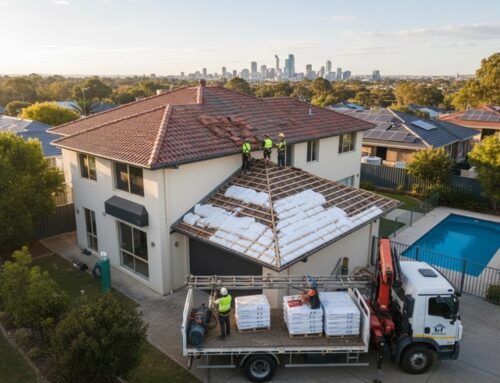
Concrete and cement tiles provide more affordable alternatives to terracotta while maintaining the traditional tile aesthetic. Modern concrete tiles incorporate advanced coatings that improve weather resistance and colour retention, though they typically require concrete tile recoating every 15-20 years to maintain protection and appearance. Permacoat has restored over 30,000 tile roofs across Perth using Dulux Acratex coating systems specifically formulated for concrete and cement tiles.
Tile roofing involves significantly greater structural weight requirements than metal alternatives, ranging from 38-60 kilograms per square metre depending on tile type and profile. This substantial weight demands robust structural support but provides advantages in wind resistance and noise reduction that lighter materials cannot match.
Climate Performance Comparison
Perth’s Mediterranean climate creates specific demands that influence roofing material performance throughout the year. Summer temperatures regularly exceed 35°C, with roof surface temperatures reaching 70°C or higher on metal roofs. Winter brings storm systems from the Indian Ocean, testing waterproofing systems with driving rain and occasional hail.
Colorbond’s metal roof thermal performance delivers measurable advantages during summer months. The light-coloured Colorbond surfaces can reduce roof temperatures by 10-15°C compared to darker materials, translating to 20-30% reductions in cooling costs for air-conditioned homes. The continuous sheet installation eliminates the thermal bridges created by individual tiles, improving overall thermal efficiency.
Tile roofing excels in thermal mass performance. The dense material absorbs heat slowly during the day and releases it gradually overnight, moderating temperature swings inside the home. This characteristic particularly benefits Perth properties without air conditioning, maintaining more comfortable indoor temperatures through passive thermal regulation.
Coastal properties face accelerated corrosion from salt-laden air. While Colorbond includes corrosion-resistant coatings, the steel base remains vulnerable to edge corrosion and damage from coastal exposure over 15-20 years. Tile roofing materials contain no ferrous components, eliminating corrosion concerns entirely, a decisive advantage for properties within 5 kilometres of the coastline.
Storm performance differs substantially between materials. Colorbond roofing withstands cyclonic winds when properly installed, with tested wind ratings exceeding 200 kilometres per hour. However, hail impact can dent metal surfaces, creating aesthetic concerns even when waterproofing remains intact. Tile roofing resists hail damage better due to its mass and curved profiles, though individual tiles may crack under severe impact and require replacement.
Installation and Structural Requirements
The structural implications of roofing material choice extend beyond the roof itself. Tile roofing’s weight requires roof framing designed to AS1684 standards for tile loads, with closer rafter spacing and heavier structural members than metal roofing demands. Converting from tile to Colorbond typically proceeds without structural modifications, but converting from Colorbond to tile may require significant structural reinforcement.
New home construction budgets must account for these structural weight requirements differences. Homes designed for tile roofing incorporate approximately 15-20% more timber in roof framing compared to metal roof specifications, adding $2,000-$4,000 to framing costs on typical residential projects.
Installation complexity affects both timeline and cost. Colorbond installation requires fewer specialised skills, with competent metal roofing contractors completing installations efficiently. Tile installation demands experienced tradespeople who understand proper tile laying techniques, valley construction, and ridge capping methods that prevent future leaks. Poor tile installation creates problems that may not manifest for years, making contractor selection critical.
Roof pitch requirements differ between materials. Colorbond roofing performs effectively on roof pitches as low as 2 degrees when properly sealed, making it suitable for modern architectural designs featuring low-slope roofs. Tile roofing requires minimum pitches of 15-20 degrees depending on tile type, limiting design options for contemporary homes.
Maintenance and Longevity Considerations
Colorbond roofing requires minimal maintenance when properly installed. Annual inspections checking for loose fasteners, damaged flashing, and debris accumulation typically suffice. The factory-applied coating system eliminates painting requirements, though coastal properties benefit from periodic washing to remove salt accumulation. Manufacturers typically offer 20-year warranties on paint finish and 30-year warranties on the steel substrate.
Tile roofing demands more active maintenance to achieve its potential terracotta tile lifespan. Roof cleaning services remove moss, lichen, and organic growth that accelerates deterioration, particularly on south-facing roof sections that receive limited sun exposure. Concrete and cement tiles require concrete tile recoating every 15-20 years to maintain weather protection and appearance, adding recurring costs that Colorbond roofing avoids.
Individual tile replacement addresses damage from fallen branches, foot traffic, or thermal stress. Most tile roof repairs involve replacing 10-30 tiles per property every 5-10 years, costing $400-$800 per service call. Colorbond repairs typically involve resealing penetrations or replacing damaged sheets, less common but more expensive when required.
The practical lifespan of each material varies with maintenance quality. Well-maintained terracotta tiles routinely exceed 80-100 years before replacement becomes necessary. Concrete tiles achieve 50-60 years with proper coating maintenance. Colorbond roofing typically lasts 40-50 years before corrosion or coating failure necessitates replacement, though coastal exposure may reduce this to 30-40 years.
Cost Analysis and Value Proposition
Initial installation costs create the most obvious difference between materials. Colorbond roofing typically costs $80-$140 per square metre installed, depending on roof complexity, profile selection, and property access. Concrete tile roofing ranges from $90-$150 per square metre, while premium terracotta tiles cost $150-$250 per square metre installed.
For a typical 150-square-metre Perth home:
- Colorbond installation: $12,000-$21,000
- Concrete tile installation: $13,500-$22,500
- Terracotta tile installation: $22,500-$37,500
However, total cost of ownership extends beyond initial installation. Colorbond’s lower maintenance requirements and elimination of recoating costs offset its initial price over 30-40 years. Concrete tiles require concrete tile recoating costing $4,000-$7,000 per treatment, typically needed twice over a 40-year period, adding $8,000-$14,000 to lifetime costs.
Energy efficiency differences affect ongoing costs differently depending on home design and occupant behaviour. Homes with effective ceiling insulation and air conditioning see minimal practical difference between materials. Properties without air conditioning benefit more from tile roofing’s thermal mass, potentially saving $200-$400 annually in cooling costs through improved passive temperature regulation.
Property value considerations vary by suburb and property style. Established suburbs with predominantly tile roofing see better value retention with tile roofs that match neighbourhood character. Modern developments and contemporary architectural styles often achieve better market appeal with Colorbond roofing. Roof restoration Perth services can transform aged tile roofs to like-new condition, preserving property value without replacement costs.
Aesthetic Options and Property Style
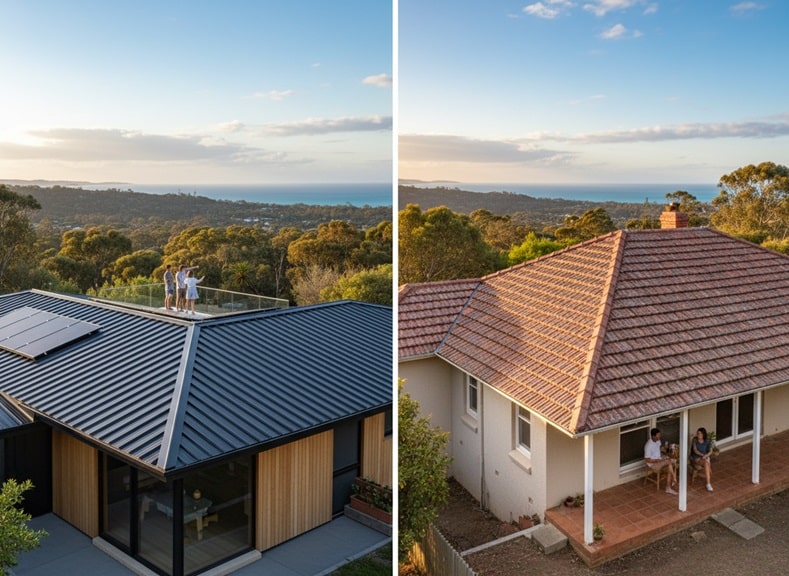
Colorbond offers 22 standard colours ranging from classic Surfmist and Monument to bold Mangrove and Wallaby. The clean, modern lines suit contemporary architectural styles, coastal designs, and properties seeking minimalist aesthetics. The uniform appearance creates crisp, defined roof planes that complement modern building materials like rendered walls and large glazing areas.
Tile roofing provides textured, dimensional appearance that suits traditional, Mediterranean, and heritage property styles. The individual tile elements create shadow lines and visual interest that flat metal roofing cannot replicate. Terracotta’s natural colour variations add character that manufactured materials struggle to match, particularly valued in heritage conservation areas.
Colour stability differs between materials over time. Colorbond’s factory-applied coating maintains colour consistency for 15-20 years before noticeable fading begins, particularly on north-facing roof sections receiving maximum UV exposure. Terracotta tiles maintain their natural colour indefinitely, while concrete tiles gradually fade and require recoating to restore original appearance.
Architectural compatibility influences material selection for specific property types. Period homes from the 1920s-1960s typically feature tile roofing, and maintaining this aesthetic preserves property character and neighbourhood consistency. Modern homes built from 2000 onward frequently specify Colorbond for its clean lines and contemporary appeal. Replacement decisions should consider how roofing material affects overall property presentation and market positioning.
Environmental and Sustainability Factors
Material sourcing and manufacturing impact environmental footprints differently. Colorbond steel contains approximately 30% recycled content and remains fully recyclable at end of life. The manufacturing process consumes significant energy but produces minimal waste. Australian manufacture reduces transportation impacts compared to imported materials.
Terracotta tile production uses natural clay fired in kilns, an energy-intensive process with centuries of refinement. The material contains no synthetic components and returns to earth harmlessly at end of life. Concrete tiles incorporate cement, sand, and aggregates with lower embodied energy than terracotta but higher than metal alternatives.
Metal roof thermal performance affects operational energy consumption throughout the roof’s lifespan. Properties in Perth’s climate typically consume more energy for cooling than heating, making summer performance critical. Colorbond’s reflective coating reduces cooling loads in air-conditioned homes, potentially offsetting manufacturing impacts through reduced operational energy over 30-40 years.
Longevity represents the most significant sustainability factor. Materials lasting 80-100 years avoid multiple replacement cycles that consume resources and generate waste. Terracotta tiles excel in this measure, potentially serving four generations without replacement. Colorbond and concrete tiles require replacement or major restoration 2-3 times over the same century, multiplying environmental impacts.
Making the Right Choice for Your Property
Several factors should guide material selection for specific properties and circumstances. Coastal properties within 5 kilometres of the ocean benefit from tile roofing’s corrosion immunity, avoiding the accelerated deterioration metal roofing experiences in salt air. Properties beyond coastal influence can confidently specify either material based on other priorities.
Budget constraints often determine initial decisions, but lifetime cost analysis provides clearer guidance. Properties where owners plan 20+ year occupancy should evaluate total ownership costs including maintenance, recoating, and energy efficiency. Short-term owners focusing on resale within 5-10 years should prioritise materials that match neighbourhood expectations and buyer preferences.
Architectural style compatibility ensures roofing material enhances rather than detracts from property character. Heritage and period homes maintain authenticity and value with tile roofing that respects original design intent. Contemporary architectural designs achieve their intended aesthetic with Colorbond’s clean, modern appearance. Contact our team on (08) 9249 5955 for guidance on material selection that complements specific property styles while meeting performance requirements.
Structural considerations may limit options for some properties. Older homes with marginal structural capacity suit Colorbond’s lighter structural weight requirements, avoiding expensive structural upgrades. Properties with robust framing designed for tile loads can accommodate either material. Structural engineers can assess existing roof frames to determine whether tile roofing remains viable or whether Colorbond offers the only practical option.
Climate exposure affects material performance across Perth’s diverse microclimates. Properties in inland suburbs like Kalamunda and Mundaring experience greater temperature extremes that favour tile roofing’s thermal mass. Coastal properties benefit from tile’s corrosion resistance. Northern suburbs with maximum sun exposure may prefer Colorbond’s reflective properties for cooling cost reduction.
Conclusion
Neither Colorbond vs tile roofing emerges as universally superior. Each material delivers specific advantages suited to different properties, budgets, and priorities. Colorbond excels in installation speed, light weight, low maintenance, and modern aesthetics, making it ideal for contemporary homes, renovation projects, and properties requiring quick installation. Tile roofing provides unmatched terracotta tile lifespan, thermal mass performance, corrosion immunity, and traditional character that suits established suburbs, heritage properties, and coastal locations.
Perth homeowners should evaluate their specific circumstances including property location, architectural style, structural capacity, budget parameters, and long-term ownership plans. Coastal properties favour tile roofing’s durability in salt air. Contemporary designs suit Colorbond’s clean lines. Budget-conscious projects benefit from Colorbond’s lower initial cost, while long-term owners may find tile roofing’s century-long lifespan delivers superior value.
Permacoat has worked with both roofing materials throughout 50+ years serving Perth homeowners, restoring over 30,000 tile roofs and maintaining countless Colorbond installations. The company’s experience across Perth’s diverse suburbs and property types provides perspective on how each material performs in real-world conditions. Whether maintaining existing roofing or planning replacement, professional assessment identifies the optimal material for specific properties and circumstances. Book a free roof inspection to receive expert guidance on roofing material selection, condition assessment, and restoration options that protect property value and provide decades of reliable weather protection.