Permacoat understands Perth property owners contemplating roof replacement or new construction face critical decisions about roofing materials affecting performance, longevity, and costs for decades. The concrete vs terracotta tiles comparison remains central to these decisions, with each material offering distinct characteristics suited to different priorities and situations. Understanding how these materials perform in Perth’s challenging climate helps homeowners make informed choices, protecting property investments while meeting aesthetic preferences.
Both tile types have served Perth roofs successfully for decades, with established track records demonstrating reliability when properly installed and maintained. However, their different material properties create performance variations affecting suitability for specific applications. Professional tile roof comparison Perth assessments evaluate individual property requirements, helping owners select optimal materials for their circumstances.
Material Composition and Manufacturing
Understanding how manufacturers produce concrete and terracotta tiles explains many performance differences between these materials.
Terracotta tiles employ natural clay fired at high temperatures, creating dense ceramic products. The manufacturing process involves shaping clay into tile profiles, drying formed tiles, applying glazes or surface treatments when specified, and firing in kilns reaching 1000-1100 degrees Celsius. This firing process creates permanent chemical and physical changes, transforming clay into a durable ceramic material. The natural clay composition and traditional manufacturing methods have remained relatively unchanged for centuries, producing materials with proven longevity.
Concrete tiles use Portland cement, sand aggregates, and water mixed into slurries, formed in moulds under pressure. Manufacturers cure formed tiles through controlled moisture and temperature conditions rather than firing. Surface treatment,s including pigments, sealers, and protective coating, is applied during or after curing. Modern concrete tile manufacturing employs sophisticated quality control, ensuring consistent products, though material properties differ fundamentally from fired ceramic tiles.
These manufacturing differences create distinct material characteristics affecting performance. Terracotta’s fired ceramic nature produces hard, dense materials with low porosity. Concrete’s cementitious matrix creates different porosity and density characteristics. These fundamental differences drive many performance variations between tile types.
Weight and Structural Considerations
Tile material selection affects roof structure requirements and installation costs, making weight comparison important for property owners.
Terracotta tiles typically weigh 40-50 kilograms per square metre,e depending on profile and thickness. Their dense ceramic composition contributes to substantial weight, requiring adequate structural support. Roof framing must accommodate these loads, sometimes necessitating structural upgrades when replacing lighter roofing materials with terracotta tiles. However, properly designed structures easily support terracotta tile loads throughout typical building service lives.
Concrete tiles generally weigh 45-55 kilograms per square metre, similar to or slightly heavier than terracotta. Weight variations depend on specific profiles, thickness, and manufacturing processes. Some lightweight concrete tile products weigh less than traditional profiles, though these represent niche markets rather than standard products. For practical comparison purposes, concrete and terracotta tiles impose similar structural requirements.
The comparable weights mean both materials require similar structural support, eliminating weight as a significant selection factor for most applications. Properties with adequate framing for one material type typically support the other equally well. Weight becomes relevant primarily when replacing significantly lighter materials like metal sheeting, where structural assessment determines whether existing framing sufficiently supports tile loads or requires reinforcement.
Durability and Longevity in Perth Climate
Perth’s harsh climate tests roofing material durability through intense UV exposure, temperature extremes, salt-laden coastal air, and periodic severe weather. Understanding how concrete and terracotta tiles withstand these conditions informs tile material selection decisions.
Terracotta tiles demonstrate exceptional longevity, with properly maintained installations lasting 50-100 years. The fired ceramic material resists UV degradation, maintains colour stability, and withstands temperature cycling without significant deterioration. Perth’s established suburbs contain numerous terracotta tile roofs exceeding 50 years of age while remaining structurally sound. Multiple tile durability factors contribute to this performance, including the vitrified ceramic composition and natural resistance to moisture infiltration.
Concrete tiles typically deliver 30-50 year service lives in Perth conditions, though quality variations affect longevity significantly. Premium concrete tiles with proper surface treatments and quality manufacturing can approach terracotta longevity. Economy products may show deterioration within 20-30 years, particularly in harsh exposures. The cementitious matrix proves more susceptible than ceramic materials to certain degradation modes, including surface spalling, colour fading, and gradual porosity increases.
Perth climate tile performance differences emerge most clearly in coastal locations where salt exposure accelerates concrete tile deterioration. Terracotta’s fired ceramic nature resists salt attack better than concrete’s cementitious matrix. Properties within several kilometres of coastlines benefit from terracotta’s superior salt resistance, though quality concrete tiles with appropriate surface treatments perform adequately in most coastal locations.
UV resistance favours terracotta, with its ceramic nature maintaining integrity under intense Perth sunlight. Concrete tiles require UV-resistant surface treatment to maintain effectiveness throughout service lives. When these treatments degrade, accelerated tile deterioration follows. This distinction becomes particularly relevant for north-facing roof slopes receiving maximum sun exposure.
Aesthetic Characteristics and Colour Options
Visual appeal influences material selection significantly, with both materials offering distinct aesthetic qualities.
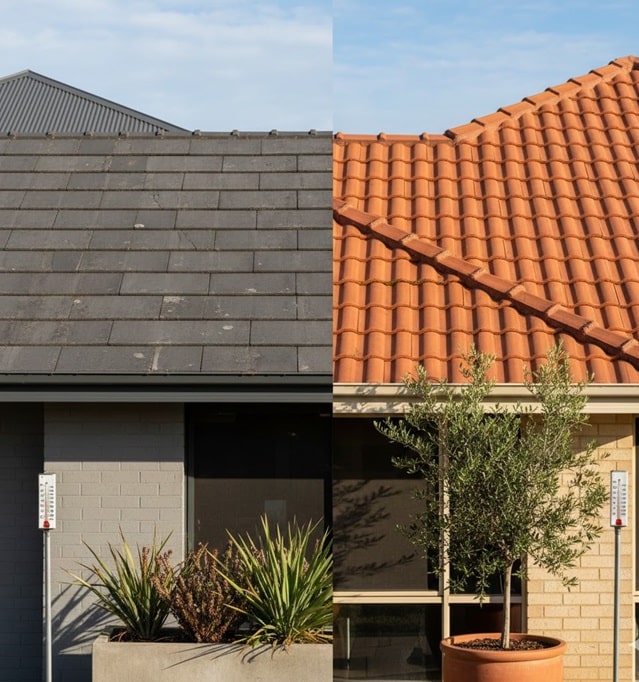
Terracotta tiles provide natural clay colours ranging from warm reds to earthy browns, with variations creating a characteristic natural appearance. The fired clay develops colour variations within individual tiles and across roof surfaces, creating visual interest that many property owners find appealing. Glazed terracotta options deliver uniform colours, including non-traditional shades, while retaining ceramic material benefits. The natural terracotta appearance suits traditional architectural styles particularly well, complementing Mediterranean, Spanish, and heritage designs.
Concrete tiles offer broader colour ranges through pigments and surface treatments. Manufacturers produce concrete tiles in colours spanning the spectrum from traditional terracotta tones to contemporary greys, blacks, and even blues. This colour flexibility suits modern architectural designs seeking specific colour coordination. However, concrete tile colours may fade over time more than terracotta, particularly in products using surface-applied rather than through-body colouring. Quality concrete tiles employ colourfast pigments and protective coatings, minimising fading, though some colour change remains inevitable.
Texture differences affect appearance and performance. Terracotta’s smooth, fired ceramic surface sheds water efficiently while providing a distinctive visual character. Concrete tiles may feature textured surfaces mimicking various materials or creating specific aesthetic effects. These surface treatments affect water shedding, dirt accumulation, and biological growth establishment.
Profile options exist in both materials, from traditional curved Spanish tiles to modern flat profiles. Both concrete and terracotta manufacturers produce multiple profile options accommodating different architectural styles. Profile selection depends more on aesthetic preferences and architectural appropriateness than on material type, as both materials accommodate similar profile ranges.
Thermal Performance and Energy Efficiency
Roof material thermal properties affect building comfort and energy costs, making thermal performance relevant to material selection.
Terracotta tiles provide beneficial thermal mass, absorbing heat during the day and releasing it gradually. This thermal flywheel effect moderates temperature fluctuations, though the benefit proves limited in Perth’s climate,e where cooling dominates energy use. The tiles’ low thermal conductivity compared to metal roofing materials reduces heat transfer into roof spaces. Terracotta’s natural colour reflectivity characteristics affect heat absorption, with lighter colours reflecting more solar energy than darker tiles.
Concrete tiles offer similar thermal mass benefits with comparable heat storage capacity. Their thermal conductivity resembles terracotta, providing a similar insulation value. Concrete tiles also benefit from cool-roof coating technologies that reflect solar energy more effectively than standard products. These specialised concrete tiles reduce roof surface temperatures by 10-15 degrees compared to standard dark tiles, delivering measurable energy savings in Perth’s hot climate.
Practical thermal performance depends heavily on the roof assembly rather than the tile material alone. Adequate roof cavity ventilation, quality insulation, and reflective sarking membranes contribute more to building energy efficiency than tile material differences. Well-designed roof assemblies using either tile type deliver good thermal performance, while poor assemblies compromise performance regardless of tile material.
Installation Requirements and Costs
Installation considerations affect initial project costs and influence long-term performance, making installation comparison relevant to selection decisions.
Both tile types require similar installation processes, including structural preparation, sarking membrane installation, batten fixing, and tile positioning. The fundamental installation approach remains consistent regardless of material, with experienced tile roof installers handling both materials competently. Neither material presents installation difficulties,s favouring one type significantly over the other.
Installation costs reflect primarily tile material costs rather than labour differences. Terracotta tiles typically cost more per square metre than concrete tiles, with premium terracotta products commanding substantial premiums. Economy concrete tiles represent the most affordable tile option, while premium concrete tiles are priced comparably to standard terracotta products. These material cost differences translate directly to installed roof costs.
Breakage during installation affects the cost marginally. Both materials break when mishandled, though terracotta’s ceramic nature makes it somewhat more brittle. Experienced installers minimise breakage regardless of material through proper handling. Breakage rates affect project costs modestly rather than dramatically.
Maintenance Requirements and Costs
Long-term maintenance needs affect lifecycle costs and should factor into selection decisions.
Both tile types require similar routine maintenance, including gutter cleaning, preventing water backup, periodic inspections identifying damage requiring repair, ridge and hip tile rebedding or mechanical fixing renewal as bedding deteriorates, and individual tile replacement addressing breakage or damage. These maintenance activities apply equally regardless of tile material.
Terracotta tiles generally require less frequent maintenance than concrete tiles due to superior durability. The ceramic material resists deterioration longer, reducing the frequency of individual tile replacement needs. Ridge bedding on terracotta roofs often lasts longer than concrete equivalents, though this depends significantly on original bedding quality and installation standards.
Concrete tiles may require more frequent individual tile replacement as surface deterioration progresses. Spalling concrete tiles need replacement, maintaining the roof’s weather-tightness and appearance. Quality concrete products extend intervals between major maintenance, while economy products may require attention more frequently.
Colour maintenance affects concrete tiles more than terracotta. Concrete tile colour fading may motivate repainting or coating application to maintain appearance. Terracotta’s fired ceramic colour remains stable without requiring such intervention. This distinction becomes particularly relevant for properties where appearance maintenance receives high priority.
Professional roof restoration services address maintenance needs for both tile types effectively. Comprehensive restoration includes inspection, individual tile replacement, ridge rebedding or mechanical fixing installation, and protective coating application where beneficial.
Environmental Considerations
Sustainability concerns increasingly influence building material choices, making environmental comparison relevant for environmentally conscious property owners.
Terracotta tile production requires significant energy for kiln firing, though natural clay materials have low embodied energy compared to processed materials. Clay extraction and tile manufacturing create environmental impacts requiring consideration. However, terracotta’s exceptional longevity means environmental costs amortise over 50-100 year service lives, favourably affecting lifecycle environmental assessments.
Concrete tile manufacturing requires less energy than terracotta firing but uses Portland cement with substantial embodied carbon. Cement production contributes significantly to global carbon emissions, affecting concrete products’ environmental profiles. However, concrete tiles’ local manufacturing in many cases reduces transportation environmental costs. Concrete tiles generally offer shorter service lives than terracotta, meaning environmental costs are distributed across fewer years.
Cost Analysis Over Roof Lifetime
Understanding total ownership costs rather than just initial installation prices provides a realistic financial comparison between materials.
Initial installation costs favour concrete tiles for budget-conscious property owners. Economy concrete products cost significantly less than terracotta, reducing upfront investment. However, this initial saving must balance against potential maintenance cost differences and service life variations.
Terracotta’s longer service life potentially delivers better value despite higher initial costs. A terracotta roof lasting 75 years costs less per year than concrete tile roofing requiring replacement after 35 years, even if initial terracotta installation costs 30-40% more. The analysis becomes more complex when considering financing costs, property ownership timelines, and maintenance expense variations.
Property owners should consider their ownership timeline when evaluating costs. Property owners anticipating long-term ownership benefit more from terracotta’s longevity advantages. Those expecting to sell properties within 10-15 years may prioritise initial cost savings from concrete tiles, though quality roofing positively affects property values regardless of material.
Making the Right Choice for Your Perth Property
Selecting between concrete and terracotta tiles requires balancing multiple factors specific to individual properties and owner priorities.
Budget constraints significantly influence decisions. Property owners with limited budgets often choose concrete tiles, accepting trade-offs in longevity and maintenance requirements. Those able to invest in premium materials may prefer terracotta’s proven longevity and lower maintenance demands.
Architectural style affects material appropriateness. Traditional Mediterranean, Spanish, or heritage architecture suits terracotta tiles particularly well. Contemporary designs accommodate either material, with concrete’s colour flexibility sometimes advantageous for specific design visions.
Location considerations include coastal proximity affecting material durability, roof slope and complexity affecting installation factors, and neighbourhood character influencing aesthetic expectations. Tile roof comparison Perth services help property owners evaluate these factors systematically.
Performance priorities guide selection for property owners, emphasising specific characteristics. Maximum longevity favours terracotta. Colour variety advantages concrete. Similar weights and thermal performance mean these factors rarely determine outcomes.
Professional Installation for Either Material
Regardless of selection, professional installation quality determines actual performance outcomes. Both concrete and terracotta tiles deliver excellent service when installed properly, but disappoint when poorly executed.
Quality installation requires appropriate structural preparation, ensuring adequate support, proper sarking membrane selection and installation, maintaining waterproof barriers, correct batten spacing and fixing for chosen tile profiles, careful tile positioning, maintaining correct overlaps and alignment, and appropriate ridge and hip tile securing through mechanical fixing.
Perth Climate Tile Performance Summary
Understanding how these materials perform specifically in Perth’s Mediterranean climate with intense summer heat, winter rainfall, coastal salt exposure, and strong winds helps property owners make informed decisions suited to local conditions.
Both materials serve Perth roofs successfully when properly selected and installed. Terracotta excels in durability and longevity, particularly in harsh coastal exposures. Concrete provides cost advantages and colour flexibility while delivering adequate performance when quality products receive proper maintenance. Neither material universally outperforms the other across all criteria – optimal selection depends on prioritising factors most important for specific properties and owners.
Professional assessment considers all relevant factors, providing recommendations based on comprehensive evaluation rather than generic preferences. Get in touch on (08) 9249 5955 for expert guidance on concrete vs terracotta tiles selection suited to your Perth property’s specific requirements. With extensive experience installing and maintaining both tile types across Perth’s diverse conditions, Permacoat helps property owners navigate material selection confidently while ensuring quality installation protecting investments for decades.