Perth’s storm season delivers intense weather events that test residential roof integrity through high winds, driving rain, and occasional hail creating damage requiring insurance claims. Understanding how to navigate storm damage insurance Perth property owners file helps maximise settlements whilst avoiding common claim pitfalls that result in denial or inadequate compensation. Proper roof claim documentation combined with knowledge of insurance processes protects homeowner interests when severe weather causes roof damage.
Permacoat has assisted countless Perth homeowners with storm-related roof repairs requiring insurance claims throughout 50+ years of service. The company’s systematic approach to storm damage insurance Perth situations includes rapid assessment, thorough documentation, and quality repairs meeting insurance requirements. This expertise helps homeowners navigate claim processes successfully whilst ensuring properties receive comprehensive restoration.
Understanding Storm Damage Coverage
Homeowner insurance policies typically cover storm damage as insured perils when weather events cause sudden, unforeseen damage to roofing systems. This coverage extends to wind damage, hail impact, rain penetration during storms, and debris impact from storm-driven objects. Understanding specific policy coverage helps homeowners recognise claimable damage versus excluded deterioration that insurance won’t address.
Wind damage coverage includes tile displacement, metal sheet lifting, ridge cap removal, or flashing separation resulting from storm wind forces. Perth’s afternoon sea breezes occasionally intensify into damaging winds exceeding 80-100 km/h during frontal passages or thunderstorm events. These wind forces can displace inadequately secured roofing components creating immediate weatherproofing compromises requiring urgent repair.
Hail damage protection covers impact damage to tiles, metal roofing, or protective coatings from hailstone strikes during severe thunderstorms. Perth experiences hail events several times annually with significant storms delivering hailstones 15-25mm diameter capable of cracking tiles or dimpling metal roofing. Post-storm inspection revealing these impacts supports insurance claims when damage requires repair or replacement.
Immediate Post-Storm Actions
Safety assessment before approaching damaged roofs prevents injuries from unstable structures, electrical hazards, or falling debris. Homeowners should observe damage from safe ground locations rather than attempting roof access during or immediately after storms. Professional assessment should occur before any roof access ensuring structural integrity hasn’t been compromised creating collapse risks.
Temporary protection measures including tarpaulin coverage prevent additional damage whilst insurance assessment proceeds. These emergency measures demonstrate responsible property management whilst preventing water infiltration that could worsen damage. Retaining receipts for emergency materials or services supports reimbursement claims whilst documenting damage mitigation efforts.
Initial damage photography from safe ground positions provides preliminary documentation establishing damage occurred during specific storm events. These photographs should capture displaced tiles, lifted sheets, debris accumulation, or visible structural damage. Date-stamped images connect damage to particular weather events supporting causation arguments during claim assessment.
Storm Event Documentation
Weather bureau data from Bureau of Meteorology provides official records of wind speeds, rainfall totals, hail reports, and severe weather warnings validating storm occurrence and intensity. This objective data substantiates homeowner claims that significant weather events occurred justifying damage causation arguments. Specific storm tracking information links property damage to documented severe weather events.
Media coverage including news reports, photographs, or social media posts documenting widespread storm damage helps establish that claimed damage aligns with broader community impact patterns. These third-party sources provide independent verification supporting individual damage claims whilst demonstrating storm severity that might justify higher settlement amounts.
Witness accounts from neighbours, family members, or others who observed storm impacts provide corroborating evidence supporting damage claims. Written statements describing specific observations, timing, and weather conditions strengthen claims beyond homeowner assertions alone. Multiple independent witness accounts prove especially persuasive when insurance companies question damage causation.
Common Storm Damage Types
Wind-lifted roofing materials including displaced tiles, removed sheets, or torn membranes represent the most obvious storm damage requiring roof claim documentation. These damages typically result from uplift forces during high winds exploiting inadequately secured roofing components. Comprehensive inspection following visible damage often reveals additional hidden problems including loosened fasteners or stressed connections throughout broader roof areas.
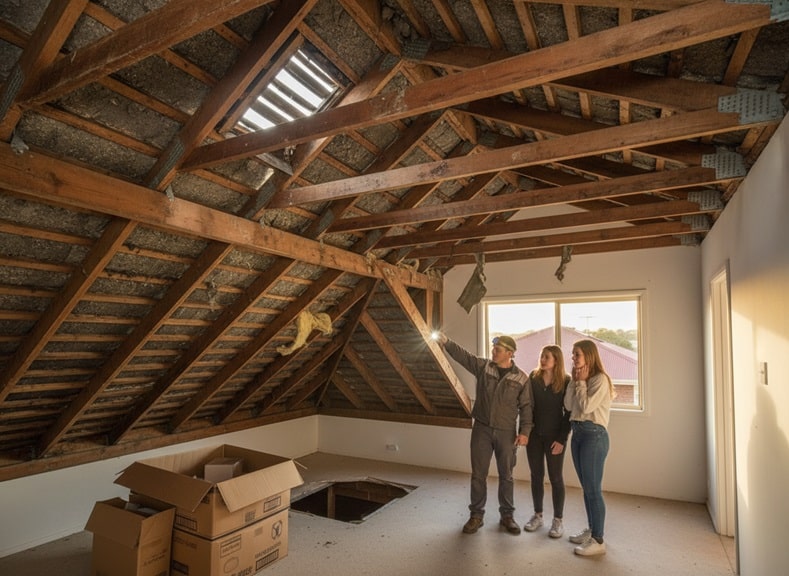
Water infiltration during storms results when wind-driven rain penetrates beneath roofing materials or through damage created during weather events. This moisture penetration can saturate insulation, damage ceiling materials, or promote mould growth requiring comprehensive remediation beyond simple roof repairs. Documentation should connect interior damage to storm-created roof penetration points supporting claims for complete damage restoration.
Debris impact damage from tree branches, airborne objects, or neighbouring property materials creates localised roof damage during severe storms. These impact points require documentation showing damage nature, impact source if identifiable, and extent of resulting problems. Photographs should capture both impact damage and source materials if present on roofs supporting claims that external objects rather than roof deficiency caused damage.
Professional Damage Assessment
Licensed contractor inspection provides technical expertise identifying all storm damage including hidden problems that casual observation might miss. Professional contractors understand how storm forces affect roofing systems whilst possessing knowledge to identify less obvious damage that untrained observers overlook. Their detailed assessment ensures roof claim documentation addresses complete damage extent rather than superficial visible problems.
Comprehensive roof inspection following storms examines not just obviously damaged areas but entire roof systems for stress damage, loosened components, or compromised weatherproofing. This thorough approach reveals cumulative damage that might not cause immediate leaks but compromises long-term roof integrity. Insurance claims should address the complete extent of damage rather than minimal visible surface problems.
Written assessment reports documenting all identified damage provide organised evidence supporting insurance claims. Quality reports include damage descriptions, location specifications, photographic documentation, repair recommendations, and cost estimates. These professional reports carry significantly more weight with insurance assessors than homeowner damage descriptions alone.
Insurance Notification Requirements
Prompt claim notification within policy-specified timeframes prevents potential claim denial based on delayed reporting. Most policies require notification within reasonable periods after damage discovery though specific requirements vary between insurers. Homeowners should report storm damage within 24-48 hours of discovery, even if a complete damage assessment remains pending.
Claim number recording and assessor contact information documentation provides reference for all subsequent claim communications. Organised record keeping, including claim numbers, assessor names, conversation dates, and discussed topics, prevents confusion whilst creating an accountability trail if disputes arise. This systematic documentation supports effective claim management throughout assessment and settlement processes.
Follow-up confirmation ensuring insurers received notifications and assigned claims for assessment prevents administrative oversights delaying claims. Email confirmation, written acknowledgment, or recorded phone call verification documents notification occurred within required timeframes. These confirmation records protect homeowner interests if insurers later question notification timing.
Working with Insurance Assessors
Assessor cooperation whilst maintaining appropriate advocacy balance helps claims progress smoothly without appearing combative or difficult. Homeowners should provide requested information promptly, allow reasonable property access, and answer questions honestly. However, cooperation doesn’t require accepting inadequate settlement offers or agreeing to assessor conclusions that undervalue damage extent.
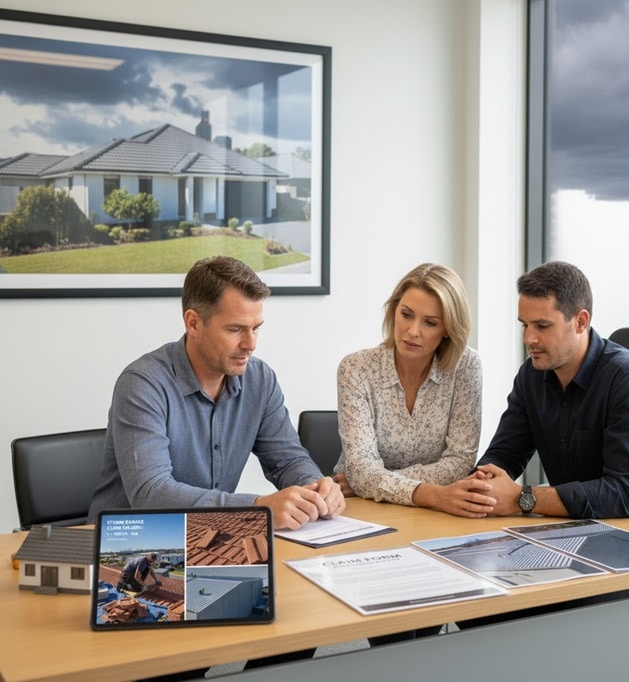
Information provision, including damage documentation, repair quotes, and supporting evidence, helps assessors understand damage scope and repair requirements. Well-organised documentation presented systematically demonstrates homeowner diligence whilst supporting efficient claim assessment. However, homeowners need not provide information beyond reasonable claim-related requirements nor sign documents without understanding implications.
Independent contractor presence during assessor inspections ensures technical expertise supports damage identification and explanation. Professional contractors can identify damage assessors might overlook whilst explaining technical causation connecting storm events to resulting problems. This professional support often results in more comprehensive damage recognition than homeowners could achieve independently.
Scope of Damage Disputes
Complete replacement versus partial repair disputes frequently arise when homeowners believe a comprehensive roof replacement is necessary, whilst assessors approve only targeted repairs. These disagreements require technical justification explaining why partial repairs prove inadequate or uneconomical. Professional contractor opinions supporting replacement approaches help resolve disputes through detailed technical reasoning.
Hidden damage recognition often requires persistent advocacy when insurance assessors focus only on visible surface problems. Professional thermal imaging, moisture detection, or invasive inspection reveals hidden damage that assessors must acknowledge once documented. This comprehensive damage revelation prevents inadequate settlements addressing only obvious problems whilst leaving underlying damage unrepaired.
Age-related depreciation arguments insurers might raise suggesting damage repair rather than replacement should account for roof age. However, depreciation shouldn’t apply when storm damage renders roofs non-functional regardless of age. Professional roof claim documentation emphasises functional failure requiring complete restoration rather than cosmetic concerns where depreciation might reasonably apply.
Documentation Supporting Successful Claims
Photographic evidence provides comprehensive coverage from multiple angles, perspectives, and distances, documenting damage thoroughly, preventing assessor arguments that images misrepresent problems. This documentation should include close-ups showing damage detail, medium shots providing context, and wide views establishing overall impact. Sequential photography comparing pre-storm and post-storm conditions proves particularly persuasive when available.
Professional repair quotations from multiple contractors demonstrate fair market pricing whilst validating the extent of damage requiring quoted repairs. These quotes should itemise materials, labour, and specific repair procedures, allowing assessors to evaluate cost reasonableness. Similar quotes from independent contractors strengthen the position that pricing represents legitimate market rates rather than inflated estimates.
Technical reports explaining damage causation, repair necessity, and inadequacy of lesser alternatives provide persuasive evidence supporting comprehensive claims. These reports from qualified professionals address technical aspects beyond homeowner expertise whilst demonstrating sophisticated understanding supporting claim positions. Professional documentation often proves decisive in scope disputes or replacement versus repair disagreements.
Common Claim Denial Reasons
Pre-existing damage arguments suggest problems existed before storms rather than resulting from weather events. Insurers might deny claims arguing damage reflects long-term deterioration rather than sudden storm impacts. Defending against these arguments requires evidence of proper maintenance, recent inspections showing sound condition, or clear connection between storm events and resulting damage.
Maintenance neglect exclusions deny coverage when insurers argue inadequate maintenance created damage vulnerability that proper care would have prevented. Documentation of regular professional roof maintenance, prompt minor repairs, and systematic care helps defend against these arguments. Even when maintenance documentation proves limited, demonstrating damage severity exceeding what maintenance could prevent sometimes overcomes these exclusions.
Coverage exclusions for specific damage types or circumstances might apply despite storm involvement. Policy review identifying applicable exclusions helps homeowners understand legitimate coverage limitations whilst recognising when denial arguments misapply exclusions. Professional policy interpretation sometimes reveals that seemingly applicable exclusions don’t actually apply to specific damage circumstances.
Settlement Negotiation Strategies
Initial offer evaluation comparing settlement proposals against documented damage extent and professional repair quotes reveals whether offers adequately address the complete damage. Many initial offers prove inadequate, requiring negotiation to achieve a fair settlement. Homeowners shouldn’t feel pressured to accept first offers without a proper evaluation to determine adequacy.
Counteroffer preparation supported by additional documentation, supplementary contractor quotes, or independent assessments strengthens negotiating positions. These counteroffers should specifically address settlement inadequacies whilst providing evidence supporting higher amounts. A professional presentation of counteroffer rationale demonstrates a serious negotiating position rather than arbitrary demands.
Professional negotiation support from public loss adjusters or experienced contractors helps homeowners unfamiliar with insurance negotiation processes. These professionals understand typical settlement ranges, effective negotiating tactics, and when compromise proves reasonable versus when persistence proves warranted. Their expertise often achieves significantly better outcomes than homeowners negotiating independently.
Time-Sensitive Claim Deadlines
Policy limitation periods specify maximum timeframes for claim submission after damage occurrence. These limitation periods typically extend 6-12 months, though specific terms vary between policies. Understanding these deadlines prevents inadvertent forfeiture of coverage through delayed claim submission beyond policy limits.
Repair authorisation timelines sometimes require claim settlements or repair approvals within specified periods, preventing indefinite claim delays. These provisions protect insurers from extended uncertainty whilst ensuring timely damage remediation. However, homeowners shouldn’t feel pressured to accept inadequate settlements simply to meet these timelines when legitimate claim disputes require resolution.
Statute of limitations for legal action regarding claim disputes provides the ultimate deadline for pursuing unsatisfactory claim outcomes through legal proceedings. These statutory periods typically extend several years, though specific timeframes vary by jurisdiction. Understanding these limitations helps homeowners evaluate whether claim disputes warrant legal pursuit within available timeframes.
Multiple Property Damage Coordination
Combined roof and other property damage claims require coordination, ensuring all storm damage receives appropriate assessment and settlement. Comprehensive property inspection following storms should document all damage, including roofing, fencing, landscaping, or other impacts. This thorough approach ensures single storm events generate complete damage claims rather than piecemeal submissions missing damage components.
Trade coordination when multiple trades address different damage aspects requires project management, ensuring repairs proceed logically without conflicts. Roofing work might need completion before ceiling repairs, whilst fencing contractors might work independently. Professional contractors can coordinate these multiple trades,s streamlining overall restoration whilst ensuring compatible work schedules.
Settlement allocation across multiple damage components requires understanding whether policies impose sublimits or aggregate limits affecting combined claims. Some policies limit specific damage types, while others impose total claim limits regardless of damage distribution. Understanding these policy structures helps homeowners evaluate whether storm damage insurance Perth settlements adequately address all damage or whether limits restrict recovery.
Emergency Repair Authorization
Reasonable emergency repairs preventing additional damage receive coverage under most policies without requiring pre-approval. These urgent measures include tarpaulin installation, temporary weatherproofing, or debris removal, preventing further property damage. Homeowners should retain all receipts and photograph emergency measures documenting necessity and reasonableness.
Approval requirements for non-emergency repairs typically require insurer authorisation before proceeding with permanent restoration work. Undertaking major repairs without approval risks insurers denying coverage for unauthorised work. However, unreasonable insurer delays sometimes justify proceeding with necessary repairs whilst maintaining claim rights through proper documentation.
Contractor selection approval processes, some insurers maintain, specify using insurer-approved contractors or obtaining approval for homeowner-selected professionals. Understanding these requirements prevents claim complications from contractor selection disputes. However, homeowners retain rights selecting qualified contractors when insurer-approved options prove inadequate or unresponsive.
Professional Claim Support Services
Public loss adjusters representing policyholders provide expert claim management, including damage assessment, documentation, negotiation, and dispute resolution. These professionals charge fees typically calculated as claim settlement percentages, aligning their interests with maximising homeowner recovery. Their expertise proves valuable for significant claims,s justifying professional representation investment.
Roofing contractor advocacy through experienced operators like Permacoat, familiar with insurance processes, helps homeowners navigate claim requirements while ensuring damage receives a comprehensive assessment. These contractors provide professional storm damage insurance Perth documentation, detailed repair specifications, and technical expertise supporting successful claims. Their involvement often results in more favourable outcomes than homeowners achieve independently.
Legal representation becomes appropriate when substantial claims face unjustified denial or when settlement disputes require professional legal analysis. Insurance lawyers understand policy interpretation, relevant case law, and effective dispute resolution approaches. Early legal consultation helps homeowners understand their rights while evaluating whether legal action is warranted for specific situations.
Post-Settlement Repair Management
Contractor selection following settlement approval requires careful evaluation, ensuring qualified professionals perform repairs meeting appropriate standards. Insurance approval doesn’t guarantee contractor competence, making independent contractor vetting essential. Homeowners should verify licences, insurance coverage, and references before engaging contractors, regardless of insurance recommendations.
Quality verification throughout repairs ensures work meets specifications, uses approved materials, and achieves weatherproofing standards protecting long-term property value. Active homeowner involvement, including progress inspections and documentation, prevents substandard work requiring remediation. Professional contractors welcome this oversight, demonstrating confidence in work quality.
Documentation retention, including final invoices, warranties, completion certificates, and photographic records, creates comprehensive claim closure documentation. These records prove valuable for future property transactions, warranty claims, or subsequent insurance situations. Organised file maintenance ensures this documentation remains accessible when needed.
Protecting Your Storm Damage Interests
Storm damage insurance for Perth homeowners requires understanding policy coverage, following proper claim procedures, and maintaining thorough roof claim documentation throughout the process. Professional support from experienced roofing contractors familiar with insurance requirements significantly improves claim success rates whilst ensuring settlements adequately address complete damage. This systematic approach protects homeowner interests when severe weather creates roofing problems.
Permacoat’s extensive experience with storm damage assessment and insurance repairs helps Perth homeowners navigate claim processes successfully. The company’s systematic documentation approaches, professional assessor relationships, and quality repair standards support favourable claim outcomes whilst ensuring properties receive comprehensive restoration. This proven expertise delivers peace of mind when storm events create roofing challenges.
Perth homeowners should respond promptly to storm damage through immediate documentation, professional assessment, and timely claim submission. These practices maximise insurance recovery whilst preventing claim complications from procedural deficiencies. Professional guidance helps homeowners understand claim processes, avoid common pitfalls, and achieve fair settlements addressing the complete damage extent.
Permacoat provides professional storm damage assessment supporting insurance claims through comprehensive documentation and expert repair quotations. The company’s systematic approach to storm damage insurance Perth situations helps homeowners achieve successful claim outcomes whilst ensuring quality repairs restore complete roof protection. Get in touch on (08) 9249 5955 with Perth’s most experienced storm damage professionals who understand insurance requirements, delivering claim support, maximising settlements.