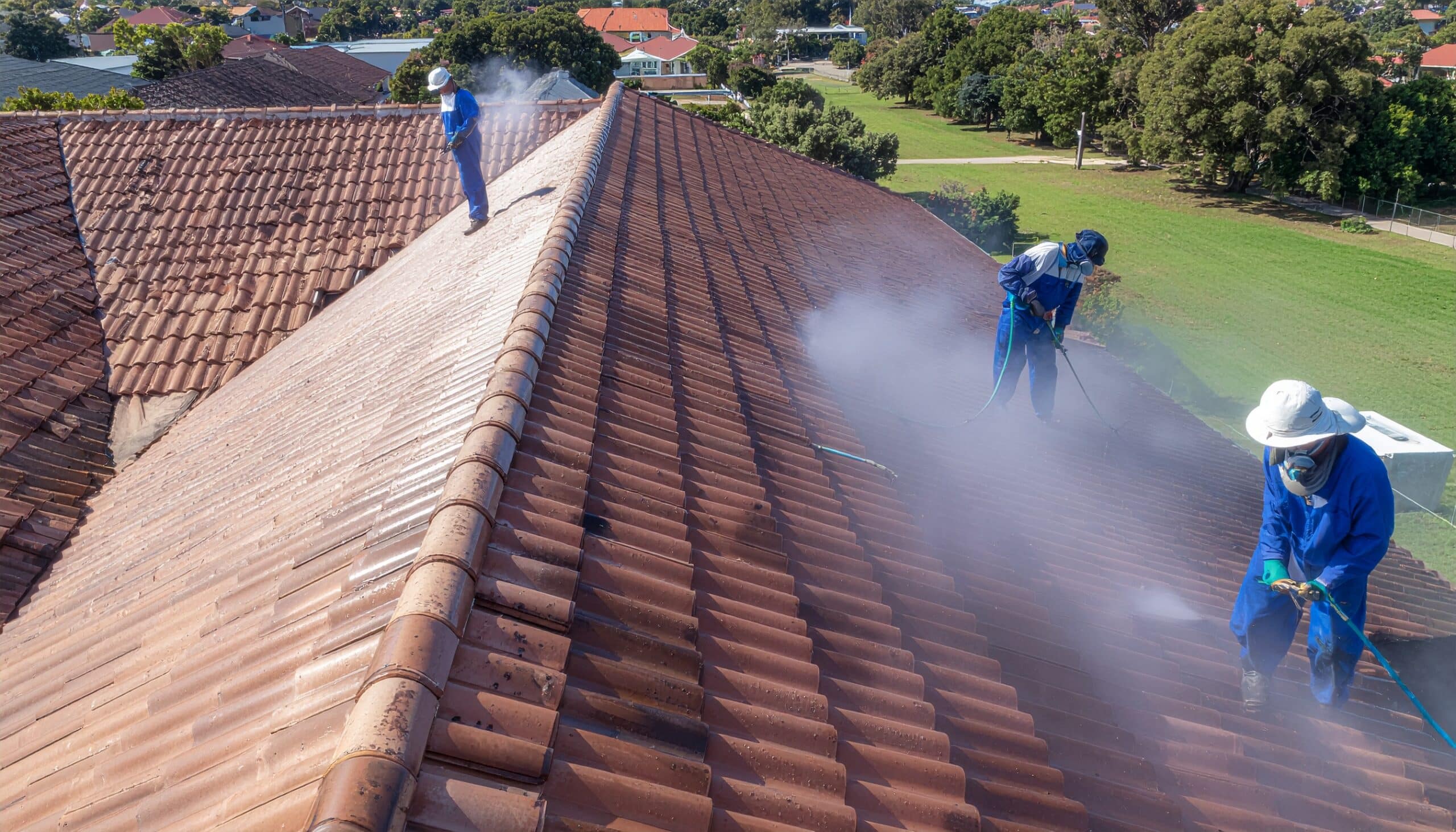
Restoration quality depends on fresh eyes at every stage. Most roof restoration companies assign one crew to handle projects from start to finish. The same team that pressure-cleans surfaces also applies coatings three days later. This approach seems efficient, but it creates critical quality control gaps that show up years later when coatings fail prematurely.
A two-team approach splitting every restoration into distinct phases proves more effective. Preparation crews complete all cleaning, repairs, and surface work. Then completely different spray coating teams arrive to inspect and coat roofs. This separation creates built-in quality audits at the most critical transition points in restoration processes.
Over decades and thousands of restored roofs, two-team approaches have reduced coating failures to less than 2%, well below industry averages of 8-12% for premature coating breakdown. Superior long-term performance stems directly from independent quality verification at preparation-to-coating transitions, where most restoration failures originate.
Why Surface Preparation Determines Coating Lifespan
Dulux Acratex coating systems perform exactly as designed when applied to properly prepared surfaces. The 15-20 year warranties on these premium coatings assume roofs have been cleaned to bare substrates, all repairs completed correctly, and contamination eliminated before first coats touch surfaces.
Three preparation failures account for 87% of early coating problems.
Incomplete cleaning leaves residual dirt, moss spores, or chalky oxidation preventing proper coating adhesion. Even thin layers of contamination create invisible barriers between substrates and primers. Coatings bond to contamination layers rather than roof surfaces. When contamination layers release, often within 2-3 years, entire coating systems delaminate.
Missed repairs become locked under new coating systems. Hairline cracks in cement tiles or slightly lifted ridge caps won’t stop coatings from looking perfect initially, but water finds these weak points within 18 months. Coatings conceal these defects without correcting them.
Rushed drying time after pressure cleaning traps moisture under coatings. Perth’s dry climate makes this seem unlikely, but shaded roof sections, valleys, and areas under overhanging trees can retain moisture for 48-72 hours after cleaning. Moisture trapped in porous tiles repels solvent-based primers, creating false bonds failing within months.
Professional quality depends fundamentally on addressing these three preparation issues before coating application. Two-team approaches provide systematic verification that preparation meets coating requirements.
How the Two-Team System Creates Natural Quality Checkpoints
Permacoat, WA’s longest-serving roof restoration company with 50+ years of experience and 30,000+ restored roofs, demonstrates how systematic quality control delivers measurably superior results. Preparation teams work to detailed specifications covering every aspect of surface readiness. They complete all repairs, high-pressure roof cleaning, moss treatment, and drying time verification before signing off.
Then they leave. Jobs sit for minimum periods while preparation work fully cures and remaining moisture evaporates.
When spray coating teams arrive, they conduct complete inspections with fresh eyes and no attachment to preparation work. They’re simply asking: “Is this surface ready for coating systems that need to last 15-20 years?”
This creates three specific quality advantages.
Independent verification catches issues preparation teams missed. Coating specialists might spot residual staining indicating incomplete cleaning beneath visible surfaces. They might notice valley sections showing moisture darkening despite main roofs appearing dry.
Specialised expertise applies at each phase. Preparation crews develop deep knowledge of high-pressure cleaning techniques and tile replacement methods. Spray coating teams focus entirely on surface assessment and coating application across complex roof geometries.
Accountability separation means neither team can blame the other for shortcuts. Preparation teams know their work will be inspected by specialists who will reject inadequate surfaces. Coating teams know any failures will be traced back to their application technique.
Approximately 12% of roofs fail spray team initial inspections. Common rejection reasons include insufficient drying time in specific areas, missed detail repairs, or residual contamination. Spray teams document specific issues, and preparation teams return to address them. This adds 1-2 days but prevents coating failures appearing within 2-3 years.
The Dulux Acratex Three-Coat System Applied by Specialists
Once spray teams approve surface preparation, they apply Dulux Acratex coatings in three-coat systems providing superior protection.
Primer sealers penetrate substrates and create critical bonds between roof materials and coating systems. Application technique matters enormously. Uneven primer coverage creates weak points where entire coating systems can eventually fail. Spray coating specialists understand how to adjust equipment pressure, nozzle distance, and traverse speed to achieve uniform coverage.
First topcoats build film thickness and begin establishing colour uniformity. Spray teams monitor application rates carefully, ensuring each square metre receives specified coating volumes without runs, sags, or thin spots.
Second topcoats complete systems with full colour development and UV protection. These final coats determine visual appearance and long-term fade resistance protecting roofs for 15-20 years.
Three-coat systems deliver approximately 750 microns total dry film thickness when applied properly. Achieving this thickness uniformly across complex roof surfaces requires specialised spray equipment and operator expertise. For properties seeking maximum protection, premium roof coatings with proper application deliver unmatched longevity.
Premium coating performance depends fundamentally on application quality matching product quality. Coating specialists focus exclusively on application excellence, developing expertise that delivers 15-20 year performance premium coatings are engineered to provide.
Quality Control Documentation at Every Transition
Two-team systems generate detailed documentation creating accountability and verification for warranty purposes.
Preparation sign-off includes photographic evidence of completed cleaning, documentation of all repairs performed, moisture readings from key roof areas, and certification that surfaces meet coating-ready specifications.
Spray team inspection reports document independent assessments, note any issues requiring additional preparation work, and confirm surface approval before coating begins.
Application records track coating batch numbers, application rates, environmental conditions during coating, and any areas requiring special attention.
This documentation proves critical when warranty questions arise years later. For strata managed properties where body corporate committees require detailed accountability, this documentation provides transparency that single-team operations cannot match.
The Cost-Benefit Reality of Separate Teams
Two-team approaches add approximately 5-8% to project costs compared to single-crew operations. This premium covers additional coordination, inspection phases between preparation and coating, and occasional preparation rework.
Property owners occasionally question this premium. Value becomes clear when examining long-term outcomes.
Coating longevity averages 17-19 years for two-team restorations based on warranty claim data. Comparable properties with single-crew work average 12-15 years before requiring recoating. This three-year performance difference means roofs require recoating one full cycle later.
Property owners who invest $10,500 in two-team restorations achieve 18-year performance. Investing $10,000 in single-crew restoration achieving 13-year performance requires recoating at year 13, adding $12,000-15,000 additional expense. Total 20-year cost for single-crew: $22,000-25,000. Total for two-team: $10,500. For properties where coating systems have failed multiple times, complete re roofing in Perth may prove more economical than continued restoration cycles.
Warranty confidence runs higher when independent quality verification occurs at critical preparation-to-coating transitions. Fifteen to twenty year coating warranties carry more weight when backed by documented quality control.
Reduced callbacks for coating issues including edge lifting or premature fading drop by approximately 70% compared to industry averages. Callback rates for coating issues sit below 2% across thousands of completed projects versus 8-12% industry averages.
Mathematics favour quality control. Paying 6% more initially to gain 25% longer coating life and eliminate 70% of potential problems delivers clear value.
How This Approach Handles Different Roof Types
Perth roofs span diverse materials and configurations. Two-team systems adapt to these variations while maintaining quality verification.
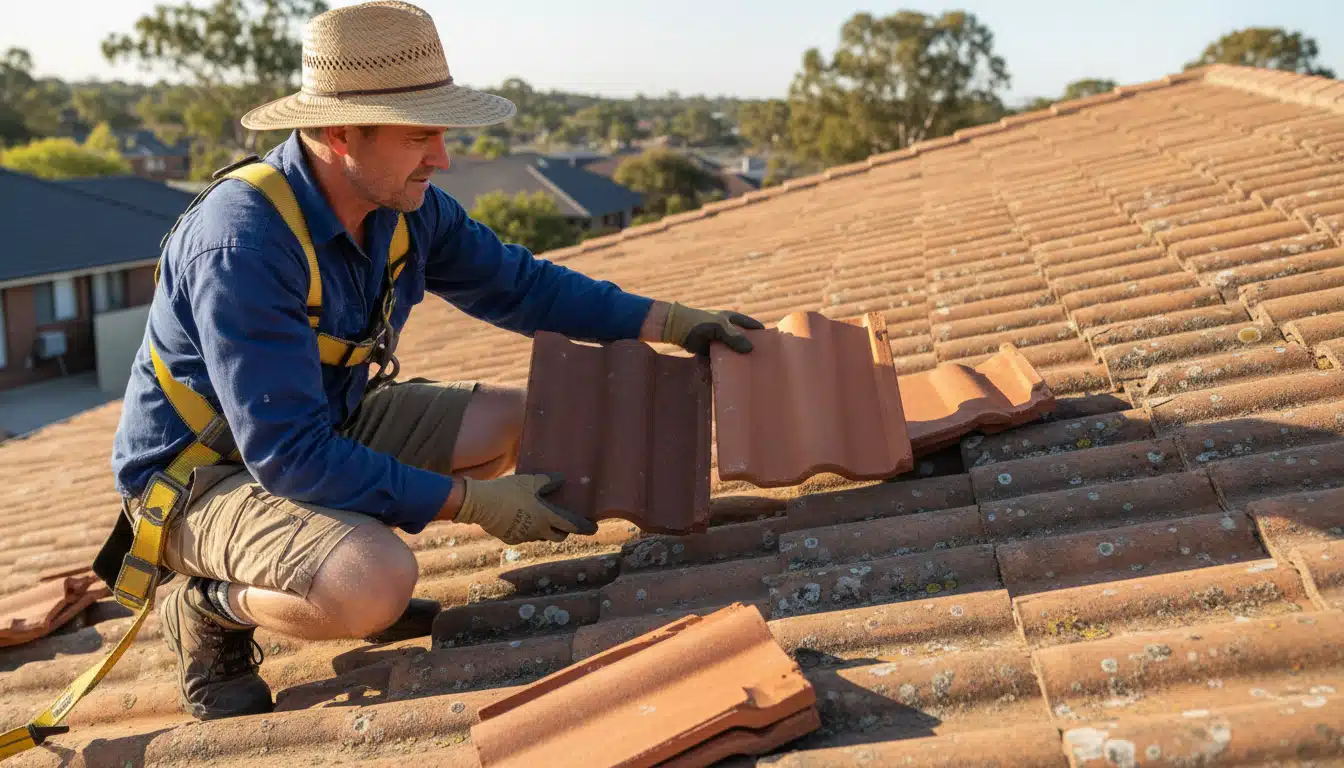
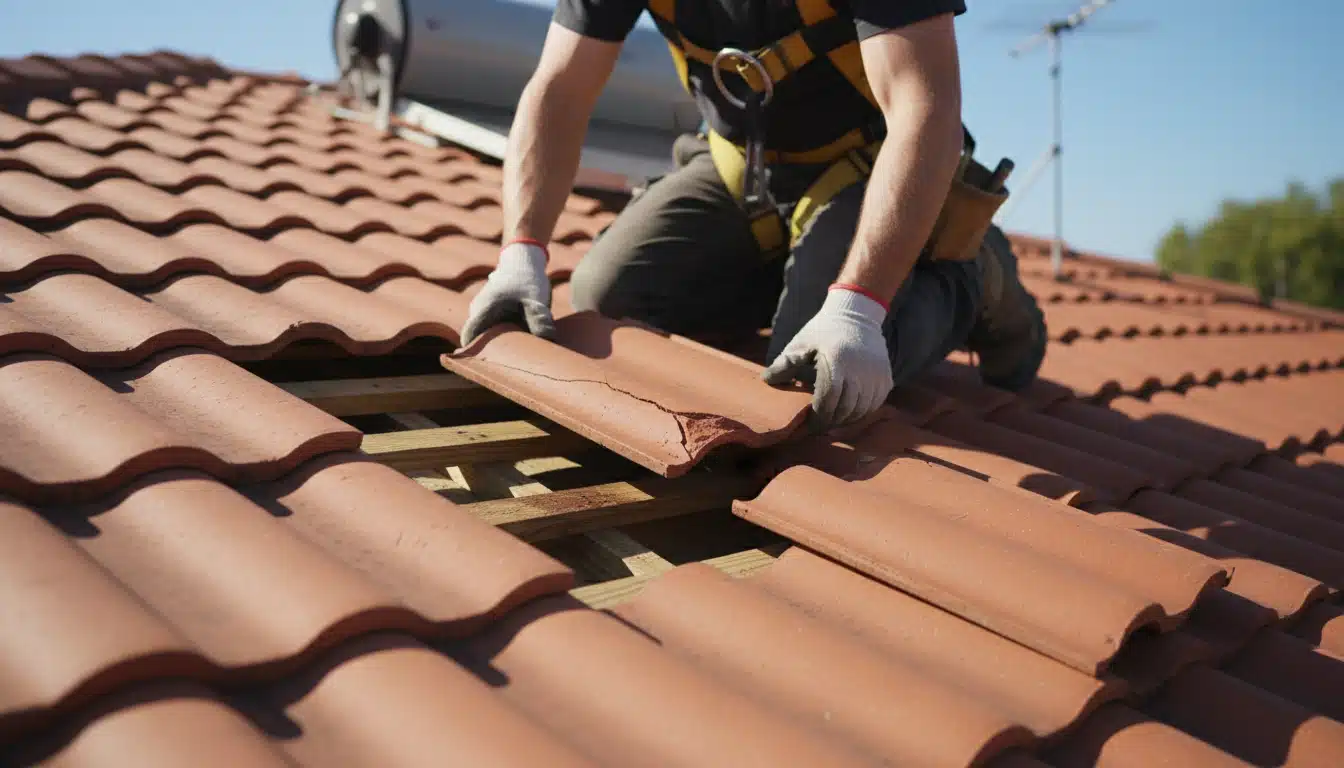
Terracotta tile roofs require gentle cleaning to avoid surface damage and precise coating application to achieve uniform appearance. Spray team fresh assessments often catch tiles preparation crews marked as acceptable but that show subtle cracking requiring replacement. Understanding when tiles need professional roof repairs versus complete replacement proves critical for long-term roof integrity.
Cement and concrete tile roofs need aggressive cleaning to remove chalky oxidation and heavier primer application to seal porous surfaces. Spray specialists understand how these substrates accept coatings differently than terracotta and adjust technique accordingly.
Colorbond and metal roofs demand complete removal of rust and coating systems specifically formulated for metal substrate expansion. Preparation-to-coating transition verification ensures rust treatment fully neutralised corrosion before coatings lock surfaces.
What Property Owners Notice During the Process
Two-team systems create distinct project rhythms.
Extended timelines add 3-5 days compared to integrated crews. Preparation completes, roofs sit for minimum periods, then coating teams arrive for inspection and application.
Multiple site visits from different teams require coordination for property access. This manages through detailed scheduling communication.
Visible inspection phases when coating teams arrive show specialists examining areas closely, taking photographs, and discussing specific roof sections.
Occasional preparation rework if spray teams identify issues extends timelines but demonstrates systems working as designed.
Process transparency builds confidence. Rather than hoping single crews performed both preparation and coating correctly, property owners see independent verification occurring at most critical quality control points.
The Long-Term Performance Difference
Two-team approaches prioritise coating longevity over project speed. These systems deliver measurable performance advantages appearing years after completion.
Coating adhesion remains strong beyond 15-year warranty periods, with many roofs showing excellent condition at 18-20 years. This extended performance stems directly from verified surface preparation.
Colour retention maintains vibrancy longer when coating application occurs under verified optimal conditions. Fading typically beginning at 10-12 years often doesn’t appear until 14-16 years on roofs restored using two-team approaches.
Edge and detail durability proves superior because spray team specialised focus ensures proper coverage at vulnerable points like ridge caps, valleys, and flashing interfaces where coating failures typically begin.
Conclusion: Independent Verification Delivers Results
Quality control in roof restoration requires independent verification at preparation-to-coating transitions. When same teams handle both phases, completion bias and familiarity prevent objective assessment of surface readiness for long-term coating performance.
Two-team approaches place specialised preparation crews and separate spray coating specialists at each restoration phase, creating natural quality checkpoints catching issues before they become locked under coating systems. This separation adds modest upfront cost while delivering measurably longer coating life, fewer warranty claims, and superior long-term roof protection.
After 50 years and 30,000 restored roofs, performance data confirms what quality control principles predict. Fresh eyes at critical transitions prevent problems that only appear years later when they’re far more expensive to address. Coating failure rates below 2% versus 8-12% industry averages demonstrate effectiveness of independent quality verification.
For property owners choosing between restoration approaches, questions become simple: would you rather save 6% initially or gain three additional years of coating life plus 70% fewer potential problems?
For expert complete roof restoration in Perth backed by 50+ years of experience, call (08) 9249 5955 to book your free inspection.