Roof timbers do not always fail from age or moisture. Sometimes chemistry that Perth homeowners never see coming destroys them. Across Western Australia’s coastal suburbs and industrial corridors, chemical roof deterioration silently compromises integrity. This process begins long before visible damage appears.
The result is a specific and frustrating pattern. Many homes suffer issues where regular maintenance and spot repairs cannot address the problem. This occurs because the timber framework has been chemically altered at a molecular level. Standard maintenance simply cannot reverse this process once it takes hold.
Understanding when chemical timber damage has progressed is essential. It determines whether restoration remains an option or if replacement is required. Making this distinction early helps homeowners avoid wasting money on temporary surface fixes. Ignoring underlying issues often leads to significant structural roof damage over time.
The Molecular Chemistry of Timber Failure
Western Australia’s environmental conditions create a demanding environment for roof timber. Unlike mechanical wear, chemical roof deterioration operates at a cellular level. It breaks down the lignin bonds and cellulose structures that provide load-bearing strength. This breakdown is a primary cause of structural roof damage in older homes.
Lignin acts as the natural glue between wood fibres. When this polymer degrades, the timber loses its compressive strength and rigidity. This chemical transformation is often triggered by salt penetration and UV radiation. Once these bonds break, the wood becomes brittle and lacks structural flexibility.
In coastal areas, salt crystals penetrate deep into the timber grain. These crystals attract moisture from the air, creating a constant cycle of expansion. This cycle stresses the cellular structure until the wood fibres physically separate. This process can reduce timber strength by 40 per cent before visible rot appears.
Geographic Vulnerability Zones in Perth
Chemical roof deterioration follows distinct patterns across the metropolitan area. Not all suburbs carry equal risk. Understanding these zones helps homeowners assess their exposure. It also helps determine the long-term condition of roofing in Perth.
Suburbs including Scarborough, Cottesloe, Fremantle, and Rockingham experience aggressive chemical roof deterioration. Salt concentration remains high enough to penetrate roof spaces through ventilation systems. It also enters through tile gaps throughout the year. These areas often see the first signs of structural sagging in older properties.
Properties within five kilometres of the ocean face constant salt-laden air. Salt crystals penetrate timber grain and attract moisture. This creates hygroscopic cycles that expand and contract wood fibres repeatedly. Over 15 to 20 years, this weakening reduces structural integrity. Permacoat provides specialised assessments across these metropolitan areas to identify invisible damage.
The Oregon Batten Crisis (1960-1985)
Homes built between 1960 and 1985 often feature Oregon battens. While popular at the time, Oregon is highly susceptible to chemical degradation. Unlike native Jarrah, this softwood lacks natural resistance to coastal salt and UV exposure. Modern structural assessments reveal severe strength loss in these specific installations.
In many Perth suburbs, Oregon battens show strength loss of 35 to 50 per cent. This is common even in roofs that appear normal from the street. The wood fibres become powdery and lose their ability to hold nails. This leads to persistent loose tiles that repairs cannot permanently fix.
Environmental factors in industrial corridors like Kwinana accelerate this process. Sulfur compounds and chemical emissions interact with the timber structure. This creates a mildly acidic environment that dissolves protective resins within the wood. This accelerated decay often leads to premature structural roof damage.
Symptoms: Why Standard Repairs Fail
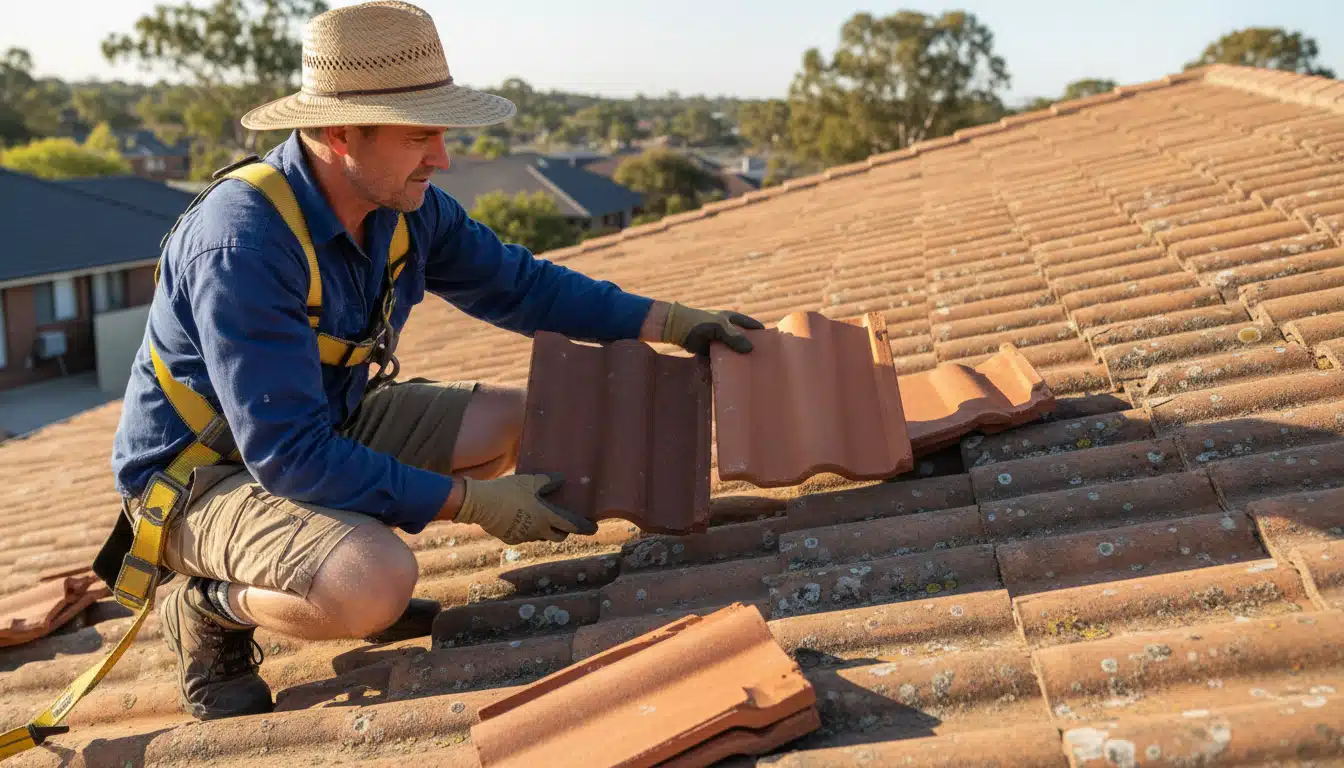
The critical question is whether symptoms stem from repairable damage. If the timber substrate is compromised, simple roof maintenance and repairs provide only temporary fixes. Professionals performing roof painting in Perth encounter this pattern regularly in coastal areas. When roof tiles repeatedly work loose, the issue often lies with degraded battens.
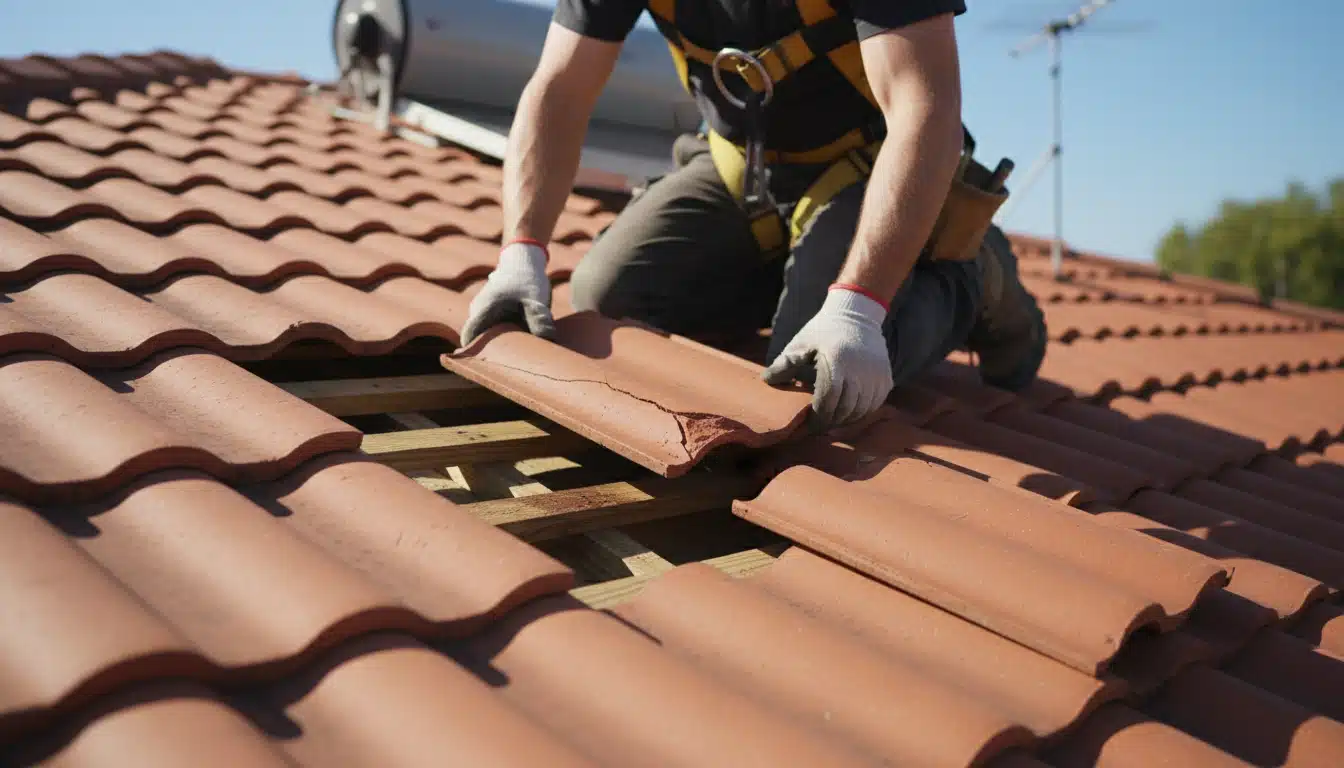
The timber has not rotted visibly, but molecular breakdown means screws cannot hold. A tile that has been reset multiple times is rarely a tile problem. It is usually a batten problem. Chemical timber damage creates uneven support surfaces as battens degrade at different rates. This movement eventually causes visible structural sagging along the ridge line.
Tiles develop stress points that produce crack patterns. These do not correlate with impact damage or foot traffic. Professional roof coatings are also affected by this movement. When battens degrade, they allow increased roof flexing. This flexing breaks coating adhesion, causing peeling within a few years.
Limitations of Standard Roof Maintenance and Repairs
Standard roof maintenance programs assume that structural timber members are sound. These approaches address surface conditions and weatherproofing effectively. However, they cannot reverse chemical timber damage that is already present. Homeowners must understand the limits of conventional interventions.
High-pressure roof cleaning effectively removes moss and lichen. However, when battens have experienced chemical degradation, water can penetrate compromised timber. This potentially accelerates the internal cellular breakdown. Cleaning should only be performed after a thorough structural assessment.
Re-bedding and re-pointing secure ridge caps and tiles effectively. But when chemical roof deterioration has weakened battens, mortar cannot compensate. The work provides temporary improvement without addressing the underlying structural deficiency. Issues typically recur in the same locations within a few years.
Professional Diagnostic Methodology
Determining whether chemical roof deterioration has progressed requires a methodical structural assessment. Specialist knowledge is required to identify the difference between superficial wear and deep-seated structural roof damage. Specialists use moisture meter analysis to identify compromised timber.
Readings consistently above 18 per cent indicate timber that has become hygroscopic. This timber actively attracts and retains moisture rather than shedding it. This environment accelerates the cellular breakdown of the wood fibres. Determining roof repair costs requires an understanding of this underlying timber health.
Penetration testing measures timber hardness and density at multiple locations. Chemically degraded battens show reduced resistance compared to sound timber. Load deflection measurement is also used. Controlled pressure reveals structural sagging that may not be visible to the naked eye.
Species and age correlation also guide the assessment. Oregon battens installed before 1985 show higher degradation rates than jarrah. Understanding these variables ensures homeowners receive correct advice regarding roofing in Perth. Professional work requires a stable and healthy substrate to last.
Financial and Safety Realities of Re-Roofing
Chemical roof deterioration sometimes advances beyond the point of cost-effective restoration. Recognising this threshold prevents investing in repairs that cannot last. When timber strength is lost, complete re roofing in Perth provides the only permanent solution.
Structural load capacity may fall below safe bearing levels. At this point, the roof can no longer safely support the weight of tiles. Visible structural sagging across multiple sections confirms that the frame is failing. Investing in surface repairs on such a structure is a poor use of funds.
If more than half of the battens are compromised, replacement is usually necessary. Complete re-roofing ensures the home meets current Australian Standards. It also prevents future structural roof damage from compromising new finishes. Protecting the roof structure ensures the longevity of all Perth properties.
Preventive Strategies for Perth Homeowners
While chemical deterioration is difficult to stop, it can be slowed. Improving roof space ventilation is a primary preventive measure. Reducing humidity prevents moisture from being trapped against the timber. This slows the enzymatic processes that digest wood cellulose.
Maintaining intact gutter and downpipe services ensures water moves away from the structure. When gutters overflow, water often tracks back along the battens. This localized moisture accelerates chemical breakdown in the eaves. Ensuring clear drainage protects the perimeter of the roof frame.
Selecting the right materials for tile to Colorbond re-roofing also matters. Modern H3-rated treated timber battens resist salt and fungal attack. These materials provide a much longer service life in harsh coastal environments. They are the standard for any new structural roofing work.
Impact of Substrate Movement on Aesthetics
Homeowners often prioritize the visual appeal of their property. Choosing the right roof colours can transform the look of a home. However, even the best coating will look poor on a failing roof. Substrate movement from timber degradation causes visible distortions.
When battens flex, the lines of the roof tiles shift. This creates shadows and uneven gaps that reflect poorly on the property. Addressing these issues requires more than just standard roof maintenance and repairs. It requires ensuring the timber provides a flat and stable surface.
Persistent leaks returning to the same locations indicate structural movement. Flashing and waterproofing may be sound, but degraded battens allow flex to break seals. Subtle structural sagging is often the first visible sign of advanced deterioration. Understanding roof tiles means understanding the frame that holds them.
Professional Assessment: The Critical First Step
Protecting a home from the harsh Western Australian climate requires expertise. Experienced teams assess whether standard repairs are viable or if structural intervention is needed. Understanding the health of the roof ensures homeowners invest their money wisely.
Early detection of timber degradation can save significant costs. When restoration is no longer an option, professional re-roofing provides safety for the home. Permacoat provides comprehensive diagnostic evaluations to help homeowners choose the correct pathway.
For a professional assessment of your roof’s structural integrity, contact the team today. For expert roof restoration in Perth backed by 50+ years of experience, call (08) 9249 5955 to book your free inspection.