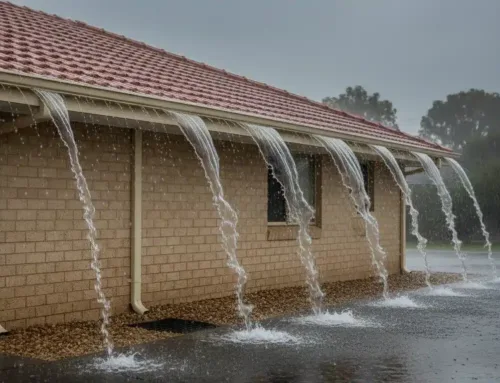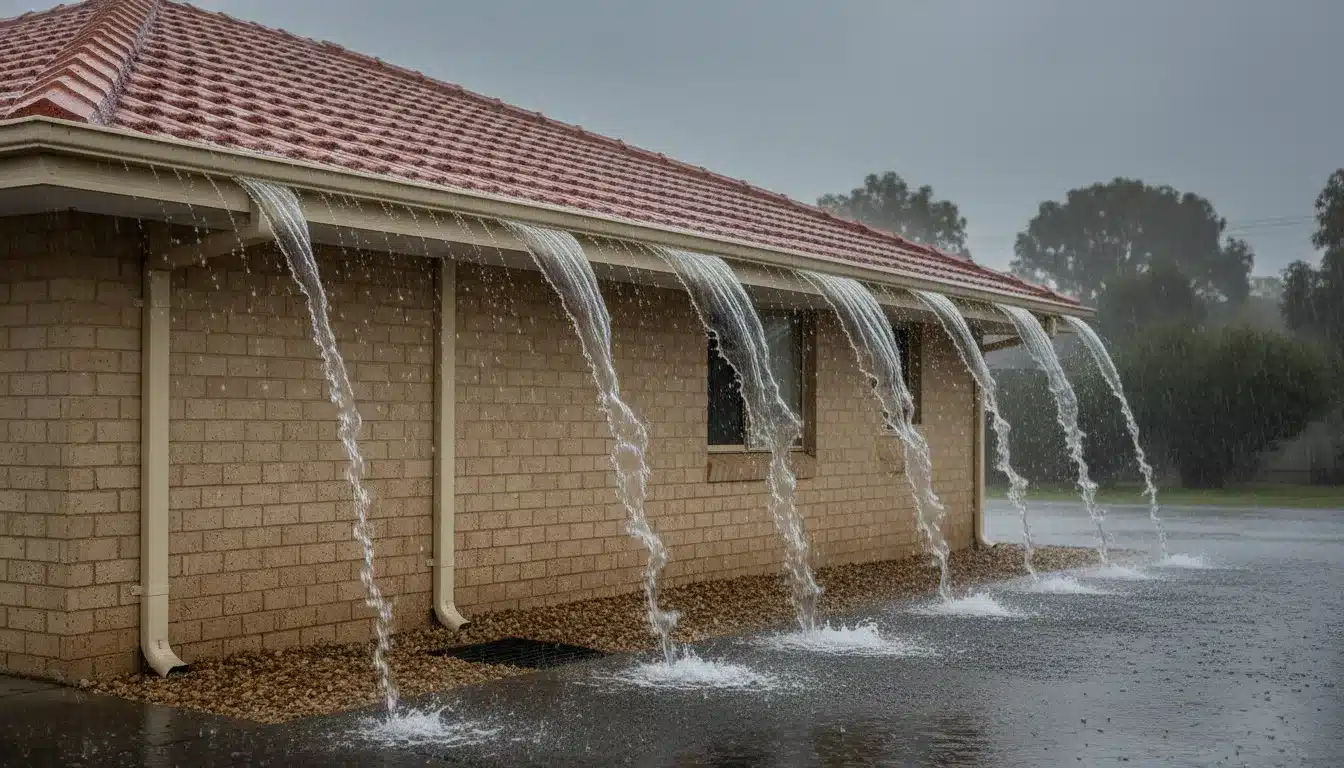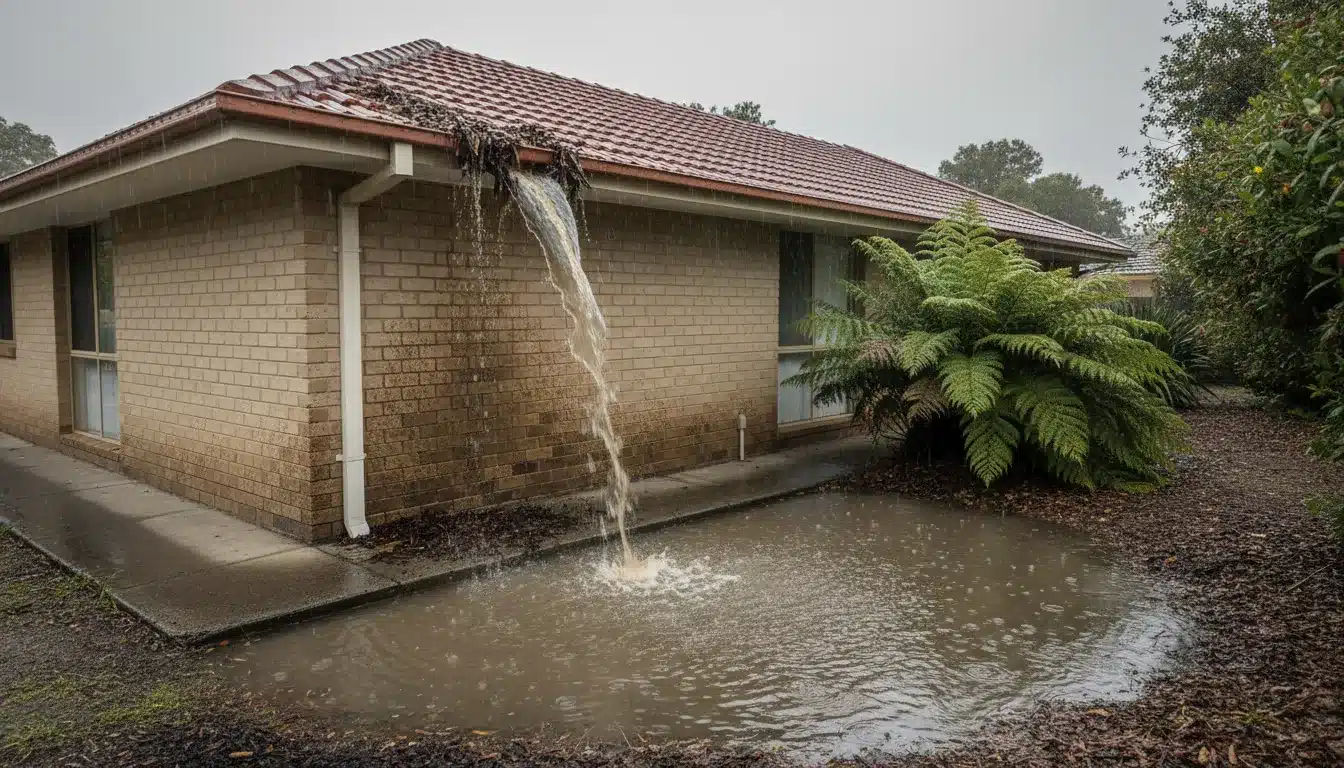
A blocked outlet can force roof water into places that were never meant to stay wet. Walls, eaves, paving edges, garden beds, and footings can all be affected when discharge slows at the wrong point.
Blocked downpipe damage often starts quietly. A gutter may look clear from the ground, while a bend, shoe, or buried outlet holds enough debris to slow flow during hard rain.
Roof drainage blockage should be traced along the full discharge route. The problem may sit at the top opening, within a middle bend, or where water leaves the pipe near the ground.
Where Backflow Usually Starts
Water normally leaves a roof edge in a set order. It drops into the gutter, moves to an outlet, travels down a pipe, then leaves the building area. Backflow happens when one part of that chain cannot keep pace.
Foundation moisture risk rises when the lower end is ignored. A clean upper outlet still creates trouble if water spills beside paving, garden beds, or wall bases.
Upper Outlet Restrictions
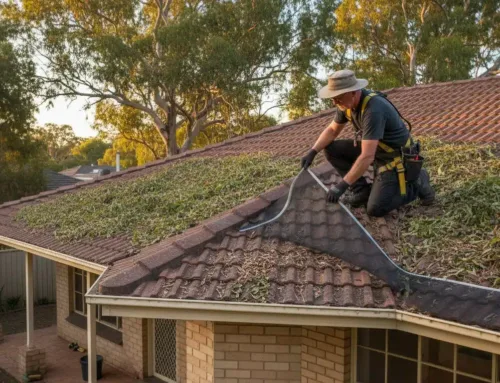
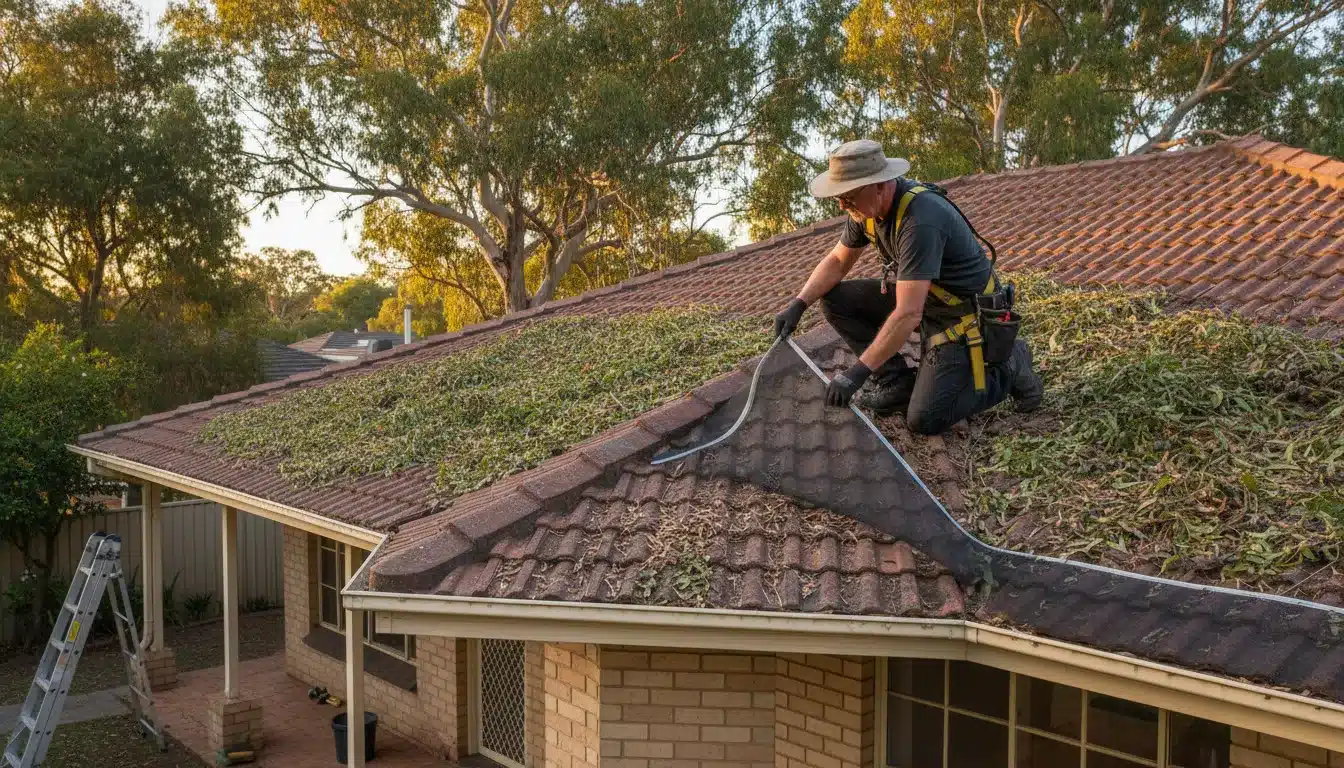
Top openings can clog with leaves, seed pods, tennis balls, mortar pieces, and bird debris. A small restriction can still matter during fast rain.
Early outlet checks should cover:
- Leaf build-up around the entry
- Silt sitting under the opening
- Loose strainers or guards
- Water marks below the gutter end
- Rust or cracks around the outlet
Bends and Offset Sections
Many pipes include offsets around eaves, fascias, or wall details. These bends can catch debris even when the straight section appears clear.
A blocked bend may cause gurgling, vibration, or delayed discharge. It can also make water spill from the gutter before the lower pipe looks full.
Wall and Footing Warning Signs
Water rarely announces the exact source. It may show as a damp strip beside paving, blistered paint near a corner, or soil that stays soft after storms.
Gutter overflow prevention depends on reading those symptoms early. Repeated overflow should not be dismissed as normal winter behaviour.
Marks Near the Wall Base
Dark marks under eaves may indicate that water has tracked behind the gutter. Damp staining near the base may indicate that discharge is landing too close to the building, although staining alone does not establish the source.
Look for these signs after rain:
- Wet lines under fascia boards
- Soil movement near outlets
- Paving that stays damp
- Splash marks on render
- Mulch washed from garden edges
Footing and Paving Clues
Footings are not visible, so surface clues matter. Water that pools beside paving can keep the adjacent ground damp.
This does not prove structural damage. It does show that the discharge route needs attention before repeated wetting becomes normal.
Local Exposure and Maintenance Access
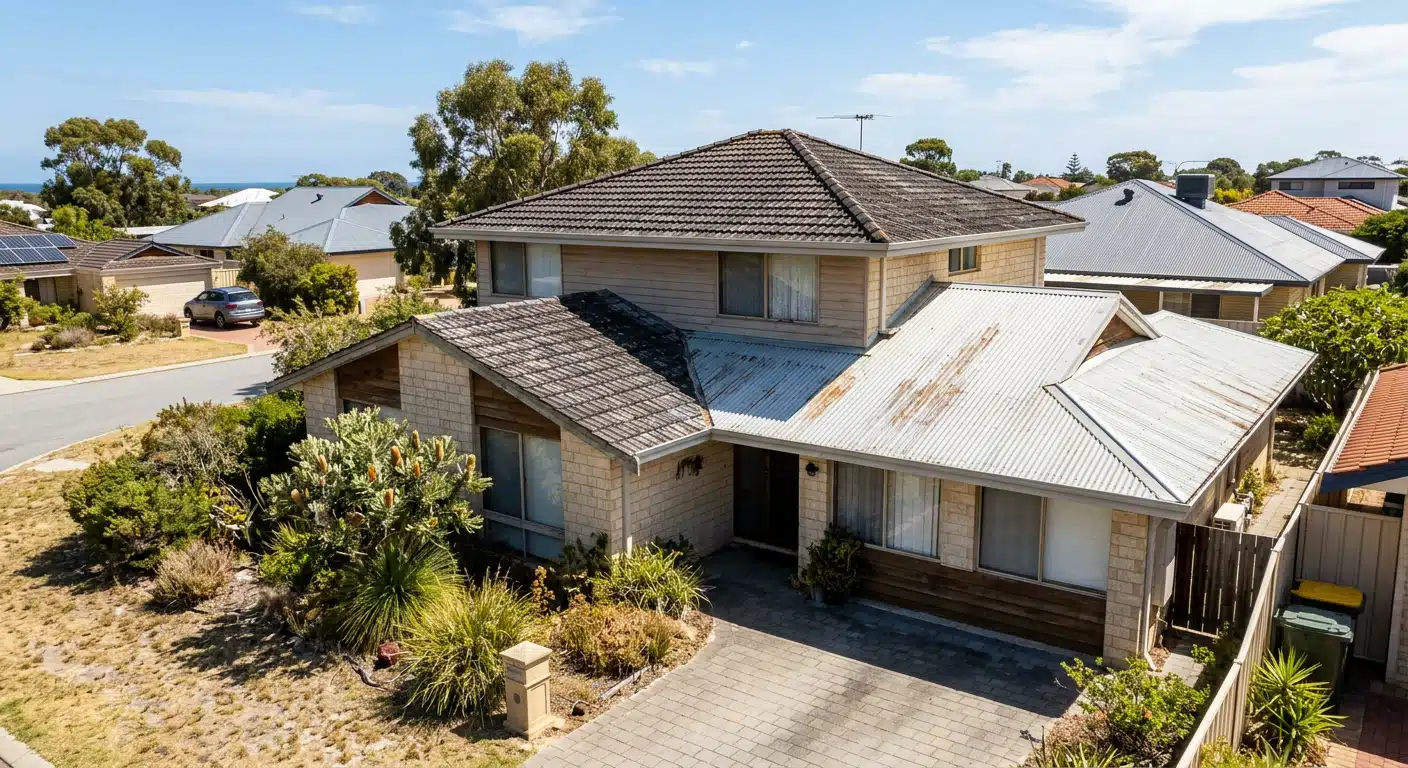
Perth homes vary widely. Some sit under heavy trees, some have paved courtyards, and others have older additions that changed the original drainage pattern.
Perth gutter repairs should account for those site conditions. A neat replacement section may still fail if the cleaning access remains poor.
Debris Sources to Check
Stormwater downpipes can collect more than leaves. Grit, old sealant, roof coating flakes, and broken mortar can all settle in bends.
Useful checks include:
- Tree cover above each roof edge
- Valley outlets feeding the same run
- Pipe brackets and wall clearance
- Lower discharge onto hard surfaces
- Soak wells or drains receiving the flow
Later Building Changes
A patio, room addition, or altered valley can send extra water to an older pipe. The pipe may have worked for the original roof, then become marginal after the change.
A practical inspection should compare the current roof shape with the drainage route. That view helps separate cleaning from redesign.
Local checks should cover:
- Nearby trees and seasonal debris
- Extra roof areas from additions
- Ground falls beside the home
- Pipes that discharge onto paving
Inspection and Repair Planning Before Storms
A good repair plan looks at gutters, strainers, downpipes, offsets, shoes, soak wells, and surface drains. It should identify the cause of slow flow before parts are replaced. Otherwise, a new section can inherit the same problem.
Our roofing experience spans more than 50 years. As the Western Australian family business behind Permacoat, we have restored more than 30,000 roofs across Perth, north and south of the river. We offer replacement of old or damaged gutters and downpipes, either separately or alongside roof restoration. Ground drainage problems still need their own assessment rather than being assumed to fall within that replacement work.
Tracing Overflow Without Climbing
Stay on firm ground when looking for the path of overflow. Binoculars may help reveal leaf build-up near an outlet or staining behind the gutter. Water emerging from an offset joint rather than the pipe shoe gives a more specific inspection location, but does not prove where the blockage begins.
The distinction between overflow above and pooling below matters. Water spilling at the eaves may point towards an upstream restriction, while water backing up from a ground drain may indicate a downstream problem. Both can wet the same wall, so the damp patch alone cannot distinguish them.
Connections That Can Hide a Restriction
An inspection for blocked downpipe damage should include the outlet, offsets and connection at ground level. Where several roof sections feed the same line, their combined flow can expose a partial restriction that is not obvious in light rain.
A buried connection can conceal the point where discharge slows. If water backs up there, replacing the visible downpipe alone may leave the wall base exposed to repeated wetting. The receiving drain or soakwell needs assessment before a change to the roof-edge system is treated as the solution.
Connection details worth checking include:
- Silt caught where the gutter meets the outlet
- Offsets that collect debris between straight sections
- Misaligned joints or brackets that distort the pipe
- Back-up where the downpipe enters a ground drain
Separating Pipe Damage from Ground Drainage
A cracked downpipe can release water against the wall before it reaches the intended outlet. A sound pipe can instead deliver water into a drain that cannot accept it. These faults may leave similar surface marks, but replacing the pipe addresses only the first.
Clearing debris may restore flow through an intact pipe. Cracked or distorted sections may need replacement, while paving falls or a restricted receiving drain need separate drainage advice. Water must have somewhere suitable to go after leaving the roof, not merely a clear pipe to reach ground level.
Keep the boundary between the two systems clear:
- Gutter outlets receive water from the roof edge
- Downpipes carry that water to the lower connection
- Receiving drains must accept the arriving flow
- Ground falls influence where any escaped water travels
Reducing Water Movement Around the Building Base
The area below the pipe matters as much as the pipe itself. Water that lands on hard paving can bounce against walls or run back under the edge of the home. Soil can also soften when discharge stays close to the same point after each storm.
A damp wall does not automatically identify a downpipe fault. Roof repairs may be needed where damaged flashings or other roof defects admit water above the eaves. Establishing whether moisture enters from above or gathers at ground level avoids treating every damp patch as a drainage blockage.
Practical checks should include:
- Look for damp lines on walls after rain
- Check paving fall away from the building
- Watch for soil movement below outlets
- Confirm bends are not crushed or loose
- Check whether garden beds trap discharge
- Check whether discharge collects against raised garden edging
Older homes can have several small issues at once. A low gutter section can send extra water into one pipe. A partial restriction can then slow that pipe. At ground level, poor fall can keep the area wet long after the rain has stopped.
That chain is why small stains should not be ignored. A mark under a gutter may look cosmetic, but it can show repeated wetting. If the same area stays damp each winter, nearby paint, render, timber, and soil can all be affected.
Raised soil or mulch can conceal the wall base and make the discharge path harder to see. Do not cover vents or weep holes while tidying an eroded garden bed. If changing the ground level or paving fall is proposed, seek suitable drainage advice rather than diverting the problem towards another wall or neighbouring property.
Maintenance access should stay practical after repairs. A neat solution that cannot be checked later can create the same problem again. Clear inspection points help owners spot early warning signs before the next front.
Fresh surface repairs can obscure whether wetting has stopped. Allow the drainage problem to be assessed before repainting stained render or replacing washed-out mulch, particularly where the same wall base has been affected through several storms.
Follow-Up Checks After Repairs
Repair work should not end when the pipe is fitted. The next rain event gives useful evidence. Look at the wall base, paving edges, garden beds, and lower outlet area once the storm has passed.
Dry weather can hide a slow fault. A pipe may look clear when inspected in summer, then struggle once grit and leaves arrive. Compare performance in reasonably similar rainfall: a light shower cannot establish whether the system will cope with the conditions that previously caused overflow.
Useful follow up records include:
- Photos taken during or after rain
- Notes about where water pooled
- Areas that dried slowly
- Any stains that returned after repairs
- Loose brackets or noisy pipe sections
- Soil that washed away near outlets
It is also worth checking nearby rooms. Damp smells, bubbling paint, or marks near skirting boards can show that external wetting has reached further than expected. Those signs need attention before cosmetic repairs begin.
Good follow-up checks whether the work solved the problem rather than moving water to a different weak point. A dry outlet area is not enough if a neighbouring wall or garden bed now receives the overflow.
Deciding Whether Cleaning or Replacement Is Needed
A blocked section does not always need full replacement. Sometimes the issue is a seasonal build-up that can be cleared safely. Our roof cleaning service includes flushing gutters and downpipes to remove leaves, debris and accumulated sediment. That does not resolve a damaged pipe, unsuitable outlet or restricted underground drain.
Roof drainage blockage should be judged by the cause, not only the symptom. If the same bend fills again after cleaning, the route may need redesign. If the gutter holds water after the pipe is clear, the fall may need attention.
Perth gutter repairs should also consider age and material condition. Brittle plastic, rusted metal, loose brackets, and distorted shoes can all reduce performance. Our gutter replacement service covers old or damaged gutters and downpipes. Replacing a failed section may be sensible when cleaning cannot restore its condition.
A comparison should include:
- How often the fault returns
- Whether the pipe is damaged
- Whether access is safe
- How water leaves the lower end
- Whether nearby surfaces stay wet
- Whether other outlets share the load
Repair costs should be compared against the work included, not just the part being replaced. Where roof defects accompany the blockage, check whether the quote covers those roof repairs as well as gutter or downpipe replacement. Ground drainage work should be identified separately rather than assumed to be included.
A lower-priced quote may cover only one damaged section, while another includes adjoining deteriorated guttering. Compare the stated extent of replacement and any associated roof work before deciding which scope addresses the observed problem.
Why the Lower Outlet Cannot Be Ignored
The lowest point often decides whether the repair works. A clear pipe can still cause trouble if it dumps water onto flat paving. It can also cause trouble in a garden bed that drains back toward the wall.
An outlet connected to a drain needs a different assessment from one discharging visibly above ground. The connection can hide back-up, while an open outlet makes splashback and surface flow easier to see. Observe only from a safe position, not during hazardous weather.
Important lower outlet checks include:
- Whether water moves away from walls
- Whether paving sends water back
- Whether soil is soft after showers
- Whether a drain accepts the flow
- Whether splashback reaches vents or render
- Whether the outlet can be cleaned later
A short extension is not automatically a suitable fix. It may move the wet patch without providing an appropriate discharge destination. Any change should account for the receiving drain and surrounding ground falls, not simply put the pipe end further from the wall.
The repair should leave the area easier to monitor. If the lower end remains hidden or awkward, future problems may not be found until staining returns.
If the receiving drain remains restricted after the visible pipe is cleared, that unresolved issue should be stated plainly at handover. A completed downpipe replacement does not establish that the underground route can accept the flow.
Conclusion
Keeping water away from walls and footings means addressing both the blockage and where the discharge goes. If old or damaged gutters or downpipes need replacing, contact us to discuss that work and whether associated roof repairs should be included. Ground drainage concerns need separate assessment.