Asbestos-containing materials still cover thousands of Perth homes, particularly those built before 1990. While these roofs may appear stable, they pose serious health risks when disturbed, damaged, or deteriorating. Understanding the removal process, legal requirements, and safety protocols protects both property owners and the community from asbestos exposure.
Understanding Asbestos in Perth Roofing
Asbestos cement roofing products were installed across Western Australia from the 1940s through to the late 1980s. Manufacturers marketed these materials as durable, fire-resistant, and cost-effective, qualities that made them standard in residential and commercial construction.
Perth’s housing stock includes three main types of asbestos roofing:
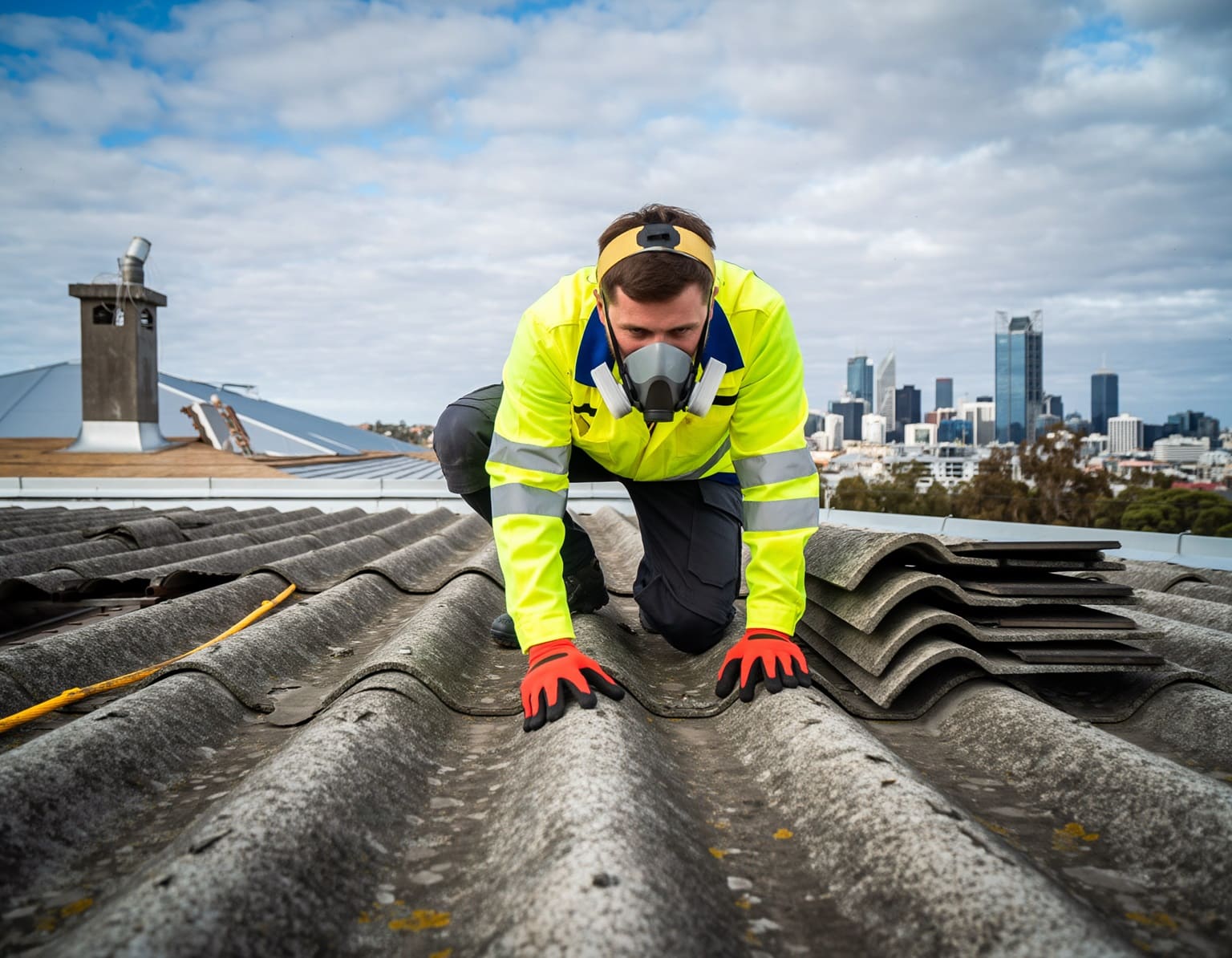
- Super Six corrugated sheeting – the most common type, featuring distinctive corrugated profiles that were easy to install and widely available.
- Flat asbestos cement sheets – typically used on carports, patios, and outbuildings rather than main roof structures.
- Asbestos roof tiles – less common but still present in some older properties, particularly in established suburbs.
Properties in suburbs like Mount Lawley, Subiaco, Victoria Park, and Fremantle frequently contain asbestos roofing due to their development periods. Coastal properties face additional risks, as salt exposure accelerates deterioration and increases the likelihood of fibre release.
The material becomes dangerous when fibres become airborne through weathering, damage, or improper handling. Perth’s climate, with intense UV exposure, temperature fluctuations, and occasional storms, gradually breaks down asbestos cement, making older roofs increasingly hazardous.
Legal Requirements for Asbestos Removal in Western Australia
Western Australia enforces strict regulations governing asbestos roof removal Perth through the Work Health and Safety Act 2020 and the Code of Practice for the Management and Control of Asbestos in Workplaces. These WorkSafe WA regulations ensure proper handling of hazardous materials throughout the removal process.
Licensed asbestos removalists must handle all asbestos removal work in WA. The Department of Mines, Industry Regulation and Safety (DMIRS) issues two types of asbestos removal licences:
- Class A licences permit removal of any quantity or type of asbestos, including friable asbestos that crumbles easily when dry.
- Class B licences (formerly unrestricted) allow removal of non-friable asbestos materials exceeding 10 square metres, which covers most residential roof removal projects.
Property owners cannot legally remove asbestos roofing themselves, regardless of the roof’s size or condition. The $10,000 fine for unlicensed asbestos work reflects the serious health consequences of improper removal.
Notification requirements mandate that licensed asbestos removalists must notify WorkSafe WA at least five days before commencing removal work. This notification includes project details, removal methods, disposal arrangements, and completion timelines.
Disposal regulations require all asbestos waste to be transported to approved asbestos disposal facilities. In Perth, this means facilities like Tamala Park or Red Hill that accept asbestos-containing materials. Waste must be double-wrapped in 200-micron plastic, clearly labelled, and transported in enclosed vehicles.
The Professional Asbestos Roof Removal Process
Licensed asbestos removalists follow strict protocols that protect workers, residents, and neighbours from exposure.
Site Preparation and Containment
Before any removal begins, professionals establish a controlled work area. This involves:
- Installing physical barriers and warning signage around the property perimeter to prevent unauthorised access. The exclusion zone typically extends at least five metres from the work area.
- Sealing windows, doors, and ventilation openings with heavy-duty plastic sheeting to prevent fibre migration into living spaces.
- Setting up decontamination facilities where workers can remove protective equipment and shower before leaving the site.
- Wetting down the entire roof surface with water mixed with a wetting agent. This critical step prevents fibres from becoming airborne during removal, as asbestos cement must remain wet throughout the entire removal process.
Removal Methodology
Licensed teams remove asbestos roofing using methods specifically designed to minimise fibre release:
Workers wear full protective equipment including disposable coveralls, P2 respirators (or P3 for higher-risk work), safety boots, and gloves. This equipment is disposed of as contaminated waste after the job.
Sheets are removed whole wherever possible, using hand tools rather than power tools that generate dust. Each sheet is carefully unscrewed or unbolted, continuously wetted, and immediately double-wrapped in plastic.
The team works systematically from one section to another, ensuring removed materials are secured before moving to the next area. This methodical approach prevents accidental damage that could release fibres.
Air monitoring equipment may be deployed during removal to verify that fibre levels remain below exposure limits. This provides real-time confirmation that containment measures are working effectively.
Waste Management and Disposal
Every piece of asbestos material, along with contaminated disposable equipment, must be properly packaged and disposed:
Materials are double-wrapped in 200-micron plastic sheeting and sealed with duct tape. The outer layer must display the asbestos warning label with the appropriate hazard information.
Wrapped materials are placed in a covered, enclosed vehicle for transport. Open trailers or utes with exposed loads violate regulations.
Transport documentation accompanies the load to the approved disposal facility, creating a permanent record of proper disposal at licensed asbestos disposal facilities.
Clearance Certification
After removal, a clearance inspection verifies the work area is safe:
Licensed assessors conduct visual inspections and may collect air samples to confirm no asbestos fibres remain.
A clearance certificate is issued once the site meets safety standards. This document provides legal proof that the property is now asbestos-free.
Health Risks and Why DIY Removal Is Dangerous
Asbestos fibres measure just 0.1 to 10 micrometres in diameter, far smaller than a human hair and invisible to the naked eye. When inhaled, these fibres lodge permanently in lung tissue, where they cause three serious diseases:
Asbestosis develops from prolonged exposure, causing progressive lung scarring that makes breathing increasingly difficult. No cure exists, and the condition worsens over time.
Mesothelioma is an aggressive cancer affecting the lining of the lungs or abdomen. This disease has no effective treatment and proves fatal in most cases within 12-18 months of diagnosis.
Lung cancer risk increases significantly with asbestos exposure, particularly among smokers. The combination of smoking and asbestos exposure multiplies cancer risk by up to 50 times.
These diseases have latency periods of 20-40 years, meaning exposure today may not cause symptoms until decades later. This delayed onset makes asbestos particularly insidious, as significant damage has already occurred by the time symptoms appear.
DIY removal attempts create dangerous scenarios:
Breaking or cutting asbestos sheets releases millions of fibres into the air. These fibres spread throughout the property and surrounding area, contaminating spaces far beyond the immediate work zone.
Improper disposal creates ongoing hazards. Asbestos dumped in general waste bins or abandoned on properties continues to release fibres as it deteriorates.
Family members, particularly children, face exposure from contaminated clothing, tools, and vehicles. Asbestos fibres cling to materials and can be carried into homes, affecting people who never approached the work site.
Cost Factors for Asbestos Roof Removal
Roof repair costs for asbestos removal reflect the specialised equipment, training, licensing, insurance, and disposal requirements involved.
Perth property owners typically invest $8,000-$20,000 for complete asbestos roof removal Perth, though several factors influence final pricing:
Roof size and complexity – larger roofs require more labour hours and generate more waste, increasing both removal and disposal costs. Complex roof designs with multiple valleys, penetrations, or difficult access points require additional time and care.
Roof pitch and height – steep or high roofs demand additional safety equipment and slow the removal process. Two-storey homes typically cost more than single-storey properties.
Roof condition – deteriorated roofing requires extra care to prevent breakage during removal. Severely damaged roofs may need additional containment measures, increasing labour costs.
Access limitations – properties with narrow side access, overhead powerlines, or limited space for equipment placement present challenges that extend project timelines.
Disposal distance – properties located far from approved disposal facilities incur higher transport costs.
Replacement roofing – most quotes include removal only. New roofing installation represents a separate cost, though bundling services often provides better overall value. Colorbond steel roofing or tiles represent popular replacement options.
While these costs may seem substantial, they reflect the genuine expenses of safe, legal asbestos roof removal Perth. Quotes significantly below market rates should raise concerns about proper licensing, insurance coverage, or disposal practices.
Choosing a Licensed Asbestos Removalist in Perth
Selecting the right contractor protects your health, ensures legal compliance, and provides confidence throughout the removal process.
Verify current licensing through the DMIRS website. Every asbestos removalist must hold a current Class A or Class B licence. Ask for the licence number and confirm it yourself.
Request proof of insurance covering asbestos removal work. Standard public liability policies often exclude asbestos work, so specific coverage is essential. Minimum coverage should reach $10 million for residential projects.
Ask about notification procedures. Legitimate removalists will explain how they notify WorkSafe WA and provide you with copies of notification documentation. Understanding WorkSafe WA regulations helps property owners verify compliance.
Discuss disposal arrangements. Reputable contractors should clearly explain which approved facility will receive the waste and provide disposal receipts after completion.
Obtain detailed written quotes that itemise removal, disposal, site preparation, and clearance certification separately. This transparency helps you understand exactly what you’re paying for.
Check references from recent Perth clients who had similar projects completed. Speaking with previous customers reveals how contractors handle unexpected challenges and customer concerns.
Understand timelines. Most residential asbestos roof removal projects take 1-3 days, depending on size and complexity. Be wary of contractors promising unrealistically fast completion.
Alternative Options: When Removal Is Not Immediately Necessary
Not every asbestos roof requires immediate removal. Well-maintained asbestos cement in good condition poses minimal risk when left undisturbed.
Encapsulation involves applying specialised sealants over asbestos roofing to bind fibres and prevent release. This option costs significantly less than removal ($3,000-$6,000 for typical homes) and extends the roof’s safe service life by 5-10 years.
However, encapsulation serves as a temporary solution. The asbestos remains in place, requiring eventual removal. This approach makes sense when:
- The roof shows minimal deterioration
- Budget constraints prevent immediate removal
- You plan to sell within a few years and want to address buyer concerns
- You’re waiting for more favourable timing for complete roof restoration Perth projects
Regular inspections by licensed asbestos assessors help monitor roof condition and determine when removal becomes necessary. These assessments typically cost $300-$600 and should occur every 2-3 years for older asbestos roofs.
Replacement Roofing Options After Asbestos Removal
Once asbestos roofing is removed, property owners choose from several modern roofing materials that offer superior performance without health risks.
Colorbond steel roofing dominates Perth’s residential market due to its durability in coastal conditions, excellent heat reflection, and minimal maintenance requirements. The material comes with 20-year warranties and suits both traditional and contemporary home designs.
Concrete or terracotta tiles provide excellent insulation properties and traditional aesthetics that suit Perth’s established suburbs. Tile roof restoration techniques ensure these materials deliver decades of reliable service.
Zincalume roofing offers a cost-effective alternative to Colorbond with similar durability characteristics, though with fewer colour options.
The choice depends on your home’s architectural style, budget, and long-term plans. Many Perth homeowners coordinate asbestos removal with complete roof restoration projects that include new roof coatings, improved insulation, and updated gutter and downpipe systems.
Conclusion
Asbestos roof removal in Perth requires strict adherence to safety protocols, legal requirements, and professional standards that protect everyone involved. The health risks of asbestos exposure are too severe to compromise on proper removal procedures, making licensed asbestos removalists essential for any project.
Property owners facing asbestos roof removal should prioritise verified licensing, comprehensive insurance coverage, and transparent disposal practices when selecting contractors. While costs may seem substantial, they reflect the genuine expenses of protecting your family, workers, and community from asbestos exposure.
Permacoat has restored over 30,000 Perth roofs during 50+ years of operation, working alongside licensed asbestos removal specialists to help homeowners transition from hazardous asbestos roofing to modern, safe alternatives. The company’s experience with Perth’s diverse housing stock, from coastal properties to inland suburbs, ensures homeowners receive accurate guidance about their specific situations.
If your Perth property contains asbestos roofing, talk to us on (08) 6205 3353 for a free inspection and detailed information about safe removal options. The assessment includes roof condition evaluation, connection with licensed asbestos removalists, and comprehensive quotes for replacement roofing that transforms your property while eliminating health risks. Taking action now protects your family’s health and positions your property for decades of safe, reliable service.