Western Australia’s commercial property sector operates under stringent workplace safety regulations governing roof access, maintenance activities, and structural requirements. Business owners and property managers face legal obligations to ensure roofing systems meet prescribed safety standards, protecting workers, contractors, and building occupants. Understanding commercial roof safety Perth requirements and implementing compliant systems prevents regulatory penalties whilst demonstrating responsible workplace management that protects human welfare.
Permacoat has navigated evolving workplace roofing compliance requirements throughout 50+ years of commercial roofing service. The company’s comprehensive understanding of WA safety regulations, building codes, and industry standards ensures commercial roofing projects meet all applicable requirements. This compliance expertise protects clients from regulatory issues whilst delivering safe, functional roofing systems supporting business operations.
Understanding WA Workplace Safety Obligations
The Work Health and Safety Act 2020 (WA) establishes a fundamental duty of care requiring persons conducting businesses or undertakings (PCBUs) to eliminate or minimise workplace risks so far as reasonably practicable. For commercial property owners, this obligation extends to roof safety for anyone accessing roofs, including maintenance staff, contractors, or emergency responders. Failure to provide safe roof access systems exposes property owners to prosecution, substantial penalties, and potential liability for injuries.
Safe Work Australia provides model codes of practice that WA adopts, with the Managing the Risk of Falls at Workplaces Code of Practice specifically addressing roof work safety requirements. These codes establish risk assessment methodologies, control hierarchy priorities, and implementation standards that commercial roof safety Perth compliance demands. Property managers must understand these requirements to meet legal obligations whilst protecting workers from fall hazards that represent leading causes of workplace fatalities.
The hierarchy of controls principle requires prioritising elimination and engineering controls over administrative measures and personal protective equipment. For commercial roofing, this means physical barriers preventing falls (guardrails, safety mesh) rank above procedural controls (restricted access, permits), which outrank individual fall arrest equipment. Compliance strategies emphasising higher-order controls deliver superior protection whilst simplifying ongoing management compared to reliance on administrative systems.
Mandatory Fall Protection Systems
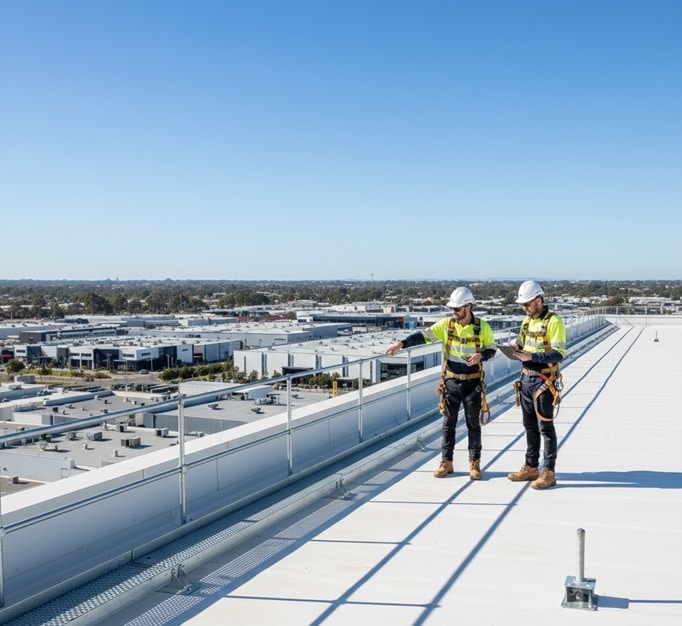
Edge protection, including guardrails, safety screens, or solid barriers, rs represents the preferred fall prevention method for commercial roofs requiring regular access. These physical barriers prevent falls without requiring worker training, vigilance, or personal equipment. Permanent guardrail installations around roof perimeters, equipment platforms, and access paths provide continuous protection for all maintenance activities.
Safety mesh or cable systems create horizontal lifelines allowing workers to be protected in their movement across roof areas whilst preventing falls through roof openings or off edges. These engineered systems are installed during construction or retrofitted to existing roofs, providing certified anchor points for personal fall arrest equipment. The systems prove particularly valuable for large commercial roofs where perimeter guardrails alone cannot provide complete coverage.
Collective fall prevention systems protecting multiple workers simultaneously outperform individual fall arrest harnesses, requiring each worker to properly connect, monitor, and manage personal equipment. Workplace roofing compliance strategies favouring collective systems reduce reliance on individual behaviour whilst simplifying supervision and verification. The investment in permanent collective systems proves cost-effective through reduced ongoing training, equipment, and management requirements.
Roof Access Requirements and Standards
Safe access ladders providing entry to commercial roofs must comply with AS 1657 Fixed platforms, walkways, stairways and ladders. This standard prescribes specific requirements for rung spacing, cage protection, landing platforms, and fall protection provisions. Non-compliant access ladders create liability exposure whilst potentially voiding insurance coverage if incidents occur.
Permanent access walkways protecting roof surfaces whilst providing safe paths to equipment or maintenance points prevent surface damage and worker injury. These engineered walkways distribute loads across structural members whilst creating slip-resistant surfaces safer than walking directly on metal or membrane roofing. The systems prove essential for roofs requiring frequent access for HVAC maintenance, solar panel cleaning, or other routine activities.
Access hatches and roof openings require guardrails or self-closing gates, preventing inadvertent falls through openings during maintenance activities. These engineered solutions provide protection when hatches open,n whilst securing openings when closed. Compliance requires proper installation, ongoing maintenance, and periodic inspection to verify continued functionality.
Structural Capacity and Load Ratings
Roof structural assessment verifies that the decking and framing capacity support imposed loads from maintenance equipment, materials, or worker traffic. Many older commercial roofs lack adequate capacity for modern equipment or multiple workers, creating collapse risks during maintenance activities. Professional structural engineering determines safe load limits and identifies reinforcement requirements before permitting roof access.
Designated load zones marked clearly on roof surfaces indicate areas structurally capable of supporting specific equipment or material loads. These marked zones prevent inadvertent overloading of inadequate roof sections whilst allowing safe material staging in appropriate locations. The marking systems prove essential for large commercial roofs where structural capacity varies across roof areas.
Penetration reinforcement around rooftop equipment mounting points distributes loads to structural members capable of supporting imposed forces. Inadequate reinforcement allows equipment loads to dimple or perforate roof decking, creating water entry points and structural damage. Professional commercial roof safety Perth installations include proper load distribution designed by qualified engineers.
Equipment and Material Handling Safety
Mechanical lifting equipment, including cranes or telehandlers used for roof material delivery, must operate within load capacity limits whilst avoiding contact with roof edges or mounted equipment. Proper lift planning prevents equipment overloading, structural damage, or falls from material handling mishaps. Written lift plans for complex operations demonstrate due diligence whilst coordinating multiple trades safely.
Material storage on roofs requires consideration of load distribution, wind resistance, and fall prevention. Stacked materials must not exceed structural capacity, require securing against wind displacement, and cannot block access paths or create trip hazards. Temporary storage procedures should specify maximum quantities, acceptable locations, and duration limits, preventing long-term loading that might exceed structural capacity.
Tool and equipment tethering prevents dropped objects from harming workers below roof areas. Simple lanyards connecting tools to workers or anchor points eliminate falling object risks that represent significant commercial roof safety concerns in Perth. The inexpensive tethering systems prevent injuries whilst protecting vehicles, equipment, or pedestrians below work areas.
Fragile Roof Materials and Penetration Risks
Translucent roof panels or skylights that cannot support worker weight require physical barriers or safety mesh preventing accidental stepping onto fragile surfaces. These fall-through hazards represent particular risks during low-light conditions or emergency response when visibility limitations might prevent hazard recognition. Permanent marking, barriers, or protective mesh eliminates reliance on worker vigilance in identifying fragile surfaces.
Deteriorated roof areas weakened by corrosion, UV damage, or age-related degradation might fail under worker weight despite appearing sound during visual inspection. Pre-access inspection identifying questionable areas allows reinforcement, replacement, or restricted access, preventing fall-through incidents. Documented inspection programs demonstrate due diligence whilst protecting workers from hidden structural deficiencies.
Roof openings, including mechanical penetrations, service hatches, or equipment access points, require secure covers or guardrails preventing falls through openings. Temporary cover removal during maintenance must include alternative fall protection, ensuring workers remain protected throughout activities. Openings left unprotected create liability exposure and serious injury risks requiring systematic management.
Training and Competency Requirements
Workers accessing commercial roofs require training specific to fall hazards, installed safety systems, emergency procedures, and safe work practices. General construction training proves insufficient for roof work demanding specialised knowledge of edge protection, personal fall arrest equipment, and rescue procedures. Documented training programs demonstrating workplace roofing compliance protect employers whilst ensuring worker competency.
Refresher training at regular intervals maintains worker awareness and updates practices reflecting changed conditions or new safety systems. Annual refresher sessions represent industry best practice, with additional training following incidents, near-misses, or significant system modifications. The ongoing training investment prevents complacency whilst reinforcing safe practices that protect workers.
Contractor management systems verify visiting contractors possess appropriate training, equipment, and insurance before permitting roof access. Pre-qualification processes requesting safety credentials, method statements, and proof of insurance protect property owners from liability associated with inadequately prepared contractors. Systematic contractor verification demonstrates due diligence whilst preventing unqualified operators from creating safety incidents.
Emergency Response and Rescue Procedures
Fall arrest rescue plans address the specific challenge of suspended worker rescue following fall arrest system deployment. Workers caught by personal fall arrest equipment require rapid rescue, preventing suspension trauma that can prove fatal within 15-30 minutes. Site-specific rescue plans must identify available rescue equipment, trained rescue personnel, and emergency contact procedures enabling prompt response.
Emergency access routes allowing rescue personnel rapid roof access without requiring normal access procedures prevent rescue delays during time-critical situations. Dedicated emergency access points marked clearly and kept accessible allow firefighters, paramedics, or rescue teams immediate entry without searching for standard access routes. These provisions prove essential during medical emergencies, fire response, or rescue operations.
Communication systems ensuring roof workers can summon assistance during emergencies represent critical safety infrastructure. Two-way radios, mobile phones, or emergency call points provide communication capability,y summoning help when needed. Isolated roof workers without communication capability face increased risks from injury, illness, or equipment failure, resulting in the inability to prevent normal descent.
Documentation and Compliance Records
Risk assessments documenting identified hazards, implemented controls, and residual risks demonstrate systematic safety management meeting regulatory obligations. These documented assessments should address all roof work scenarios, ios including routine maintenance, emergency repairs, and contractor activities. Regular review andupdate maintains assessment accuracy whilst incorporating experience from actual work activities.
Safe work method statements (SWMS) for roof activities detail specific tasks, associated hazards, and required controls protecting workers during defined activities. Quality SWMS include step-by-step procedures, required equipment, emergency responses, and responsible persons, ensuring consistent safe practices. Commercial roof safety Perth compliance requires SWMS for high-risk roof work, with documentation retained demonstrating proper planning.
Inspection records verifying safety system condition provide evidence of ongoing maintenance and compliance monitoring. Documented inspections of guardrails, safety mesh, access ladders, and fall arrest anchors prove due diligence while identifying deficiencies requiring correction. The systematic inspection programs prevent equipment deterioration from compromising worker protection.
Insurance and Liability Considerations
Public liability insurance carried by commercial property owners should include coverage for roof access incidents affecting workers, contractors, or visitors. Policy terms often specify requirements for safety systems, documented procedures, and compliance with regulations. Failure to maintain required safety standards might void coverage, leaving property owners personally liable for incident costs.
Workers’ compensation implications affect property owners employing maintenance staff undertaking roof work. Premium calculations consider work activities and implemented risk controls, with inadequate safety systems potentially increasing insurance costs. Demonstrated compliance with safety standards and systematic risk management supports favourable insurance terms whilst protecting workers.
Contractor liability verification ensures visiting roofing contractors carry adequate insurance, protecting property owners from claims resulting from contractor incidents. Certificate of currency verification before work commencement confirms coverage validity whilst protecting property owners from exposure to contractor injury claims. The systematic verification represents a fundamental, prudent practice that workplace roofing compliance demands.
Design Standards for New Construction
Building Code of Australia (BCA) requirements influence roof safety provisions for new commercial construction through mandatory access, fall protection, and structural requirements. Professional design incorporating required safety features during construction proves far more cost-effective than retrofit installations attempting to meet standards post-construction. Early safety system integration creates better functionality whilst reducing overall costs.
Australian Standards, including AS 4389 Safe Roof Access Platforms and Walkways, provide detailed technical requirements for engineered safety systems. Compliance with these standards ensures systems meet structural, dimensional, and safety performance criteria. Professional design and installation following prescribed standards protects building owners whilst ensuring system reliability.
Certification and documentation for installed safety systems verify compliance with applicable standards and manufacturer requirements. Engineers’ certificates confirming structural adequacy, installation certificates verifying proper installation, and load rating documentation provide evidence supporting workplace roofing compliance. These records prove essential during safety audits or incident investigations.
Retrofit Safety Solutions for Existing Buildings
Existing commercial buildings lacking adequate roof safety systems require retrofit installations meeting current standards despite original construction preceding modern requirements. Professional assessment identifies specific deficiencies and develops retrofit solutions addressing current compliance obligations. The retrofit investment protects workers whilst reducing liability exposure from inadequate legacy systems.
Staged implementation allows the major retrofit program to proceed progressively as budgets permit, whilst prioritising the highest-risk areas. Initial phases might address frequently accessed equipment areas or identified fall hazards, with subsequent stages completing comprehensive coverage. This practical approach recognises budget constraints whilst systematically improving safety.
Grant programs and tax incentives sometimes support workplace safety improvement,s including roof safety system installations. Property owners should investigate available support to reduce retrofit costs whilst accelerating compliance achievement. Professional advice identifies applicable programs supporting safety investments.
Maintenance and Ongoing Verification
Periodic inspection of safety systems verifies continued functionality and compliance with standards. Guardrails require inspection for corrosion, structural damage, or loose fastenings affecting strength. Safety mesh systems need tension verification and anchor pointexamination,n ensuring reliable performance. Documented inspection programs at 6-12 month intervals demonstrate ongoing compliance whilst identifying deficiencies requiring correction.
Corrective maintenance addressing identified deficiencies prevents safety system deterioration from compromising protection. Prompt repair or replacement of damaged components maintains system reliability whilst demonstrating responsible safety management. Deferred maintenance, allowing safety systems to degrade, represents regulatory non-compliance, creating liability exposure.
System upgrades accommodating changed roof use, new equipment installations, or modified access requirements ensure safety provisions remain appropriate for actual roof activities. Professional roof maintenance includes safety system review,w identifying upgrade requirements, and supporting safe operations.
Industry Best Practices and Innovations
Roof safety technology advances, including rigid rail fall arrest systems, cable-based horizontal lifelines, and modular walkway systems, provide improved protection with simplified installation. These engineered solutions offer superior performance compared to basic perimeter guardrails alone, creating comprehensive fall protection across entire roof areas. Investment in proven systems delivers reliable protection whilst supporting compliance.
Safety culture development, emphasising worker engagement, reporting, and continuous improvement, delivers superior results compared to compliance-only approaches satisfying minimum requirements. Organisations valuing worker input, investigating near-misses, and systematically addressing identified issues prevent incidents whilst building trust and engagement. This cultural approach complements technical safety systems, creating comprehensive protection.
Technology integration, including roof access monitoring, digital inspection systems, and automated compliance tracking, simplifies safety management whilst providing verifiable records. These modern approaches reduce administrative burden whilst improving documentation supporting compliance demonstration. Professional commercial roof safety Perth programs increasingly incorporate technology, enhancing traditional safety management.
Regional Compliance Variations Across WA
Metropolitan Perth commercial properties face different risk profiles and regulatory scrutiny compared to regional WA facilities. Urban areas experience regular inspections and higher enforcement activity, making compliance essential. Regional properties might receive less frequent oversight but remain subject to identical legal obligations requiring equivalent safety standards.
Coastal industrial areas around Fremantle, Kwinana, and Geraldton experience accelerated safety system corrosion,n demanding more frequent inspection and maintenance. Salt exposure attacks guardrails, anchor points, and structural components, requiring vigilant monitoring to prevent corrosion from compromising safety equipment. Enhanced maintenance programs address coastal exposure challenges, maintaining system reliability.
Mining and resources sector facilities operate under additional safety requirements beyond standard commercial obligations. These high-risk industries implement comprehensive safety management systems addressing specific operational hazards. Professional roofing contractors serving the resources sector understand enhanced requirements, delivering compliant solutions supporting an operational safety culture.
Protecting Workers and Business Interests
Commercial roof safety Perth requirements represent fundamental business obligations protecting worker welfare whilst demonstrating responsible management. The regulatory framework establishes minimum standards that prudent organisations exceed through comprehensive safety systems and culture supporting worker protection. Compliance investment prevents regulatory penalties, protects workers, and reduces liability exposure from foreseeable incidents.
Permacoat’s comprehensive understanding of workplace roofing compliance requirements stems from 50+ years of implementing safety solutions across commercial projects. The company’s systematic approach integrates safety considerations throughout design, installation, and maintenance phases. This proven expertise delivers compliant roofing systems protecting workers whilst supporting business operations.
Commercial property owners and managers, including those overseeing multi-unit commercial properties, should prioritise roof safety compliance through professional assessment, quality safety systems, and ongoing verification programs. These investments protect workers, satisfy legal obligations, and demonstrate responsible business management. Professional guidance ensures safety solutions meet applicable standards whilst providing practical functionality supporting maintenance operations.
Schedule a professional compliance evaluation by calling (08) 9249 5955 for a roof safety assessment, identifying compliance requirements and solution options. The company’s safety specialists understand WA regulations and develop practical systems meeting obligations whilst supporting efficient facility management. Free assessment services connect property managers with Perth’s most experienced commercial roofing professionals who prioritise safety throughout all roofing work.