Perth homeowners face some of Australia’s highest cooling costs during summer months, with temperatures regularly exceeding 35°C and heat waves pushing energy bills to uncomfortable levels. While most focus on air conditioning efficiency or window treatments, the roof space above plays a critical role in home temperature management that is often overlooked.
A poorly ventilated roof cavity can reach temperatures of 60-70°C during Perth’s summer peak, turning the entire roof space into a massive radiator that forces heat downward into living areas. This trapped heat does not just make homes uncomfortable. It forces air conditioning systems to work harder and longer, driving up electricity costs by 20-30% compared to properly ventilated homes.
Permacoat has restored over 30,000 Perth roofs across five decades, and proper ventilation consistently emerges as one of the most cost-effective improvements homeowners can make. The difference between a well-ventilated and poorly ventilated roof can mean hundreds of dollars in annual savings on roof ventilation cooling costs, along with extended roof life and improved indoor comfort.
The Science Behind Roof Heat Build-Up
Perth’s intense summer sun does not just heat roof surfaces. It creates a thermal mass effect that accumulates throughout the day. Metal roofs can reach surface temperatures of 80°C, while tile roofs typically hit 65-70°C. This extreme heat radiates into the roof cavity, where it becomes trapped without adequate ventilation.
The trapped air in an unventilated roof space acts as an insulating blanket in reverse. Instead of keeping heat out, it holds heat in and transfers it downward through ceiling insulation into living spaces. Even quality ceiling insulation rated at R4.0 or higher struggles to combat the sustained heat load from a 65°C roof cavity.
This heat transfer forces air conditioning systems to run continuously rather than cycling on and off. The compressor works harder, the system runs longer, and electricity consumption spikes. During Perth’s typical summer pattern of consecutive 35°C+ days, this cumulative effect can double or triple cooling costs compared to homes with effective roof ventilation that achieves proper air conditioning load reduction.
The coastal suburbs face an additional challenge. Salt-laden air combined with heat creates corrosive conditions that accelerate roof deterioration when ventilation is inadequate. Moisture becomes trapped alongside heat, creating an environment that damages roof timbers, accelerates rust on metal components, and reduces the lifespan of roofing materials.
How Proper Ventilation Changes the Equation
Effective roof ventilation creates continuous natural convection airflow that removes hot air before it can transfer into living spaces. The principle is straightforward. Hot air rises and escapes through ridge ventilation exhaust or roof-mounted ventilators, while cooler air is drawn in through eave or soffit vents. This natural convection airflow process can reduce roof cavity temperatures by 15-20°C.
That temperature reduction translates directly to roof ventilation cooling costs savings. When roof cavity temperature drops from 65°C to 45°C, the heat load on ceiling insulation decreases substantially. Air conditioning systems cycle normally instead of running continuously, compressors experience less strain, and electricity consumption returns to manageable levels through effective air conditioning load reduction.
The impact varies by roof type and home design, but Perth homeowners typically see roof ventilation cooling costs reductions of 15-25% after proper ventilation installation. For a home spending $400 monthly on summer cooling, that means $60-100 in monthly savings, or $180-300 across a typical three-month peak summer period.
Beyond immediate cost savings, roof ventilation extends the life of roofing materials and reduces maintenance requirements. Cooler roof cavities mean less thermal stress on tiles, reduced expansion and contraction of metal roofing, and lower risk of premature coating failure. The investment in proper ventilation typically pays for itself within 3-5 years through combined cooling savings and reduced maintenance costs.
Ventilation Solutions for Different Roof Types
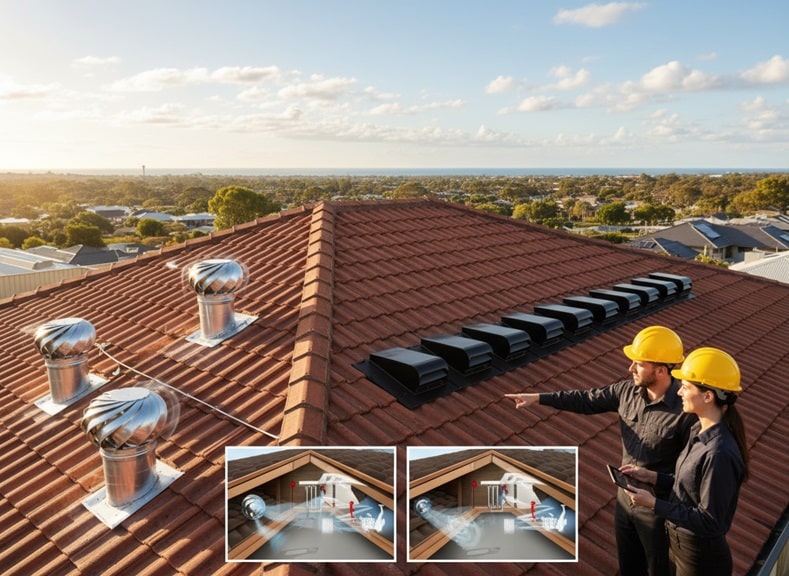
Tile roofs offer natural ventilation advantages through gaps between tiles, but this passive airflow often is not sufficient for Perth’s extreme summer conditions. Ridge ventilation exhaust systems installed along roof peaks create dedicated exhaust points that dramatically improve natural convection airflow. Combined with adequate soffit venting, these ridge ventilation exhaust systems transform tile roofs from moderately ventilated to highly efficient.
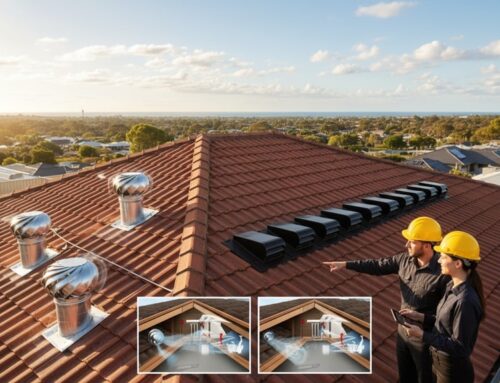
Metal roofs present different challenges and opportunities. Colorbond and steel roofing materials conduct heat rapidly, making active ventilation even more critical. Whirlybird ventilators provide wind-powered extraction that works well in Perth’s summer sea breeze conditions. Solar-powered exhaust fan units offer even greater extraction capacity for larger roof spaces or particularly hot western-facing roofs.
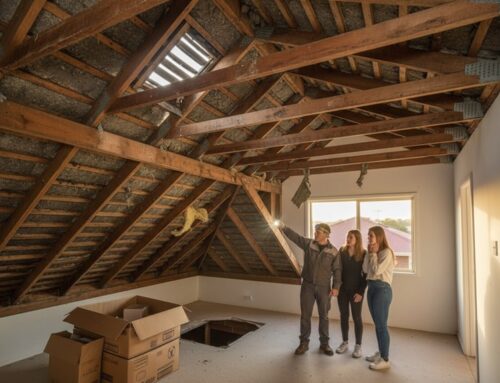
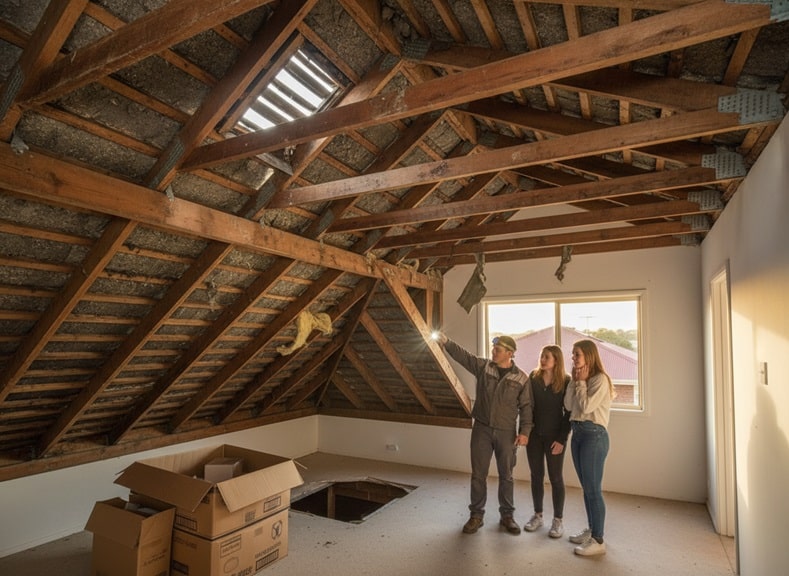
The specific solution depends on roof design, cavity size, and existing ventilation infrastructure. Homes with cathedral ceilings or limited roof cavity space require different approaches than traditional designs with substantial roof voids. Professional assessment identifies the optimal balance between intake and exhaust ventilation for each property’s unique characteristics.
Permacoat’s restoration process includes ventilation evaluation as standard practice. During the initial inspection, roof cavities are assessed for adequate natural convection airflow, and recommendations are made for improvements that complement the roof restoration Perth work. This integrated approach ensures ventilation, coating, and structural repairs work together to maximise roof performance and longevity.
The Insulation and Ventilation Partnership
Many homeowners mistakenly believe ceiling insulation alone solves heat transfer problems. While quality insulation is essential, it works most effectively when paired with proper roof ventilation. Insulation slows heat transfer, but it does not eliminate it. Heat still accumulates in roof cavities and gradually penetrates through insulation over time.
The combination of ventilation and insulation creates a two-stage defence. Ventilation removes heat before it can build up, achieving air conditioning load reduction, while insulation blocks the remaining heat from reaching living spaces. This partnership is particularly important in Perth’s climate, where sustained high temperatures mean heat has hours to penetrate through insulation barriers.
Homes with R4.0+ ceiling insulation but poor ventilation still experience uncomfortable indoor temperatures and high roof ventilation cooling costs. The insulation slows heat transfer but cannot prevent it when roof cavity temperatures remain at 65°C for 8-10 hours daily. Adding proper ventilation to these well-insulated homes often produces dramatic improvements in comfort and cooling efficiency.
The reverse scenario, good ventilation but inadequate insulation, also falls short. Heat that does enter the roof cavity transfers too easily into living spaces. The optimal approach combines R4.0 or higher ceiling insulation with ventilation systems that maintain roof cavity temperatures within 10-15°C of outdoor ambient temperature.
Cost-Benefit Analysis for Perth Homeowners
Initial ventilation installation costs vary based on roof type, size, and chosen system. Whirlybird ventilators typically cost $300-600 per unit installed, with most homes requiring 2-4 units for adequate coverage. Ridge ventilation exhaust systems range from $1,500-3,500 depending on roof length and complexity. Solar-powered exhaust fan units cost $800-1,500 per unit installed.
These upfront costs must be weighed against ongoing savings on roof ventilation cooling costs. A typical Perth home spending $1,200-1,600 on summer cooling can expect annual savings of $200-400 with proper ventilation. The payback period ranges from 3-7 years depending on the system chosen and home-specific factors.
Beyond direct cooling savings, ventilation provides additional value through extended roof life. Reduced thermal stress means roof coatings last longer, tiles crack less frequently, and metal roofing experiences less expansion-contraction fatigue. These maintenance cost reductions add another $100-300 in annual value for most properties.
Property value considerations also factor into the equation. Homes with documented energy efficiency improvements, including proper roof ventilation, command premium prices in Perth’s competitive real estate market. While difficult to quantify precisely, real estate professionals consistently report that energy-efficient features influence buyer decisions and support higher sale prices.
Seasonal Considerations Beyond Summer Cooling
While summer cooling dominates the ventilation discussion, Perth’s mild winters also benefit from proper roof ventilation that maintains natural convection airflow. Moisture management becomes the priority during cooler months, as condensation can form in roof cavities when warm indoor air meets cold roof surfaces.
Trapped moisture accelerates timber decay, promotes mould growth, and degrades insulation effectiveness. Continuous ventilation removes moisture-laden air before condensation occurs, protecting roof structure and maintaining insulation performance. This year-round protection extends roof life and prevents costly moisture-related damage.
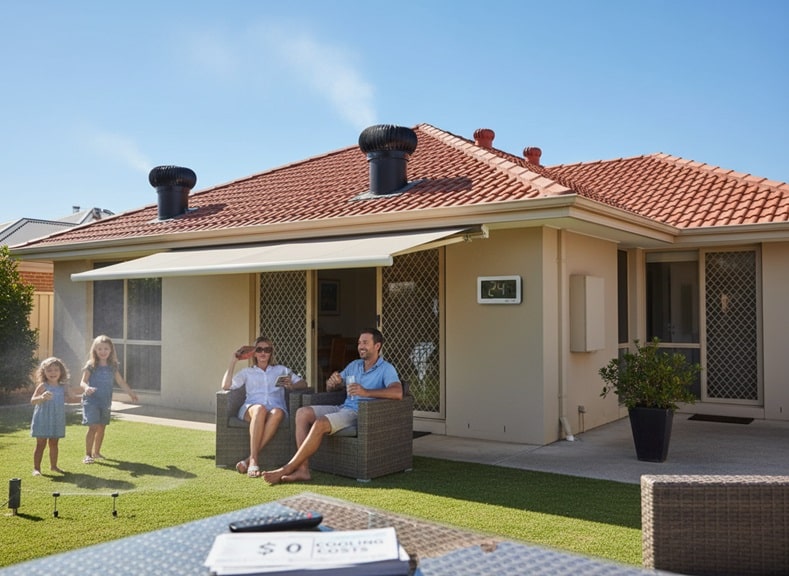
The transitional seasons of spring and autumn present opportunities to reduce air conditioning use entirely. Well-ventilated roofs allow homes to remain comfortable with natural ventilation and ceiling fans, eliminating cooling costs during Perth’s pleasant shoulder seasons. This extends the cost-saving benefit beyond the three-month summer peak to potentially five or six months annually.
Coastal properties from Fremantle to Quinns Rocks face additional moisture challenges from salt-laden air. Proper ventilation prevents salt accumulation in roof cavities that would otherwise accelerate corrosion of metal components and fasteners. This protective effect is particularly valuable for homes within 5km of the coast, where salt exposure significantly impacts roof longevity.
Integration with Roof Restoration Projects
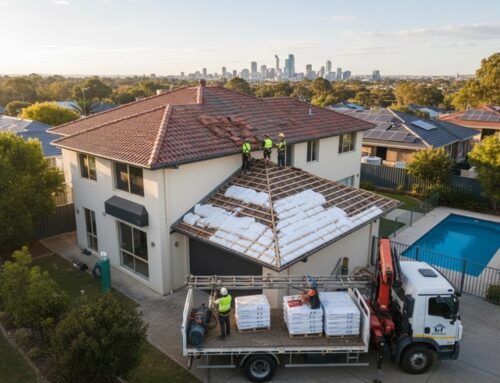
Roof restoration presents an ideal opportunity to address ventilation deficiencies. The restoration process involves comprehensive roof access, making ventilation installation more cost-effective than standalone projects. Scaffolding and safety equipment are already in place, labour is on-site, and the roof surface is prepared for modifications.
When roof repairs Perth work identifies ventilation issues, addressing them during restoration prevents future problems and maximises the return on restoration investment. A beautifully restored and coated roof performs significantly better when supported by proper ventilation that protects the coating and underlying structure.
The restoration timeline accommodates ventilation work without extending project duration. Ventilation installation typically occurs during the preparation phase, before cleaning and coating. This sequencing ensures ventilation components are properly integrated and sealed, preventing potential leak points while maintaining aesthetic consistency.
Colour coordination between ventilation components and roof coating ensures visual harmony. Whirlybirds, ridge vents, and solar-powered exhaust fan units are available in Colorbond colours that match the Dulux Acratex colours used for roof coating. This attention to detail maintains curb appeal while delivering functional benefits.
Professional Assessment and Installation
DIY ventilation installation tempts some homeowners, but professional assessment and installation deliver superior results. Calculating required ventilation capacity involves roof cavity volume, local climate data, and specific roof characteristics. Undersized ventilation systems fail to deliver expected air conditioning load reduction benefits, while oversized systems waste money without proportional improvements.
Professional installers ensure proper placement that maximises natural convection airflow without creating leak risks. Ridge ventilation exhaust must be positioned to prevent weather penetration, whirlybirds require specific mounting techniques for different roof materials, and soffit vents need strategic placement to draw air from the coolest sources. These details significantly impact system performance.
Warranty protection represents another professional installation advantage. Quality ventilation products carry manufacturer warranties of 10-15 years, but these warranties typically require professional installation. DIY installation voids warranties and creates liability issues if installation errors cause roof damage or leaks.
The free roof inspection that Permacoat provides includes ventilation assessment as standard practice. This no-obligation evaluation identifies specific ventilation needs, recommends appropriate solutions, and provides accurate cost estimates. Homeowners receive expert guidance without pressure, allowing informed decisions about ventilation improvements.
Measuring Results and Ongoing Maintenance
Quantifying ventilation benefits requires comparing pre and post-installation electricity bills during similar weather periods. Perth homeowners should compare summer electricity costs from consecutive years, accounting for rate changes and usage pattern differences. Most see measurable reductions in roof ventilation cooling costs within the first summer after proper ventilation installation.
Indoor temperature monitoring provides additional performance data. Ceiling cavity temperatures can be measured with simple thermometers, comparing readings between ventilated and unventilated areas. Temperature reductions of 10-15°C confirm effective ventilation performance and correlate with cooling cost savings.
Ventilation systems require minimal maintenance but benefit from annual inspection. Whirlybird bearings should spin freely, ridge vents should remain clear of debris, and soffit vents need occasional cleaning to maintain natural convection airflow. These simple checks take minutes and ensure continued performance throughout the system’s 15-20 year lifespan.
Professional roof maintenance programs include ventilation inspection as part of comprehensive roof care. Annual or biennial inspections identify potential issues before they impact performance, clean ventilation components, and verify that airflow remains optimal. This proactive approach protects the investment in both ventilation systems and roof restoration work.
Conclusion
Roof ventilation represents one of the most cost-effective improvements Perth homeowners can make to reduce summer roof ventilation cooling costs. By preventing heat build-up in roof cavities through natural convection airflow, proper ventilation systems decrease air conditioning load reduction by 15-25%, translating to hundreds of dollars in annual savings while extending roof life and improving indoor comfort.
The investment in quality ventilation pays for itself within 3-7 years through direct cooling savings, with additional value from reduced maintenance costs and extended roof material lifespan. When integrated with roof restoration projects, ventilation installation becomes even more cost-effective and ensures the restored roof performs optimally for decades.
With over 50 years of experience restoring Perth roofs and 30,000 completed projects, Permacoat understands how ventilation, coating, and structural integrity work together to protect homes from Perth’s demanding climate. The company’s comprehensive approach addresses ventilation as part of complete roof care, not as an afterthought.
Perth homeowners concerned about rising cooling costs or uncomfortable summer temperatures should consider a professional roof and ventilation assessment. Contact us on (08) 9249 5955 for a free inspection that identifies specific opportunities to improve roof performance, reduce energy costs, and enhance home comfort without obligation or pressure. The combination of proper ventilation, quality restoration, and proven Dulux Acratex coating systems delivers measurable results that protect both homes and budgets for years to come.