Western Australian homeowners face constant challenges protecting their properties from water damage caused by roof leaks. Traditional inspection methods often fail to detect problems until significant damage has occurred, leaving property owners facing expensive repairs and potential structural issues. The limitations of conventional leak detection create a critical gap in property maintenance strategies.
Thermal imaging technology has transformed how professionals identify moisture problems in residential properties. These advanced diagnostic methods reveal hidden water infiltration that visual inspections cannot detect, allowing for early intervention before minor issues escalate into major repair projects. Perth’s established roofing specialists have adopted this technology to deliver superior diagnostic accuracy for concerned homeowners.
The Critical Problem with Traditional Leak Detection
Conventional roof inspection methods rely primarily on visible evidence of water damage. Inspectors examine ceilings for staining, check roof spaces for active drips, and look for obvious exterior damage like broken tiles or deteriorated flashing. While these approaches identify clear problems, they miss the crucial early stages when leaks first develop.
By the time water staining appears on ceilings, substantial damage has typically occurred within roof cavities. Insulation becomes saturated, timber framing absorbs moisture and begins deteriorating, and mould establishes itself in hidden spaces. The visible symptoms represent only a fraction of the total damage present, with most deterioration remaining concealed behind finished surfaces.
Visual inspections face inherent limitations that compromise their effectiveness. Inspectors cannot see through roofing materials to assess underlayment condition. They cannot detect moisture trapped within roof assemblies before it causes visible symptoms. They struggle to identify the precise source of leaks when water travels along structural members before appearing at distant locations. These limitations mean traditional inspections often provide false assurance, missing developing problems that will manifest as expensive failures later.
The hose test, where water is systematically applied to roof surfaces while observers watch for leaks, requires existing damage pathways to be effective. This reactive approach confirms leak locations after problems have developed but offers no early detection capability. Additionally, introducing water during testing risks worsening existing moisture problems within roof cavities.
Moisture meters provide more sophisticated assessment than visual inspection alone, but their effectiveness depends on knowing where to test. Without guidance about likely problem areas, technicians must test numerous locations, making a comprehensive assessment time-consuming and potentially incomplete. Random testing may miss critical moisture accumulation concentrated in specific areas.
These traditional method limitations create substantial risk for property owners. Problems progress silently, with damage accumulating steadily while appearing manageable based on limited visible symptoms. When failures finally become obvious, repair costs have escalated dramatically compared to what early intervention would have required.
Understanding Thermal Imaging Technology
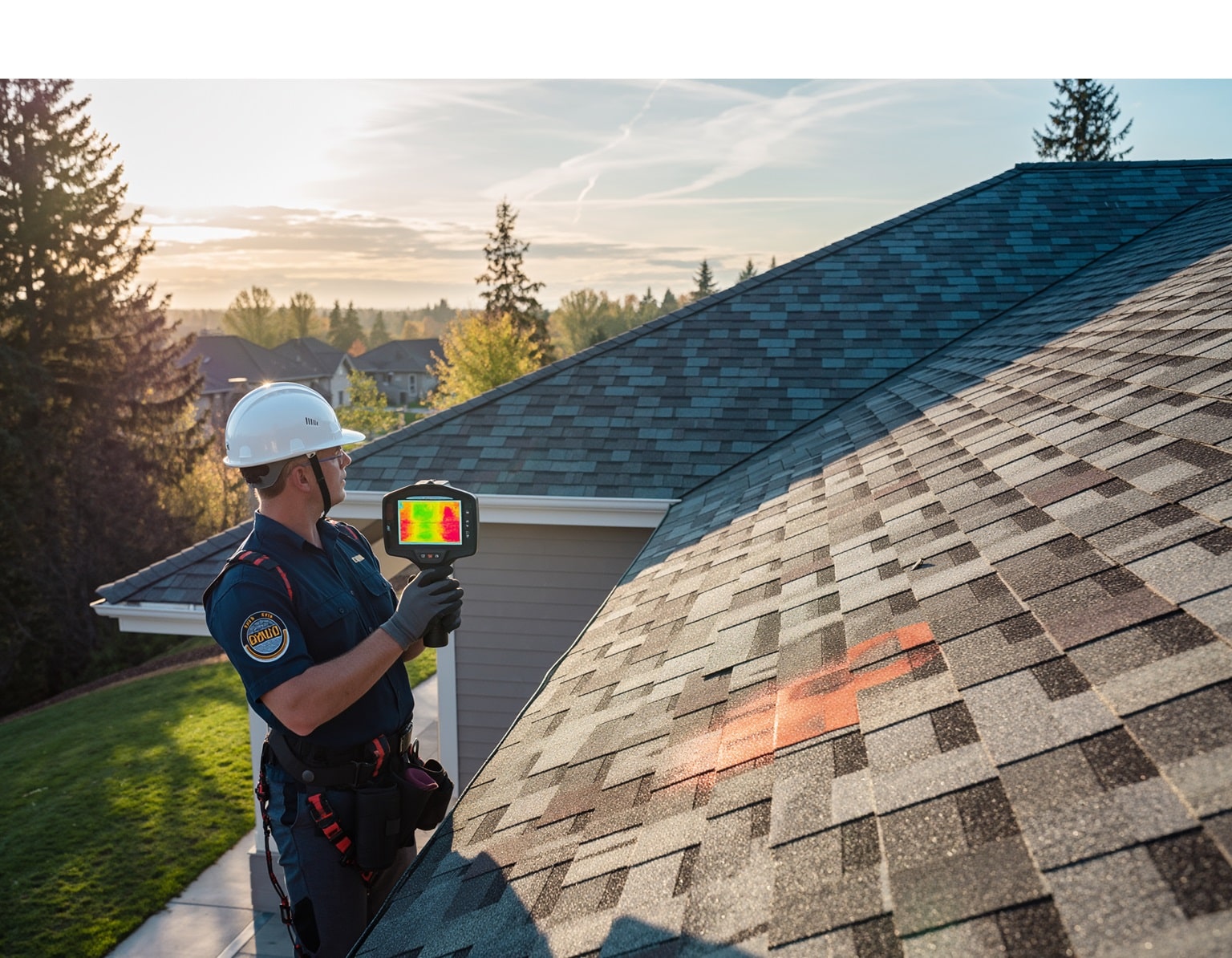
Thermal imaging cameras detect infrared radiation emitted by all objects based on their temperature. These sophisticated instruments employ heat signature detection technology, converting invisible thermal radiation into visible images that display temperature variations across surfaces as colour-coded thermal maps. The technology operates on fundamental physics principles that make it exceptionally valuable for building diagnostics.
Different materials absorb, retain, and release heat at varying rates depending on their thermal properties. Water possesses significantly different thermal characteristics compared to common building materials. When moisture infiltrates roofing assemblies, the affected areas display distinct thermal signatures that differentiate them from dry surroundings. This thermal contrast allows trained technicians to identify moisture presence without physical contact or invasive testing.
Infrared roof scanning Perth services employ cameras sensitive to temperature differences as small as 0.1 degrees Celsius. This extreme sensitivity detects subtle thermal variations that indicate moisture presence, even when saturation levels remain relatively low. Early detection at this stage prevents the extensive damage that occurs when moisture problems progress unnoticed for months or years.
The physics behind thermal imaging roof leaks detection involves several key principles. During daytime hours, solar radiation heats roof surfaces. Dry materials warm quickly and release heat rapidly once sun exposure ends. Moisture-saturated materials absorb more heat energy but release it more slowly due to water’s high specific heat capacity. This differential cooling creates temperature variations that persist for hours after sunset, providing ideal conditions for thermal scanning.
Evening thermal inspections, conducted several hours after sunset, reveal moisture-affected areas as warmer zones within cooler surroundings through heat signature detection. The trapped moisture retains heat longer than dry materials, creating clear thermal contrast. Morning inspections show the opposite pattern, with wet areas appearing cooler as moisture evaporates, drawing heat energy from surrounding materials through evaporative cooling.
Professional thermal imaging equipment differs substantially from consumer-grade infrared cameras. Professional instruments offer higher resolution, greater thermal sensitivity, and sophisticated analysis software that helps technicians interpret complex thermal patterns. These capabilities prove essential for accurate roof diagnostics, where subtle temperature differences carry significant meaning.
Thermal imaging cameras produce visual representations where colour gradients indicate temperature variations. Typically, warmer areas display in red, orange, or yellow tones, while cooler zones appear blue or purple. Moderate temperatures show as green. These intuitive colour maps allow technicians to quickly identify anomalous areas requiring detailed investigation.
The technology operates non-invasively, requiring no physical contact with roof surfaces or materials. Scans can be conducted from ground level for many roof configurations, though roof access provides more detailed assessment for complex structures. This non-invasive nature means inspections cause no damage while providing a comprehensive evaluation of the entire roof systems.
How Infrared Technology Reveals Hidden Moisture
Thermal imaging methodology follows systematic protocols designed to maximise detection accuracy while minimising false positives. Successful thermal imaging requires optimal environmental conditions, proper equipment calibration, and expert interpretation of thermal patterns.
Environmental conditions significantly affect thermal imaging effectiveness. Clear skies during the day preceding evening scans ensure maximum solar heating of roof surfaces. Light winds prevent excessive heat loss that could diminish thermal contrast. Ambient temperatures should ideally differ by at least 10 degrees Celsius between day and night to create pronounced cooling patterns. Perth’s climate, with its warm days and cooler nights, often provides excellent conditions for thermal roof scanning.
Timing proves critical for accurate thermal imaging roof leaks assessment. Evening scans typically occur 2-4 hours after sunset when differential cooling has created maximum thermal contrast. This window allows dry areas to cool substantially while moisture-affected zones retain heat. Morning scans work best in the hours following sunrise before solar heating eliminates temperature differentials created by overnight cooling patterns.
Technicians begin thermal assessments by scanning entire roof surfaces to create comprehensive thermal maps. These initial scans identify temperature anomalies warranting closer examination. Areas displaying unexpected thermal patterns receive detailed scanning from multiple angles to confirm findings and rule out false readings caused by reflective surfaces or thermal bridging through structural elements.
Moisture patterns within roofs create distinctive thermal signatures that experienced technicians recognise. Active leaks show as concentrated thermal anomalies at entry points, with diffuse patterns indicating moisture spread through insulation or along structural members. Trapped moisture appears as broader thermal zones where water has saturated materials over time. Underlayment failures display characteristic patterns where moisture accumulates beneath tiles across extended areas.
The technology identifies multiple moisture-related problems beyond active leaks. Condensation issues within roof spaces show distinct thermal patterns different from infiltration leaks. Inadequate ventilation creates temperature distributions that thermal imaging reveals clearly. Failed vapour barriers produce recognisable thermal signatures. This diagnostic versatility makes thermal imaging invaluable for comprehensive roof assessment.
False readings can occur if technicians lack proper training or fail to account for confounding factors. Thermal bridging, where structural elements conduct heat differently than surrounding materials, can create temperature variations unrelated to moisture. Reflective surfaces may display misleading thermal patterns. External heat sources like air conditioning units or solar panels affect nearby thermal readings. Professional infrared roof scanning Perth specialists understand these potential issues and employ techniques to differentiate true moisture problems from artefacts.
Thermal imaging documentation provides permanent records of roof conditions. High-resolution thermal images, annotated with temperature data and specific location information, create detailed evidence supporting maintenance decisions. These records prove valuable for insurance documentation, property transactions, and long-term maintenance planning. Comparison of thermal scans over time tracks problem progression or verifies repair effectiveness.
Advanced Diagnostic Methods Beyond Basic Thermal Scanning
Sophisticated thermal imaging roof leaks assessment employs advanced techniques that extend beyond simple temperature mapping. These methods provide detailed information about moisture severity, extent, and probable sources, enabling targeted repair strategies that address root causes rather than symptoms.
Quantitative thermal analysis involves precise temperature measurements at multiple points across suspect areas. Technicians document specific temperature differentials between affected and unaffected zones, providing objective data about moisture presence. Temperature differences exceeding certain thresholds indicate significant moisture content requiring immediate attention. This quantitative approach eliminates subjective interpretation, delivering reproducible results.
Thermal tracking follows moisture patterns through roof assemblies to identify infiltration sources. Water entering at one location often travels along structural members before appearing elsewhere. By mapping thermal signatures systematically, technicians trace moisture pathways back to entry points. This technique proves particularly valuable for complex leak scenarios where water travels substantial distances from source to symptom.
Multi-angle thermal imaging captures roof surfaces from various perspectives to eliminate blind spots and reduce false readings. Overhead scans from ladders or drones provide different thermal information than ground-level scans. Combining multiple viewpoints creates a comprehensive assessment that accounts for factors like sun angle, shadow effects, and reflected radiation. Professional services employ multi-angle approaches for thorough evaluation.
Temporal thermal imaging involves scanning roofs at different times to observe thermal pattern evolution. Comparing evening and morning scans reveals how moisture affects thermal behaviour throughout daily heating and cooling cycles. This temporal analysis confirms moisture presence more definitively than single-time scanning. It also helps distinguish between different moisture types, as active leaks, trapped moisture, and condensation each display characteristic temporal patterns.
Thermal density mapping quantifies moisture distribution across affected areas. Rather than simply identifying wet zones, this technique measures relative moisture levels throughout suspect regions. Dense concentrations indicate primary problem areas requiring immediate repair, while lighter moisture presence suggests secondary spread requiring monitoring. This information guides repair scope decisions and prioritisation.
Integration with moisture meters provides powerful diagnostic capabilities. Thermal imaging identifies suspect areas efficiently across large roof sections, while moisture meters quantify water content at specific locations. This combined approach delivers both broad assessment and precise measurement, optimising inspection efficiency while ensuring accuracy. Permacoat‘s comprehensive diagnostic methodology employs this integrated strategy for superior results.
Three-dimensional thermal modelling creates detailed visualisations of moisture distribution through roof assemblies. Specialised software processes thermal data to generate models showing moisture penetration depth and spread patterns. These models help property owners understand problem severity visually, supporting informed repair decisions. They also assist contractors planning remediation work by revealing the full extent of affected areas.
Practical Applications in Perth Homes
Perth’s housing stock presents unique challenges that make thermal imaging particularly valuable for roof assessment. The region’s tile roofs, common in established suburbs, often exceed 30 years of age, placing them at risk for underlayment failure. Thermal imaging identifies these hidden problems before they cause extensive damage.
Tile roof assessment using thermal imaging reveals underlayment deterioration invisible to visual inspection. Tiles may appear intact and properly positioned while the waterproof barriers beneath them have failed. Thermal imaging roof leak detection identifies these failures by showing moisture accumulation patterns within roof cavities. Early detection allows for targeted underlayment replacement before structural damage occurs.
Ridge capping failures represent common problems in Perth’s windy coastal environment. Thermal scanning reveals moisture penetration along ridge lines where mortar bedding has deteriorated. These thermal signatures appear as linear patterns following roof peaks, indicating water entry through compromised ridge caps. Identifying these problems early prevents the extensive water damage that develops when ridge leaks progress unchecked.
Valley flashing assessment benefits significantly from thermal imaging. These critical junctions concentrate water flow, making them vulnerable to leak development. Thermal imaging detects moisture infiltration at valley edges where sealants have failed or flashing has corroded. Visual inspection often misses early-stage valley problems, but thermal signatures reveal them clearly.
Penetration sealing around pipes, vents, and antenna mounts creates potential leak sources as materials deteriorate under UV exposure and weathering. Thermal imaging identifies moisture entry at penetration points before water damage becomes visible inside properties. This early detection allows for simple resealing that prevents extensive repairs.
Flat roof sections common on contemporary Perth homes require different thermal assessment approaches than tile roofs. Membrane systems show characteristic thermal patterns when breached, with moisture trapped between membrane layers creating distinct signatures. Thermal imaging locates these breaches precisely, eliminating the extensive exploratory work traditional methods require for flat roof leak detection.
Concrete tile roofs, increasingly common in newer Perth suburbs, benefit from thermal assessment that identifies problems early in their service life. Thermal imaging verifies proper installation and detects manufacturing defects or installation errors before warranty periods expire. This proactive approach protects homeowner investments by identifying problems while repair costs remain minimal.
Heritage properties with complex roof configurations present particular assessment challenges that thermal imaging addresses effectively. Multiple roof planes, dormers, and architectural features create numerous potential leak sources. Comprehensive thermal scanning identifies problems across these complex structures efficiently, providing an assessment that would require extensive time using traditional methods.
The Non-Invasive Advantage for Homeowners
Non-invasive leak detection through thermal imaging provides substantial benefits compared to traditional diagnostic approaches that often require destructive investigation. Property owners avoid the disruption, cost, and potential complications associated with exploratory demolition.
Traditional leak investigation frequently requires removing ceiling materials, insulation, or roofing components to locate moisture sources. This destructive approach damages serviceable materials, increases repair costs, and disrupts household activities. Thermal imaging eliminates most exploratory work by pinpointing problem areas before any demolition begins. When physical investigation becomes necessary, thermal guidance ensures work focuses on actual problem locations rather than broad exploratory areas.
Time savings represent another significant advantage. A comprehensive thermal roof assessment is typically completed within hours, providing immediate results. Traditional investigation methods may require multiple visits over days or weeks as technicians systematically test various possibilities. The rapid assessment thermal imaging provides proves particularly valuable when active leaks threaten property or when purchase decisions depend on roof condition evaluation.
Occupant disruption decreases substantially with thermal assessment compared to traditional methods. Most thermal scanning occurs externally without requiring building access. When interior scanning becomes necessary, it proceeds quickly without moving furniture, removing fixtures, or creating debris. Families can remain in residence during assessment without the displacement that traditional extensive investigation often necessitates.
Cost-effectiveness emerges clearly when comparing thermal assessment to traditional diagnostic approaches. While thermal imaging services carry higher initial costs than basic visual inspection, they prevent the extensive expenses associated with exploratory demolition and incorrect repair attempts. By identifying problems accurately on the first assessment, thermal imaging eliminates the trial-and-error repair approaches that plague traditional leak detection.
Documentation quality surpasses traditional inspection reports significantly. Thermal images provide visual evidence of problems that photographs of finished surfaces cannot show. These detailed records support insurance claims, strengthen negotiating positions in property transactions, and create permanent documentation of conditions for future reference. The professional appearance and technical nature of thermal reports carry substantial credibility with insurance adjusters and potential property buyers.
Safety considerations favour thermal assessment, particularly for older buildings where hidden hazards may exist. Exploratory demolition can expose asbestos-containing materials, deteriorated electrical systems, or structural problems. Thermal imaging identifies issues without physical disturbance, allowing for proper hazard assessment and mitigation planning before any physical work begins.
Property value protection represents an often-overlooked thermal imaging benefit. Early problem detection through thermal assessment prevents the extensive damage that diminishes property value. Documented thermal assessment histories demonstrate diligent property maintenance, potentially affecting property valuations positively. For properties being sold, thermal assessment reports provide credible evidence of roof condition that reduces buyer concerns.
Comparing Thermal Imaging to Other Detection Technologies
The roofing diagnostic landscape includes multiple technologies beyond thermal imaging, each offering specific capabilities. Understanding how thermal imaging compares to alternatives helps property owners choose appropriate assessment approaches for their situations.
Electronic leak detection, commonly used for membrane roofs, applies electrical charges to waterproof barriers and then uses sensors to locate breaches. This method excels at pinpointing exact leak locations but requires direct roof access. Thermal imaging provides broader assessment capabilities while electronic detection delivers precise breach location. Used together, these technologies provide a comprehensive membrane roof evaluation.
Moisture meters with probe pins require penetrating surfaces to take readings, creating small holes that require sealing. Non-invasive leak detection using thermal imaging avoids this surface damage while screening large areas rapidly. When quantitative moisture measurement becomes necessary, thermal imaging guides precise meter placement, minimising invasive penetrations required.
The ideal diagnostic approach often combines multiple technologies. Thermal imaging provides an efficient, broad assessment, identifying problem areas quickly. Other technologies then deliver detailed information about the specific issues thermal scanning reveals. Permacoat’s comprehensive methodology employs this integrated approach, selecting appropriate technologies for each unique situation to deliver optimal diagnostic accuracy.
Professional Thermal Imaging Services vs DIY Approaches
Consumer-grade thermal cameras have become increasingly affordable, tempting some property owners to attempt DIY roof assessment. Understanding the substantial differences between professional infrared roof scanning Perth services and DIY efforts helps homeowners make informed decisions.
Equipment quality differs dramatically. Professional thermal cameras costing tens of thousands of dollars offer resolution, sensitivity, and accuracy that consumer models cannot approach. Professional instruments detect temperature differences of 0.1 degrees Celsius, while consumer cameras typically resolve only 0.5 to 1.0 degree differences. This sensitivity difference means professional equipment identifies subtle moisture problems consumer cameras miss entirely.
Training and experience prove essential for accurate interpretation. Thermal patterns can result from various factors beyond moisture, including thermal bridging and reflective surfaces. Professional thermographers undergo extensive training and certification, developing expertise through hundreds of inspections. This experience allows accurate differentiation between actual problems and thermal artifacts.
Timing and methodology significantly impact effectiveness. Professionals understand optimal conditions for scanning different roof types and adjust approaches accordingly. They recognise when weather conditions render thermal scanning unreliable. DIY operators typically lack this knowledge, potentially conducting scans during inappropriate conditions that yield misleading results.
Documentation standards differ substantially. Professional thermal inspection reports include calibrated thermal images, temperature measurements, detailed findings descriptions, and specific recommendations with priority classifications. These comprehensive reports support insurance claims and property transactions effectively. DIY efforts rarely produce documentation meeting professional standards.
The value of professional thermal imaging extends beyond detection capabilities. Experienced professionals integrate thermal findings with broader roofing knowledge, providing context about problem severity, repair urgency, and appropriate remediation approaches.
Thermal Imaging Integration with Comprehensive Roof Assessment
Effective roof diagnostics employ thermal imaging as part of comprehensive evaluation strategies rather than standalone assessment. This integrated approach combines thermal imaging’s unique capabilities with other inspection methods to deliver complete understanding of roof conditions.
Visual inspection establishes context for thermal findings. Experienced professionals examine exterior conditions before thermal scanning, identifying obvious damage and noting areas warranting detailed thermal assessment. Interior inspection complements exterior thermal scanning by revealing moisture damage symptoms and verifying thermal findings.
Moisture meter verification adds quantitative measurement to thermal imaging’s qualitative detection. After thermal scanning identifies suspect areas, moisture meters provide precise saturation readings. These measurements confirm moisture presence and quantify severity, supporting repair scope decisions.
Documentation compilation creates comprehensive records integrating findings from all assessment methods. Professional reports include thermal images, moisture readings, structural observations, and exterior condition photographs. These multi-faceted records provide complete documentation supporting maintenance decisions.
Follow-up verification employs thermal imaging to confirm repair effectiveness. Post-repair thermal scanning verifies moisture elimination and ensures remediation work has resolved identified problems. This verification protects property owners by confirming successful repairs before final payment.
Taking Action on Thermal Imaging Findings
The thermal imaging assessment value depends on appropriate follow-through after problems are identified. Understanding how to interpret findings and prioritise repairs ensures maximum benefit from diagnostic investment.
Urgent findings require immediate action. Active leaks identified through thermal imaging roof leaks scanning demand prompt repair. Extensive moisture presence, indicating prolonged water intrusion, necessitates expedited remediation to prevent mould and structural deterioration. These critical issues should receive attention within days.
High-priority concerns include developing problems likely to worsen rapidly. Underlayment failure beneath intact tiles falls into this category, as does ridge capping with compromised bedding. Valley flashing deterioration represents another high-priority issue. These problems warrant scheduling within weeks of identification.
Medium-priority items involve isolated moisture presence without an immediate damage threat. Small amounts of trapped moisture from resolved leaks may require only monitoring. Minor penetration seal deterioration in low-exposure areas can receive attention during routine maintenance. These issues permit flexible scheduling without significant risk.
Repair strategy development should address all identified issues comprehensively rather than piecemeal. Multiple related problems often share root causes that comprehensive repairs address effectively. Professional repair contracts should specify a post-repair thermal assessment confirming problem resolution before final payment.
Insurance considerations affect how findings receive action. Properties with active claims should document thermal findings thoroughly. Thermal imaging reports often strengthen claims by providing objective evidence of damage extent.
Protecting Your WA Property Investment
Western Australian property owners have access to sophisticated diagnostic technology that protects their investments from hidden water damage. Thermal imaging represents a substantial advancement over traditional methods, providing early problem identification that prevents extensive damage and expensive repairs.
The technology’s non-invasive nature, comprehensive assessment capabilities, and accurate moisture detection deliver exceptional value for property owners concerned about roof condition. Early identification of developing problems through infrared roof scanning Perth services allows for targeted repairs when costs remain modest and damage stays localised.
Professional thermal imaging services integrate advanced diagnostic methods with traditional inspection approaches to deliver complete roof condition assessment. This comprehensive methodology identifies all current problems, potential vulnerabilities, and maintenance needs, supporting informed property care decisions.
Property owners benefit from understanding thermal imaging capabilities and limitations, allowing realistic expectations and informed decisions about when thermal assessment provides value. Regular preventive assessment using thermal technology protects property investments by catching problems during early development stages when intervention remains straightforward and affordable.
The combination of professional expertise, sophisticated equipment, and systematic assessment protocols positions Perth’s roofing specialists to deliver superior diagnostic services. Property owners seeking confidence about roof condition, transparency about problems requiring attention, or verification of repair effectiveness find thermal imaging provides answers traditional methods cannot deliver.
Permacoat has served Perth’s homeowners for over 50 years, protecting more than 30,000 properties across the metropolitan area. The company’s adoption of advanced diagnostic technology including thermal imaging reflects its commitment to delivering superior service through continuous improvement and investment in proven innovations. As a Dulux Acratex accredited provider, Permacoat combines technical expertise with premium materials to deliver lasting results backed by comprehensive warranties.
Property owners concerned about potential roof leaks, preparing for property transactions, or simply wanting confidence about roof condition should schedule a professional roof assessment. Talk to us on (08) 9249 5955. Professional services using thermal imaging provide accurate, non-invasive evaluation revealing problems traditional inspections miss. Early detection remains the most cost-effective strategy for protecting properties from water damage and maintaining value in Perth’s challenging climate.