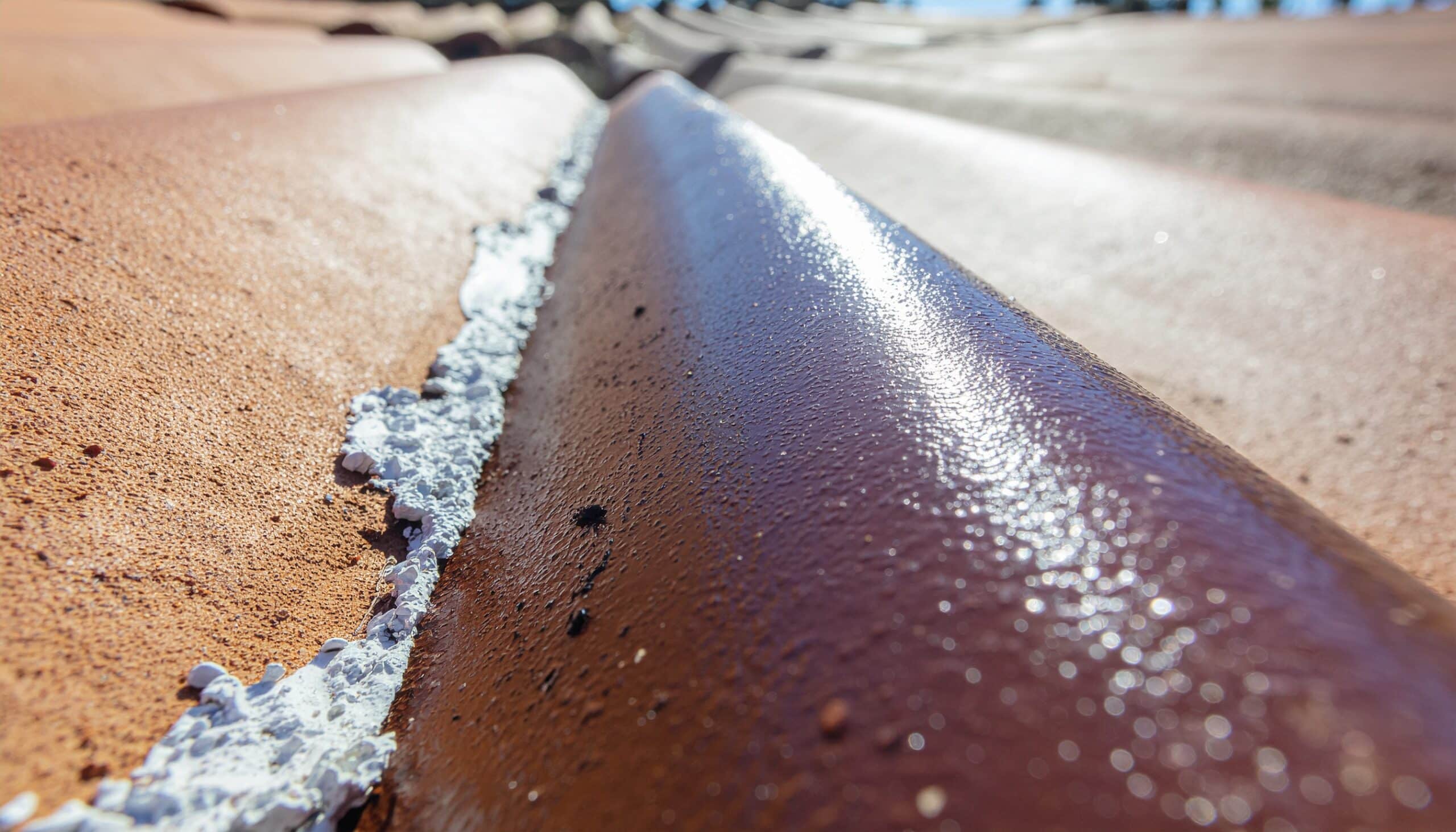
Peeling roof coatings represent more than aesthetic problems. They signal fundamental chemical adhesion failure that compromises a home’s primary defence system. For Western Australian homeowners, this issue proves particularly prevalent due to unique geological and climatic factors affecting Perth’s established suburbs. When roof coatings begin delaminating within five to seven years of application, the root cause traces back to preparation phase failures and inadequate surface oxidation treatment with appropriate chemical binders.
The “chalking” problem inherent in aged cement and terracotta tiles requires specific engineering solutions. By moving away from standard surface-level acrylics and utilizing deep-penetrating alkyd resin coatings, oxidised tile substrates can transform into stable, high-adhesion surfaces capable of supporting multi-decade coating systems.
Performance differences between properly sealed roofs and those treated with conventional primers become apparent within three to five years. Properties across Perth’s metropolitan area demonstrate consistent patterns: roofs restored using long oil binder technology maintain appearance and waterproof integrity for 15 to 20 years. Conventionally treated surfaces show visible deterioration, chalking, and edge lifting within half that timeframe. This dramatic performance gap stems directly from substrate preparation chemistry and primer selection.
The Chemistry of Decay: Why Perth Roofs Oxidise
Understanding why oxidised tile binding sealers prove necessary requires examining the chemical breakdown of tiles themselves. Perth’s housing stock relies heavily on concrete (cement) and terracotta tiles. While durable, these materials undergo oxidation and carbonation processes.
Perth experiences some of Australia’s highest UV index ratings, regularly recording readings between 11 and 14 throughout summer months. Over 20 to 30 years, this radiation breaks down silicate and oxide bonds on cement tile surfaces. This results in “chalking,” a fine powdery layer of loose particles sitting on the tile surface. When contractors apply standard water-based sealers over this powder, the sealer bonds to the dust, not the tile. When wind blows or tiles expand, coatings simply lift away with dust attached to their underside.
Chalking occurs because UV radiation disrupts calcium silicate hydrate bonds giving cement tiles their surface strength. As these bonds break, calcium carbonate and silica particles separate from the tile matrix, creating characteristic white powder. This powder layer ranges from 0.1mm to 0.5mm thick on heavily oxidised roofs, creating insurmountable barriers to proper coating adhesion unless addressed with appropriate sealing technology.
Perth’s Mediterranean climate involves extreme temperature swings. Roof surfaces reach 65°C on January afternoons and drop to 5°C by early morning. This causes tiles to physically expand and contract. This “thermal cycling” places immense mechanical stress on bonds between coatings and tiles. Without sealers that have “molecularly anchored” into tiles, coatings inevitably fracture and peel.
Concrete tile expansion coefficients approximate 10 micrometres per metre per degree Celsius. A 6-metre roof section experiencing 60°C temperature differential expands approximately 3.6mm. Standard acrylic coatings lack flexibility to accommodate this movement without developing micro-cracks. These then propagate into visible failures over multiple thermal cycles.
Coastal suburbs from Quinns Rocks through to Mandurah face additional degradation from salt aerosol deposition. Salt particles carried by sea breezes penetrate tile pores, where they absorb moisture and physically expand, creating internal pressure accelerating surface breakdown. The combination of UV exposure, thermal cycling, and salt attack creates particularly hostile environments demanding superior sealing technology for long-term coating success.
Technical Deep Dive: Long Oil Binder Sealer vs. Conventional Primers
Primary differentiators in restoration quality involve primer choice. Most budget contractors use water-based acrylic primers because they’re cheap, dry fast, and clean easily. However, from chemical engineering perspectives, they often prove wrong tools for oxidised tile substrates.
Water has high surface tension measuring approximately 72 millinewtons per metre at 20°C. When water-based primers spray onto porous, dusty tiles, they tend to bead or sit on top of pores. They typically penetrate no more than 0.2mm to 0.5mm. This shallow penetration creates adhesion relying primarily on mechanical keying to immediate surface layers, exactly the layers compromised by oxidation and chalking.
Long oil binder sealers use solvent carrier systems with surface tension as low as 25-30 millinewtons per metre. This allows resins to be carried 2mm to 4mm deep into tile internal matrices. Penetration reaches below oxidised surface zones into sound, uncompromised tile material. This creates adhesion surviving even when surface layers continue deteriorating.
In resin chemistry, “oil length” refers to oil-to-polymer ratios. “Long oil” formulations contain high percentages of drying oils, typically 60-70% by weight. These oils slow drying processes, which proves advantageous. Slow dry times allow alkyd resin coatings more time to “wet out” substrates and creep into microscopic voids before hardening. Typical working time extends to 30-45 minutes before surface tack develops, compared to 5-10 minutes for water-based primers.
This extended working time proves critical on hot Perth roof surfaces. When surface temperatures exceed 40°C, water-based primers can “flash off” within seconds, preventing meaningful substrate penetration. Solvent carriers in long oil binders evaporate more slowly, maintaining workability even on surfaces approaching 50°C. This ensures proper penetration regardless of application conditions.
Once long oil sealers penetrate tiles, they begin oxidative cross-linking processes. They don’t just dry; they cure. Alkyd resin coatings form complex, three-dimensional chemical webs physically entangling with tile structures. This creates “mechanical anchors.” Instead of coatings sitting on tiles, they become part of tiles.
Cross-linking reactions involve atmospheric oxygen reacting with carbon-carbon double bonds in drying oil components. This creates additional chemical bonds between polymer chains, progressively increasing molecular weight and creating rigid, durable film structures. Full cure typically requires 48-72 hours, during which bond strength increases continuously. Water-based primers reach maximum strength within 4-6 hours with no further improvement.
Laboratory adhesion testing demonstrates long oil binder superiority quantitatively. Pull-off tests measuring adhesion strength show water-based primers achieving 0.8-1.2 MPa bond strength on oxidised tiles. Long oil binders consistently exceed 2.5 MPa, more than double the adhesion force. This difference translates directly to long-term coating performance under Perth’s demanding conditions.
The Restoration Sequence: Integrating Binding Technology
Permacoat, WA’s longest-serving roof restoration company with 50+ years of experience, has proven that successful tile roof restoration functions as multi-stage engineering projects. Binding technology proves effective only when preceding and succeeding steps execute with precision. The company’s 30,000+ completed Perth restorations demonstrate that systematic approaches deliver consistent long-term results.
High-Pressure Preparation
Before any sealer applies, roofs must undergo 3000 PSI preparation through high-pressure roof cleaning. This step isn’t about making tiles look “clean”; it removes “friable” material. Friable material includes anything loose enough for mechanical force to detach. By removing worst oxidation, binder sealers reach “sound” substrates more effectively.
The 3000 PSI pressure specification proves deliberate. Lower pressures (1500-2000 PSI) common in residential pressure washing lack sufficient force to remove deeply embedded organic growth and heavily oxidised surface layers. Higher pressures (4000+ PSI) risk damaging tile surfaces, creating roughness that actually increases future contamination accumulation. The 3000 PSI specification represents optimal balance between thorough cleaning and substrate preservation.
Cleaning operators must maintain proper nozzle distance and traverse speed. Holding nozzles too close or moving too slowly erodes tile surfaces. Excessive distance or speed leaves contamination in place. Professional applicators maintain 200-300mm nozzle distance and traverse at 300-400mm per second, creating uniform cleaning without substrate damage.
Moisture Management and Substrate Dryness
Critical failure points in many Perth restorations involve applying sealers to damp tiles. Because long oil binders are solvent-based, they’re hydrophobic. If moisture traps inside tile pores, sealers repel, leading to “false bonds.” Tiles must reach moisture content below 15% before oxidised tile binding sealers apply.
Moisture content measurement requires either electronic moisture meters designed for masonry materials or careful observation of substrate appearance. Tiles with moisture content above 15% show visible darkening compared to dry tiles. On hot days, moisture evaporation creates visible steam rising from roof surfaces. Any visible moisture indication requires extended drying time before sealer application.
Drying time varies significantly with weather conditions, roof orientation, and season. North-facing roof sections in summer may dry completely within 24 hours of pressure cleaning. South-facing sections in winter may require 72-96 hours for moisture content to drop below 15%. Shaded areas beneath overhanging trees may need even longer drying periods.
The Three-Coat Architecture
Long oil binders constitute first of three layers. Layer 1 (The Root) sees binder sealers penetrate and stabilise oxidised tile substrates. Layer 2 (The Body) involves high-build Dulux Acratex membranes providing bulk waterproofing and filling surface pitting. Layer 3 (The Shield) includes UV-resistant premium coatings providing final colour and protecting lower layers from radiation.
Dulux Acratex membrane coats apply at approximately 250 microns wet film thickness, drying to 150-180 microns. This substantial thickness fills minor surface defects, creating uniform bases for topcoats. Membrane coats also provide primary waterproofing functions, with water permeability less than 0.1 grams per square metre per 24 hours.
Final topcoats apply at similar thickness, bringing total dry film thickness to 300-360 microns across three-coat systems. This substantial protective roof coating thickness provides thermal mass moderating temperature fluctuations at substrate interfaces, reducing thermal stress and extending coating life. By comparison, conventional two-coat systems typically achieve only 120-180 microns total thickness, providing inadequate protection for Perth conditions.
Identifying the “High-Risk” Roof: When Is This Technology Mandatory?
Not every roof requires solvent-based long oil binders. However, for significant portions of Perth’s 20+ year-old homes, using anything else proves risky.
Homeowners can perform simple chalk test diagnostics. Run a finger firmly across dry roof tiles. If thick, paint-like powder transfers to skin, roofs show “heavy chalking.” This definitively indicates surface integrity has failed and requires penetrating binders to “glue” loose particles back together.
Chalk tests provide semi-quantitative oxidation severity assessments. Light chalking shows minimal powder transfer, indicating early-stage oxidation where water-based primers may still perform adequately. Moderate chalking leaves visible powder on fingers but doesn’t create thick coatings. Heavy chalking transfers sufficient powder to completely coat fingertips, often leaving white marks requiring washing to remove. Only heavy chalking absolutely mandates long oil binder treatment, though moderate chalking benefits significantly from this technology.
When water pours onto sound tiles, it should bead or run off. On oxidised tiles, water disappears almost instantly into substrates, turning tiles dark, saturated colours. This high porosity means any coating applied will have moisture “sucked out” too quickly, preventing proper film formation. Long oil sealers fill these pores, satiating tile thirst so topcoats can dry evenly.
Absorption tests reveal internal porosity that may not be apparent from visual inspection alone. Sound terracotta tiles typically show water absorption rates of 6-8% by weight. Oxidised tiles can exceed 15%. This increased porosity allows water-based coatings to penetrate irregularly, creating uneven film thickness and premature failure. Long oil binder’s lower viscosity and slower evaporation rate accommodates high porosity without compromising coating uniformity.
Coastal suburbs face “salt attack.” Salt crystals grow inside tile pores, physically prying material apart from inside out. This makes tiles exceptionally porous and crumbly. For these homes, specialists must use solvent-based binders to counteract salt-weakened structures.
Properties within 5 kilometres of the ocean require particular attention to salt contamination. Pressure cleaning processes must include chemical treatment to dissolve and remove salt deposits before binder application. Residual salt creates osmotic pressure that can cause coating blistering months or years after application, as salt absorbs atmospheric moisture and expands beneath coating films.
Financial Analysis: The True Cost of Inadequate Sealing
Many homeowners find quotes $2,000 to $3,000 cheaper than premium restorations tempting. However, when analysing costs over 20-year horizons, “cheap” options almost always prove most expensive.
Investing in budget restorations might cost $6,000 initially. If coatings begin peeling within six years, entire systems often require labour-intensive strip and recoat procedures. This can lead to total expenditure of $15,000 over single decades. Conversely, premium restorations with long oil binders might cost $9,000 initially but remain perfectly adhered for 15 to 20 years. Annualised costs of premium approaches prove significantly lower because they avoid catastrophic failure cycles.
Mathematics of annualised cost reveal budget option false economy. A $6,000 restoration requiring recoating at year 6 and year 12 totals $18,000 over 12 years, or $1,500 per year. A $9,000 restoration lasting 18 years costs $500 per year, one-third the annualised expense. This calculation excludes inconvenience and property disruption of repeated restoration projects.
By investing in correct chemical foundations, homeowners avoid “strip and start over” scenarios. Lower maintenance costs are achieved by preventing secondary damages like ceiling staining or timber rot caused by moisture ingress through peeling sections.
Secondary damage from coating failure often exceeds original restoration costs. Water penetration through failed coatings saturates ceiling insulation, reducing R-values and requiring replacement. Moisture reaching timber roof framing promotes rot and termite attack, potentially necessitating structural repairs costing $8,000 to $15,000. Interior ceiling water staining requires repainting, with costs ranging from $1,500 to $4,000 depending on affected areas. These consequential damages make proper initial sealing genuine investments rather than expenses. Understanding roof repair costs helps property owners appreciate the value of prevention through quality sealing technology.
Warranty coverage available on premium restorations provides additional financial value. Fifteen to twenty year coating warranties and 12-month leak warranties mean any premature failure results in rectification at no cost to homeowners. Budget restorations rarely offer warranties exceeding 5-7 years, and many contractors provide no warranty coverage whatsoever, leaving homeowners fully exposed to failure costs.
When Restoration Isn’t Enough: The Limits of Binding Technology
While long oil binders prove remarkable, they’re not magic. Points of “substrate exhaustion” exist where tiles prove too far gone for saving.
If tiles have “delaminated” (meaning they’re splitting into layers) or if they’ve become “friable” to points that they crumble under finger pressure, sealers cannot fix them. In these cases, complete re roofing in Perth proves necessary rather than attempting restorations destined to fail.
Substrate assessment requires careful inspection of tile condition across entire roof surfaces. Inspectors test tile integrity by tapping with plastic mallets, listening for solid “pings” of sound tiles versus dull “thuds” of delaminated ones. Visual inspection identifies tiles with visible cracks, spalling, or surface loss. Any sections showing more than 15-20% compromised tiles become re-roofing candidates rather than restoration opportunities.
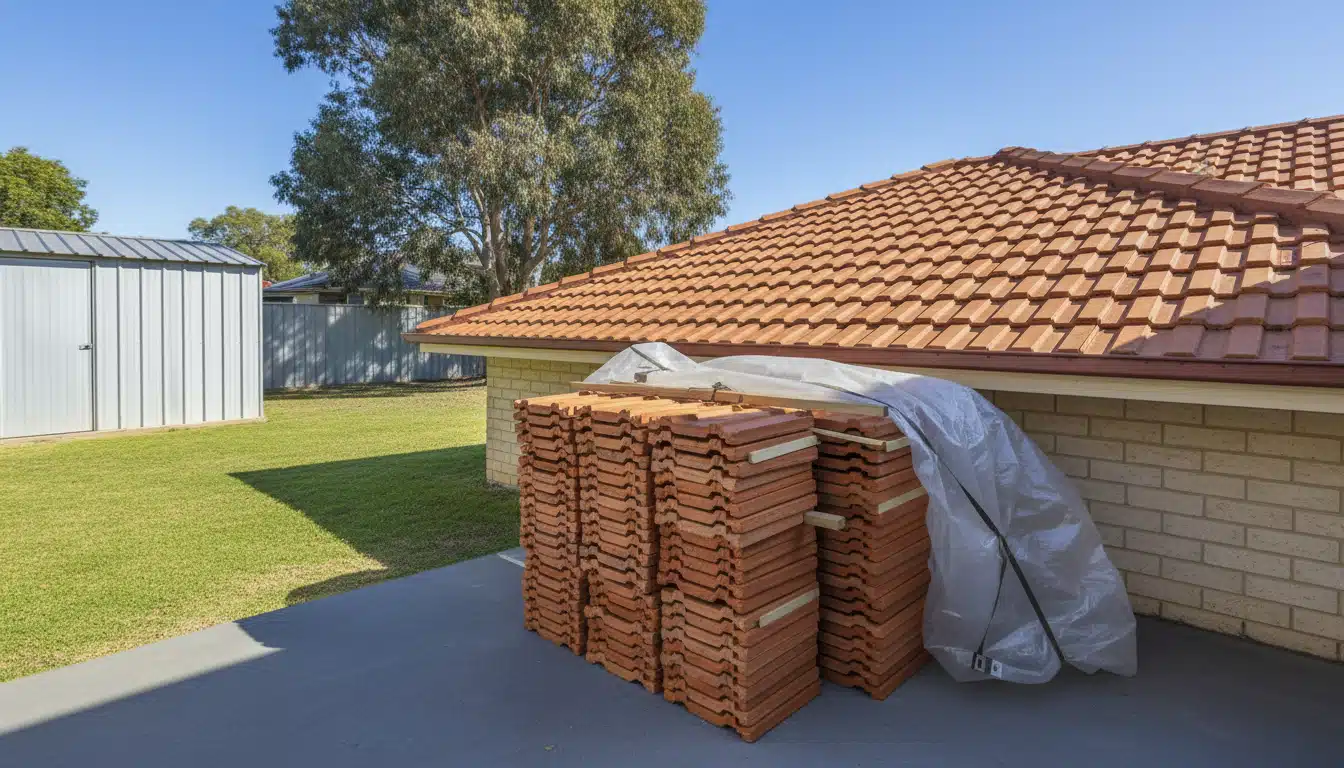
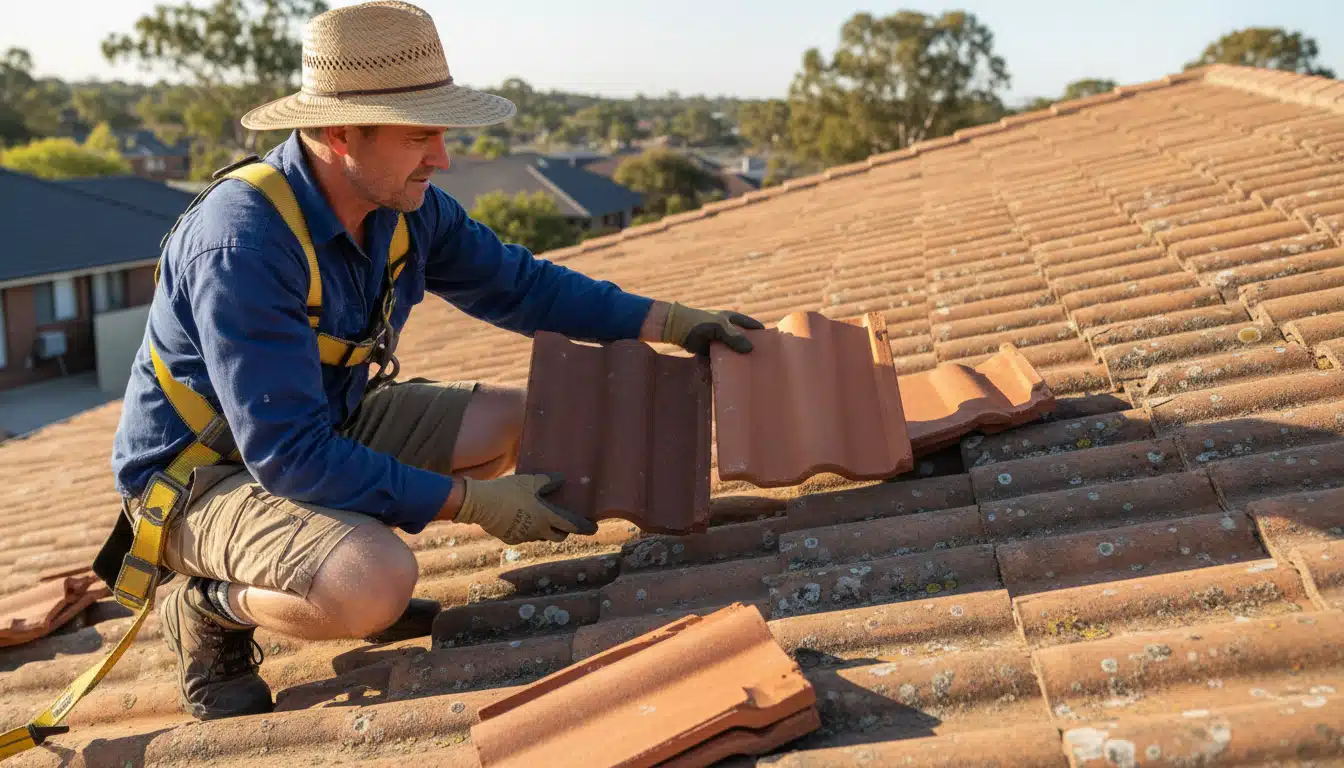
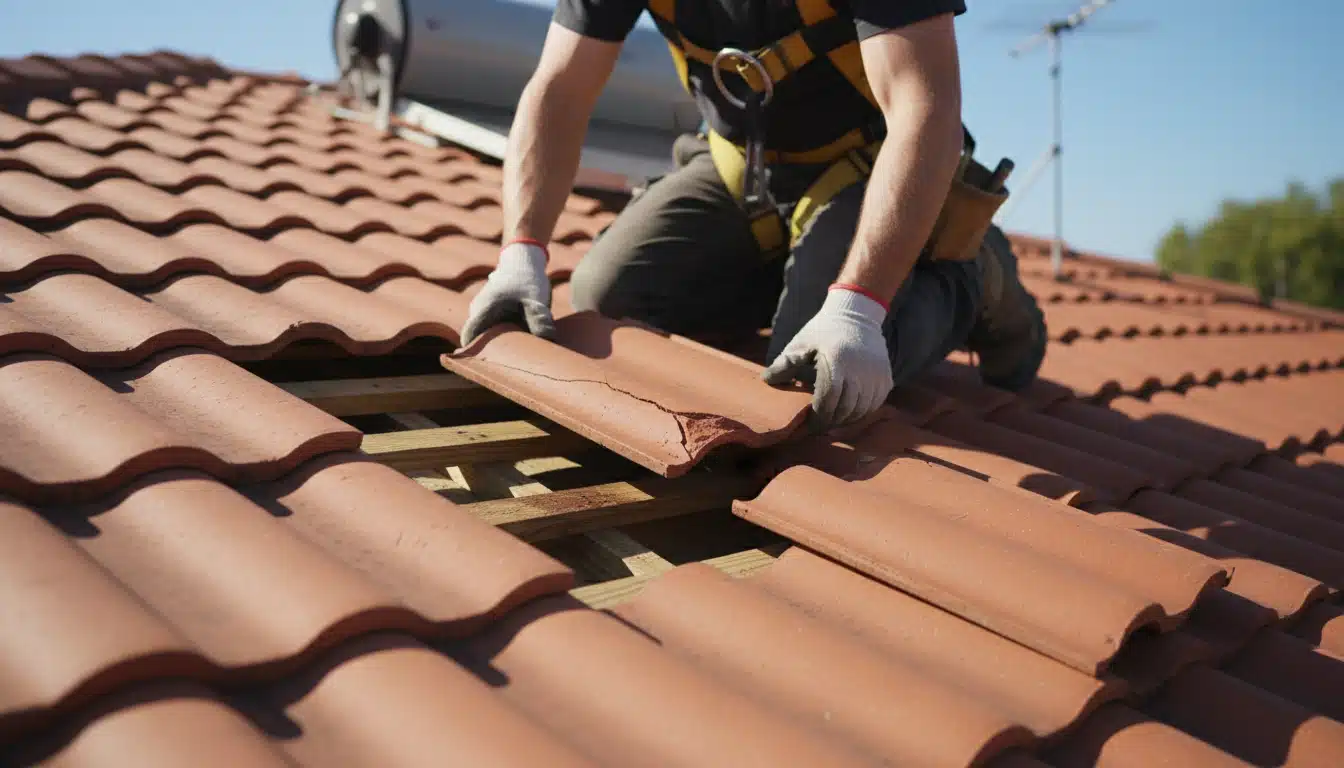
Often, main body roofs remain sound, but ridge caps or specific sections show degradation. High-quality restorations involve replacing these “exhausted” tiles with sound second-hand or new matches before sealing processes begin. This ensures oxidised tile binding sealers work on substrates still possessing structural life. For properties with terracotta or cement tiles requiring attention, tile roof restoration specialists can assess which sections need replacement versus restoration.
Hybrid approaches combining selective replacement with premium sealing provide optimal value for roofs showing localised deterioration. Ridge caps experience highest UV exposure and thermal cycling, often degrading 5-10 years before main roof fields. Replacing compromised ridge caps before restoration ensures uniform substrate quality and prevents premature failures in these critical waterproofing zones.
Valley sections similarly experience accelerated degradation from concentrated water flow and debris accumulation. Inspectors pay particular attention to valley tiles, replacing any showing erosion or organic growth penetration indicating structural compromise. Costs of selective tile replacement add $1,200 to $2,800 to restoration expenses but prevent failures requiring complete recoating within 5-8 years.
Perth-Specific Environmental Challenges
Perth’s unique combination of environmental factors creates coating challenges unmatched elsewhere in Australia. The city’s Mediterranean climate delivers 8-9 months of dry weather with intense UV exposure, followed by concentrated winter rainfall testing waterproofing integrity.
Northern suburbs including Butler, Yanchep, and Two Rocks experience highest UV exposure levels in the metropolitan area. Additional heat stress from extended summer afternoons above 38°C compounds challenges. Roofs in these suburbs benefit most from long oil binder technology’s superior adhesion and heat resistance, as coating failures occur earlier and more severely than in southern suburbs.
Coastal suburbs from Mindarie through Fremantle to Rockingham face salt aerosol deposition accelerating both tile and coating degradation. Salt concentration in coastal air reaches 30-50 micrograms per cubic metre during onshore wind events, depositing 2-4 grams per square metre annually on roof surfaces. This salt accumulation requires specialised cleaning protocols and mandates long oil binder treatment for successful long-term performance.
Hills suburbs including Kalamunda, Darlington, and Lesmurdie experience temperature differentials 5-8°C greater than coastal areas, creating more severe thermal cycling stress. Winter morning temperatures can drop below 2°C while summer afternoons exceed 42°C, creating 40°C daily temperature swings subjecting coatings to maximum expansion-contraction cycling. Thermal stress in these locations makes alkyd resin coating flexibility essential for preventing premature coating fracture.
Professional Application Standards and Quality Control
Performance advantages of long oil binder technology only materialise when application follows strict quality standards. Substrate preparation, environmental conditions, and application technique all significantly impact final coating performance.
Qualified applicators maintain surface temperature monitoring throughout application processes. Ideal application temperatures range from 15°C to 35°C, with substrate temperatures not exceeding 45°C. Applications outside these parameters risk improper cure, creating coating defects appearing months or years later.
Humidity monitoring similarly affects coating performance. Relative humidity during application should remain below 85% to prevent moisture interference with solvent-based binder cure. Morning applications in winter months require particular attention to humidity levels, as overnight condensation can leave surfaces with elevated moisture content despite appearing visually dry.
Quality control checkpoints include film thickness measurement using wet film thickness gauges during application. Operators verify spray application delivers specified 200-250 micron wet film thickness, adjusting equipment settings as needed to maintain consistency across entire roof surfaces. This attention to application detail separates professional results from budget contractor work.
Conclusion: Securing Your Investment
Decisions to restore roofs represent significant financial commitments. Differences between results lasting five years versus twenty lie in invisible chemistry of first coats. Long oil binder sealer technology provides the only scientifically proven method for bridging gaps between degraded, oxidised tiles and modern, high-performance Dulux Acratex membranes.
For Perth homeowners, whose roofs endure some of harshest UV and thermal conditions on the planet, cutting corners on sealers isn’t an option. By insisting on three-coat systems anchored by deep-penetrating solvent binders, homeowners ensure their homes remain waterproof, aesthetically pleasing, and structurally sound for decades to come.
Investment in premium sealing technology pays dividends throughout property ownership periods. Roofs treated with long oil binders maintain appearance and waterproof integrity for 15-20 years, eliminating recurring expense and disruption of repeated restoration cycles. Peace of mind provided by comprehensive warranty coverage and proven long-term performance makes premium approaches the only rational choice for homeowners planning extended property ownership.
Would you like professional assessment of your roof’s oxidation levels? If you’re noticing chalking, fading, or minor peeling, don’t wait for total coating failure. For expert professional roof restoration in Perth backed by 50+ years of experience, call (08) 9249 5955 to book your free inspection.