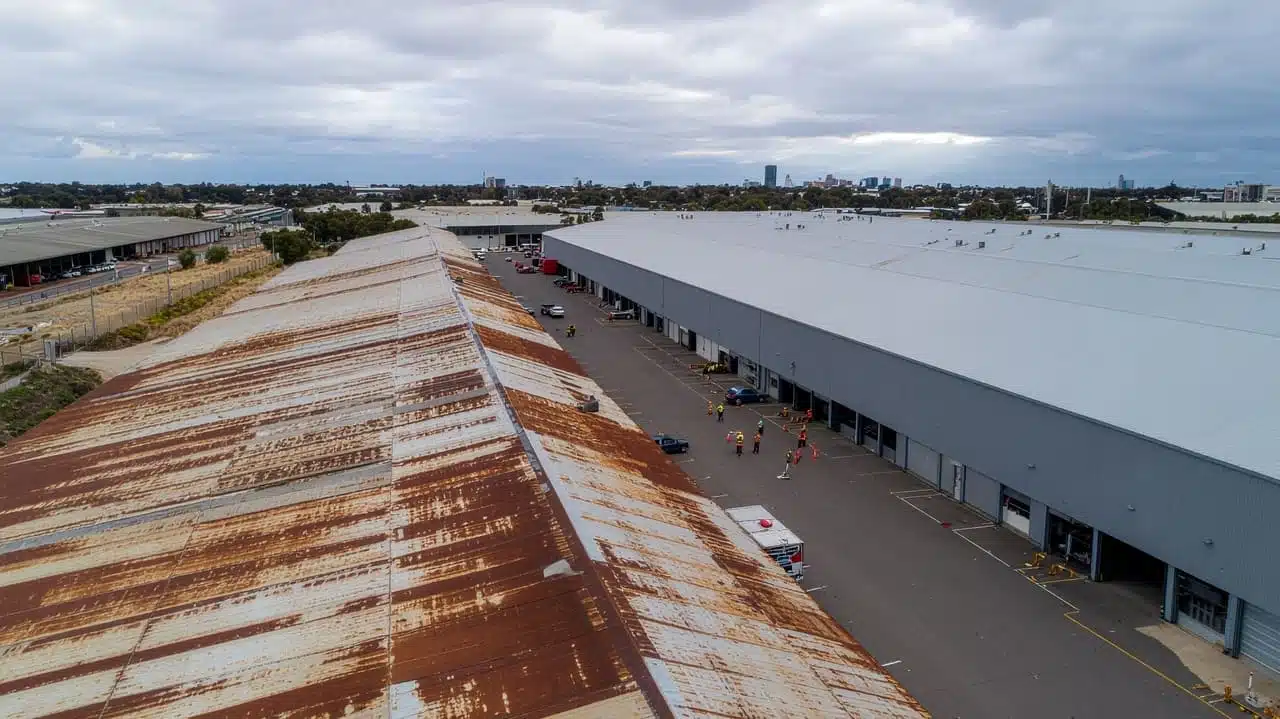
Industrial roofs across Perth’s northern suburbs face relentless pressure from coastal salt, intense UV exposure, and thermal cycling that would destroy most residential structures within years. In Malaga and Joondalup, manufacturing facilities, warehouses, and commercial complexes dominate the landscape where roof failures don’t just leak.
They halt production, damage inventory worth hundreds of thousands, and create safety hazards that can shut down entire operations. The difference between a roof that lasts 30 years and one that fails within 15 often comes down to systematic assessment rather than reactive repairs.
A comprehensive warehouse structural roof audit identifies vulnerabilities before they cascade into catastrophic failures. Yet most facility managers only discover they need one after water pours through ceiling panels during Perth’s winter storms.
Why Industrial Roofs Fail Faster in Northern Perth
The industrial corridor stretching through Malaga and Joondalup creates unique stress factors that accelerate roof deterioration. Metal roofing systems installed over warehouses and manufacturing facilities expand and contract through temperature swings of 40+ degrees between summer days and winter nights. This constant movement fatigues fasteners, cracks sealants, and creates gaps where water penetrates.
Coastal proximity compounds these challenges significantly as salt-laden air from the Indian Ocean travels inland, settling on roof surfaces. It corrodes Colorbond coatings, exposed fasteners, and flashing systems. Within 10 kilometres of the coast, metal roofs can show significant corrosion patterns within 8-12 years without proper maintenance protocols.
Industrial facilities also generate internal conditions that attack roofing from below. Manufacturing processes that produce heat, humidity, or chemical vapours create condensation patterns that saturate insulation, rust roof sheeting from the interior, and promote mould growth that weakens structural timber.
The combination of external weathering and internal moisture creates failure points that residential roofs never encounter. Understanding these unique pressures helps facility managers implement appropriate protection strategies.
Common Failure Patterns Across Malaga Warehouses
Walk through any industrial estate in Malaga and specific failure patterns emerge with predictable regularity. Ridge capping systems consistently fail first where thermal movement is greatest and wind uplift forces concentrate. Original silicone sealants dry out and crack, allowing water to track under cappings and saturate roof timbers.
Valley gutters present another critical vulnerability. These internal drainage channels handle enormous water volumes during storms, but debris accumulation, coating breakdown, and fastener corrosion create leak points that flood ceiling cavities before anyone notices external symptoms.
By the time water stains appear on warehouse ceilings, structural damage may already require complete valley replacement exceeding simple resealing costs. Fastener failure represents perhaps the most insidious problem as it remains invisible until sheets lift during storms.
Exposed screws that penetrate metal roofing deteriorate through galvanic corrosion, thermal cycling, and UV degradation of rubber washers. After 15-20 years, a significant percentage of fasteners no longer provide secure attachment, yet the roof appears intact until wind forces exceed the remaining holding capacity.
Restoration work across hundreds of Malaga warehouses reveals consistent patterns. Facilities typically experience first major leaks around gutters, valleys, and penetrations between years 12-18, followed by widespread fastener and coating failures between years 18-25.
Facilities that implement structured audit programs identify these patterns early enough for cost-effective intervention that prevents emergency repairs during production hours.
The Joondalup Commercial Roof Challenge
Joondalup’s commercial and light industrial facilities face slightly different failure profiles reflecting mixed-use developments and architectural complexity. Multi-level structures with multiple roof planes create numerous transition points where different materials meet. Each represents a potential failure zone requiring specific assessment protocols.
Parapet walls surrounding flat or low-slope sections trap moisture, hide deterioration, and concentrate water flow into drainage systems that frequently lack adequate capacity for Perth’s intense winter downpours. When these systems fail, water backs up behind parapet flashings and saturates wall cavities.
This creates damage far beyond the roof structure itself. Commercial facilities also commonly feature roof-mounted equipment including HVAC units, solar arrays, and communication equipment that penetrate waterproof membranes and create maintenance access requirements.
Each penetration represents a potential leak point as equipment vibration gradually loosens fasteners and cracks sealants over time. A thorough warehouse structural roof audit examines not just the roof surface but evaluates every penetration, equipment support, and access pathway systematically.
What a Comprehensive Structural Audit Actually Examines
Effective warehouse roof audits go far beyond walking the roof with a clipboard. Professional assessments examine structural adequacy, waterproofing integrity, drainage functionality, and remaining service life covering every roof component comprehensively.
Structural evaluation identifies sagging purlins, deteriorated timber supports, and inadequate bracing that may not cause immediate leaks but indicate load-bearing capacity has diminished. This matters critically for facilities considering solar installations or equipment upgrades that add roof loads beyond original design specifications.
Fastener surveys assess holding capacity across the entire roof field as inspectors check for rust staining around screws, loose fasteners that spin without tightening, and missing fasteners indicating previous wind damage. Statistical sampling determines what percentage of fasteners have failed, revealing whether widespread replacement becomes necessary.
Waterproofing assessment examines coating condition, sealant integrity, and flashing performance. Infrared thermography can identify moisture trapped within roof assemblies, revealing leak patterns invisible to visual inspection. This technology proves particularly valuable for large warehouse roofs where small leaks may not produce obvious interior symptoms until damage becomes extensive.
Drainage evaluation measures fall toward outlets and checks for ponding areas indicating structural settlement. It verifies that gutters and downpipes can handle design storm intensities. Many older facilities were built to drainage standards that no longer meet current rainfall data, creating flood risks during severe weather events.
Prevention Strategies That Actually Work
The most cost-effective prevention strategy involves implementing scheduled inspections before problems emerge. Facilities that conduct professional roof audits every 3-5 years identify minor issues when repairs cost hundreds rather than waiting until failures require tens of thousands in emergency restoration work.
Proactive fastener replacement programs extend roof life dramatically. When audits reveal that 15-20% of fasteners show deterioration, systematic replacement of all exposed fasteners becomes necessary. Combined with proper sealing, this can add 10-15 years of service life at a fraction of re-roofing expenses.
This approach works particularly well for Colorbond roofs where the metal sheeting remains structurally sound but attachment systems have degraded. Coating renewal programs provide another high-value intervention as metal roofs that receive proper surface preparation and premium roof coatings every 12-15 years can achieve 40+ year service lives.
This compares to 20-25 years for untreated roofs. The key lies in timing as applying coatings before rust penetrates metal surfaces works better than attempting to seal over existing corrosion.
Permacoat, with five decades of industrial roofing experience across Perth’s northern suburbs, has demonstrated clear results. Facilities implementing these prevention strategies reduce lifetime roofing costs by 40-60% compared to reactive maintenance approaches. The difference comes from avoiding emergency repairs during business hours, preventing secondary damage to building interiors and contents, and maximising the service life of existing roof structures.
The Role of Professional Assessment vs DIY Inspection
Facility managers often conduct basic roof inspections using maintenance staff, but professional audits provide value that internal inspections cannot match. Experienced specialists recognise subtle indicators that predict imminent failures as slight fastener rust patterns, early coating breakdown, and minor valley distortion appear insignificant to untrained observers.
Professional assessors also bring diagnostic tools that reveal hidden conditions. Moisture meters identify saturated insulation before ceiling damage appears. Infrared cameras map temperature differentials that indicate wet areas across vast roof expanses. Pull-testing equipment measures actual fastener holding capacity more accurately than visual assessment alone.
Documentation standards represent another critical difference. Professional audits produce detailed reports with photographic evidence, condition ratings for each roof section, prioritised repair recommendations, and projected service life estimates. This data-driven approach enables accurate scope definition and realistic timeline predictions.
This documentation proves invaluable for capital planning, insurance purposes, and due diligence during property transactions. The investment in professional assessment typically ranges from $800-2,500 depending on facility size and complexity, representing a modest cost compared to emergency repairs that commonly exceed $15,000-50,000 for warehouse-scale failures. For detailed pricing information, comprehensive roof repair costs and restoration pricing varies based on facility size and condition.
Material-Specific Vulnerabilities and Solutions
Different roofing materials common across Malaga and Joondalup industrial facilities present distinct failure patterns requiring targeted prevention strategies for optimal results. Understanding these material-specific characteristics helps facility managers implement appropriate maintenance programs.
Colorbond and metal sheeting systems dominate Perth industrial roofing due to durability and cost-effectiveness. Primary vulnerabilities include fastener corrosion, coating breakdown, and cut-edge rust where sheets were trimmed during installation. Prevention focuses on fastener replacement cycles, coating renewal programs, and edge sealing treatments that arrest rust progression before perforation occurs.
Trimdek and corrugated profiles feature wide pans and shallow ribs that accumulate debris and hold moisture longer than residential profiles. This accelerates coating deterioration and creates ideal conditions for lichen growth that retains moisture against metal surfaces. Regular roof cleaning combined with coating maintenance prevents these accumulation-driven failure patterns.
Insulated panel systems provide excellent thermal performance but create unique challenges at panel joints where weather seals deteriorate and fastener penetrations compress insulation cores. Audits must assess both external waterproofing and internal vapour barriers that prevent condensation within panel cores.
Built-up and modified bitumen systems appear in older Joondalup commercial facilities where these membrane systems cover concrete decks. Blistering, cracking, and seam failures typically emerge after 15-20 years. Proper assessment can identify deterioration patterns early enough for overlay systems that prevent complete tear-off and replacement.
Creating a Long-Term Roof Management Plan
Industrial facilities that treat roofs as managed assets achieve dramatically better outcomes than those viewing roofs as neglected building components. Effective management plans establish inspection schedules, budget for preventive maintenance, track roof condition over time, and plan capital improvements before emergency situations develop.
A typical management plan for a 5,000-square-metre warehouse might include professional structural audits every 3-5 years, annual internal inspections after winter storms, gutter and valley cleaning twice yearly, minor repairs addressed within 30 days of identification, coating renewal scheduled for year 12-15, fastener replacement programs in year 15-18, and major restoration or replacement budgeted for year 25-30.
This structured approach spreads costs across decades, prevents production disruptions from emergency repairs, and maximises return on roofing investment. Facilities that implement such plans typically spend 30-40% less on roofing over 30-year periods compared to reactive maintenance approaches while experiencing fewer leak-related disruptions and inventory losses. For commercial complexes and industrial estates, coordinated strata roofing services deliver economies of scale.
When Restoration Makes Sense vs Replacement
The fundamental question every warehouse structural roof audit must answer involves restoration viability. Can restoration deliver adequate service life, or does replacement become the more cost-effective path? Several factors drive this decision.
Structural integrity provides the foundation for this analysis. Roofs with sound framing, adequate load capacity, and minimal deterioration of support members generally qualify as restoration candidates regardless of surface condition. Conversely, roofs showing structural sagging, timber rot, or inadequate bracing may require replacement even if metal sheeting appears serviceable.
Remaining metal thickness determines whether coating systems can provide long-term protection. Metal that has rusted through or shows extensive perforation cannot be restored and requires replacement only. However, metal with surface rust but intact structural integrity responds well to proper preparation and premium coating systems that deliver 15-20 additional years of service.
Economic analysis must consider not just immediate costs but lifecycle value. Professional roof restoration in Perth costing $45-75 per square metre delivering 15-20 years of service life often provides better value than replacement at $120-180 per square metre. This particularly applies when restoration can be staged across multiple budget cycles while replacement typically requires full capital commitment.
The assessment process for industrial facilities includes detailed lifecycle cost analysis comparing restoration versus replacement scenarios while accounting for expected service life, warranty coverage, and future maintenance requirements. This data-driven approach helps facility managers make informed decisions that align with operational and financial objectives.
The Impact of Delayed Maintenance
The financial consequences of deferred roof maintenance compound rapidly as deterioration passes critical thresholds with accelerating damage. A fastener replacement program costing $8,000-12,000 in year 15 prevents sheet detachment that might cause $40,000-80,000 in emergency repairs plus production losses in year 18-20 without intervention.
Secondary damage represents the hidden cost that makes delayed maintenance particularly expensive. Roof leaks that saturate insulation reduce thermal performance by 50-70%, driving up heating and cooling costs for years before anyone connects higher energy bills to roof condition.
Water damage to inventory, equipment, and building interiors often exceeds roof repair costs by multiplication factors reaching 3-10 times the roofing expense. Regulatory implications add another dimension as facilities with documented roof deficiencies may face increased insurance premiums, coverage limitations, or workplace safety citations if deteriorated conditions create hazards.
Professional audits that identify and document timely repairs protect against these regulatory and insurance complications while preserving operational continuity.
Selecting Qualified Assessment Providers
Not all roof inspections deliver equal value, making careful selection of assessment providers critical. Facility managers should verify that assessment providers bring relevant industrial roofing experience, appropriate diagnostic equipment, and comprehensive reporting capabilities.
Look for providers who conduct assessments independent of repair sales pressure, as the most valuable audits come from specialists who provide objective condition analysis and prioritised recommendations rather than inflated repair proposals designed to maximise immediate project value.
Verify that assessors carry appropriate insurance coverage including professional indemnity protection, as roof assessment involves significant liability exposure from both physical access risks and professional advice guiding major capital decisions. Providers should maintain $20 million+ public liability coverage plus professional indemnity protection.
Request sample reports before engaging assessment services to ensure quality reports include detailed photographic documentation, condition ratings for each roof component, clear explanations of identified deficiencies, prioritised repair recommendations with cost estimates, and projected service life analysis. Reports lacking this detail provide limited value for planning and budgeting purposes.
Building a Prevention Culture
The most successful industrial facilities embed roof care into broader asset management cultures rather than treating roofs as afterthoughts. This involves training facility personnel to recognise early warning signs, establishing clear protocols for reporting concerns, and empowering maintenance teams to address minor issues before they escalate.
Simple practices deliver outsized value. Monthly visual inspections from ground level can spot debris accumulation, damaged gutters, or obvious coating failures. Immediate response to interior water stains prevents single leak points from becoming widespread damage. Annual professional cleaning removes debris that accelerates deterioration while allowing proper assessment of underlying conditions.
Documentation systems that track roof history, maintenance activities, and repair work create institutional knowledge that survives personnel changes effectively. Digital photo archives showing roof condition over time help identify deterioration patterns and support data-driven decisions about intervention timing.
Facilities that develop these prevention-oriented cultures typically experience 60-80% fewer emergency roof repairs, achieve 30-50% longer roof service lives, and maintain better facility conditions that support operational excellence and property value preservation.
Conclusion
Industrial roof failures across Malaga and Joondalup follow predictable patterns driven by Perth’s harsh climate, coastal exposure, and unique warehouse demands. The facilities that avoid catastrophic failures share a common approach of implementing systematic assessment programs that identify vulnerabilities before they cascade into expensive emergencies.
A comprehensive warehouse structural roof audit provides the foundation for cost-effective roof management by revealing structural adequacy, fastener condition, waterproofing integrity, and drainage functionality covering every roof component systematically. Professional assessment delivers value that far exceeds its modest cost through enabling targeted interventions when repairs remain simple and preventing the secondary damage that multiplies repair expenses.
For expert professional roof repairs backed by 50+ years of industrial roofing experience across Perth’s northern suburbs, call (08) 9249 5955 to book your professional roof evaluation today.