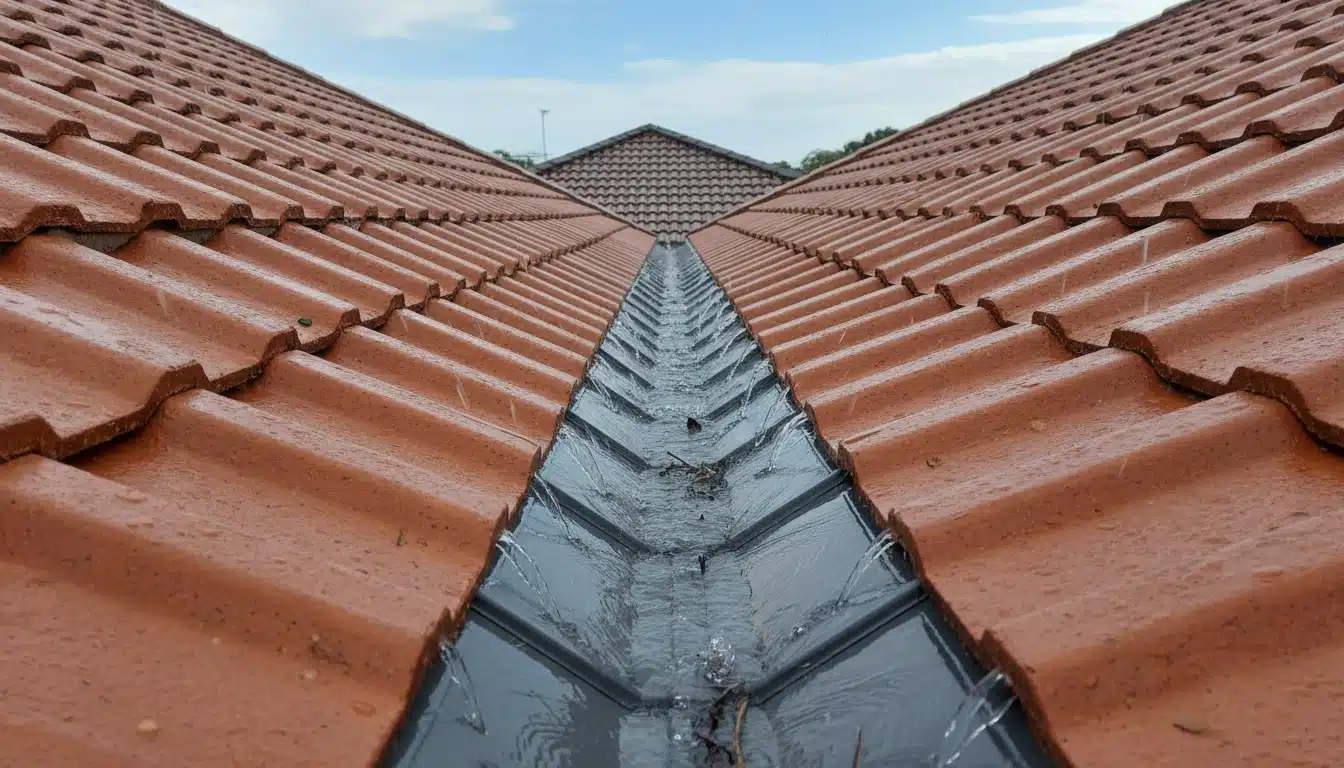
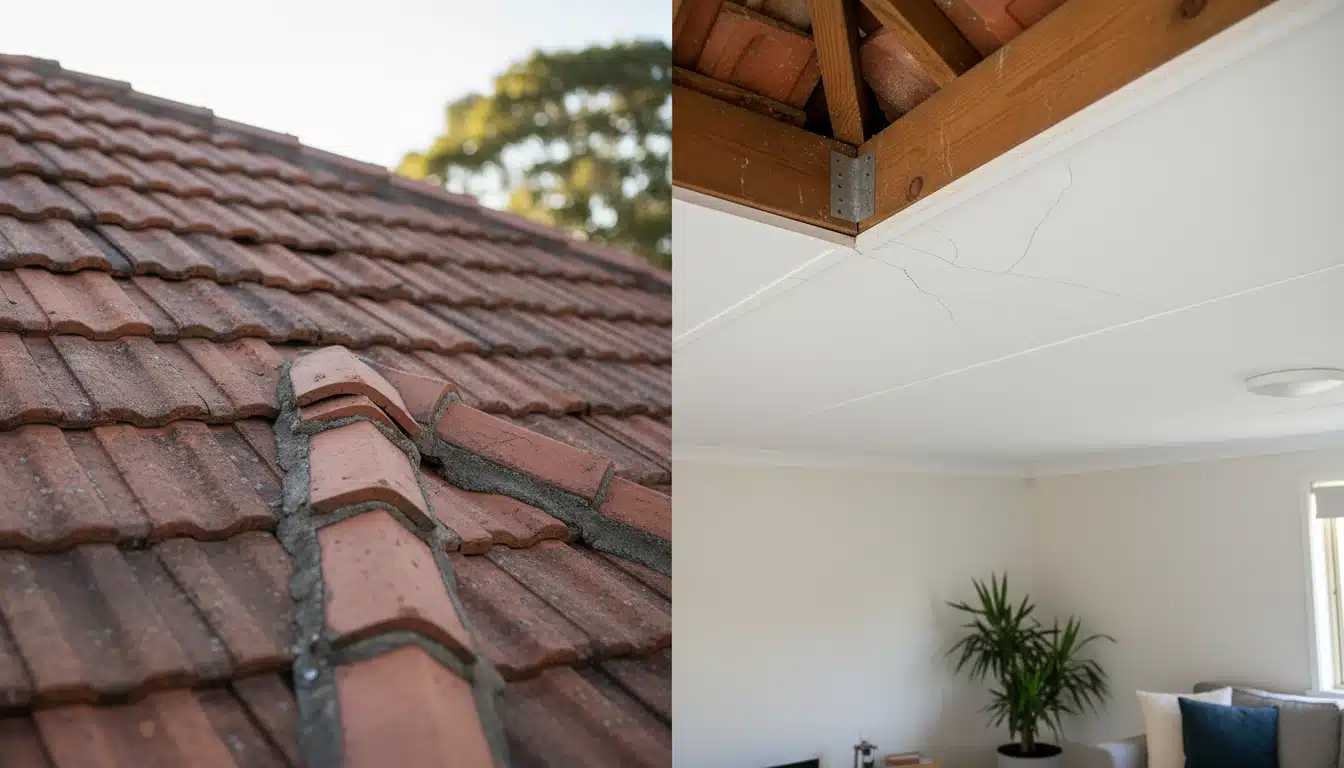
Apron flashing repairs stop water entering at the lower edge of a skylight, chimney or other raised roof feature. A reliable repair restores the path that directs rain back over the roof covering, rather than covering the visible gap with sealant and hoping it holds.
The right repair depends on where the leak begins. Lifted flashing, cracked mortar, failed sealant, damaged tiles and blocked drainage can produce similar marks indoors, so the whole junction needs to be checked before materials are removed.
Skylight flashing fix work requires the apron to work with the side and back flashings while allowing for normal roof movement. Around a chimney, the condition of the masonry, counter flashing and any back gutter also affects the result.
We assess the water path first, then repair the part that has failed. This approach protects useful roofing material, avoids repeated surface patching and gives the repaired junction a better chance of handling Perth sun, seasonal rain and wind-driven water.
What apron flashing does
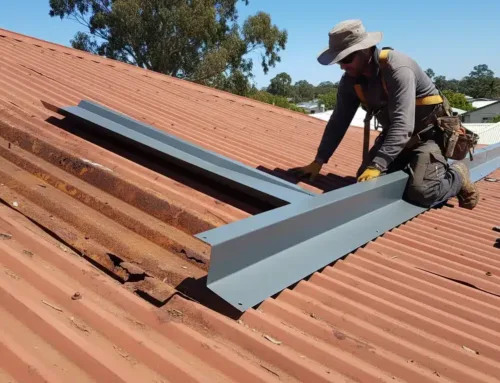
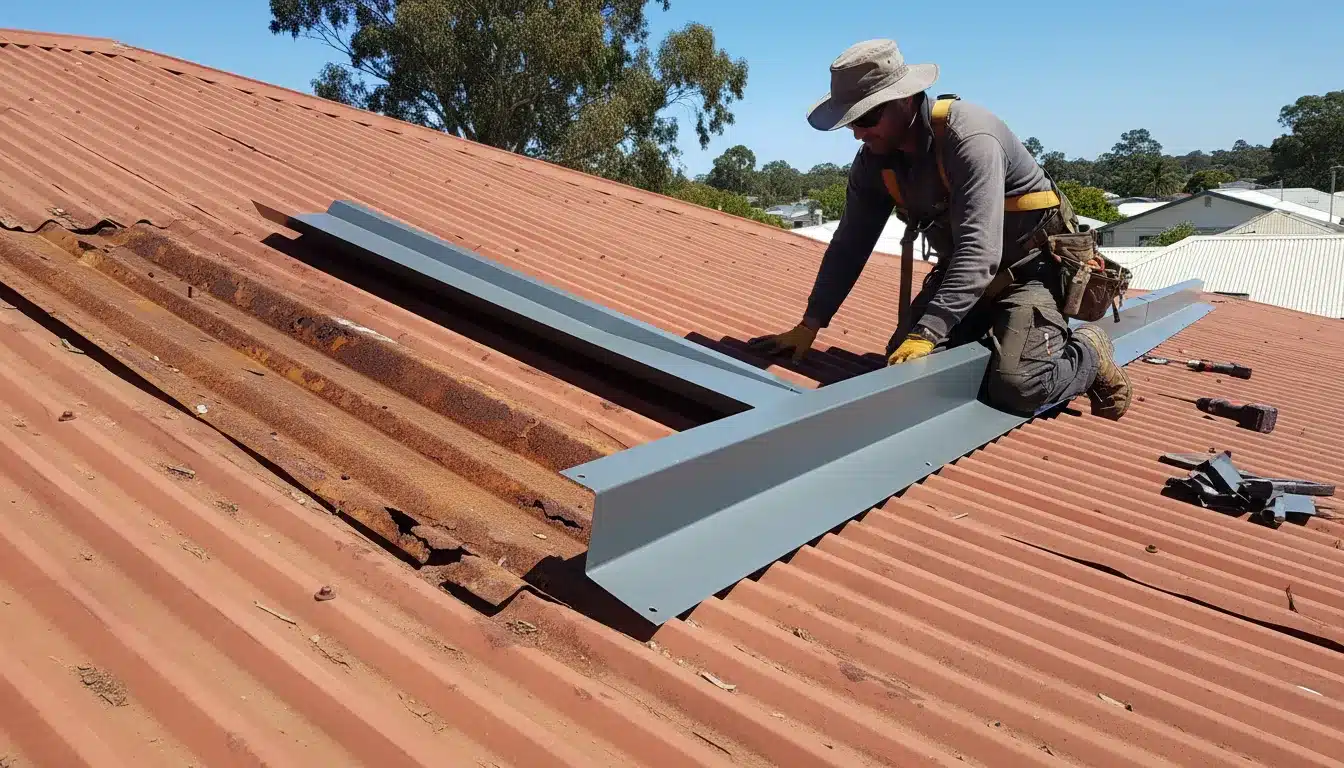
Apron flashing runs across the lower side of a roof penetration. It catches water moving down the roof and returns it to the exposed roof surface. On a tiled roof, it must meet the tile profile without leaving channels that draw water beneath the laps. On a metal roof, it must suit the sheet ribs, pitch and direction of runoff.
The apron is not a stand-alone seal. Side flashings guide water past the penetration, while a back flashing or back gutter manages water arriving from above. Our roof repairs consider this complete arrangement because a sound lower apron cannot compensate for water entering at an upper corner.
Skylight waterproof seal performance therefore relies on geometry as much as adhesion. Correct falls, overlaps and turned edges do most of the weatherproofing work. Compatible sealant supports those details at selected joints, but it should not become a thick surface cap over a poorly arranged flashing system.
Why skylight apron flashing starts to leak
Skylights interrupt an otherwise continuous roof plane. Their frames, flashings and surrounding roof materials heat and cool at different rates. Over time, that movement can loosen fasteners, open fine gaps or break the bond of old sealant. A leak may appear only during prolonged rain or when wind drives water towards one exposed edge.
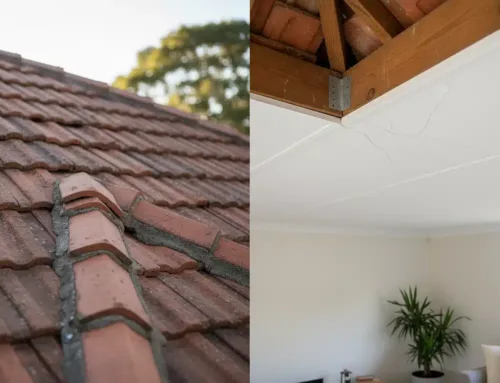
Tiles around a skylight can also crack, shift or sit too tightly against the frame. Small alignment problems may send runoff towards the opening instead of towards the gutter. Our tile repairs address damaged or badly seated tiles when they are part of the leak path, rather than treating every stain as a flashing-only fault.
Leaves, seed pods and roof grit can collect on the upslope side of a skylight. This debris slows drainage and encourages water to move sideways around the frame. It can also conceal corrosion or a lifted edge. Cleaning must be controlled because aggressive scraping or unsuitable pressure can damage coatings, flashing surfaces and tile edges.
Old sealant is another common weakness. UV exposure can make it hard, shrunken or brittle, while dust and oxidised material reduce adhesion for later patches. Adding fresh sealant over contaminated material usually creates an untidy temporary barrier. The failed material needs to be removed and the underlying flashing checked before a compatible replacement is considered.
Why chimney apron flashing needs a broader inspection
A chimney introduces more materials and junctions than most skylights. Brickwork, render, mortar, lead or formed metal flashing, roof tiles and counter flashing may all meet within a small area. Water found near the lower apron may have entered through a cracked mortar joint or travelled around the chimney from the upslope side.
Lead flashing can split along a worked fold or lift at an exposed edge after years of movement. Formed metal can corrode where water and debris remain trapped. If the material is fatigued across several points, repeated patches are unlikely to restore the original water path. Replacement can then be more sensible than another local seal.
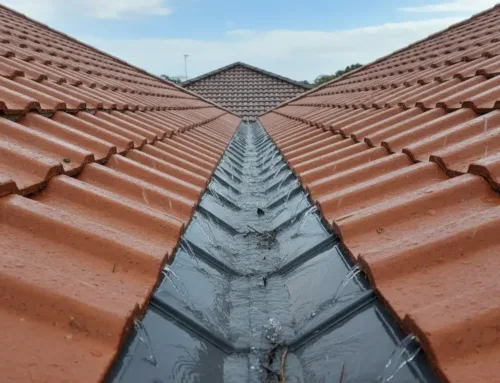
The upslope detail matters just as much. A broad chimney may need a back gutter or cricket to divide runoff and send it around both sides. When that route is blocked, water pressure increases behind the chimney and the first indoor mark may appear below the apron. Clear gutters and downpipes also help the wider roof drainage system move stormwater away without avoidable overflow.
Counter flashing protects the top edge where apron or side flashing meets masonry. Loose mortar, a shallow chase or crumbling render can let water behind the metal even when the exposed apron looks intact. Repairs may therefore include securing the flashing termination and making the surrounding masonry sound enough to hold it.
How we trace the source of the leak
Diagnosis begins with the timing and position of the moisture. A stain that grows during wind-driven rain suggests a different route from dampness that appears after hours of steady runoff. Permacoat uses that weather history to separate an active leak from old staining that remains after the area has dried.
The visible roof inspection then follows water from the area above the penetration to the apron below. We look for lifted corners, cracked folds, corrosion, failed sealant, loose fasteners and poor overlaps. Tile cuts, sheet profiles, valleys and drainage channels are checked at the same time. A professional roof clean can expose hidden defects where built-up dirt or organic growth is obstructing the inspection area.
Where safe access is available, the roof cavity can show whether water enters at the lower edge or travels along framing, battens or sarking from higher up. Damp timber, stained underlay, rust marks and wet insulation all help map the route. Water near electrical fittings requires particular caution and should not be approached as an ordinary do-it-yourself roof check.
We do not assume that the nearest visible gap is the source. We have worked on more than 30,000 roofs, and that breadth of experience matters when several small defects could explain the same ceiling mark. A precise repair scope begins by separating the entry point from the place where water finally becomes visible.
Repair options for skylight flashing
When the existing apron is sound but nearby tiles have moved, the repair may involve lifting, cleaning and reseating those tiles. Broken pieces should be replaced, and the laps must continue to shed water towards the gutter. This preserves a serviceable flashing while correcting the route that was directing runoff towards the skylight frame.
Failed sealant should be removed rather than buried. The joint needs clean, dry and compatible surfaces before new material is applied. Salt, dust, old residue and oxidation can all weaken adhesion. Where the surrounding finish has deteriorated, suitable roof coatings may form part of broader maintenance, but coating cannot replace a correctly shaped and lapped flashing detail.
A short, split or badly dressed apron may need to be rebuilt. The replacement must fit the roof profile, extend far enough to discharge water and connect properly with both side flashings. Corners need careful treatment because an open corner can admit wind-driven rain even when the centre of the apron appears secure.
If the skylight frame itself is damaged, distorted or poorly fitted, replacing only the apron may leave the underlying problem unresolved. The repair scope should distinguish defects in the roof flashing from defects in the skylight unit. That decision is best made before tiles or sheets are cut for a new detail.
Repair options for chimney flashing
Loose flashing can sometimes be re-fixed when the metal remains sound and the masonry can support a secure termination. The finished edge should sit firmly in its chase or counter-flashing detail without creating a ledge that holds water. Loose or cracked mortar must be repaired as part of the junction, not hidden behind sealant.
Split or heavily fatigued lead may need replacement. A new detail can be formed with appropriate laps and support for the roof pitch and tile profile. The objective is to move water around and below the chimney cleanly, while allowing normal thermal movement without concentrating stress at one fold.
Widespread corrosion, recurring leaks and extensive deterioration may point to work beyond a local flashing repair. Our re-roofing assessment is relevant when failures extend across the roof covering or its supporting materials. A local apron repair remains the better choice when the surrounding roof is sound and the defect is genuinely confined to the penetration.
Any back gutter behind the chimney must also be cleared and checked for fall, capacity and sound joints. Repairing the lower apron while leaving an obstructed or damaged upslope route simply sends the same volume of water back towards the vulnerable junction.
Avoiding repeat leaks after repair
Surface sealant is most likely to fail when it is asked to bridge movement or correct poor drainage. A neat bead has a useful role at compatible joints, but thick layers can conceal corrosion, trap dirt and make later inspection harder. The repaired flashing should shed water correctly before sealant is added.
Interior repainting should wait until the roof has been repaired, the affected materials have dried and later rain has provided a useful check. Our roof painting work is kept separate from leak diagnosis because a fresh finish should never conceal active moisture or staining that still needs investigation.
Regular inspection is particularly useful after storms and during periods of heavy leaf fall. The focus should be on clear drainage paths, intact tiles, secure exposed edges and any early change in sealant condition. Maintenance is simpler when a lifted edge or cracked tile is found before repeated wetting damages insulation or ceiling material.
Owners considering wider work can also compare a focused repair with tiled roof restoration when the roof has broader wear. The condition of the main covering should drive that decision. A sound roof with one failed apron does not need an oversized scope, while numerous defects should not be disguised as one isolated leak.
Choosing the right repair scope
A successful skylight flashing fix or chimney apron repair starts with the full water path. The lower apron, side flashings, back drainage, tiles or sheets, sealant and masonry each have a distinct job. Repairing the failed element in that system is more dependable than sealing whichever gap is easiest to reach.
We can inspect the junction, identify whether the fault is local or part of wider roof deterioration, and set out the appropriate next step. To arrange an assessment for a leaking skylight or chimney flashing, contact us.