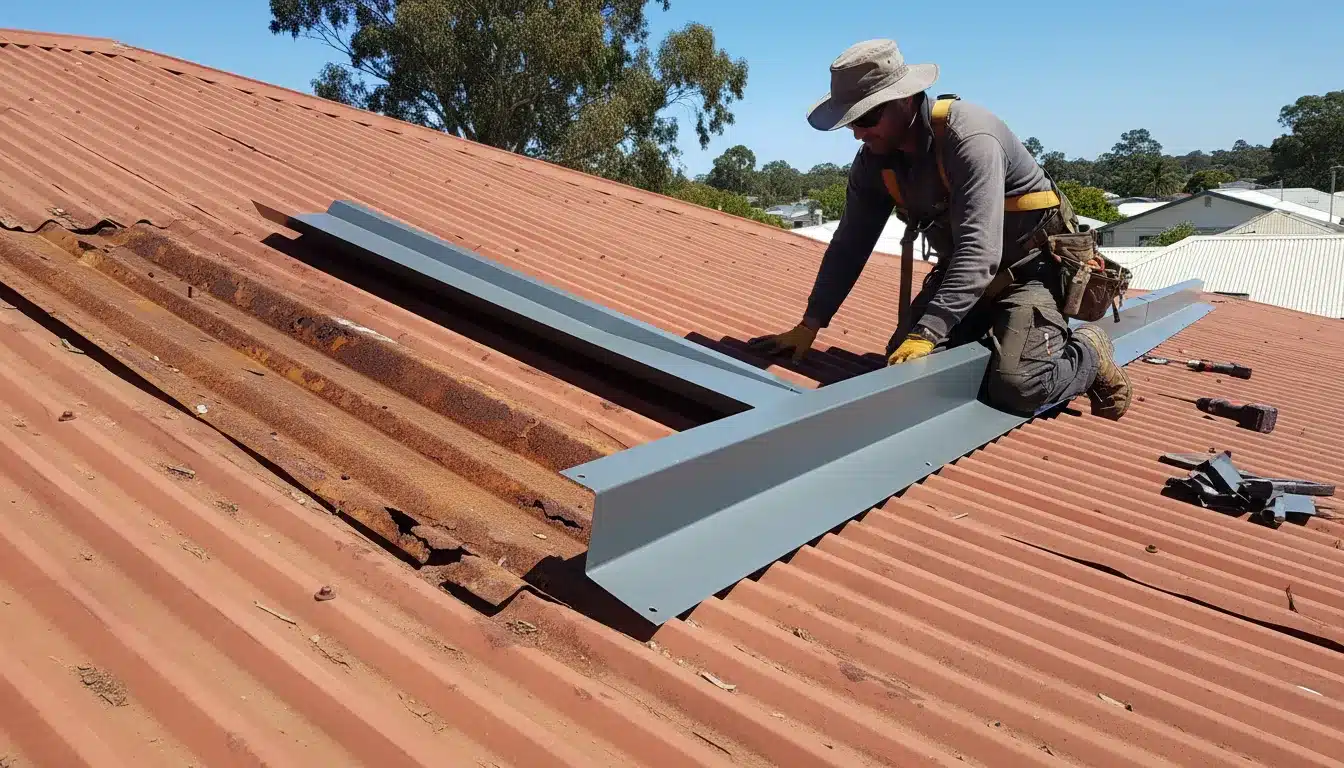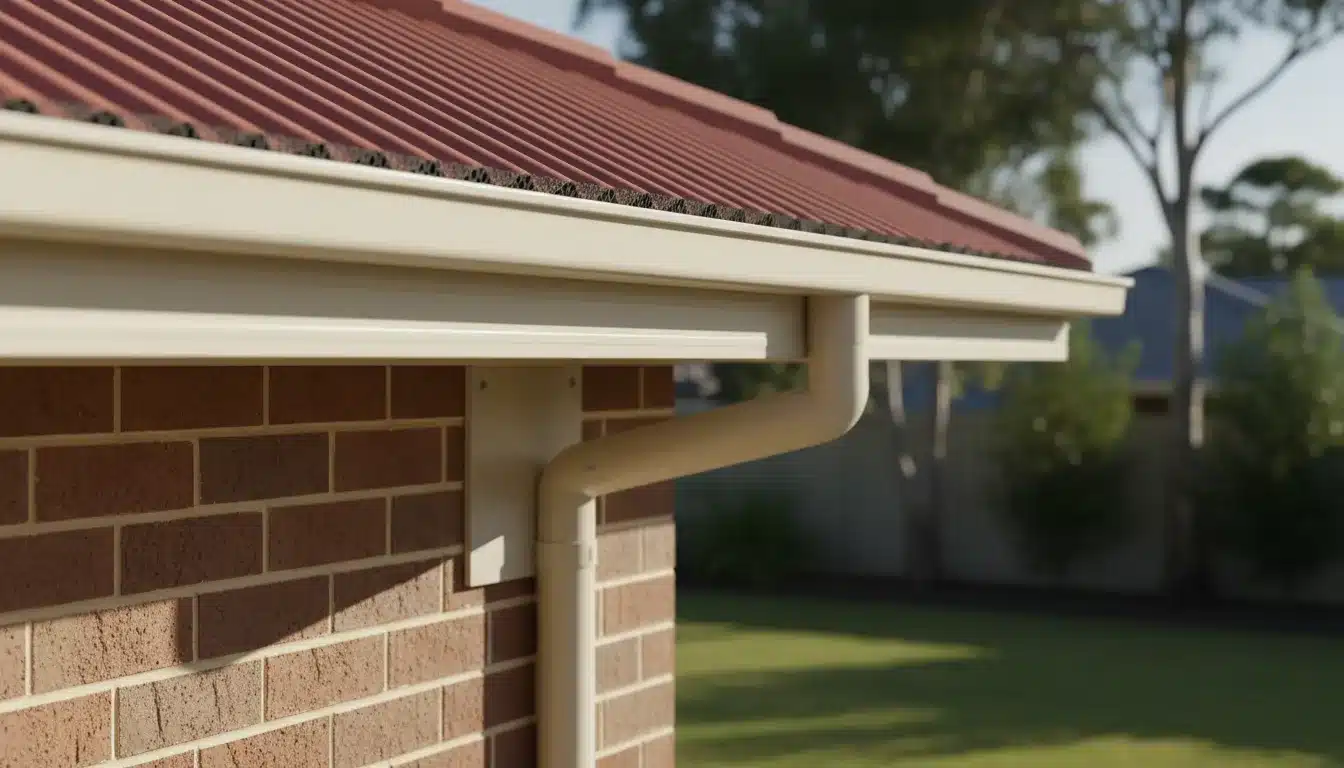
Kick-out flashing is important because it turns roof runoff away from the point where a sloping roof finishes against a wall. Without that small diverter, water can miss the gutter, wet the brick face or enter the wall cavity.
The detail completes the lower end of the roof-to-wall flashing. It does not make the whole junction waterproof by itself, but it gives water carried down the flashing a controlled exit before it reaches a vulnerable corner.
WA brick veneer homes need this detail because the outer brick skin, cavity and internal frame perform different jobs. Brick veneer protection relies on incidental moisture draining safely, rather than concentrated roof runoff being directed into the cavity.
A missing, undersized or badly lapped kick-out may remain unnoticed in light rain. The problem often becomes visible during wind-driven winter rain, when runoff reaches the junction quickly and is pushed towards gaps beside the wall.
What kick-out flashing does
Roof-to-wall flashing manages water along the sloping junction between a roof and a vertical wall. The kick-out sits at its lowest point and turns that moving water outwards. Depending on the roof geometry, the safe destination may be the gutter or a lower roof surface that can carry the flow away.
The position matters. A diverter installed too high leaves an unprotected section beneath it, while one added too low may allow water to reach the wall before it is redirected. Its shape also needs to suit the roof pitch, the wall finish and the way the gutter meets the roof edge.
Kick-out flashing works as part of a sequence. Upper pieces must shed over lower pieces so gravity keeps water on the outer face of the metal. Reverse laps, open corners or a diverter pushed behind the main flashing can create an entry route even when the metalwork looks complete from the ground.
Tiles around the junction also need to sit correctly. A cracked, displaced or poorly seated tile can change the water path and expose the lower flashing to more runoff than intended. We include nearby tile repairs when the roof covering is contributing to the same fault.
Why WA brick veneer walls are vulnerable
Brick veneer construction normally includes an outer brick skin, a cavity and an internal framed wall. The cavity helps separate the exterior masonry from the interior structure and provides a route for incidental moisture to drain. It is not intended to receive a concentrated stream from a roof junction.
When the kick-out is absent, runoff can follow the wall flashing to its end and continue behind render, beside the fascia or into the cavity. Once inside, water may move down or sideways before it becomes visible. The internal stain can therefore appear some distance from the original opening.
Perth weather can make the fault intermittent. Strong sun heats roof metal, tiles, sealants and wall finishes, then cooler conditions contract them. Seasonal movement can open a small edge or weaken a previous patch. Wind-driven rain can exploit that opening even if ordinary vertical rain has not caused an obvious leak.
The drainage below the junction matters just as much. A sound kick-out cannot solve a gutter that is blocked, badly aligned or unable to discharge properly. Where overflow or splashback is part of the problem, we assess the relevant gutters and downpipes with the flashing rather than isolating one component.
Where kick-out details are commonly missed
Lower roofs that meet upper-storey walls are a common risk point. Water travels down the long wall junction and gathers at the bottom, often close to a gutter end, fascia return or change in roof level. A small omission there can expose the wall to runoff from an entire roof plane.
Porches, garages and additions can create similar junctions in tighter spaces. The gutter may finish close to the wall, tiles may need cutting and the original brickwork may have render or previous sealant over it. Those constraints make the final termination easy to conceal or complete poorly.
Renovation work can also disturb an existing diverter. Replacing tiles, changing gutters, adding a roof section or repairing wall finishes may alter the relationship between components. The new work needs to retain a clear outward path instead of sealing over the route water should take.
Moss, lichen, dirt and old patching compounds can hide the lower edge during inspection. When build-up prevents the junction from being read properly, professional roof cleaning can expose the roof surface and drainage channels. Cleaning is preparation, not a substitute for correcting failed flashing.
Signs the flashing needs attention
Exterior staining is often the clearest early clue. Look for dirty streaks, persistent damp areas or deposits beginning below the end of a roof-to-wall junction. A mark that returns after rain deserves attention even if the brickwork dries between weather events.
Inside, moisture may appear near a ceiling line, window head or room corner. Plasterboard swelling, peeling paint, a musty smell or a stain that grows after storms can indicate water moving through the cavity. The visible symptom identifies an affected area, not necessarily the precise entry point.
Eaves and fascia can show the same water path from another angle. Bubbling paint, softened timber or repeated staining beside the wall suggests runoff is leaving the intended route. The gutter end, flashing termination, roof covering and wall finish should then be considered together.
Permacoat reads these connected signs before setting the scope. Our work across 30,000 roofs informs that practical approach, but each junction still needs to be assessed on its own geometry, materials and pattern of water entry.
Safe observations after rain can help. From ground level, note where the water leaves the roof edge, whether it reaches the gutter and where staining begins. Photographs taken from the same position across separate weather events can show whether the pattern is recurring without anyone climbing onto a wet roof.
How we assess the water path
The first task is to identify where runoff travels before, through and after the junction. We check the roof plane above, the wall flashing, surrounding tiles or sheets, the lower termination, gutter alignment and visible wall condition. Focusing only on the internal stain can miss the route water followed to reach it.
Old sealant needs careful interpretation. A thick bead may indicate where someone previously suspected a leak, but it can also hide laps or trap water against the wall. The durable answer is correctly integrated metalwork, with sealant used only where it supports an appropriate detail rather than replacing one.
When access and conditions allow, surrounding roof material may need to be lifted so the laps can be seen. We scope roof repairs around the defect found, which may include flashing adjustment, tile replacement, gutter correction or another connected source of water entry.
The wall and eaves also need to be checked for consequences. Damp insulation, affected plasterboard, timber deterioration or retained moisture will not disappear the moment the roof detail is corrected. Drying and monitoring help separate old moisture from any continuing entry before internal finishes are restored.
Repairing a missing or failed kick-out
A proper repair places the diverter at the lower end of the flashing and integrates it with the existing water-shedding sequence. The piece must project far enough to turn runoff clear of the wall while avoiding a shape that obstructs the gutter or creates a debris trap.
A token metal tab attached to the outside is not always enough. If it sits over the wrong lap or leaves a gap behind it, water can bypass the visible diverter. Tiles or sheets may need to be lifted so the new section can sit beneath the correct upper material and over the correct lower material.
Where the junction fault sits within wider tile, ridge or surface deterioration, tile roof restoration may be assessed as a broader option. The active leak route still comes first, and a sound roof with one local defect should not be pushed into unnecessary work.
The same order applies to finishes. Roof coatings belong only after the substrate is sound, water entry has been resolved and preparation is complete. A coating can protect a suitable roof surface, but it cannot rebuild a missing diverter or correct backward flashing laps.
If a wider colour change forms part of an agreed restoration, roof painting comes after repairs and preparation. Paint on the roof or wall should never be used to conceal an unresolved moisture path, because concentrated runoff will continue testing the same weak junction.
Choosing the right scope
A contained fault may need only local flashing work and repairs to adjacent roof components. The decision should be based on the condition revealed at the junction, not the size of the first stain. Correcting the water path early can limit the amount of wall, eave and interior material affected.
Widespread failure changes the comparison. If the roof covering or supporting materials have reached the end of practical repair, re-roofing may be considered separately from a local kick-out repair. One missing detail alone does not justify replacing an otherwise serviceable roof.
Shared roofs require clear coordination because the visible symptom, roof junction and access route may involve different lots. Our strata roof services support condition assessment and agreed scopes across managed properties without treating every connected roof area as though it has the same defect.
Practical questions about kick-out flashing
Can sealant replace kick-out flashing?
No. Sealant may support a correctly formed junction, but it does not provide the same controlled outward turn as properly lapped metalwork. Movement and weathering can open a sealant-only patch, especially where runoff repeatedly reaches the same point.
Is the detail needed on a small roof section?
Yes. A porch, garage or lower roof may be small, yet its slope can still concentrate water at one corner. The catchment size, roof pitch, gutter position and exposure determine the flow that the lower junction must manage.
Does every internal damp mark mean the kick-out has failed?
No. Tiles, ridge work, penetrations, gutters and other flashings can also admit or redirect water. The symptom should be matched to the exterior water path before a specific repair is selected.
What should homeowners record?
Note when the mark appears, the wind direction if known, whether the gutter overflowed and any exterior staining visible from a safe position. Avoid climbing onto the roof, moving tiles or pulling at flashing, as this can enlarge the opening and makes the original condition harder to assess.
Finish the water path, not just the visible patch
The right repair gives runoff an uninterrupted route down the roof-to-wall flashing, out through a properly formed kick-out and into working drainage. If staining, damp corners or eave damage suggests that route is failing, contact us to have the junction assessed and define a repair scope based on the actual water path.