Spare roof tiles are worth keeping because a matching tile can turn an urgent search into a straightforward repair. Tiles vary by profile, lap, thickness, colour and age, so a close-looking substitute may not fit or shed water correctly. Sound spares from your own roof give a roofer a sound chance of restoring the damaged area promptly.
This matters after storms, accidental impact or routine roof access. Emergency tile repairs need the correct fit as well as a quick response. A tile stored at the property can reduce sourcing delays and help the repair blend with the surrounding roof.
A useful stash does not need to take over the shed. A small, labelled group of sound field tiles, ridge pieces and other roof-specific accessories can cover common breakages. Condition, identification and safe storage matter more than quantity.
We have worked on more than 30,000 roofs, and older tiled roofs show why matching materials matter. Profiles change, colours, weather and previous work can leave several tile types on one property. Known spares remove one uncertainty before the next repair begins.
Why Matching Spare Tiles Matter
Roof tiles are not universal building components. Two tiles can look similar on the ground yet differ through the nose, side lock or water channel. Those details determine how the replacement interlocks with the tiles around it and whether it sits at the same height.
A badly matched tile can rock, sit proud or leave an awkward gap at the lap. Wind-driven rain can then reach beneath the covering even when the repair looks acceptable from below. Our roof repairs start with the cause and condition of the problem rather than treating every broken tile as an isolated swap.
Tile Profiles Can Become Hard to Source
Manufacturers may update, rename or discontinue profiles over time. A roof installed decades ago can therefore need salvage stock when a tile breaks. Suitable second-hand tiles may still exist, but locating the right profile can take longer during wet weather or after a widespread storm.
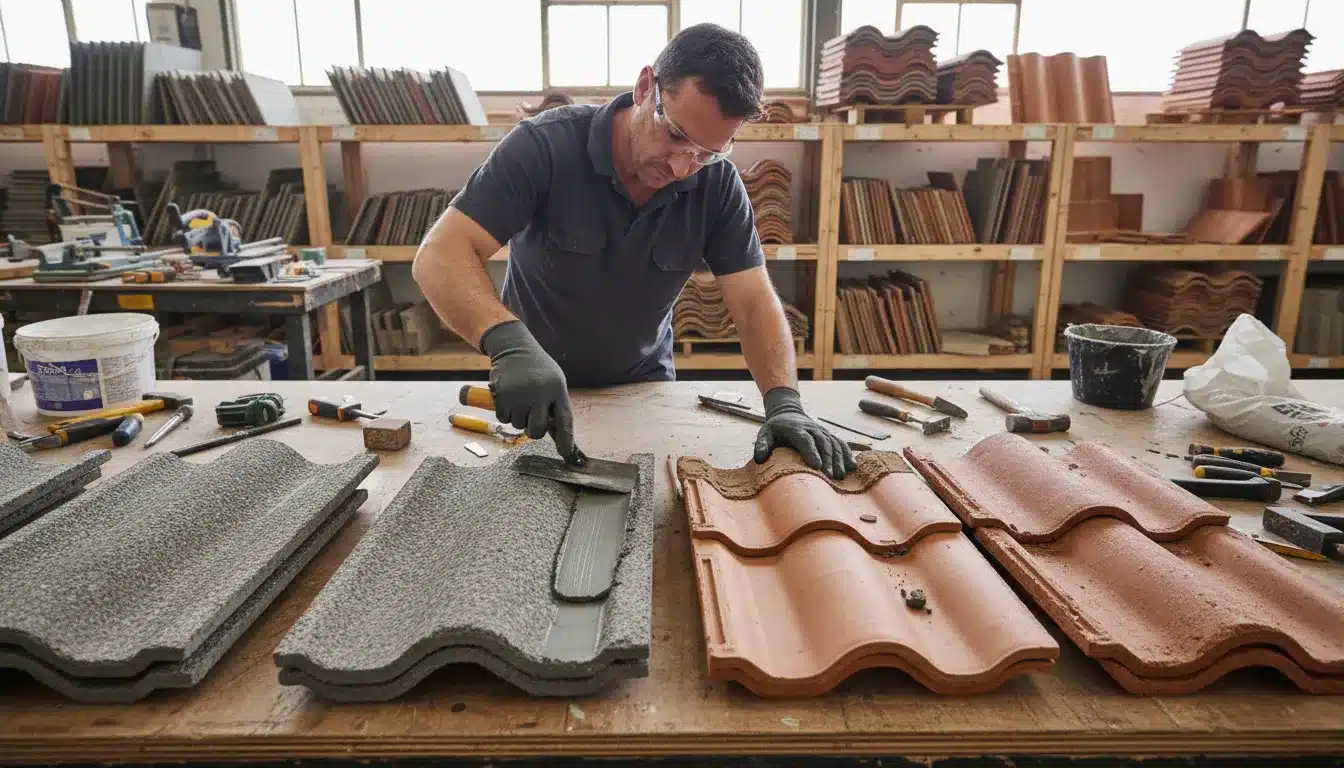
A stored original provides an immediate sample. The underside, side locks, nose and dimensions can be checked before it is fitted. Even a cracked spare that is unsuitable for installation can help identify the correct profile, provided it is clearly marked as a sample only. Keep spare roof tiles in that same decision.
Our tile repair work includes replacing damaged tiles and dealing with related faults. Having the right tile ready does not replace diagnosis, but it gives the repairer a reliable starting point when the visible damage is confirmed. Keep spare roof tiles in that same decision.
Tiles From the Same Roof Usually Blend Better
Colour names are not enough to guarantee a visual match. Sun, rain, lichen and previous coatings change how tiles appear over time. Production variations can also mean that a new tile in the nominally correct colour looks conspicuous among older materials.
A spare kept from the same roof shares the original profile and production characteristics. It may weather differently in storage, but it is often a better candidate than a newly made alternative. Where appearance matters, a roofer can also consider where the replacement will be least noticeable without compromising fit. That sits with Roof repairs.
For a roof receiving broader work, spare tiles still have value. Our tile roof restoration can address worn tiled roofs, while retained matching pieces remain useful for isolated damage and future maintenance.
Emergency Tile Repairs Depend on Speed and Fit
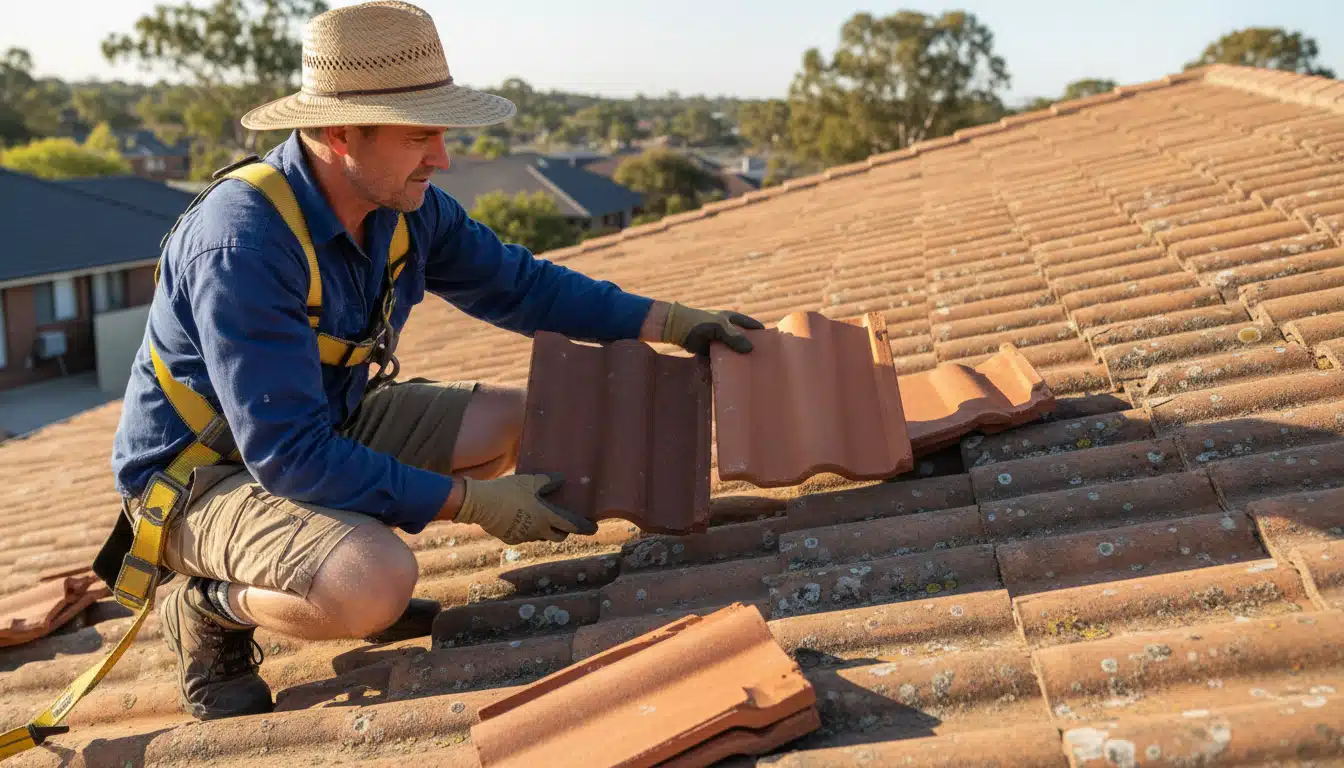
A storm does not wait while an uncommon tile is sourced. Hail, falling branches and strong winds can expose an existing weakness or break a sound tile. If more rain is approaching, the immediate priority is to limit water entry and establish what permanent work is required. That sits with tile repairs.
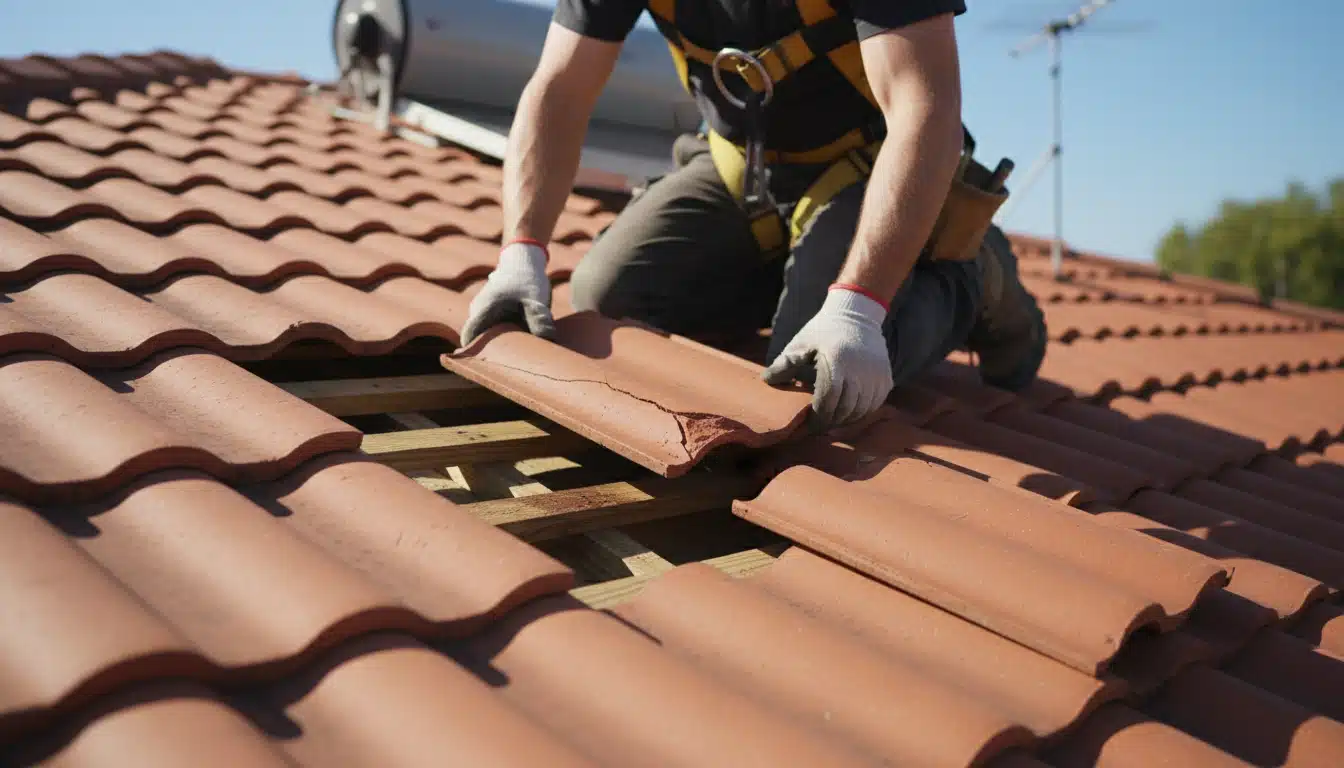
A correct spare can remove a major delay. The roofer still needs to inspect nearby laps, flashing, valleys and the roof space where appropriate, because a visible break may not be the only route for water. The spare simply makes a proper replacement possible when that is the confirmed repair.
Foot traffic is another common reason to keep extra tiles. Solar servicing, antenna work, gutter cleaning and inspections all involve roof access. Older tiles can be brittle, and one misplaced step can damage more than one. A small reserve helps stop routine work from creating a sourcing problem.
Correct Fit Protects the Water Path
Tiles are laid as a system. Their side locks and head laps guide water down the roof and into the drainage system. A replacement that sits high, low or twisted can interrupt that path, allowing wind-driven rain to move beneath the overlap.
This is why filler pieces, forced fits and close-looking profiles are poor long-term answers. When we assess a tiled roof, we look beyond the broken piece to the surrounding courses and any signs of movement. A sound spare must fit naturally and preserve the intended lap.
Temporary protection may still be necessary if the roof is unsafe to access or the right tile is unavailable. It should be treated as a holding measure, not mistaken for a completed repair. A labelled stash improves the chance that the permanent work can proceed as soon as conditions allow. Permacoat treats that as part of the same roof, not a separate product.
How to Store Spare Roof Tiles
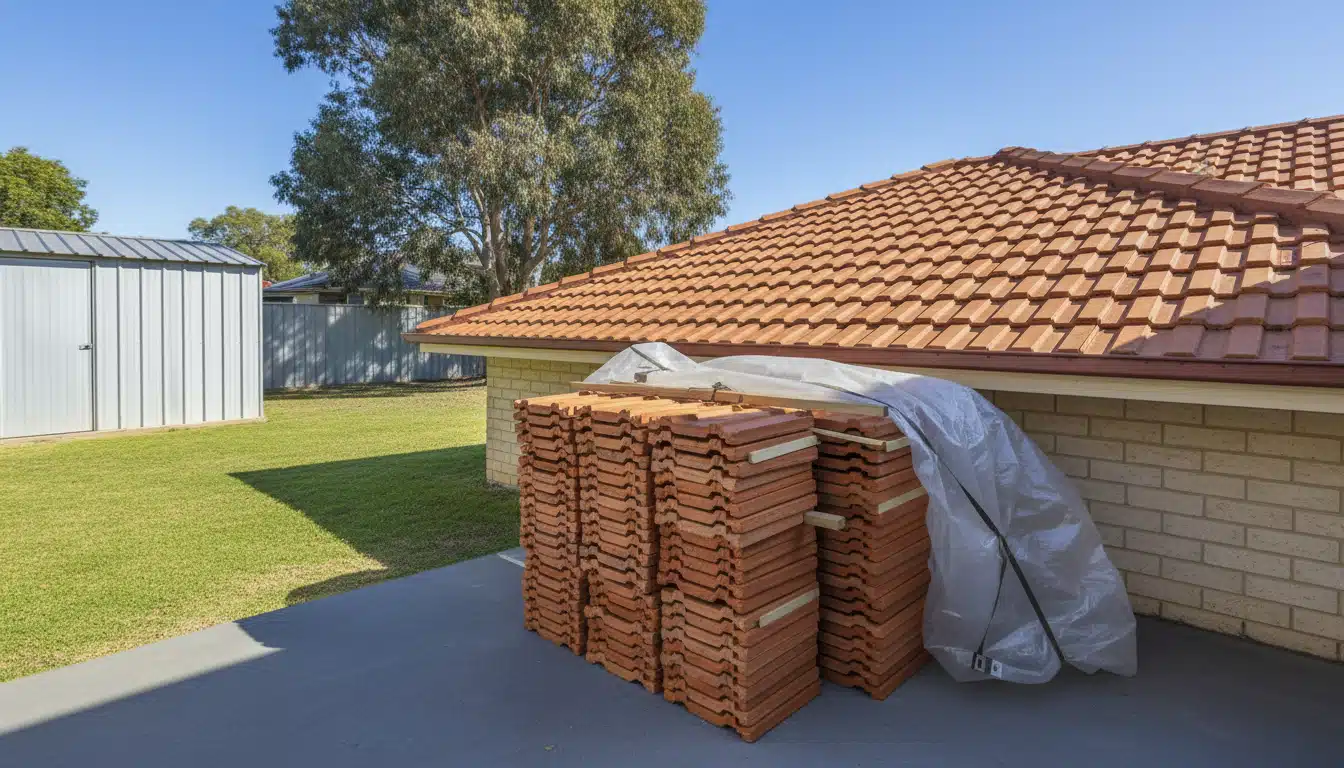
Spare tiles only help if they survive storage. Keep them away from vehicles, bins, bikes, ladders and garden equipment. Corners and noses can break when knocked, while an unstable stack may place damaging pressure on the lower pieces.
Choose a dry, low-traffic spot such as a protected shed area or a stable position beside a wall. Support the tiles in a way that suits their shape rather than dropping them into a random pile. Permacoat recommends keeping the stock accessible enough for a roofer to inspect without moving heavy clutter first.
Label the Tiles and Their Purpose
A simple label can prevent useful stock being discarded. Record that the tiles belong to the roof, where they came from and the profile name if known. If there are tiles from different roof sections, keep the groups separate rather than assuming they are interchangeable.
Photograph the face, underside, side lock and any markings. Store those images with repair invoices or household maintenance records. The photos will not confirm fitness for use, but they can speed up identification if the physical stack is difficult to reach during an urgent call-out.
If a tile is cracked but valuable as a sample, mark it clearly. Do not place it among sound spares where it could be fitted during a rushed repair. Our roof cleaning process includes an inspection for broken tiles and other visible faults, which is also a useful time to check whether the property still has matching stock.
Keep a Small Roof Record
A practical roof record can list the tile profile, repair dates, known leak areas, stored quantities and the location of the spares. Future owners, tenants and property managers may otherwise have no idea why a stack of old tiles was retained.
Update the record whenever tiles are used or added. If broader work changes the roof finish, note that too. A tile can have the right shape but a visibly different surface after the roof has been treated with protective coatings.
Review the stack about once a year and after any impact in the storage area. Separate broken pieces, check that labels remain readable and make sure the tiles are still stable. This quick check is easier than discovering damaged stock while rain is entering the home.
How Many Spare Tiles Should You Keep?
There is no single number that suits every roof. The sensible quantity depends on roof size, age, profile availability, storage space and how often trades need access. The goal is a useful reserve for common breakages, not enough material to rebuild the roof.
A Practical Quantity For Most Homes
Five to ten sound field tiles can be useful for many homes, but an older or discontinued profile may justify keeping more when space allows. If a repair leaves several correct, serviceable tiles, retaining them is usually more useful than throwing them away and trying to replace them later.
Ridge Caps And Specialty Pieces
Keep ridge caps, gable pieces and other accessories when they genuinely match the roof. These shapes may have fewer compatible substitutes than ordinary field tiles. Store and label each type separately so the next repairer can identify its purpose quickly.
Keep Stored Samples Uncoated
If painting forms part of future work, do not coat stored samples casually to make them look neater. Their original finish and markings help with identification. Our roof painting includes preparation and repairs before coating, so sound replacement tiles need to be identified and fitted at the right stage.
When Spare Tiles Are Not Enough
A spare tile solves a material problem, not every roof problem. Water can travel along battens, underlay or framing before appearing as a ceiling stain. Failed flashing, loose ridge capping, rusted valleys and blocked drainage can produce symptoms that seem to point to one broken tile.
If water has entered the home, the roof needs diagnosis as well as a replacement. The surrounding laps, penetrations, valleys and accessible roof space may all need checking. Emergency tile repairs should control immediate exposure, followed by suitable work on the actual entry path.
A spare must also be sound. Check terracotta pieces around the nose, corners and locks. Check concrete tiles for deep cracks, crumbling edges and damage that prevents proper seating. A damaged piece may remain useful for identification, but it should not become the final covering.
Drainage deserves separate attention because a watertight tile field still depends on water escaping correctly. Leaves and sediment can cause gutters to overflow towards fascias, eaves or wall cavities. Our gutter and downpipe services cover damaged or ageing drainage where tile replacement alone will not address the risk.
Repeated Breakages Need a Wider Assessment
One accidental break is different from tiles failing across several roof areas. Repeated cracks, movement or poor seating can point to age, earlier access damage, unsuitable replacements or another underlying issue. Continuing to consume the spare pile without investigating the pattern can hide a growing maintenance problem.
Broader work should be based on the roof’s condition rather than the convenience of available spares. Sound stored tiles can support isolated repairs and help identify the existing profile, but they cannot correct widespread defects by themselves.
The same principle applies to shared buildings. Access arrangements, records and approval processes can slow urgent work even when the right tile exists. Our strata roof services address repairs and restoration for managed properties, where clearly recorded spare stock can make coordination easier.
Frequently Asked Questions
Are Spare Tiles Useful for Emergency Tile Repairs?
Yes. A matching spare can remove a sourcing delay and help a roofer restore the correct lap after storm, impact or access damage. The roof still needs to be checked for any related faults.
Should Cracked Spare Tiles Be Kept?
A cracked tile can be retained as an identification sample if it is clearly separated from usable stock. It should not be fitted as the final replacement.
Can Spare Tiles Be Stored Outside?
They can be stored in a protected, stable outdoor position, but they should be kept away from traffic, falling objects and unstable ground. Clear labelling and safe access matter wherever the tiles are kept.
Should Spare Tiles Stay with the Property?
Yes. Matching tiles are most useful at the roof they came from. If the property changes hands, leave the labelled stock and roof record for the next owner or manager.
Keep Matching Tiles Ready for the Next Repair
A sound time to create a stash is immediately after a repair, while the correct profile is known and sound extras may be available. Keep the tiles stable, label samples and usable stock separately, and record the storage location. That preparation gives the next roofer a better chance of completing a correct repair without avoidable sourcing delays.
If you have broken tiles, an active leak or no reliable record of the roof profile, we can inspect the condition and explain the appropriate next step. For advice on spare roof tiles and Emergency tile repairs, contact us to arrange an assessment.