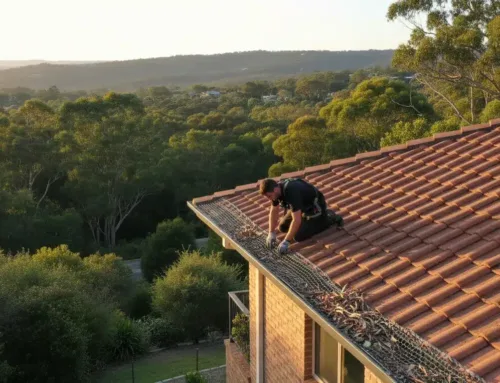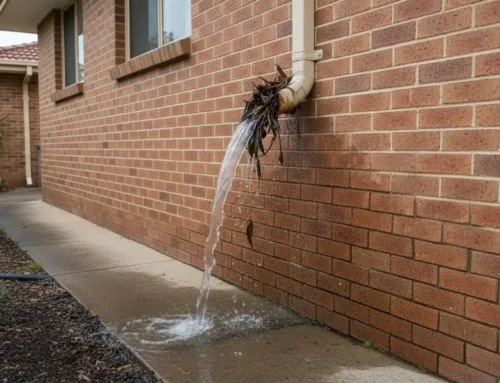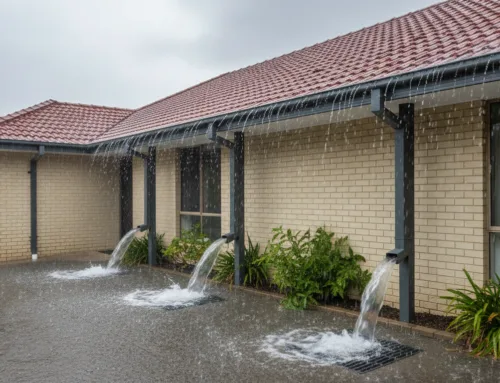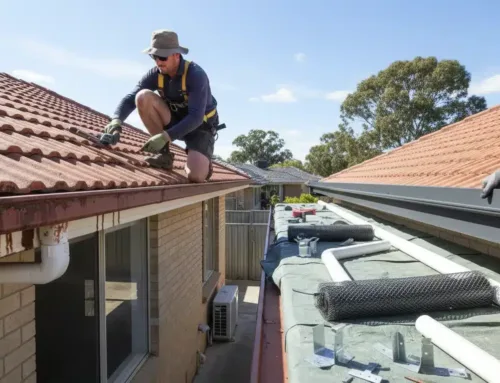
Overflowing gutters cause roof leaks via the eaves when rainwater rises above its intended drainage path and spills behind the gutter. Instead of moving safely into an outlet and downpipe, the water wets the fascia, soffit and lower roof edge. It can then enter gaps beneath tiles, around fixings or beside the sarking before appearing indoors near an external wall.
The visible overflow is only part of the problem. Water pouring over the front lip may be obvious, while water escaping over the back remains hidden from ground level. That rear overflow can continue whenever rainfall exceeds the gutter system’s usable capacity.
Eave leak prevention starts by identifying why the water is backing up and where it travels next. Clearing leaves may solve a simple blockage, but it will not correct poor gutter fall, a restricted outlet, damaged fascia or inadequate drainage capacity.
Overflowing gutter leaks are therefore best treated as a roof-edge drainage problem rather than an isolated ceiling stain. The stain marks the end of the water path, not necessarily the point where rain first entered.
Why Water Moves Into the Eaves
The eave brings together the roof covering, gutter, fascia, soffit and wall line. Each component has a job, but the junction is not designed to hold a gutter full of water. When runoff cannot leave quickly enough, it begins testing joints and edges that normally remain above the waterline.
A sound gutter collects water from the roof and directs it towards its outlets. A blocked, sagging or distorted run reduces that flow. Water then rises until it escapes over the front, back or end of the gutter.
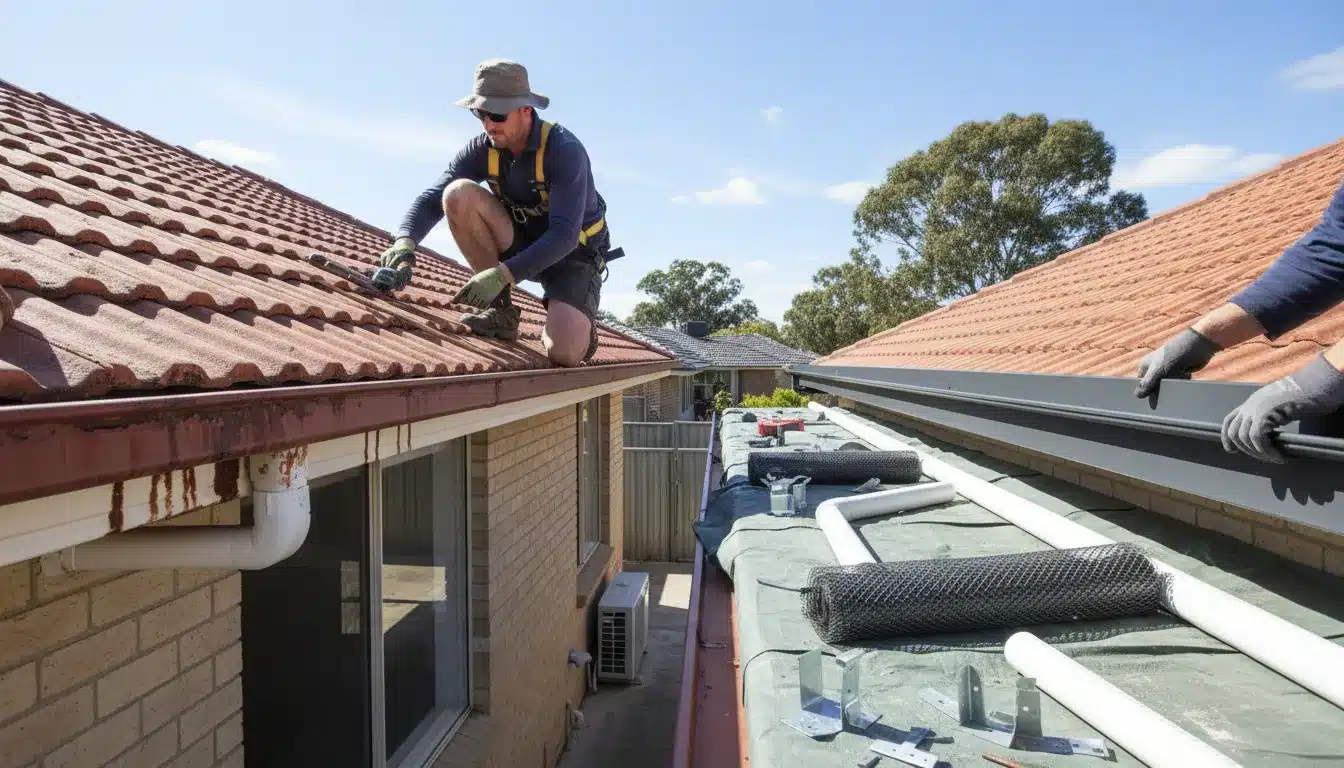
Our gutter and downpipe work can address damaged or ageing drainage components when cleaning alone cannot restore reliable flow.
Backflow Behind the Gutter
Rear overflow is difficult to spot because the gutter conceals it. Water can run down the back face, soak the top or front of the fascia and collect around brackets. If the first tile course or sarking edge does not discharge cleanly into the gutter, water may also move beneath the roof covering.
This explains why a roof can leak at the eaves without a visibly broken tile above the room. The roof plane may still shed rain correctly, but the edge is being flooded from below or from the side.
Where the entry point is uncertain, our roof repairs start with the condition of the roof and the likely moisture path rather than assuming the nearest tile is responsible.
Fascia and Soffit Exposure
The fascia supports the gutter and helps define its alignment. Repeated wetting can cause timber fascia to swell, paint to blister and fixings to loosen. As the fascia changes shape, the gutter fall can worsen, leaving more standing water after rain.
Soffit linings often reveal the problem later. Flaking paint, ripples, brown marks or a damp shadow can appear after moisture has repeatedly escaped behind the gutter. These signs may dry between storms and return only during heavier rain.
Broken or displaced tiles can create an additional route near the lower roof edge. Our tile repair service is relevant when an inspection finds cracked tiles, failed positioning or another local tile defect contributing to the leak.
How Overflow Becomes an Indoor Leak
Water does not always fall straight down from the point of entry. Once it reaches the lower roof cavity, it can move along timber, sarking, insulation or lining edges before dripping onto the ceiling. The indoor mark may therefore sit some distance from the overflowing gutter section.
Capillary action can draw moisture through narrow junctions, while gravity carries it towards a low point. A small opening can admit a meaningful amount of water when it remains submerged or repeatedly wetted through a storm.
Wind-Driven Rain at the Roof Edge
Wind changes the direction of overflow. Water that would drop away in calm conditions can be pushed back against fascia, beneath tile edges or into the soffit line. This is why a gutter may appear adequate during light rain but leak during a short, windy downpour.
The timing of the symptom matters. If staining develops only during rain from a particular direction, the vulnerable edge may depend on wind pressure as well as water volume. We look at the roof edge as a connected system, including tile position, gutter height, fascia condition and the route into the cavity.
Accumulated moss, lichen, dirt and loose debris can also restrict flow around roof edges and valleys. Our roof cleaning includes attention to gutters and downpipes as part of preparing and maintaining the wider roof surface.
Sarking Can Shift the Drip Point
Sarking beneath tiles can carry water sideways when moisture reaches an exposed edge, damaged lap or low point. The eventual drip may land several metres from the original entry point, making the ceiling stain a poor guide when considered by itself.
A useful inspection follows the roof slope above and to either side of the stain. Damp insulation, marks on framing or discolouration on sarking can help connect the indoor symptom with the roof-edge source.
Coatings are not a substitute for correcting failed drainage, but the roof surface still needs to be assessed as part of the whole system. Our roof coatings are applied as part of suitable roof work after preparation and necessary repairs, rather than over unresolved defects.
Common Causes of Overflowing Gutter Leaks
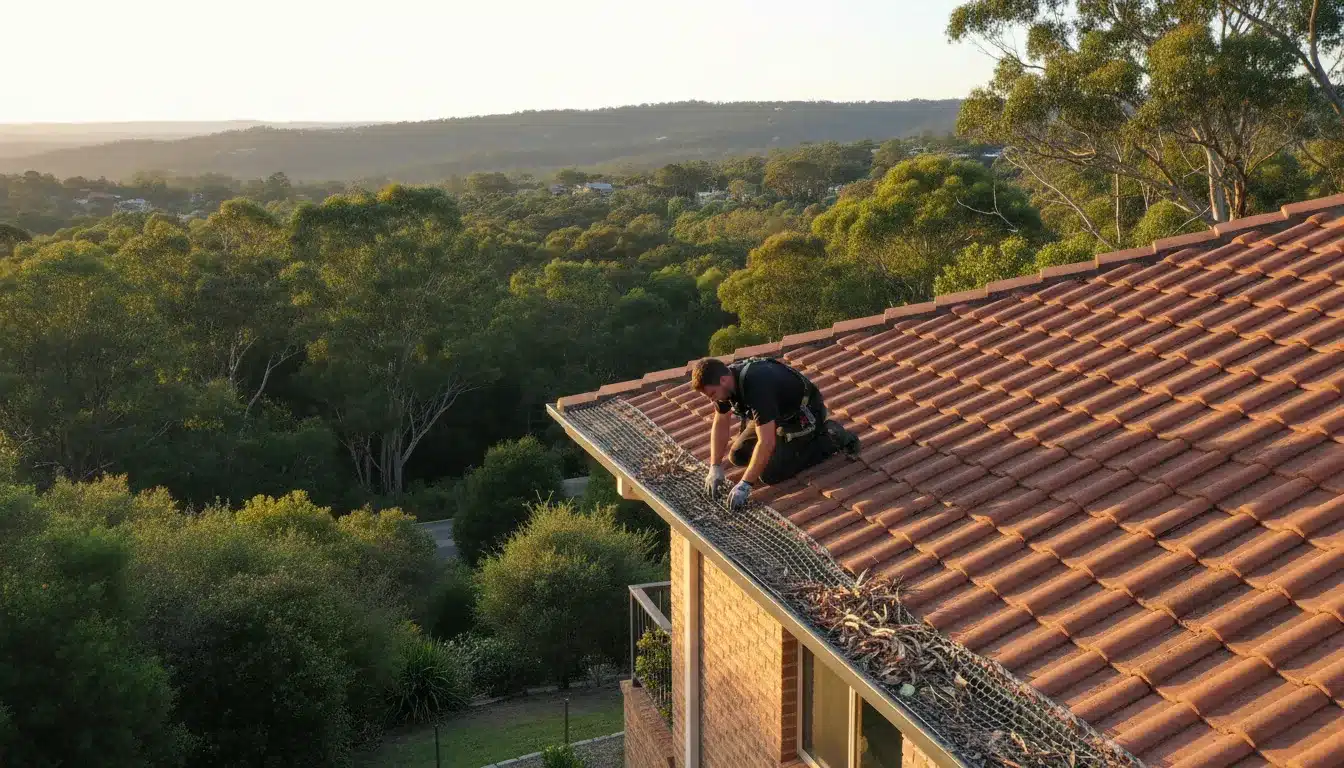
Leaves are common, but they are not the only restriction. Seed pods, roof grit, bird debris, compacted silt and loose fragments can collect around an outlet. A tennis ball or similar object may block the dropper while the rest of the run looks relatively clear.
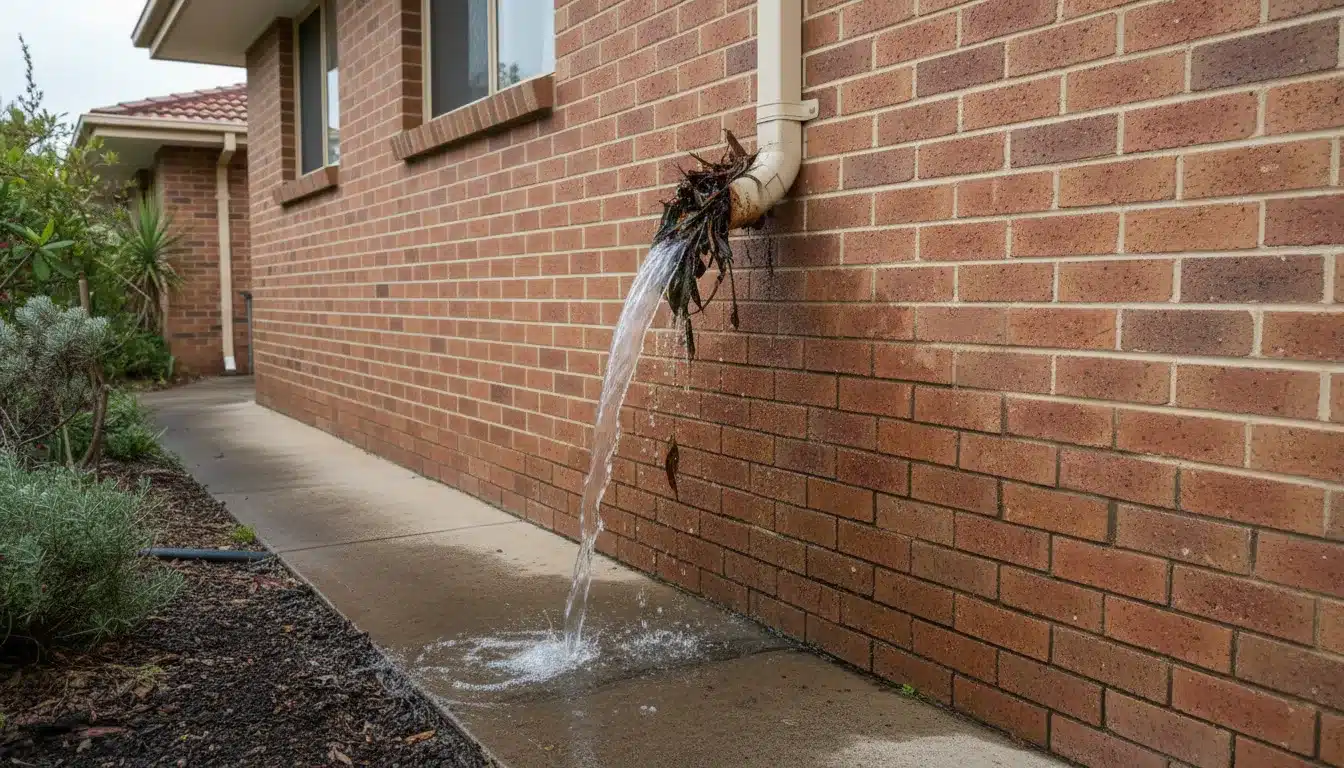
We treat the outlet as the narrowest point. When it slows, water backs up along the gutter until it finds a low edge. This can cause concentrated eave damage beside one downpipe even when most of the gutter remains open.
Poor fall creates a different problem. A gutter that sags between brackets or sits against distorted fascia can retain water after each shower. Standing water leaves sediment, sediment traps more debris, and the added weight can worsen the sag.
Permacoat has restored more than 30,000 roofs across Perth, north and south of the river, giving us broad experience with the way roof surfaces, gutters and edge details interact in local conditions.
When Capacity Is the Limiting Factor
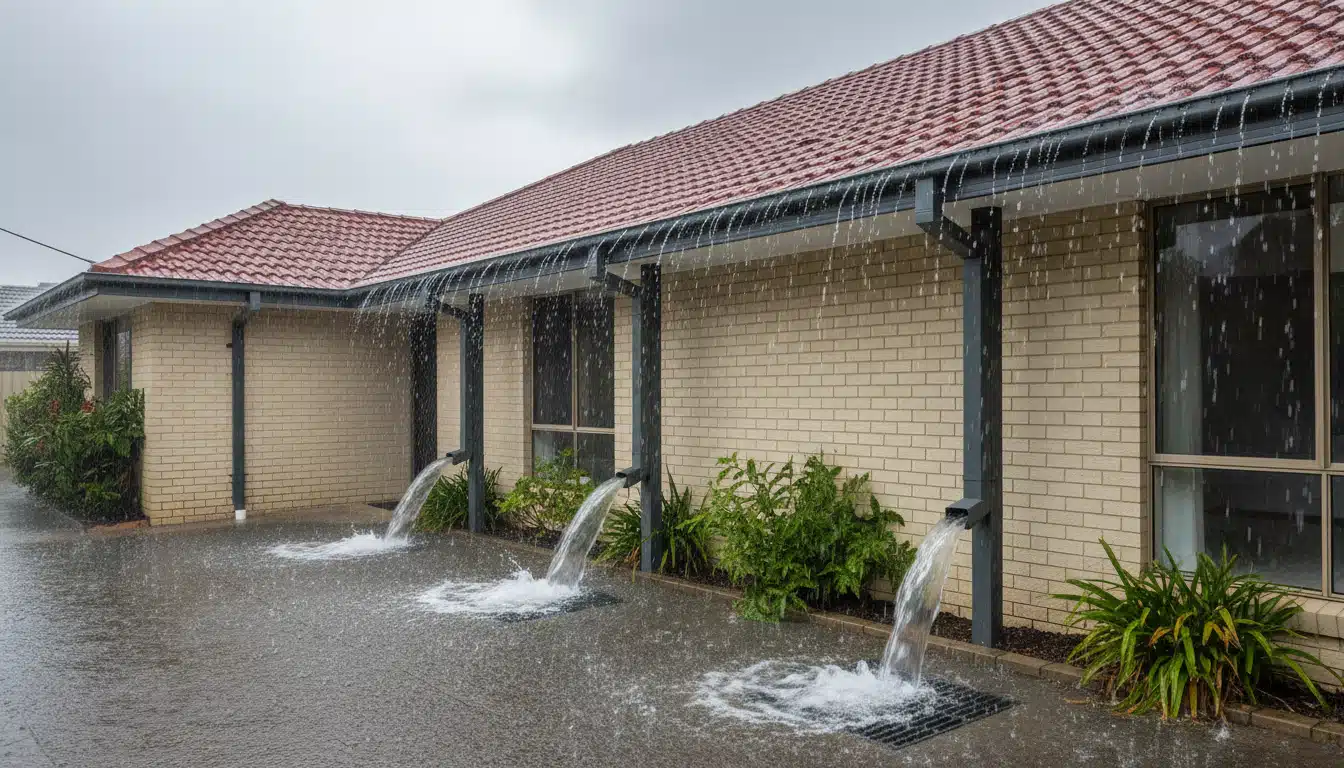
Some clean gutters still overflow because too much runoff reaches a short section at once. A large roof plane, steep pitch or valley can concentrate water near one outlet. Light rain stays within the system’s capacity, while an intense burst fills it faster than the downpipe can discharge.
Capacity needs to be considered across the full route. Gutter profile, outlet size, number and position of downpipes, roof catchment and ground discharge all affect performance. Enlarging one part may not help if the next part remains restricted.
A faded or weathered roof may need separate surface work, but that work should not distract from a drainage fault at the eaves. Our roof painting includes preparation and assessment appropriate to the roof rather than treating colour as the only concern.
Signs That Point Back to the Gutter Line
External evidence often appears before an indoor leak. Dark streaks below a gutter, washed garden beds, splash marks on walls and peeling fascia paint can all indicate repeated overflow. Rust staining around brackets may also point to standing water or a persistent wet area.
Photos taken from a safe position during rain can help show exactly where the gutter spills. Once conditions are dry, the same run may look normal from the ground and provide little evidence of its behaviour under load.
Inside, a narrow stain near an external-wall cornice is consistent with entry around the eaves. Bubbling paint, a musty smell, swollen trim or damp insulation near the wall plate can support the diagnosis. Electrical fittings near a wet ceiling require particular caution.
If a roof has widespread deterioration or chronic leaks across several areas, repeated local repairs may not resolve the underlying condition. Our re-roofing is reserved for roofs where assessment shows that complete replacement is the appropriate long-term response.
What to Check Safely
From ground level, note whether overflow occurs along the front lip, behind the gutter or at an end cap. Look for a low point in the run, water lingering after rain and downpipes that appear slow to discharge.
Roof access carries fall and electrical risks, especially in wet conditions. We do not recommend climbing onto a roof to watch a live overflow. A professional inspection can check the gutter, outlets, fascia, roof covering and cavity evidence using suitable access and safety controls.
Shared rooflines can make responsibility and drainage routes more complex because one catchment may affect several units. Our strata roof services cover repairs and associated roof work for managed properties where coordinated assessment is needed.
Choosing the Right Repair
The repair should match the cause. Loose debris and a blocked outlet may only need thorough clearing and a flow check. A clean gutter that still holds water may need its fall corrected, brackets replaced or the fascia repaired before realignment.
If the system overflows only in heavy rain, the roof catchment and drainage capacity need closer attention. An additional downpipe, a larger outlet or a revised discharge arrangement may be appropriate, but the choice depends on the existing layout and where the water can be directed safely.
The roof edge also needs checking after the drainage issue is corrected. Wet or softened fascia, damaged soffit lining, displaced tiles and affected insulation do not repair themselves when the gutter starts flowing again. These items should be assessed so concealed damage is not left behind.
Cleaning Is a Starting Point
Cleaning should cover the gutter run, outlets, downpipes and valley exits rather than removing only the leaves visible from below. Compacted material around a dropper can remain even when the open section looks clear.
After cleaning, retained water helps reveal poor fall or distortion. A hose flow check may identify a slow outlet, although it cannot fully reproduce the volume and wind conditions of a severe storm. Safe observation during later rain can confirm whether the repair restored the intended path.
Eave Leak Prevention Is System Maintenance
Eave leak prevention means keeping runoff moving from the roof surface to the gutter, through the outlet and downpipe, and away from the building. A weakness anywhere along that route can send water back towards the eaves.
Properties near trees or exposed to wind-blown debris may need more frequent checks. The practical interval depends on the site, roof shape and previous drainage history rather than a fixed calendar date.
Frequently Asked Questions
How Do Overflowing Gutter Leaks Reach the Eaves?
Water that cannot enter an outlet sheets over the front edge or behind the gutter line. Overflowing gutter leaks then wet fascia, eaves linings and the wall cavity. The stain inside is often the last place that water shows.
What Comes First for Eave Leak Prevention?
Eave leak prevention starts by finding why the gutter held water: fall, outlets, debris, a crushed downpipe, or a roof defect dumping into the same run. Replacing a stained soffit without that diagnosis invites the same mark back.
Is It Always a Gutter Fault?
Not always. A slipped tile or failed flashing can send water behind a sound gutter. We check the roof edge and the drainage together so the repair matches the actual path.
The decisive step is to diagnose the overflow before replacing unrelated materials. If stains, fascia damage or repeated spillover show that water is escaping at the roof edge, contact us to arrange an assessment of the gutter, eaves and connected roof details.