The ridge capping system running along the peak of tile roofs represents a critical protective element that often receives insufficient attention until problems develop. These specially designed caps seal the vulnerable junction where opposing roof planes meet at the highest point, preventing wind-driven rain, debris, and pests from entering the roof cavity. When ridge caps become loose, cracked, or displaced, the resulting exposure compromises the entire roofing system and can lead to substantial interior damage from water penetration.
Ridge capping repairs Perth property owners arrange typically result from wind damage, mortar deterioration, or age-related wear that affects cap stability. Permacoat has repaired and replaced thousands of ridge cap systems across Perth’s metropolitan area, developing specialised techniques that deliver long-lasting results. The company’s 50+ years of experience provides comprehensive understanding of ridge cap performance in Perth’s unique wind and weather conditions.
Understanding Ridge Capping Function and Design
Ridge capping serves multiple functions beyond the obvious protective role of sealing the roof peak. These purpose-designed components create the finished appearance along roof ridgelines whilst accommodating thermal expansion of roof tile systems. Traditional ridge caps sit in mortar bedding that holds them securely whilst allowing minor movement during temperature fluctuations. Modern systems incorporate mechanical fasteners that supplement or replace mortar bedding, providing enhanced wind resistance for exposed locations.
Tile ridge caps come in various profiles designed to match specific roof tile types and architectural styles. Terracotta ridge caps suit traditional clay tile roofs common in established Perth suburbs, whilst concrete caps match the larger format tiles prevalent in contemporary construction. Some properties feature Colorbond steel ridge capping that provides superior wind resistance and eliminates mortar maintenance requirements entirely.
The ridge cap installation method significantly affects long-term performance and maintenance requirements. Traditional mortar bedding techniques that served well for generations now face challenges from Perth’s thermal extremes and intense UV exposure. Modern flexible pointing compounds maintain better adhesion across temperature ranges whilst accommodating building movement that rigid mortar cannot tolerate. Professional ridge capping repairs Perth specialists implement incorporate these proven materials for repairs that outlast traditional approaches.
How Perth’s Wind Conditions Challenge Ridge Caps
Perth experiences consistent afternoon sea breezes during summer months that create substantial uplift forces on ridge capping systems. These prevailing westerly winds flowing inland from the Indian Ocean generate positive pressure on windward roof slopes whilst creating negative pressure (suction) on leeward sides. Ridge caps positioned at the transition point between these pressure zones face significant uplift forces that test bedding and fastener strength.
Strong easterly winds during winter months approach from the opposite direction, subjecting ridge caps to different stress patterns that can exploit weaknesses in bedding systems. Properties with east-west ridge orientations experience maximum wind exposure, with caps bearing the full force of prevailing winds. North-south ridges face less direct wind loading but still require secure fastening to prevent displacement during severe weather events.
Storm systems delivering winds exceeding 80-100 km/h occur several times annually in Perth, with severe events occasionally reaching 120+ km/h. These extreme conditions identify any weakness in ridge capping systems, lifting inadequately secured caps or breaking aged mortar bonds. Homeowners often discover ridge cap damage following major storms, though progressive deterioration typically precedes the final failure event that makes damage visible.
Common Ridge Cap Deterioration Patterns
Mortar bedding deterioration represents the most frequent ridge cap problem affecting Perth homes built before 2000. Traditional cement-based mortars gradually crack and crumble under repeated thermal cycling and UV exposure. Small cracks initially allow minor water penetration that accelerates breakdown through freeze-thaw action (in southern Perth areas) and salt crystallisation (in coastal properties). Eventually, the mortar loses structural integrity and caps become loose or displaced.
Ridge capping repairs Perth specialists encounter frequently involve mechanical fastener corrosion that compromises cap security. Older installations used galvanised nails or screws that gradually rust when exposed to moisture penetration through deteriorated mortar. Corroded fasteners lose holding strength and allow caps to lift during wind events. Modern stainless steel or heavily galvanised fasteners provide superior corrosion resistance essential for long service life.
Cracked or broken ridge caps result from several causes including storm debris impact, thermal stress, and installation damage during maintenance work. Terracotta caps become brittle with age and can fracture from relatively minor impacts that newer caps would tolerate. Once cracked, caps lose weatherproofing effectiveness and typically require replacement rather than repair. Concrete caps prove more impact-resistant but can still crack from severe strikes or when underlying bedding fails.
Identifying Ridge Cap Problems Before Major Damage Occurs
Visual inspection from ground level using binoculars reveals obvious ridge cap problems like displaced or missing caps, though subtle deterioration requires closer examination from roof access. Homeowners should look for gaps between adjacent caps, mortar that appears crumbly or discoloured, and caps sitting at inconsistent heights along the ridge line. These visible indicators suggest underlying problems requiring professional assessment.
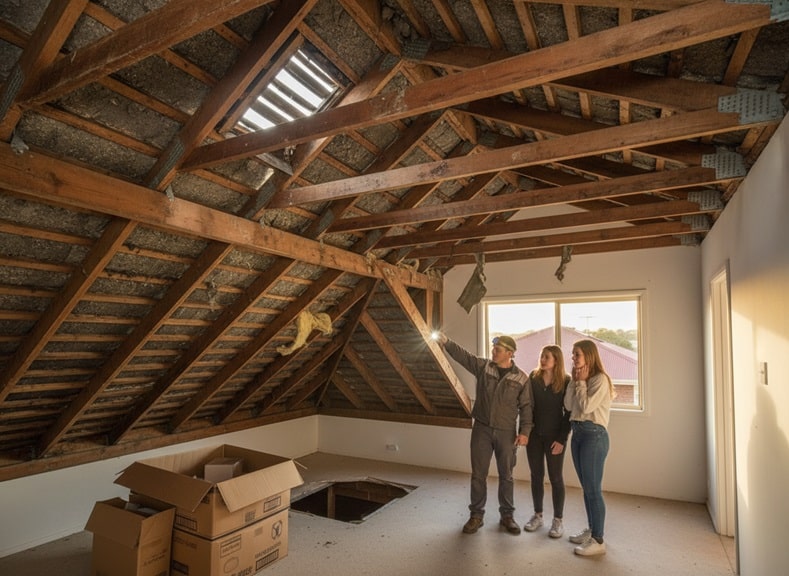
Interior signs of ridge cap failure include water staining on ceiling surfaces near the roof peak, particularly after rain events with strong winds. Moisture entering through compromised ridge capping saturates insulation in the roof cavity before becoming visible inside the home. Even minor ceiling stains near ridge lines warrant immediate professional inspection, as the visible damage represents only a fraction of the moisture exposure occurring in hidden roof spaces.
Increased pest activity in roof cavities sometimes indicates ridge cap gaps that allow entry for birds, possums, or insects. Nocturnal noises in ceiling spaces or evidence of droppings in roof cavities during inspection suggests penetration points that often occur through deteriorated ridge capping. Professional roof ridge replacement or repair eliminates these entry points whilst addressing the underlying weatherproofing compromise.
Decision Process: Ridge Cap Repair Versus Complete Replacement
Limited ridge cap damage affecting only a few individual caps may allow successful localised repair rather than complete system replacement. Recent storm damage that displaced several caps on otherwise sound systems typically suits repair approaches where affected caps can be reset with modern bedding compounds and additional mechanical fasteners. This targeted approach addresses specific problem areas whilst preserving functional portions of the ridge system.
Widespread mortar deterioration affecting majority of the ridge length indicates complete roof ridge replacement delivers better value than attempted repairs. When more than 30-40% of caps show looseness, cracking, or mortar failure, the underlying condition affects the entire system. Repairing select caps whilst leaving deteriorated sections creates false economy, as remaining problems require attention within 1-2 years regardless.
Age considerations influence the repair versus replacement decision significantly. Ridge capping systems approaching 25-30 years typically warrant complete replacement during any repair project, as remaining service life doesn’t justify investment in extensive repairs. Properties undergoing roof restoration should include ridge cap replacement in project scope, as the access and setup costs get distributed across all roofing work.
Professional Ridge Capping Repair Techniques
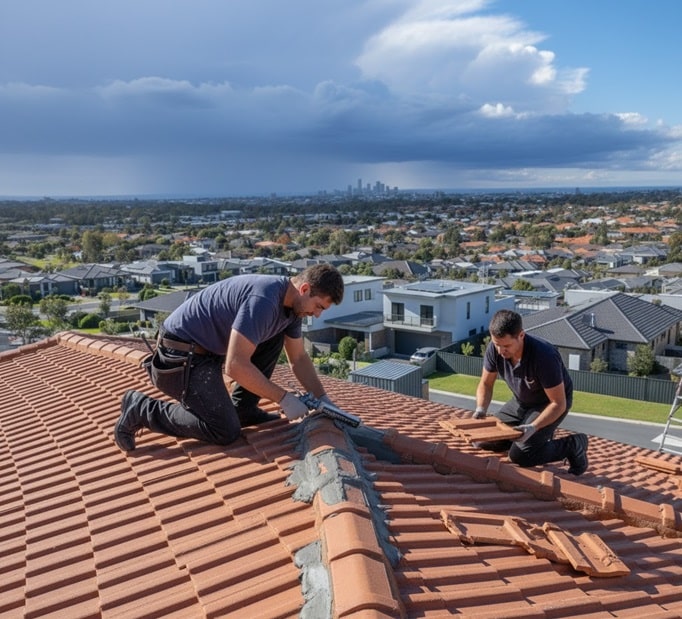
Professional ridge capping repairs Perth contractors perform begin with safe roof access using appropriate ladders or scaffolding that meets workplace safety requirements. Technicians inspect each ridge cap individually, testing for looseness, checking mortar condition, and verifying fastener integrity. This detailed assessment identifies specific repairs needed rather than applying blanket approaches that might address symptoms without correcting underlying causes.
Cap removal requires careful technique to avoid breakage of salvageable caps and damage to adjacent tiles. Professionals use appropriate tools to break mortar bonds gently whilst supporting caps during extraction. Once removed, the ridge batten receives inspection for rot or insect damage that requires treatment before reinstallation proceeds. Any compromised timber must be repaired or replaced to provide proper substrate for refastened caps.
Modern flexible bedding systems used in quality ridge capping repairs Perth work provide superior performance compared to traditional cement mortar. These polyurethane or acrylic-based compounds maintain elasticity across Perth’s temperature extremes, accommodating the expansion and contraction that causes rigid mortar to crack. Flexible bedding adheres strongly to both tile surfaces and cap undersides whilst remaining pliable enough to prevent stress concentration that leads to premature failure.
Material Selection for Perth Climate Conditions
Colorbond ridge capping represents the premium material choice for properties seeking maximum durability and minimum maintenance requirements. These formed steel caps install using concealed fasteners and specialised foam closure strips that seal against weather penetration without mortar requirements. Colorbond ridge systems withstand Perth’s wind conditions exceptionally well whilst eliminating mortar maintenance needs entirely. The material suits both tile and metal roofing, though installation on tile roofs requires custom foam filler strips manufactured for specific tile profiles.
Replacement terracotta ridge caps match the aesthetic of traditional clay tile roofs common throughout Perth’s established suburbs. Modern terracotta caps feature improved frost resistance and more consistent manufacturing quality than historical products. These caps install using flexible bedding systems supplemented with stainless steel screws that provide mechanical security independent of bedding performance. Quality terracotta caps carry warranties of 30-50 years when installed correctly.
Concrete ridge caps offer economical alternatives for properties with concrete tile roofing systems. These heavy-duty caps provide excellent wind resistance through their mass whilst costing less than terracotta equivalents. Modern concrete caps feature improved surface sealing that reduces moisture absorption and subsequent deterioration. Professional installation using flexible bedding and mechanical fasteners ensures concrete caps deliver 20-30 years of reliable service.
Mechanical Fastening Requirements and Specifications
Modern ridge capping installations incorporate mechanical fasteners that provide primary cap security rather than relying solely on bedding adhesion. Stainless steel screws or heavily galvanised fixings penetrate through cap bodies into underlying ridge battens, creating positive attachment that resists wind uplift forces. Fastener spacing typically runs 300-450mm along ridge lines, with additional fixings at valley intersections and gable ends where wind exposure intensifies.
Fastener type and installation technique significantly affect ridge cap performance and longevity. Screws must feature weather sealing washers that prevent water entry through fastener holes in cap bodies. Installation torque requires careful control to achieve secure attachment without cracking brittle terracotta caps or over-compressing bedding compounds. Professional installers use calibrated tools that deliver consistent results across entire ridge systems.
Hidden fastening systems available for Colorbond ridge capping eliminate visible fixings whilst providing secure attachment through concealed clips. These systems create clean appearance without exposed fastener heads that collect debris or provide corrosion initiation points. The concealed approach suits properties where aesthetic considerations rank highly, though traditional exposed fastening remains perfectly acceptable for most residential applications.
Ventilation Considerations in Ridge Cap Systems
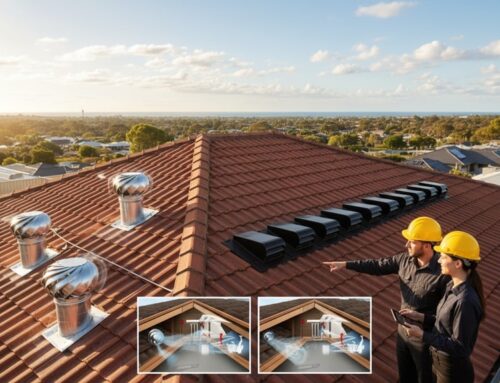
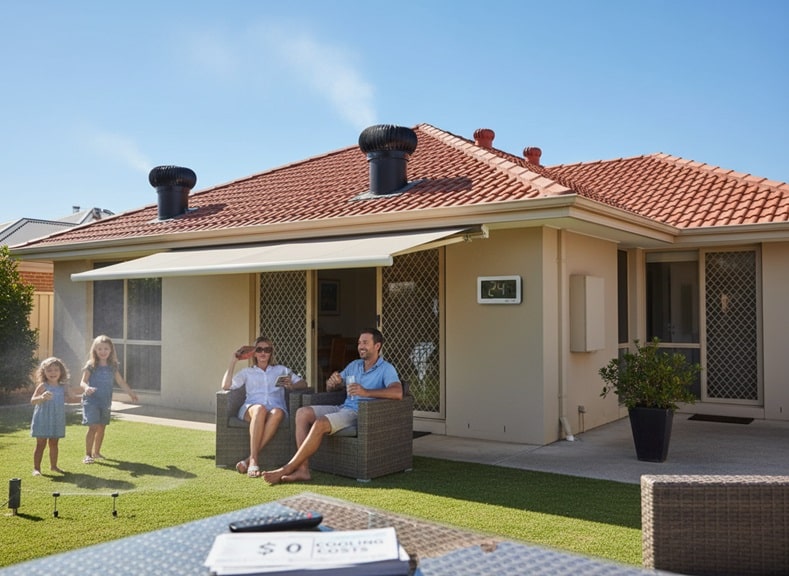
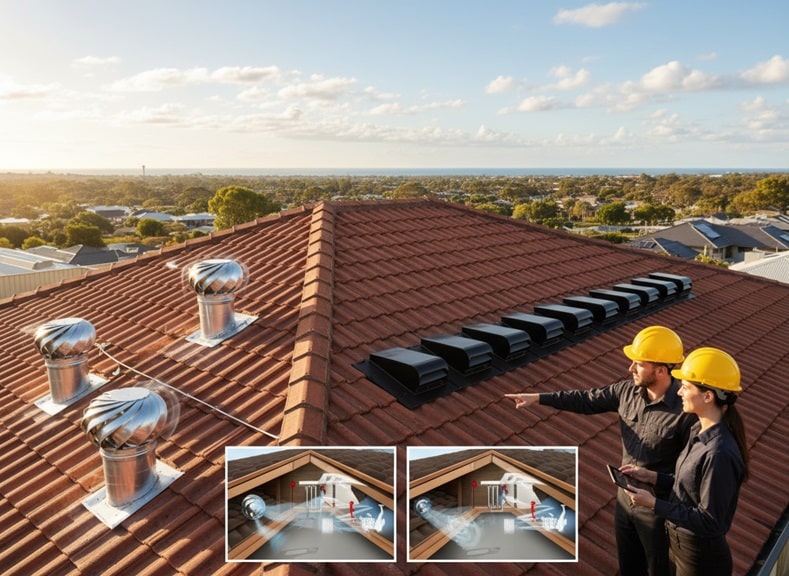
Modern building codes increasingly require roof ventilation to manage moisture and heat accumulation in ceiling spaces. Ridge cap systems can incorporate ventilation provisions through specialised vented caps or ventilated foam filler strips that allow air movement whilst excluding weather and pests. Adequate roof ventilation reduces summer cooling costs whilst preventing moisture condensation that damages insulation and structural timber during winter months.
Retrofit ventilation additions during ridge capping repairs Perth projects can improve roof cavity performance without extensive modifications. Vented ridge caps replace standard caps at strategic locations, providing exhaust paths for hot air rising through the roof space. These ventilation additions work best when combined with soffit or gable vents that allow intake air flow, creating complete ventilation circuits through ceiling spaces.
Balanced ventilation systems prevent negative outcomes like moisture accumulation or excessive heat buildup that reduce energy efficiency. Professional assessment determines appropriate ventilation provisions based on roof size, cavity volume, and existing ventilation infrastructure. Ridge cap replacement projects provide ideal opportunities to enhance roof ventilation without the access and setup costs of separate ventilation installations.
Cost Factors in Ridge Cap Repair Projects
Ridge capping repairs Perth pricing reflects several variables including ridge length, cap type, access difficulty, and extent of repair required. Simple repairs addressing a few loose caps typically cost substantially less than complete ridge replacement involving all caps along multiple ridge lines. Properties with complex roof geometries featuring multiple ridges and hip caps face higher costs than simple gable roofs with single ridge runs.
Access requirements significantly impact project pricing, particularly for steep roofs or two-storey properties requiring scaffolding or elevated work platforms. Safety equipment costs get factored into legitimate quotes from professional contractors who prioritise worker protection. Homeowners should question unusually low quotes that might indicate inadequate safety provisions or shortcuts in materials and techniques.
Material selection affects project costs, with premium Colorbond systems costing more initially than concrete or terracotta alternatives. However, lifecycle cost analysis often favours Colorbond installations that eliminate ongoing mortar maintenance whilst providing 20+ years of trouble-free service. Property owners should evaluate total ownership costs rather than focusing solely on initial installation expenses when choosing between cap material options.
Warranty Coverage and Quality Assurance
Professional ridge capping repairs Perth contractors provide should include warranty coverage for both materials and installation workmanship. Material warranties from manufacturers typically extend 10-30 years depending on cap type, with Colorbond systems offering the longest coverage periods. Installation warranties generally cover 12 months for leak-free performance and 3 years for workmanship, protecting homeowners if repairs fail prematurely.
Quality assurance processes separate professional contractors from less rigorous operators. Permacoat’s systematic approach includes photographic documentation before and after repairs, detailed scope specifications, and separate inspection team verification of completed work. This multi-layer quality control ensures ridge cap repairs meet company standards rather than relying solely on individual installer diligence.
Insurance documentation should accompany ridge cap work on properties with active homeowner policies. Professional contractors carry appropriate public liability coverage protecting property owners if accidents occur during repairs. Workers compensation insurance protects employees whilst removing homeowner exposure to workplace injury claims. Verification of these insurance coverages before work commences protects property owners from unforeseen liability.
Preventative Maintenance Extending Ridge Cap Life
Regular roof cleaning services remove organic debris accumulation that accelerates mortar deterioration and traps moisture against cap surfaces. Moss, lichen, and leaf litter create persistently damp conditions ideal for biological growth that breaks down mortar chemically whilst physically disrupting bonds through root penetration. Annual cleaning eliminates these threats whilst allowing inspection to identify developing problems requiring attention.
Tree management around properties protects ridge capping from mechanical damage and debris accumulation. Overhanging branches deposit leaves, bark, and small twigs that concentrate in roof valleys and along ridge lines. These organic materials retain moisture whilst their decomposition produces acidic compounds that attack mortar and concrete surfaces. Maintaining 2-3 metre clearance between trees and roof structures eliminates these problems whilst reducing shade that promotes moss growth.
Protective roof coatings applied during restoration work can extend ridge cap life by sealing minor cracks and providing additional weatherproofing. Dulux Acratex coating systems adhere to properly prepared ridge caps, creating flexible protective barriers that reduce moisture penetration whilst reflecting UV radiation that degrades mortar. This preventative approach suits caps showing early deterioration that don’t yet require replacement.
Regional Variations Across Perth Metro
Coastal suburbs experience accelerated ridge cap deterioration from salt exposure carried inland by sea breezes. Properties within 5 kilometres of the coastline face salt spray that attacks mortar bonds and corrodes mechanical fasteners faster than inland locations. Coastal properties should anticipate ridge cap maintenance approximately 20-30% sooner than equivalent inland homes, typically within 15-20 years rather than 20-25 years for similar systems inland.
Hills area properties east of Perth encounter different challenges from increased rainfall, humidity, and vegetation coverage. Ridge caps in suburbs like Kalamunda, Mundaring, or Roleystone contend with moss growth and organic debris accumulation that traps moisture against cap surfaces. These conditions promote biological deterioration of mortar whilst creating persistently damp environments that accelerate rust on mechanical fasteners.
Northern suburbs face intense solar exposure that degrades mortar through UV radiation and extreme thermal cycling. Ridge caps in areas like Joondalup, Wanneroo, or Yanchep experience temperature extremes that stress mortar bonds through daily expansion and contraction cycles. Properties in these areas benefit particularly from flexible bedding systems that accommodate thermal movement without cracking or debonding.
Environmental and Sustainability Considerations
Ridge cap replacement projects generate waste materials requiring responsible disposal. Broken concrete or terracotta caps can sometimes be crushed and used as drainage aggregate or landscape base material rather than consigning them to landfill. Metal ridge caps remain fully recyclable through scrap metal channels. Professional contractors should separate waste streams and maximise material recovery rather than mixing all demolition debris.
Long-life material selection reduces environmental impact through decreased replacement frequency over building service life. Colorbond ridge systems providing 20-30 years of service create less waste and consume fewer resources than cheaper alternatives requiring replacement every 12-15 years. This sustainability perspective aligns with broader building industry trends toward durable materials that reduce lifecycle environmental footprints.
Ventilation improvements during ridge cap work reduce building energy consumption through better thermal management of roof cavities. Properties with adequate roof ventilation require less mechanical cooling during summer whilst avoiding moisture problems that reduce insulation effectiveness during winter. These energy benefits accumulate over decades, delivering both environmental advantages and owner cost savings.
Protecting Your Roof Peak Investment
Ridge capping represents a relatively small component of overall roofing systems that plays a disproportionately important role in weatherproofing and structural protection. The exposed location at the roof peak subjects ridge caps to maximum wind forces, UV exposure, and thermal stress. When ridge caps fail, the resulting damage extends beyond the immediate weatherproofing compromise to affect ceiling insulation, structural timber, and interior finishes.
Permacoat’s specialised experience in ridge capping repairs Perth homeowners trust stems from 50+ years serving the local market. The company’s systematic approach to ridge work includes detailed assessment, quality materials, proven installation techniques, and comprehensive warranty protection. Separate inspection and installation teams ensure ridge repairs receive appropriate attention from start to finish rather than rushed approaches that sacrifice quality for speed.
Property owners who notice loose, cracked, or displaced ridge caps should arrange professional assessment without delay. Early intervention allows repairs to proceed as planned maintenance rather than emergency response to active leaks during storm events. Proactive ridge cap maintenance protects property values, prevents interior damage, and ensures roofing systems deliver expected service life.
Contact us on (08) 9249 5955 for comprehensive roof inspection that includes detailed ridge cap assessment. The company’s inspection specialists provide honest evaluation backed by photographic documentation and written reports. Free inspection services connect property owners with Perth’s most experienced roofing professionals who deliver ridge cap solutions that protect investments for decades. Schedule your free inspection today to verify ridge cap condition and receive expert recommendations for any required maintenance.