Strata roofs carry more responsibility than individual homes. They cover multiple units, protect shared structures, and represent a significant collective investment. When something goes wrong, it affects not just one property owner but every resident in the block. That’s why warranties and structured maintenance plans matter so much for strata roofing Perth projects. They safeguard against costly surprises, keep everything compliant, and provide peace of mind for strata committees tasked with managing complex properties.
The financial implications of roof failure in a strata setting extend far beyond simple repair costs. Emergency levies strain household budgets, insurance premiums can spike after claims, and property values may decline if roofing problems become visible or persistent. Worse still, legal disputes between owners, tenants, and strata councils can emerge when responsibility for damage becomes contested. A comprehensive warranty paired with a proactive maintenance strategy eliminates most of these risks before they materialise.
This guide explains the importance of strong warranties, tailored maintenance programs, and practical steps to keep strata roofs in top condition for decades. Whether managing a small residential complex or an extensive multi-unit development, understanding these principles protects your investment and ensures long-term performance.
Why Warranties Matter for Strata Roofs
The scale and complexity of strata roofing demand robust protection. Unlike a single dwelling where one person absorbs the cost of failure, a strata roof problem impacts multiple households. The financial burden spreads across all owners, making even moderate repairs contentious and potentially divisive.
A strong commercial roofing warranty Perth provides:
Protection Against Defects in Materials or Workmanship – Manufacturing faults or installation errors shouldn’t cost strata owners thousands in unexpected repairs. Quality warranties cover these scenarios comprehensively.
Shifting Financial Risk Back Onto the Manufacturer or Contractor – When problems arise within the warranty period, the responsibility – and expense – falls on the party who created the issue, not the property owners.
Reducing Unexpected Levies for Owners – Budget stability matters in strata environments. Warranties prevent surprise costs that force councils to impose emergency levies on already stretched household budgets.
Providing Assurance to Insurers, Buyers, and Tenants – Documentation of warranty-backed work increases property appeal, supports insurance applications, and demonstrates responsible asset management to prospective buyers.
Imagine a summer storm reveals a poorly flashing installation around roof penetrations. Water enters the building, damaging ceilings, electrical fittings, and interior walls across multiple apartments. Without an artistry warranty, the strata faces the full repair cost – potentially tens of thousands of dollars split between owners. With a comprehensive warranty backed by a reputable contractor like Permacoat, the installation company resolves the issue at no extra charge, preserving both finances and community harmony.
Key Takeaway: Warranties act as an insurance policy, protecting strata owners from the financial burden of roof failures caused by defects or poor installation.
Types of Roof Warranties
Not all warranties offer equal protection. Understanding the categories helps committees make informed choices when selecting contractors and materials for strata roofing Perth projects.
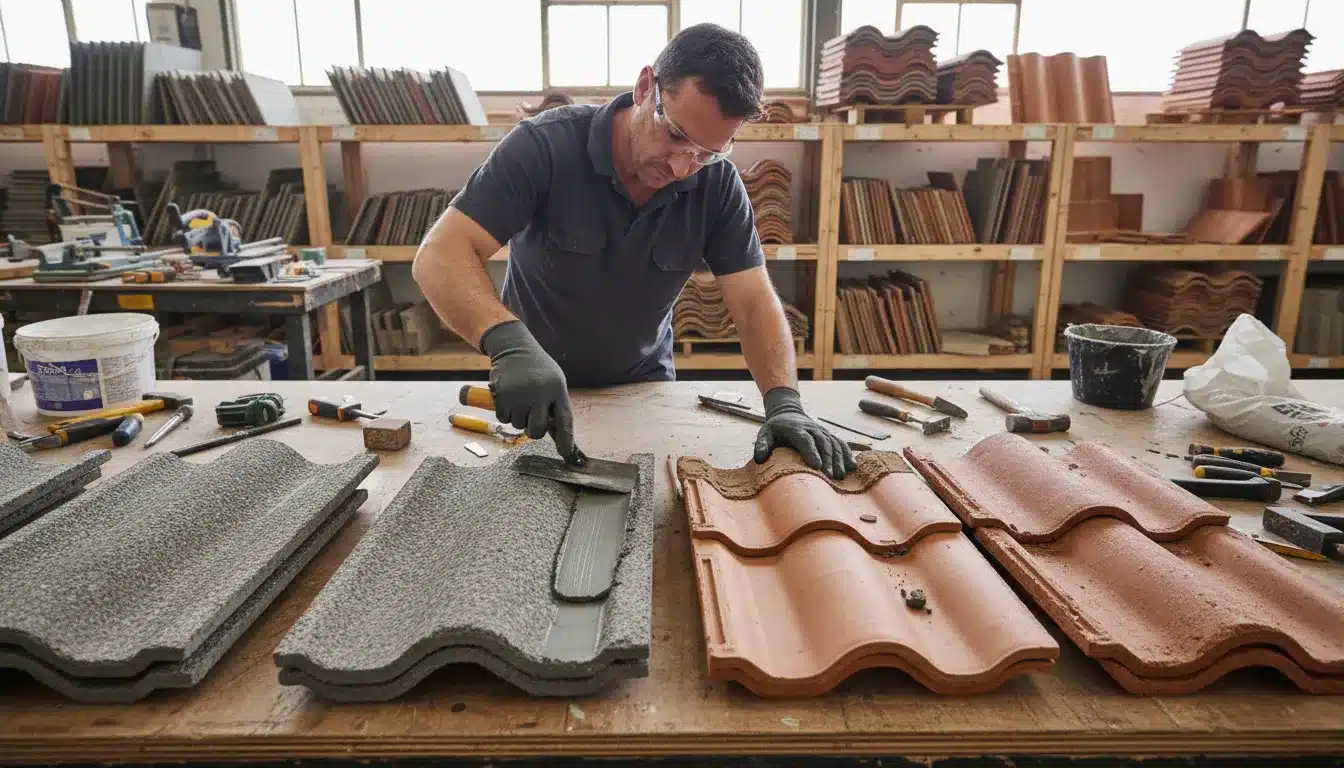
Manufacturer’s Warranty – Covers defects in the roofing materials themselves. Suppose roof tiles crack prematurely due to manufacturing flaws. In that case, if a membrane deteriorates faster than advertised specifications or if Colorbond sheets show unexpected corrosion, the manufacturer bears responsibility for replacement costs.
Workmanship Warranty – Covers errors in installation and application. Poorly fixed flashing, uneven tile alignment, incorrect sealing around penetrations, or inadequate fastening would fall under this category. These warranties typically run for shorter periods than material warranties but are equally crucial for long-term performance.
Comprehensive Warranty – Combines material and artistry coverage, offering the most complete protection available. These warranties simplify claims by providing a single point of contact rather than forcing strata committees to determine whether problems stem from materials or installation.
The fine print is critical in all warranty types. Some warranties exclude coastal properties due to accelerated corrosion from salt exposure. Others require strict maintenance regimes – including documented professional inspections every 12-24 months – to remain valid. Strata councils should always request clear written explanations of inclusions, exclusions, and maintenance obligations before committing to any roofing project. Understanding these terms prevents nasty surprises when claims become necessary.
Key Takeaway: Comprehensive warranties provide the best protection for strata projects, but validity depends on both maintenance compliance and proper installation by licensed contractors.
Factors That Affect Warranty Coverage
A warranty is only as reliable as the company behind it and the conditions under which the roof operates. Several factors influence both scope and duration:
Roofing Material – Colorbond and other metal systems often come with manufacturer warranties spanning 10-25 years, while terracotta tiles may vary from 15-50 years depending on quality grade. Membrane systems typically offer shorter coverage periods but can be extended with proper maintenance and protective roof coatings.
Contractor Reputation – Established companies with decades of experience back their work with solid, enforceable warranties because they expect to remain in business long-term. Fly-by-night operators may offer impressive-sounding coverage but vanish before claims can be processed.
Maintenance History – Neglected roofs risk voiding warranty cover entirely. Regular professional inspections, cleaning, and minor repairs demonstrate due diligence. Most warranties explicitly state that failure to maintain the roof system releases the manufacturer or contractor from obligation.
Installation Quality – Poor artistry leads to early failure and disputed claims. Even premium materials fail prematurely when installed incorrectly. This makes choosing experienced contractors who specialise in strata-managed properties essential for warranty validity.
Environmental Exposure – Coastal locations, high-wind zones, areas with significant tree coverage, and regions experiencing extreme temperature variations may face shortened warranty terms or additional exclusions. Perth’s coastal suburbs often require special consideration in warranty agreements due to salt-laden winds.
Key Takeaway: Warranty protection depends not just on paperwork but on choosing durable materials, reputable contractors with proven track records in commercial roof maintenance Perth, and maintaining the roof correctly throughout its service life.
The Importance of Regular Roof Maintenance
A warranty doesn’t remove the need for maintenance – in fact, most explicitly require it. Strata properties benefit from proactive care in the same way vehicles do from regular servicing. Skipping scheduled maintenance to save short-term costs inevitably leads to expensive failures and voided warranty protection.
Benefits of Scheduled Maintenance:
Extends Roof Lifespan by Addressing Minor Problems Early – A small crack in a tile costs $50 to replace. Left unattended, water penetration damages roof battens, ceiling insulation, and electrical wiring, escalating costs to thousands. Regular inspections catch these issues before they multiply.
Keeps Warranty Conditions Valid – Most comprehensive warranties require documented proof of maintenance at specified intervals. Missing even one scheduled inspection can void coverage entirely, leaving strata owners financially exposed.
Reduces Long-Term Costs by Preventing Major Structural Failures – Emergency repairs cost 3-5 times more than preventative maintenance. They also disrupt residents, damage interiors, and create conflict within strata communities.
Provides Evidence of Due Diligence in Insurance or Warranty Claims – When claims arise, insurers and warranty providers scrutinise maintenance records. Properties with a comprehensive documentation process claim faster and face fewer disputes over coverage.
Professional roof cleaning services prevent moss, lichen, and organic debris from undermining protective coatings or blocking drainage systems. In Perth’s Mediterranean climate, algae growth accelerates during winter months, trapping moisture against roof surfaces and accelerating material degradation. Annual cleaning removes these threats before damage occurs.
Key Takeaway: Maintenance isn’t optional – it’s essential to keep warranties enforceable and roofs functional. Properties that skip maintenance pay dramatically more over the roof’s lifetime through accelerated deterioration and emergency repairs.
What a Good Strata Roof Maintenance Plan Includes
A tailored maintenance program should address every element of the roof system with scheduled interventions based on building age, construction type, and environmental exposure. Cookie-cutter approaches fail to account for property-specific vulnerabilities that emerge over time.
Essential Inclusions:
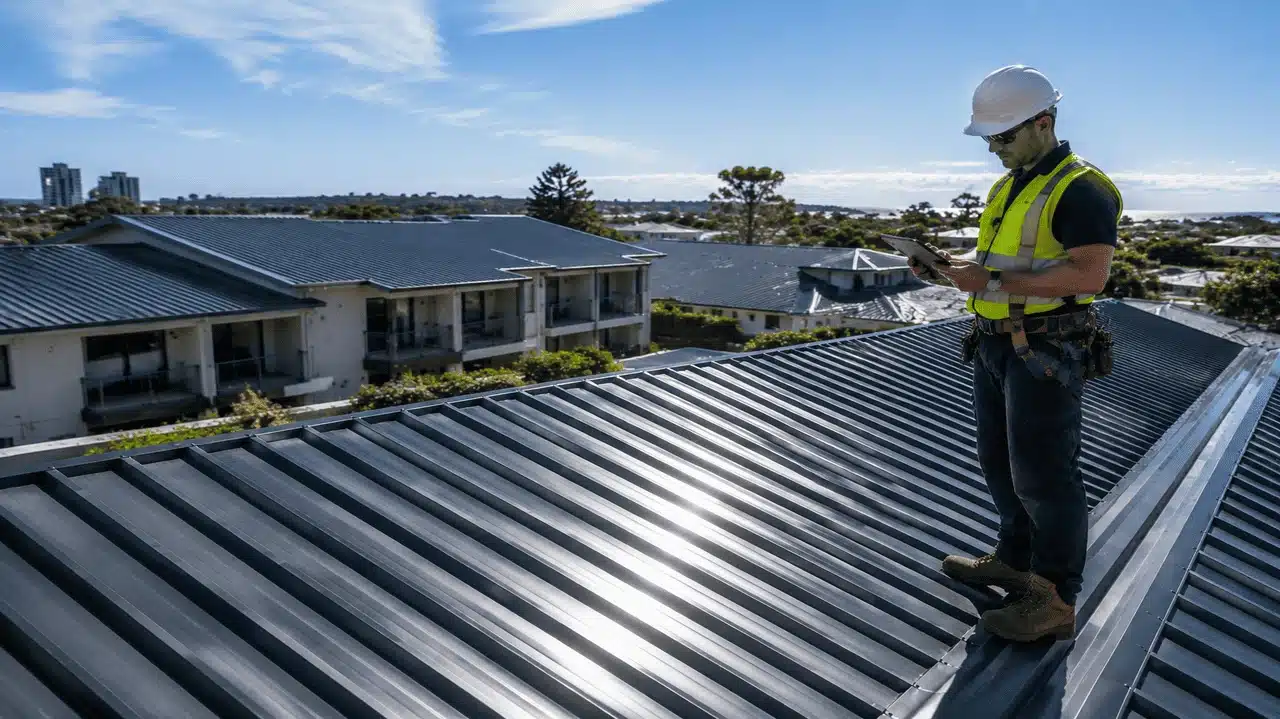
Routine Inspections – At least twice yearly, ideally before and after Perth’s wet season. Inspections should cover structural integrity, waterproofing systems, drainage functionality, and early signs of material degradation. Professional inspectors document conditions with photographs and written reports, creating accountability and tracking deterioration rates.
Gutter & Downpipe Maintenance – Regular gutters and downpipes cleaning prevents overflow and water damage. Blocked gutters force water back under the eaves, saturating timber structures and causing rot. In strata complexes with valley gutters between units, blockages affect multiple dwellings simultaneously.
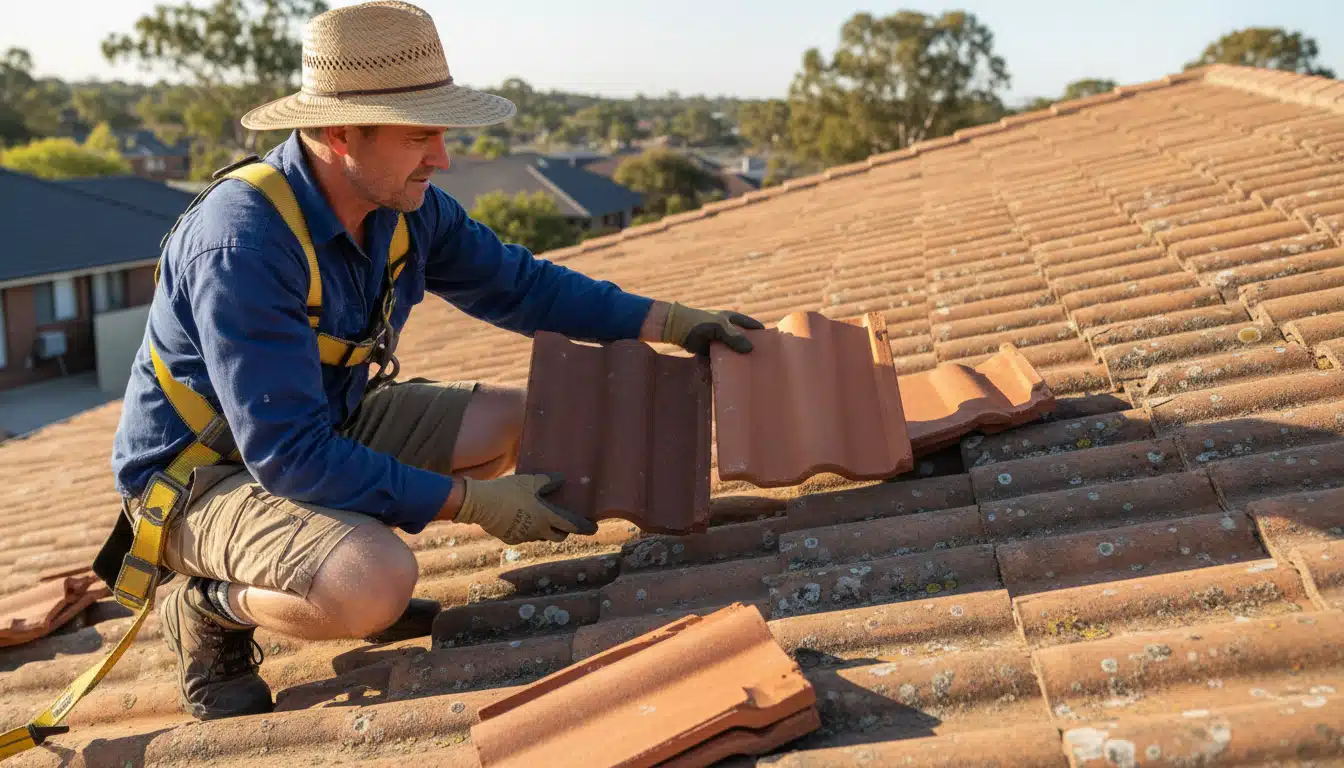
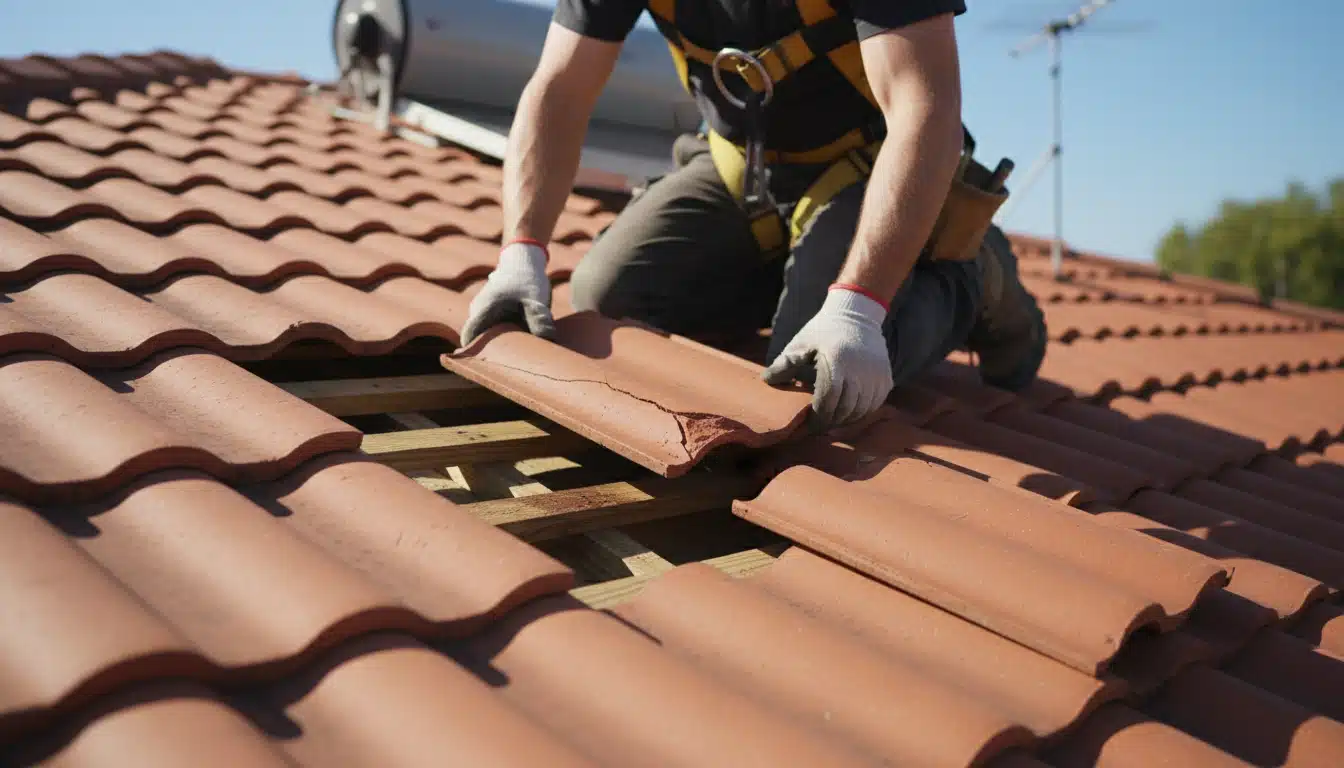
Tile or Metal Repairs – Prompt replacement of cracked tiles, rusted sheets, or damaged fasteners. Even minor damage allows water penetration that undermines surrounding materials. Professional roof restoration Perth services address these issues before they escalate.
Flashing & Seal Checks – Vulnerable junctions around skylights, vents, chimneys, and wall intersections require regular inspection for corrosion, seal degradation, or physical damage. These weak points account for 80% of roof leaks in commercial and strata buildings.
Protective Coatings – Scheduled reapplication of quality protective systems extends material life significantly. Modern coatings reflect solar radiation, reduce thermal stress on roof structures, and create waterproof barriers that shed moisture effectively.
Professional Cleaning – Removing moss, lichen, algae, and organic matter that damage tiles, coatings, and drainage systems. Organic growth retains moisture, accelerates material breakdown, and increases weight loading on roof structures. High-pressure cleaning combined with anti-fungal treatments provides lasting protection.
Strata committees should request maintenance schedules in writing, specifically tailored to their property’s construction type, age, and location. Generic maintenance plans miss property-specific vulnerabilities and fail to optimise intervention timing for maximum cost-effectiveness.
Key Takeaway: A well-structured maintenance plan addresses inspection, cleaning, repair, and coating to protect the entire roof system. Plans should be documented, scheduled, and adapted as the building ages.
Benefits of a Proactive Maintenance Approach
Waiting until something fails is always more expensive and more disruptive. Proactive care delivers measurable benefits for strata owners, residents, and property values alike.
Extended Roof Lifespan – Proper maintenance can add 15-25 years to a roof’s functional life. A $5,000 annual maintenance budget protects a $150,000 roof replacement investment – an exceptional return that compounds over decades.
Reduced Repair Costs – Small fixes stop problems from escalating into structural emergencies. Replacing damaged flashing costs $300. Repairing water-damaged ceilings, electrical systems, and insulation across multiple units costs $25,000+.
Improved Energy Efficiency – Clean, coated roofs reflect more solar radiation, cutting cooling bills across the entire complex. In Perth’s hot summers, reflective coatings can reduce roof surface temperatures by 15-20°C, substantially decreasing air conditioning loads.
Enhanced Property Value – A documented history of professional care reassures buyers, investors, and valuers. Properties with comprehensive maintenance records command premium prices and sell faster than comparable buildings with uncertain roof conditions.
Peace of Mind – Residents know the roof won’t fail unexpectedly, causing interior damage or triggering emergency levies. This stability supports community harmony and reduces strata management disputes.
Key Takeaway: Preventive care costs less than emergency repairs and adds tangible value to strata complexes while protecting residents from financial shocks.
Choosing the Right Roofing Contractor
Strata roofing requires experienced contractors who understand group ownership structures, strata legislation, and the unique challenges of multi-unit properties. Choosing based on price alone often results in disputes, poor artistry, and failed warranty claims.
Checklist for Contractors:
Licensed and Fully Insured – Verify current licensing with the Building Services Board and confirm insurance covers both public liability and workers’ compensation for the full project value.
Proven Track Record in Strata Roof Maintenance Perth – Request references from other strata complexes and verify completion of similar-scale projects. Experience with group decision-making processes and strata committee requirements matters as much as technical capability.
References from Other Complexes – Speak directly with strata managers and committee members from previous projects. Ask about communication quality, adherence to schedules, problem-solving approach, and post-completion support.
Transparent Communication with Strata Councils – Contractors should provide detailed written quotes, explain technical decisions in accessible language, and maintain regular progress updates throughout projects.
Comprehensive Warranties That Clearly Outline Terms – All warranty conditions, exclusions, maintenance requirements, and claim procedures should be documented in plain English before work commences.
Professional contractors specialising in commercial and strata properties understand these requirements and structure their services accordingly. They navigate body corporate approval processes, coordinate access across multiple units, and minimise disruption to residents.
Documenting Work for Warranty Claims
Strong records make warranty claims straightforward and disputes rare. Without comprehensive documentation, proving maintenance compliance becomes impossible when problems emerge years after installation.
Best Practices:
Keep Invoices for All Inspections, Repairs, and Cleaning – File these chronologically with clear descriptions of work performed, materials used, and areas addressed.
Take Dated Photos Before and After Work – Visual evidence documents conditions at intervention points and proves work quality. Photos should include wide shots showing context and close-ups highlighting specific repairs.
Maintain a Digital Logbook Accessible to the Strata Committee – Cloud-based systems ensure continuity when committee members change. Include contractor contact details, warranty expiry dates, and maintenance schedule reminders.
Store Warranty Documents Securely with Clear Contact Details for Providers – Keep both digital and physical copies. Update contact information if contractors relocate or change business structure.
Key Takeaway: Documentation ensures warranty enforceability and provides transparency for all owners. Properties with comprehensive records resolve claims faster and face fewer coverage disputes.
Real-World Scenarios
Neglected Roof – Expensive Lesson
A strata block in Joondalup delayed inspections and maintenance for five consecutive years to avoid levying owners for “unnecessary” expenses. When winter storms hit, widespread leaks caused damage to ceilings, lighting fixtures, and interior walls across eight apartments. Total repair costs exceeded $75,000. The warranty claim was rejected due to a lack of maintenance records demonstrating reasonable care. Owners faced emergency levies averaging $9,000 per unit, triggering disputes, payment defaults, and significant community conflict.
Proactive Roof – Long-Term Savings
A Mount Lawley complex established a structured maintenance agreement with professional contractors immediately after construction. Minor leaks were caught during biannual inspections and repaired before causing interior damage. Protective coatings were reapplied every seven years as recommended. Gutters remained clear through scheduled cleaning. After 22 years, the roof remains in excellent condition with predictable annual costs averaging $4,200 for the 12-unit building. No emergency repairs. No surprise levies. No owner disputes.
Key Takeaway: Strata projects that invest in proactive maintenance and strong warranties avoid financial shocks and extend roof life significantly. The cost difference between proactive and reactive approaches reaches tens of thousands of dollars over a roof’s lifetime.
Conclusion: Protecting Strata Roofs the Smart Way
Warranties and structured maintenance are not optional extras – they are fundamental to protecting shared strata assets from deterioration, unexpected costs, and community disputes. A robust commercial roofing warranty Perth safeguards against material and installation defects, while a customised maintenance program ensures the roof continues to perform optimally for decades. Together, they prevent conflicts, control costs, and preserve property value in an increasingly competitive real estate market.
The most successful strata communities view roof maintenance not as an expense but as an investment in property value, resident satisfaction, and long-term financial stability. They understand that $5,000 spent annually on professional maintenance protects a $200,000+ roof replacement liability while avoiding the disruption and conflict that emergency repairs create.
If you manage or own a strata property, now is the time to review your roof’s warranty coverage and maintenance schedule. Don’t wait for the next storm to reveal costly problems that could have been prevented through routine care. Professional assessment identifies current condition, highlights vulnerabilities, and establishes cost-effective intervention schedules tailored to your property’s specific needs.
Talk to our team on (08) 9249 5955 today to discuss tailored warranty-backed maintenance options for your strata complex.
Actionable Next Steps
Review Your Current Warranty – Confirm coverage terms, exclusions, maintenance requirements, and expiry dates. Ensure the warranty provider remains in business and reachable.
Schedule a Professional Inspection – Establish current roof condition with documented assessment. Use this baseline to track deterioration rates and plan interventions.
Develop a Written Maintenance Plan – Create a multi-year schedule covering cleaning, inspections, repairs, and coating reapplication. Budget accordingly and present to all owners for transparency.
Engage a Reputable Contractor with Strata Experience – Select contractors with proven track records in multi-unit properties who offer comprehensive warranties and understand strata management processes.
Keep Records to Protect Warranty Validity – Implement a documentation system capturing all maintenance activities, repair work, and professional assessments. Ensure continuity when committee membership changes.