Flat and low-slope roofs across Perth’s residential and commercial properties face a persistent challenge that threatens structural integrity and waterproofing performance. Water ponding flat roofs represents one of the most common yet preventable roofing problems affecting these vulnerable systems. Understanding the causes, recognising the risks, and implementing effective solutions protects property investments from the extensive damage prolonged water accumulation creates.
Many property owners dismiss shallow water pooling on flat roofs as normal or harmless. This misconception leads to delayed action while problems progressively worsen. Even seemingly minor ponding accelerates roof deterioration, compromises waterproofing systems, and ultimately necessitates expensive repairs that proactive intervention would have prevented. Professional flat roof drainage Perth services identify ponding causes and implement lasting solutions before significant damage occurs.
Understanding Water Ponding and Why It Matters
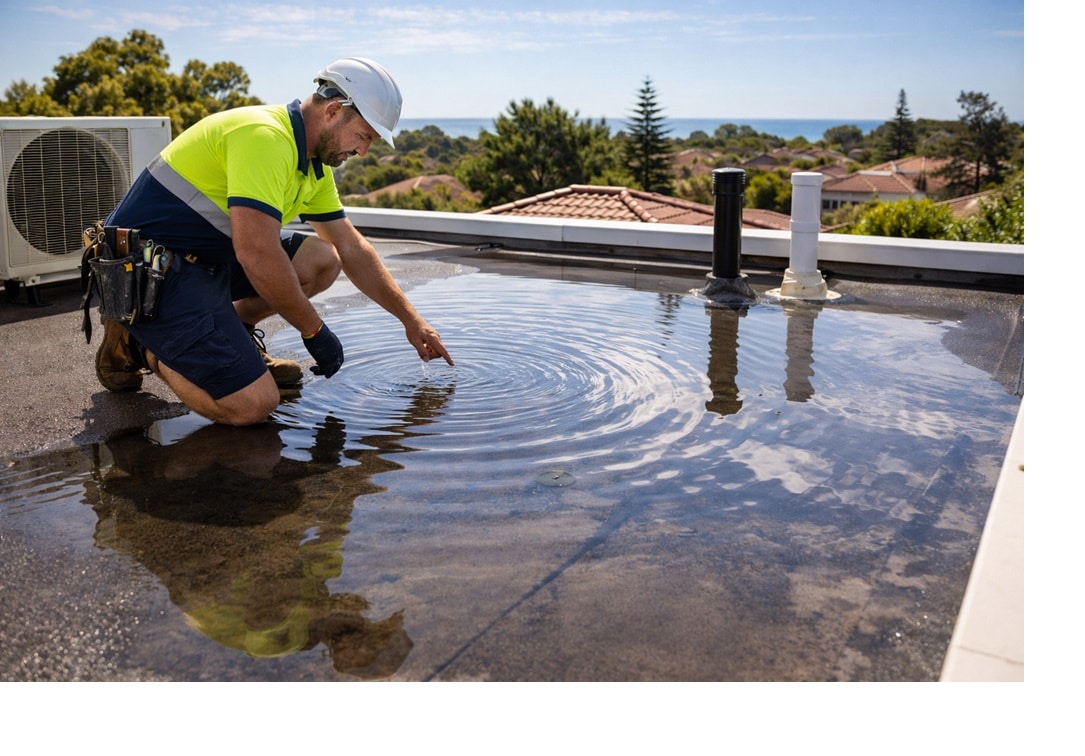
Water ponding occurs when roof surfaces retain standing water more than 48 hours after rainfall or other water introduction. Truly flat roofs do not exist in proper construction – all roofs require minimum slopes facilitating drainage. When these slopes prove inadequate or drainage systems fail, water accumulates in low spots rather than flowing to designed discharge points.
The 48-hour threshold carries significance because this period allows for gradual evaporation under normal conditions. Water remaining beyond this timeframe indicates drainage deficiencies requiring attention. Some property owners observe water disappearing within several days through evaporation and assume no problem exists. However, the cyclical pattern of ponding following each rain event steadily degrades roofing systems regardless of eventual evaporation.
Perth’s climate creates conditions where ponding problems manifest frequently. Summer dry periods followed by intense rainfall events test drainage system capacity. When gutters or roof drains cannot handle sudden water volumes, temporary ponding occurs even in properly designed systems. If this temporary ponding becomes chronic, underlying drainage inadequacies require correction.
The distinction between temporary ponding during active rainfall and chronic water retention proves important. Observing water accumulation during storms reveals drainage system performance under stress conditions. Water remaining hours or days after rain cessation indicates problems requiring professional evaluation. Property owners should monitor flat roof sections following rainfall, documenting ponding locations and duration.
Ponding water weight creates loading beyond original structural design assumptions. Water weighs approximately 1,000 kilograms per cubic metre. Even shallow ponding across significant roof areas adds substantial loading. Roof structures designed for minimum code-required loads may experience overstress when ponding water adds unexpected weight. This excess loading can cause progressive structural deflection, worsening ponding problems through a self-reinforcing cycle.
Common Causes of Flat Roof Ponding
Multiple factors contribute to ponding development, often in combination rather than isolation. Identifying specific causes affecting individual properties guides appropriate solution selection.
Inadequate roof slope represents the most fundamental ponding cause. Building codes require minimum slopes for flat roofs, typically 1:80 for membrane systems. Roofs constructed without adequate slope or with slopes falling below minimums pond water. Sometimes original construction met requirements, but subsequent structural settling or deflection has reduced slopes below functional thresholds. Measuring actual slopes identifies whether inadequate pitch contributes to ponding problems.
Structural deflection creates depressions collecting water even when original slopes met requirements. Roof framing gradually deflects under sustained loading, creating low spots in previously adequately sloped surfaces. This deflection can result from undersized structural members, deteriorated timber framing, inadequate support spacing, or damage from excessive loading. The deflection often concentrates at specific locations rather than affecting entire roof planes uniformly.
Blocked or inadequate drainage systems prevent water removal even when slopes direct flow correctly. Roof drains clogged with debris cannot discharge water at designed rates. Undersized drains or insufficient drain quantities create bottlenecks during heavy rainfall. Gutter systems overwhelmed by water volume or blocked by leaves fail to remove water from roof surfaces. Regular drainage system inspection and maintenance prevents many ponding problems.
Membrane damage or deterioration creates surface irregularities trapping water. Properly installed flat roof membranes present smooth surfaces facilitating drainage. When membranes blister, wrinkle, or separate from substrates, surface irregularities develop. Water accumulates in these depressions even when surrounding areas drain adequately. Membrane maintenance and timely repairs prevent deterioration-related ponding.
Equipment platforms or roof penetrations create obstacles disrupting drainage paths. Improperly designed or positioned HVAC equipment bases, solar panel mounting systems, or other roof-mounted items can dam water flow. Penetrations for pipes or conduits sometimes create raised thresholds water cannot cross. Professional flat roof drainage Perth assessment evaluates how roof-mounted equipment affects drainage patterns.
Parapet walls and roof edge details sometimes create drainage problems. Inadequate scupper sizing prevents water discharge during heavy rainfall. Blocked or improperly positioned scuppers fail to drain water at roof perimeters. Parapet walls without adequate drainage provisions trap water on roof surfaces. These edge conditions require careful attention ensuring effective water removal.
Risks and Damage from Chronic Ponding
Understanding ponding consequences motivates property owners to address problems promptly rather than postponing action. The damage progression from chronic ponding exceeds what most property owners anticipate.
Membrane degradation accelerates dramatically under ponding conditions. Constant water immersion breaks down waterproofing materials faster than intermittent wetting and drying cycles. UV inhibitors leach from membrane surfaces, accelerating photodegradation when water eventually evaporates and exposes deteriorated materials to sunlight. Biological growth establishes in ponding areas, with algae and bacteria producing compounds further degrading membranes.
Ponding water solutions become increasingly urgent as membrane deterioration progresses. Small areas of compromised membrane expand as water infiltrates through initial failure points. The moisture spreads through insulation layers and substrate materials, causing damage far exceeding visible ponding areas. By the time interior leaking becomes apparent, extensive hidden damage typically exists throughout roof assemblies.
Structural damage develops progressively under sustained ponding loads. Timber roof framing absorbs moisture, losing strength and experiencing accelerated deterioration. Metal structural components corrode when repeatedly wetted. Roof decking materials degrade, losing capacity to support overlying roof systems. The damage often remains hidden until failures manifest through obvious symptoms like visible sagging or interior water damage.
Insulation damage compromises building thermal performance and adds remediation costs. Wet insulation loses insulating value, increasing energy costs for heating and cooling. Moisture within insulation promotes mould growth creating indoor air quality concerns. Saturated insulation adds weight exceeding structural design loads. Remediation requires removing damaged insulation along with waterproofing replacement, substantially increasing project costs compared to addressing ponding before insulation damage occurs.
Interior damage from ponding-related leaks affects building contents, finishes, and operations. Commercial properties may experience business interruption while repairs proceed. Residential properties suffer from damaged possessions and disrupted living conditions. The cost of addressing these consequential damages typically exceeds roof repair expenses significantly.
Property value impacts result from visible ponding and associated damage. Prospective buyers recognise ponding as a significant deficiency reducing offer prices or preventing sales entirely. Visible ponding during property inspections raises concerns about maintenance history and potential hidden damage. Addressing ponding problems before property marketing prevents these complications.
Effective Ponding Solutions
Multiple solution approaches address ponding depending on specific causes and site conditions. Professional assessment determines optimal strategies for individual situations.
Flat roof slope correction provides permanent solutions for inadequate pitch. Tapered insulation systems installed over existing roof decks create slopes directing water to drains or edges. These systems employ rigid insulation panels varying in thickness to achieve required slopes while adding beneficial insulation value. The approach suits situations where structural capacity permits additional roof loading and where roof height increases remain acceptable.
Structural repairs address deflection-related ponding. Reinforcing undersized framing members, replacing deteriorated structural components, or adding supplementary support eliminates depressions collecting water. This approach proves most effective when structural assessment reveals specific deficiencies causing deflection. The work typically requires removing existing roofing materials to access structural framing, making it most practical when coordinating with roof replacement projects.
Drainage system upgrades improve water removal capacity addressing inadequate or blocked systems. Installing additional roof drains increases discharge capacity for large roof areas. Enlarging existing drains or scuppers handles higher flow rates. Adding secondary overflow drains provides backup protection during primary drain blockages. Regular drain cleaning and maintenance prevents debris accumulation causing blockages.
Flat roof drainage Perth improvements often combine multiple approaches optimising overall system performance. Enhancing slopes through tapered insulation while upgrading drain capacity delivers superior results compared to either intervention alone. Professional design coordinates these elements into comprehensive solutions addressing all identified deficiencies.
Membrane repair or replacement eliminates surface irregularities trapping water. Removing blistered or wrinkled membrane sections and installing properly adhered replacements creates smooth surfaces facilitating drainage. When deterioration affects large areas, complete membrane replacement proves more cost-effective than extensive patching. Modern membrane materials offer improved durability and weather resistance compared to older products, justifying replacement investment.
Equipment relocation or redesign removes drainage obstacles. Repositioning roof-mounted equipment to avoid creating water dams, redesigning equipment bases to permit water flow underneath, or installing drainage channels directing water around obstacles resolves equipment-related ponding. Planning such modifications during equipment installation prevents problems rather than requiring costly corrections later.
Parapet and edge modifications improve perimeter drainage. Enlarging or adding scuppers, lowering coping heights at strategic locations, or installing through-wall scuppers where conventional scuppers prove impractical enhances roof edge water removal. These modifications require careful attention to wall waterproofing, ensuring drainage improvements don’t create new moisture entry paths.
Professional Assessment and Solution Design
Effective ponding correction requires comprehensive assessment identifying all contributing factors and designing solutions addressing root causes rather than symptoms.
Professional evaluation begins with visual inspection documenting ponding locations, extent, and depth. Inspectors observe roof surfaces following rainfall when ponding visibility maximises. Photographs and measurements create permanent records supporting solution design and future monitoring. Multiple inspections during different weather conditions may reveal drainage behaviour variations.
Slope measurements determine whether inadequate pitch contributes to ponding. Professional instruments measure slopes accurately, comparing measurements against building code requirements and manufacturer recommendations. Laser levels or digital inclinometers provide precise slope data across roof surfaces. This information guides decisions about flat roof slope correction necessity and extent.
Structural assessment evaluates framing adequacy and identifies deflection causes. Experienced professionals recognise symptoms indicating structural deficiencies. When substantial deflection appears evident, detailed structural engineering evaluation may proceed before finalising solutions. Understanding structural conditions prevents implementing drainage improvements that fail because underlying structural problems cause ongoing deflection.
Drainage system evaluation examines drain quantity, sizing, positioning, and condition. Professionals verify that drain capacities meet code requirements for roof areas served. They inspect drain hardware for damage or deterioration affecting performance. Gutter sizing and slope assessment determines whether perimeter drainage functions adequately. Identifying specific drainage deficiencies guides upgrade design.
Solution design considers all assessment findings, site constraints, and budget parameters. Professional designers develop comprehensive approaches addressing identified problems while considering practical implementation factors. Multiple solution alternatives may emerge, each with different cost implications and performance characteristics. Design professionals help property owners understand options and select approaches balancing effectiveness with affordability.
Maintenance Strategies Preventing Ponding
Proactive maintenance prevents many ponding problems from developing while identifying emerging issues before they cause significant damage.
Regular drainage system cleaning represents the most important preventive maintenance activity. Scheduling drain and gutter cleaning at least twice annually, with additional cleaning following major weather events, prevents debris accumulation causing blockages. Spring cleaning addresses materials accumulated during autumn and winter. Autumn cleaning occurs after trees shed leaves potentially blocking drainage systems. Properties near trees may require more frequent cleaning.
Periodic roof inspections identify developing problems early. Annual professional inspections document roof conditions, noting any ponding evidence and assessing membrane integrity. These inspections create baseline records enabling change tracking over time. Property owners benefit from conducting informal inspections following significant rainfall, observing drainage performance and noting any ponding locations requiring professional evaluation.
Prompt minor repairs prevent problems from escalating. Small membrane blisters sealed before they expand, minor drain obstructions cleared before they cause overflow, and early structural deflection signs investigated before major damage occurs all exemplify effective preventive maintenance. The modest investment in timely minor work prevents expensive major repairs.
Documentation supports effective maintenance program management. Maintaining records of inspection findings, maintenance activities performed, and repairs completed creates valuable property history. This documentation assists future decision-making about major work timing and proves useful during property transactions. Professional maintenance services typically provide comprehensive documentation as standard service components.
Winter preparation proves particularly important for Perth properties. While Perth’s winters appear mild compared to cold climate regions, significant rainfall occurs during winter months. Verifying drainage systems function properly before winter rainfall seasons prevents storm-related problems. Clearing debris before rain arrives ensures systems operate at full capacity when needed most.
Renovation and Addition Considerations
Property modifications affecting roof areas require careful attention to drainage implications preventing new ponding problems.
New equipment installations must consider drainage impacts. HVAC replacement, solar panel installation, or other roof-mounted equipment additions should include drainage assessment as planning components. Equipment positioning, mounting base design, and any necessary drainage modifications should coordinate to prevent creating ponding problems. Professional installers experienced with flat roof systems understand these requirements and design installations accordingly.
Roof extensions or additions require drainage integration with existing systems. New roof sections must slope appropriately, connect to adequate drainage, and avoid creating dams blocking existing drainage paths. Professional design coordinates new and existing roof elements ensuring comprehensive drainage function. Inadequate attention to these details during construction creates ponding problems requiring expensive correction.
Building envelope modifications affecting roof-to-wall transitions can impact roof edge drainage. Changes to parapet walls, facade cladding, or window installations around roof perimeters require consideration of their drainage implications. Ensuring modifications don’t compromise scupper function or create water dams prevents problems.
Professional Services for Ponding Solutions
Permacoat‘s comprehensive approach to roof restoration includes systematic assessment and resolution of ponding problems. Professional evaluation identifies all contributing factors, ensuring solutions address root causes rather than providing temporary fixes. With over 50 years serving Perth properties, Permacoat understands local climate challenges and designs drainage system upgrades proven effective in regional conditions.
Quality materials and expert installation backed by comprehensive warranties provide property owners confidence in long-term performance. Professional services include ongoing support ensuring solutions continue functioning properly throughout their service lives.
Property owners recognising ponding problems or seeking preventive assessment should schedule professional evaluation. Early intervention prevents the progressive damage ponding causes, protecting property investments through cost-effective solutions. Comprehensive inspection identifies all factors contributing to ponding, supporting effective solution design addressing specific property conditions.
Taking Action to Protect Your Property
Flat roof systems require proper drainage performing reliably throughout their service lives. Water ponding flat roofs accelerates deterioration, compromises structural integrity, and creates expensive damage property owners can prevent through appropriate action.
Understanding ponding causes, recognising associated risks, and implementing effective ponding water solutions protects Perth properties from preventable damage. Professional flat roof drainage Perth services provide assessment, solution design, and implementation ensuring reliable performance. Proactive maintenance and prompt response to developing problems maximise flat roof service life while minimising lifecycle costs.
Regular inspection following rainfall reveals ponding problems before they cause extensive damage. Property owners observing water retention beyond 48 hours should schedule professional evaluation determining appropriate solutions. Even properties without current visible ponding benefit from periodic drainage system assessment verifying adequate capacity and function.
Professional guidance helps property owners navigate solution options, understanding trade-offs between different approaches and selecting strategies optimised for their specific situations. Investing in proper drainage solutions proves far more economical than addressing extensive damage resulting from delayed action. Quality work performed by experienced professionals delivers lasting results protecting property values and preventing operational disruptions.
Talk to our team on (08) 9249 5955 for comprehensive flat roof assessment and professional solutions addressing ponding problems. Expert evaluation identifies all contributing factors while solution design addresses root causes ensuring lasting effectiveness. With proven experience across Perth’s diverse property types and comprehensive warranties backing all work, Permacoat delivers drainage system upgrades maintaining flat roof integrity through challenging conditions.