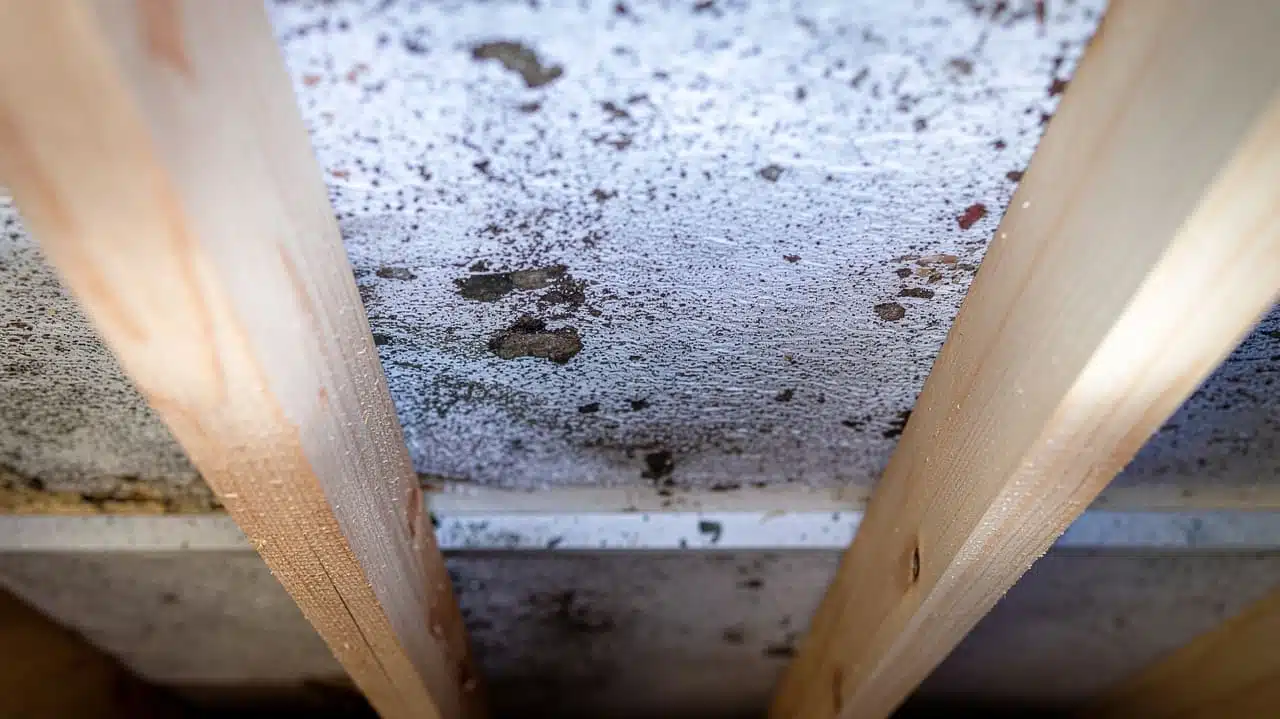
Roof spaces in Western Australian homes regularly reach temperatures exceeding 65°C during summer months, hot enough to warp timber, accelerate coating deterioration, and create conditions for serious structural damage. Yet most homeowners never consider what is happening in the cavity between their ceiling and roof until problems become visible inside the home.
Poor roof ventilation damage does not announce itself with obvious warning signs. Instead, it works silently over months and years, creating an environment where heat, moisture, and condensation gradually compromise roofing materials, insulation, and even ceiling structures. The damage accumulates until homeowners notice paint peeling, tiles cracking prematurely, or worse, moisture stains spreading across ceilings.
Understanding how ventilation affects roof longevity matters particularly in Perth’s climate, where intense summer heat combines with winter rainfall to create conditions that test every roofing system. Properties built before modern building codes often lack adequate ventilation entirely, while even newer homes can develop ventilation problems if whirlybirds fail, vents become blocked, or roof modifications restrict airflow.
The Science Behind Roof Ventilation Damage
Roof cavities function as thermal buffers between exterior roofing materials and interior living spaces. When ventilation systems work properly, they allow hot air to escape during summer and prevent condensation moisture accumulation during winter. When ventilation fails, these spaces become ovens in summer and condensation chambers in winter.
Heat accumulation represents the most immediate problem. During Perth’s summer months, metal and tile roofs absorb solar radiation throughout the day, transferring this heat into the roof cavity. Without adequate ventilation to exhaust hot air, temperatures in these spaces climb dramatically, often 20-30°C hotter than outside air temperatures.
This extreme heat accelerates the deterioration of every material in the roof space. Timber battens and rafters dry out excessively, becoming brittle and prone to cracking. Roof coatings break down faster as the substrate beneath them expands and contracts more dramatically through thermal cycling stress. Insulation loses effectiveness as binding materials degrade. Even electrical wiring insulation can deteriorate prematurely in these conditions.
Condensation moisture accumulation creates equally serious problems, particularly during cooler months. As warm air from living spaces rises into roof cavities, it carries moisture from cooking, bathing, and general household activities. When this moisture-laden air meets cooler roof surfaces without adequate ventilation to remove it, condensation forms on timber, metal components, and the underside of roofing materials.
This cycle of heat and moisture damage compounds over time. Timber that has dried and cracked during summer absorbs moisture more readily during winter. Metal components that have expanded in heat develop micro-cracks where moisture can penetrate. Roof coatings stressed by thermal cycling stress become more porous, allowing moisture to reach substrate materials.
Common Roof Ventilation Problems in Perth Properties
Western Australian homes face several distinct ventilation challenges based on age, design, and roof type. Properties built before the 1980s frequently lack purpose-designed ventilation systems entirely, relying instead on gaps and air leakage that may or may not provide adequate airflow.
Insufficient ventilation capacity affects homes across all age ranges. Building standards have evolved significantly, yet many properties still operate with ventilation systems designed for smaller homes or different climate assumptions. A single whirlybird might have seemed adequate when installed, but proves insufficient for actual roof cavity volumes, particularly after renovations or extensions increase roof area without adding corresponding ventilation.
Blocked or failed ventilation components create problems even in well-designed systems. Whirlybirds accumulate debris, develop bearing failures that prevent rotation, or become painted over during roof restoration work. Ridge vents collect leaves and nesting materials. Eave vents get blocked by insulation installed incorrectly or by wasp nests and spider webs.
Design flaws appear frequently in complex roof configurations. Hip roofs with multiple valleys create pockets where hot air accumulates without clear paths to ventilation outlets. Skillion roof additions trap heat in corners. Cathedral ceilings eliminate traditional roof cavities entirely, concentrating heat directly against ceiling materials without ventilation buffers.
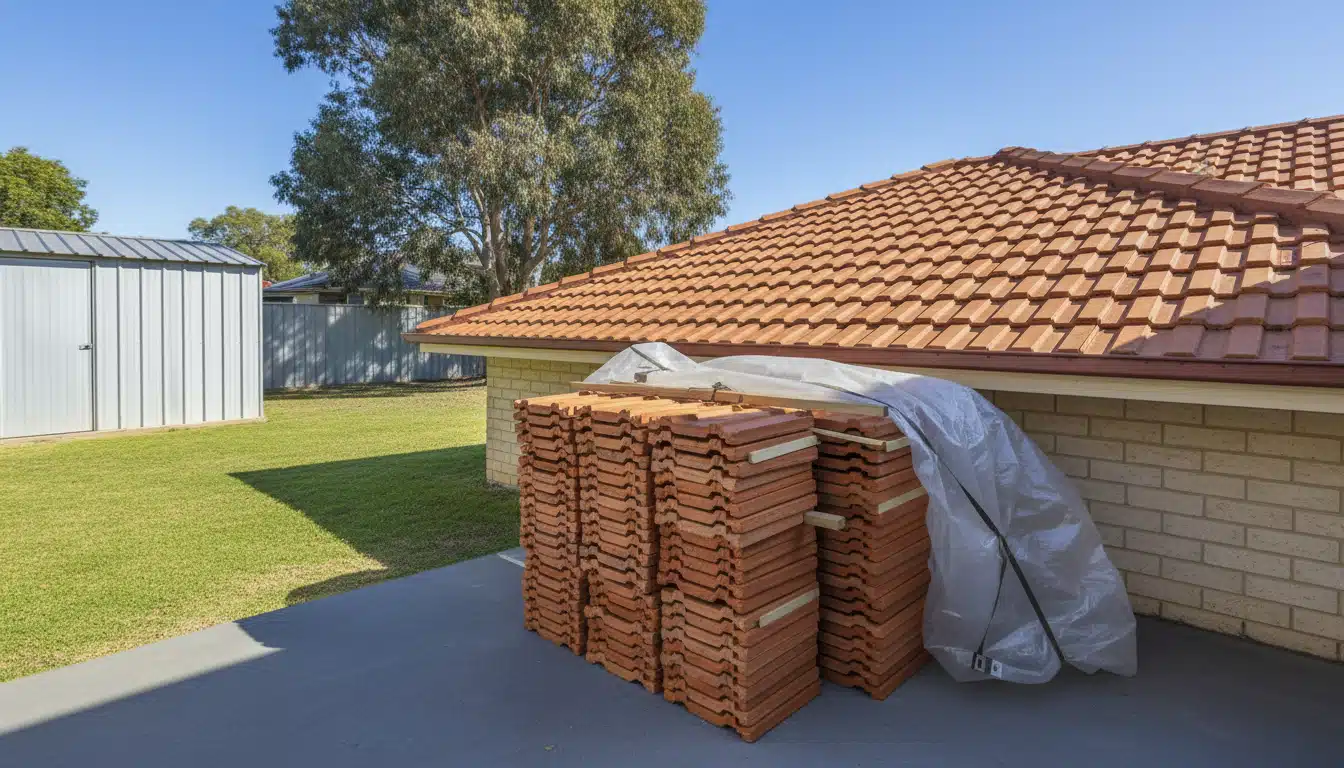
Tile roof ventilation challenges require particular attention. Terracotta and concrete tiles create naturally ventilated systems through gaps between tiles, but this ventilation depends on proper tile placement and unobstructed airflow paths. When tiles settle, shift, or get replaced incorrectly, these ventilation paths close. Sarking installed beneath tiles without adequate ventilation provision can eliminate natural airflow entirely.
Metal roofs present different ventilation requirements. Colorbond and other metal roofing materials conduct heat rapidly, creating intense heat buildup in roof cavities unless ventilation systems actively exhaust this thermal load. Metal roofs also generate more condensation moisture accumulation on their undersides during temperature transitions, requiring ventilation systems that can handle moisture removal as well as heat exhaust.
Visible Signs of Ventilation-Related Damage
Poor roof ventilation damage manifests through various symptoms, some obvious and others easily mistaken for different issues. Recognising these signs early prevents minor ventilation problems from escalating into major structural damage.
Interior ceiling damage often provides the first indication of ventilation problems. Paint peeling or blistering on ceilings suggests condensation moisture accumulation in roof cavities. Discolouration or staining indicates water vapour condensing and dripping onto ceiling materials. Sagging ceiling sections point to insulation that has absorbed moisture and increased in weight.
Premature coating adhesion failure frequently results from excessive heat cycling. Coatings that should last 15-20 years begin cracking, peeling, or fading within 5-7 years when subjected to extreme temperature fluctuations. The coating material itself may be high-quality, but the substrate beneath it expands and contracts so dramatically that coating adhesion failure occurs regardless of product quality.
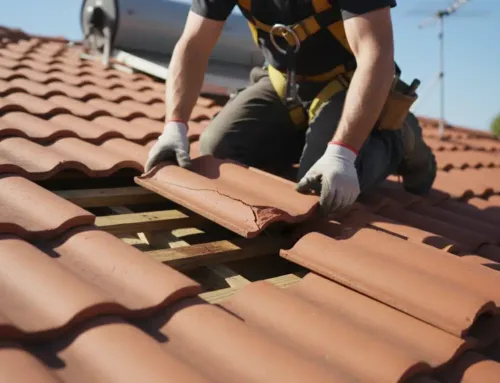
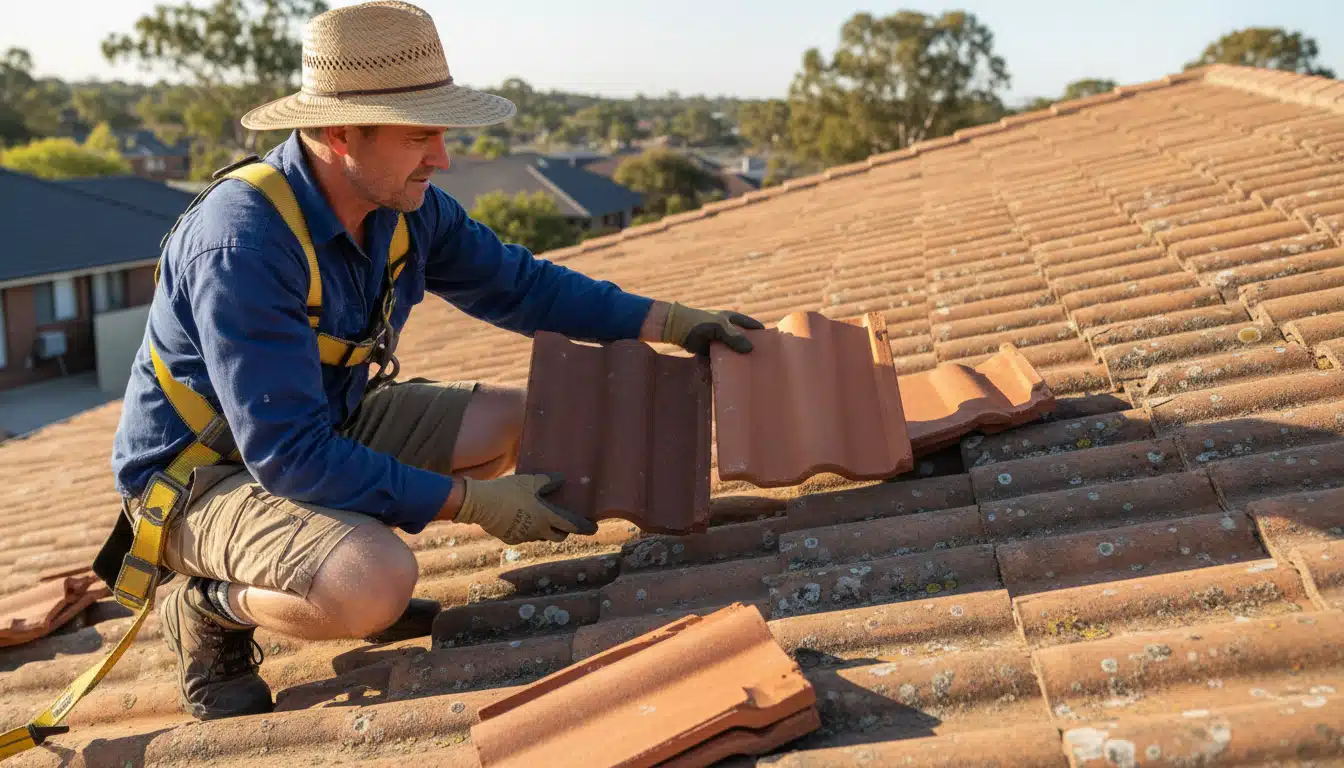
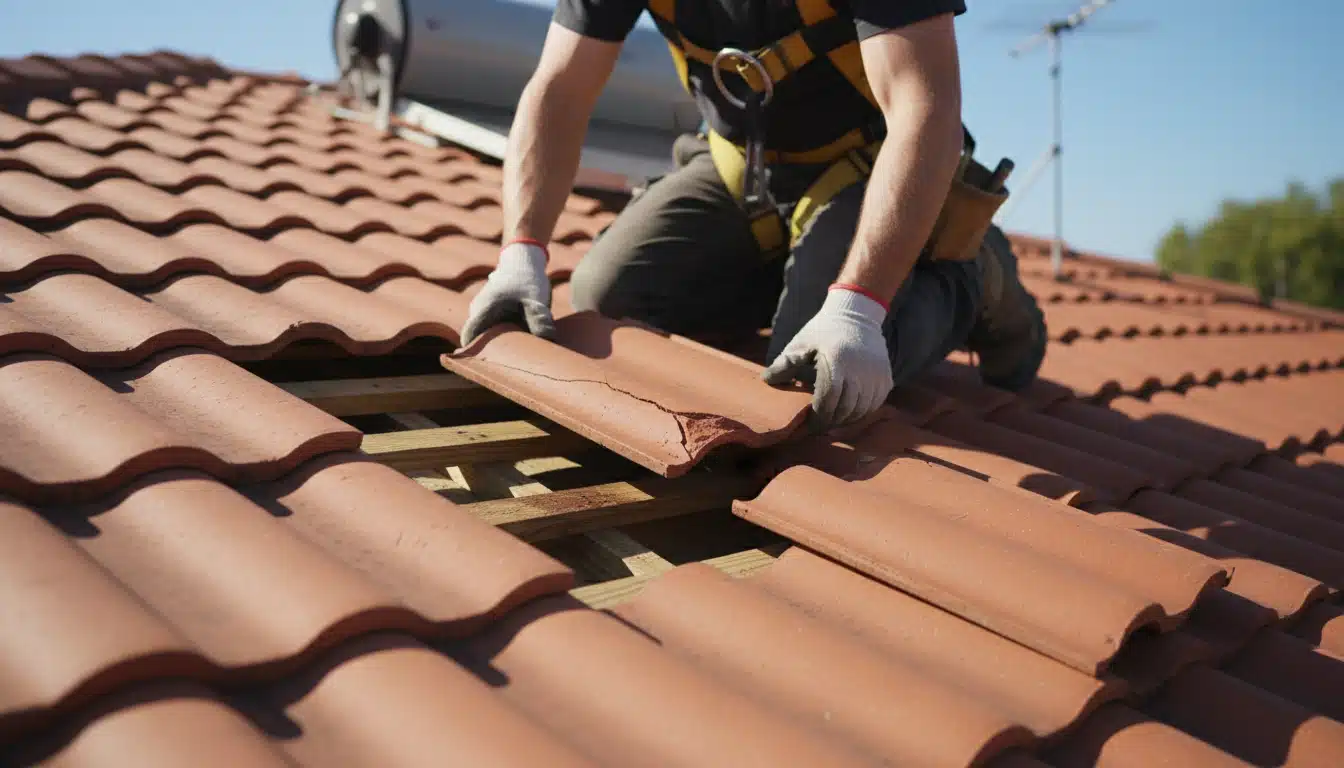
Accelerated tile deterioration appears in homes with ventilation problems. Cement and terracotta tiles develop surface crazing, spalling, or cracking patterns that indicate thermal cycling stress. Tiles that should last 50+ years show significant deterioration within 20-30 years. This damage concentrates in areas where heat accumulation is most severe, typically around roof ridges and in valleys.
Timber batten deterioration becomes visible during roof inspections or roof repairs. Battens show excessive cracking, warping, or splitting. Rafters develop checks and cracks. In severe cases, timber shows signs of rot or fungal growth where condensation has provided sustained moisture. This timber batten deterioration undermines the entire roof structure, affecting how tiles sit and how the roof handles loads.
Metal component corrosion accelerates in poorly ventilated roof spaces. Roof screws, brackets, and flashing materials develop rust or corrosion despite protective coatings. Valley irons show premature deterioration. This corrosion concentrates in areas where condensation regularly forms, creating conditions for moisture-accelerated metal degradation.
Energy efficiency problems signal ventilation issues before structural damage becomes apparent. Homes with poor roof ventilation damage require more air conditioning during summer as heat radiates down through ceilings. Upstairs rooms become uncomfortably hot even with cooling systems running. Energy bills climb without corresponding changes in household usage patterns.
How Ventilation Problems Affect Different Roof Types
Tile roofs and metal roofs respond differently to ventilation problems, requiring distinct approaches to diagnosis and solution.
Terracotta and concrete tile roofs rely on natural ventilation through gaps between tiles, supplemented by ridge vents, whirlybirds, or other mechanical ventilation. When this system works properly, air flows up through eave gaps, moves between tiles and sarking, and exhausts through ridge vents. This creates continuous airflow that moderates temperature and removes moisture.
Ventilation problems in tile roofs often stem from blocked airflow paths. Sarking installed too tightly against tiles eliminates the air gap needed for ventilation. Mortar bedding applied too generously blocks ventilation channels along ridges. Tiles that have shifted or settled close gaps that previously allowed airflow. These restrictions create hot spots where heat accumulates and accelerates coating adhesion failure.
The weight and thermal mass of tile roofs means they respond more slowly to temperature changes than metal roofs, but they also retain heat longer. Poor ventilation allows this accumulated heat to radiate into living spaces for hours after sunset, creating uncomfortable conditions and driving cooling costs.
Metal roofs (Colorbond, corrugated iron, and other metal systems) conduct heat rapidly, creating different ventilation challenges. These roofs heat quickly under direct sun and cool quickly after sunset, but without adequate ventilation, the heat transfers directly into roof cavities. Metal roofs also generate significant condensation moisture accumulation on their undersides during temperature transitions, particularly during autumn and spring when warm days give way to cool nights.
Ventilation systems for metal roofs need higher capacity than equivalent tile roof systems because metal transfers heat so efficiently. A whirlybird that adequately ventilates a tile roof might prove insufficient for a metal roof of the same size. Metal roofs also benefit from reflective sarking materials that reduce radiant heat transfer, but these materials only work effectively when ventilation systems remove the heat that does penetrate.
Complex roof configurations multiply ventilation challenges regardless of roofing material. Multiple roof planes at different pitches create air pockets where heat accumulates. Valleys between roof sections trap hot air. Dormers and roof windows interrupt airflow patterns. Each architectural feature requires consideration in ventilation system design.
Properties with roof tiles covering complex configurations need particularly careful ventilation planning. The natural ventilation properties of tiles help, but cannot overcome fundamental design issues where airflow paths simply do not exist or where hot air has no route to ventilation outlets.
The Connection Between Ventilation and Roof Longevity
Proper ventilation extends roof life significantly, often by decades. This relationship between airflow and longevity affects every component of the roofing system.
Coating systems perform dramatically better on well-ventilated roofs. Dulux Acratex coatings applied over properly ventilated substrates routinely exceed their 15-20 year warranty periods, while identical coatings on poorly ventilated roofs may fail within 7-10 years due to coating adhesion failure. The coating material itself has not changed; the difference lies entirely in the thermal cycling stress the substrate experiences.
Permacoat’s restoration work on thousands of Perth roofs demonstrates this relationship consistently. Properties with adequate ventilation require roof painting and coating renewal on predictable schedules. Properties with ventilation problems need attention more frequently, and often require more extensive preparation work because substrate damage has progressed further.
Tile integrity depends heavily on thermal cycling stress management. Tiles subjected to extreme daily temperature swings develop micro-cracks that eventually become visible damage. These cracks allow moisture penetration, which accelerates deterioration through expansion cycles. Well-ventilated tiles experience gentler temperature transitions and last substantially longer.
Structural timber maintains strength and integrity when protected from extreme heat and moisture cycling. Rafters, battens, and purlins in well-ventilated roof spaces retain their structural properties for the life of the building. The same timber components in poorly ventilated spaces may require replacement within 30-40 years as excessive drying, moisture absorption, and thermal cycling stress compromise structural capacity. Timber batten deterioration represents one of the most expensive repair categories.
Metal components corrode far more slowly when ventilation removes moisture effectively. Valley irons, flashing, and fasteners in well-ventilated roofs maintain protective coatings and resist rust formation. Poor ventilation creates conditions where condensation forms regularly on metal surfaces, accelerating corrosion despite protective finishes.
The cost implications are substantial. A roof system designed to last 50+ years might require major intervention at 25-30 years if ventilation problems go unaddressed. Conversely, improving ventilation on an aging roof can extend its viable life by 10-15 years, deferring major restoration or replacement costs significantly.
Solutions for Ventilation Problems
Addressing poor roof ventilation damage requires assessment of current conditions, identification of specific deficiencies, and implementation of appropriate solutions. The approach varies based on roof type, home design, and severity of existing damage.
Ventilation capacity assessment provides the foundation for effective solutions. Roof cavity volume, roof material and colour, ceiling insulation levels, and climate exposure all factor into ventilation requirements. A property in coastal Perth with a dark Colorbond roof needs substantially more ventilation capacity than an inland property with a light-coloured terracotta tile roof, even if the roof areas are identical.
Professional assessment identifies whether existing ventilation components are functioning, appropriately sized, and properly positioned. A roof inspection can reveal blocked whirlybirds, inadequate ridge venting, obstructed eave vents, or complete absence of ventilation systems in older properties.
Whirlybird installation or replacement addresses capacity problems in many situations. Modern whirlybirds move substantially more air than older models, and proper sizing matters. Commercial-grade units handle larger roof areas more effectively than residential models. For metal roofs or dark-coloured roofs, multiple whirlybirds positioned strategically often prove necessary.
Ridge ventilation systems provide continuous ventilation along roof peaks, creating natural convection that draws hot air up and out of roof cavities. These systems work particularly well on hip roofs where ridge lines run the length of the building. Ridge vents require proper installation to prevent water penetration while allowing maximum airflow.
Eave and soffit ventilation creates intake points for ventilation systems. Hot air exhaust through ridge vents or whirlybirds only works effectively when replacement air can enter through eaves. Many older homes have eaves that were never designed for ventilation, requiring retrofit solutions that add ventilation capacity without compromising weather protection.
Gable vents suit certain roof configurations, particularly where gable ends provide opportunities for large ventilation openings. These vents work with prevailing breezes to create cross-ventilation through roof spaces, supplementing heat-driven convection with wind-assisted airflow.
Sarking and insulation modifications sometimes prove necessary to restore ventilation in tile roofs. Sarking installed too tightly against tiles needs adjustment to recreate air gaps. Insulation pushed too far into eaves needs repositioning to allow airflow. These modifications require careful work to maintain weather protection while improving ventilation.
Solutions often combine multiple approaches. A comprehensive ventilation upgrade might include new whirlybirds for heat exhaust, eave vent installation for air intake, and sarking adjustments to improve airflow paths. The specific combination depends on roof configuration, existing conditions, and budget considerations.
Preventive Maintenance for Ventilation Systems
Maintaining ventilation effectiveness prevents problems from developing and protects the investment in roofing systems. Regular maintenance catches issues before they cause damage.
Annual inspections should include ventilation system checks. Whirlybirds should rotate freely without binding or noise. Ridge vents should be clear of debris and show no signs of water penetration. Eave vents should be unobstructed by insulation, nests, or debris. These checks take minimal time during routine roof maintenance but prevent problems that could cost thousands to address later.
Whirlybird bearing maintenance extends component life significantly. Bearings exposed to Perth’s weather conditions need periodic lubrication or replacement. A whirlybird that has stopped rotating provides zero ventilation benefit, yet homeowners often do not notice the failure until other problems develop. Regular checks ensure these components continue functioning.
Debris removal from ventilation components maintains airflow capacity. Leaves, nesting materials, and general debris accumulate in ridge vents, around whirlybird bases, and in eave vents. This debris restricts airflow and can create pathways for water penetration. Clearing ventilation components during roof cleaning services maintains system effectiveness.
Post-restoration ventilation verification ensures that roof work has not compromised ventilation. Painting or coating work can inadvertently block vents if not performed carefully. Tile replacement can close ventilation gaps if tiles are not positioned correctly. Checking ventilation function after any roof work prevents problems from developing.
Insulation positioning requires attention during any ceiling or roof space work. Insulation pushed too far into eaves blocks ventilation intake paths. Insulation installed without proper clearance around whirlybird openings reduces exhaust capacity. These issues develop gradually as insulation settles or during renovation work, requiring periodic verification that ventilation paths remain clear.
When to Address Ventilation Problems
Timing matters when dealing with poor roof ventilation damage. Some situations require immediate attention, while others can be addressed during planned maintenance or restoration work.
Immediate attention becomes necessary when ventilation problems have caused visible damage. Ceiling stains indicating condensation moisture accumulation, sagging ceiling sections, or evidence of timber rot all signal that ventilation problems have progressed to the point of causing structural issues. These situations require prompt assessment and remediation to prevent further damage.
During restoration planning represents the ideal time to address ventilation deficiencies. When planning roof restoration, incorporating ventilation improvements ensures the restored roof performs optimally and the coating system achieves its full life expectancy. The cost of adding ventilation during restoration is substantially less than retrofitting it later, and the benefits to coating longevity justify the investment.
Before coating application matters particularly for properties with existing ventilation problems. Applying premium roof coatings over poorly ventilated substrates wastes the coating’s potential. The coating will fail prematurely through coating adhesion failure regardless of quality because the underlying thermal cycling stress problem has not been addressed. Fixing ventilation first protects the coating investment.
After energy efficiency problems emerge suggests ventilation issues have developed. If cooling costs have increased, upstairs rooms have become uncomfortably hot, or the home feels stuffy despite adequate insulation, ventilation problems likely contribute. Addressing these issues improves comfort immediately and prevents long-term roof damage.
During property improvements provides opportunities to upgrade ventilation systems. Renovations that add roof area, ceiling insulation upgrades, or changes to roof configuration all affect ventilation requirements. Reassessing ventilation capacity during these projects ensures the system matches current needs.
Conclusion
Poor roof ventilation damage develops gradually, creating conditions that accelerate coating adhesion failure, tile deterioration, and structural damage over months and years. The extreme temperatures Perth roofs experience during summer, combined with condensation moisture accumulation during cooler months, make adequate ventilation essential for roof longevity. Properties with proper ventilation systems routinely achieve 15-20 year coating life and 50+ year roof system life, while poorly ventilated roofs require intervention far more frequently.
Understanding the relationship between ventilation and roof performance helps homeowners protect their investment and avoid premature failure of roofing systems. Whether addressing existing problems or planning preventive improvements, ventilation deserves serious consideration in any roof maintenance or restoration strategy.
Permacoat’s experience across 30,000+ Perth roof restorations demonstrates that ventilation directly impacts coating performance and roof longevity. Properties receiving comprehensive restoration work that includes ventilation assessment and improvement consistently outperform properties where ventilation issues go unaddressed. The difference appears clearly in warranty claim rates, maintenance requirements, and overall system performance.
For Perth homeowners concerned about roof condition, ventilation assessment should be part of any professional roof inspection. Contact us on (08) 9249 5955 to identify and address ventilation problems before they cause visible damage, preventing costly repairs and extending roof system lifespan.