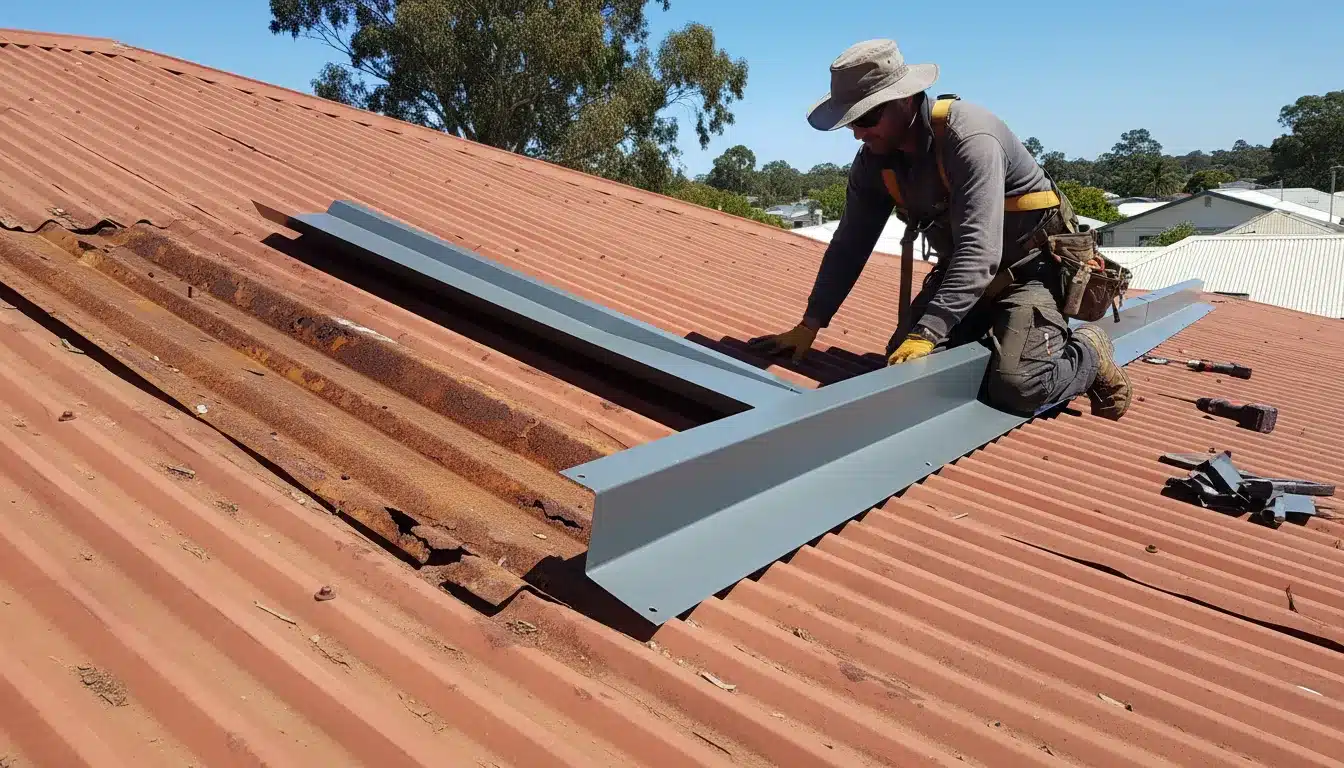
Rusted gutters should be replaced with a system that suits the roof, drainage load and Perth conditions, not simply with the cheapest available profile. For most exposed Perth homes, Colorbond guttering is usually the stronger all-round choice because it holds its shape over long runs, integrates neatly with common roof colours and tolerates demanding outdoor conditions when installed and maintained correctly.
PVC does not rust and may suit a short, sheltered run, but heat, ultraviolet exposure and movement at joins can make it less suitable for long, sun-exposed roof edges. The useful comparison is therefore not simply PVC vs metal gutters. It is how each complete system will perform on the particular home.
Before selecting either material, the cause of the existing corrosion needs to be found. Poor fall, blocked outlets, wet debris, failing joins, incompatible fixings and damaged fascia can all contribute to gutter failure.
The replacement also has to account for roof catchment, valleys, outlet positions and downpipe capacity. A durable material cannot compensate for a drainage layout that holds water or overflows in heavy rain.
What rust reveals about the existing gutter
Rust is more than a cosmetic mark. Once corrosion reaches the gutter base, the surrounding metal may be thin or pitted even if only one pinhole is visible. Bubbling coatings, orange staining and drips at seams can indicate that the protective finish has broken down over a wider area.
A patch may control one isolated leak, but repeated pinholes or long rust lines usually call for a broader assessment. Our gutter replacement work considers the gutter profile, downpipes and the drainage route together rather than treating each leak as a separate defect.
Water left sitting in the gutter is a common warning sign. It may point to inadequate fall, a sagging run, a blocked outlet or brackets that no longer hold the profile in line. Replacing corroded metal without correcting that cause can expose the new system to the same conditions.
Rust around brackets and joins deserves particular attention. These points can trap damp debris and concentrate movement. If fixings have loosened or a joint repeatedly opens, water can reach the fascia and eaves before the gutter looks severely damaged from ground level.
Check the roof edge before choosing a material
The fascia must provide a sound base for the new brackets. Soft timber, swelling, cracked coatings or loose fixing points can prevent either steel or PVC from maintaining the intended fall. Fascia repairs should be identified before installation rather than discovered after the old gutter is removed.
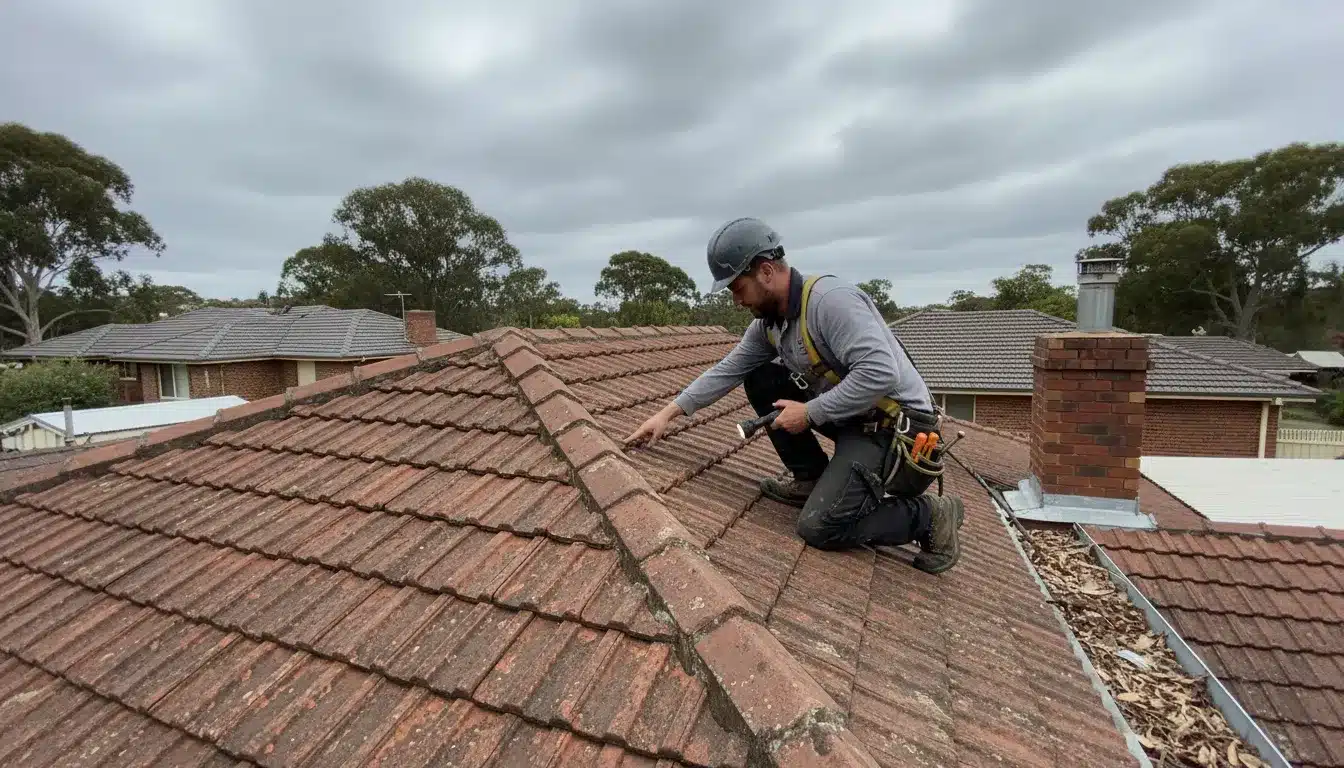
The adjoining roof also matters. Broken tiles, failed flashing or a leak near the eaves can be mistaken for a gutter problem. We assess related defects through roof repairs so water entry from above is not left behind when the gutter is replaced.
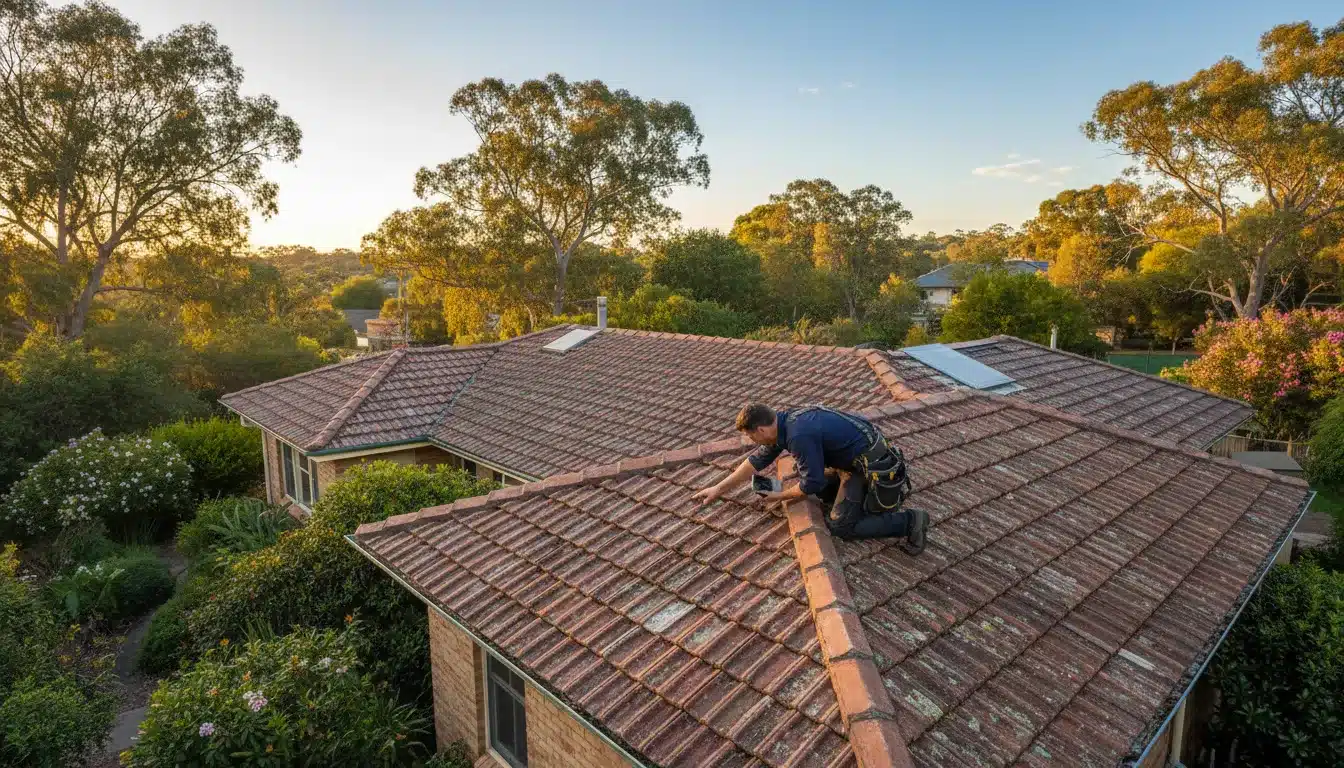
On a tiled roof, the bottom course and roof edge need close inspection. A displaced or damaged tile can direct water behind the gutter instead of into it. Our tile repair approach addresses cracked, slipped and deteriorated tiles that can affect drainage at the eaves.
Extensions and patios can also change the original catchment. If additional roof area now drains into an older run, a like-for-like replacement may repeat an existing capacity problem. The proposed profile and outlets should reflect the roof as it stands today.
How Colorbond guttering performs in Perth
Colorbond guttering is coated steel, so its value comes from the combination of profile strength, protective finish and correct installation. It generally maintains a crisp line along long elevations when supported at suitable bracket spacing, which helps preserve both fall and appearance.
That stiffness becomes useful when valleys or steep roof planes discharge a sudden volume of water into one section. The gutter still needs enough capacity and support, but a rigid metal profile is less prone to visible distortion than a lightweight alternative under temporary load.
Colour selection is another practical advantage. Colorbond guttering can be coordinated with roof sheets, fascia, downpipes, garage trims and other exterior finishes. The result can look integrated with the home rather than like a separate repair added later.
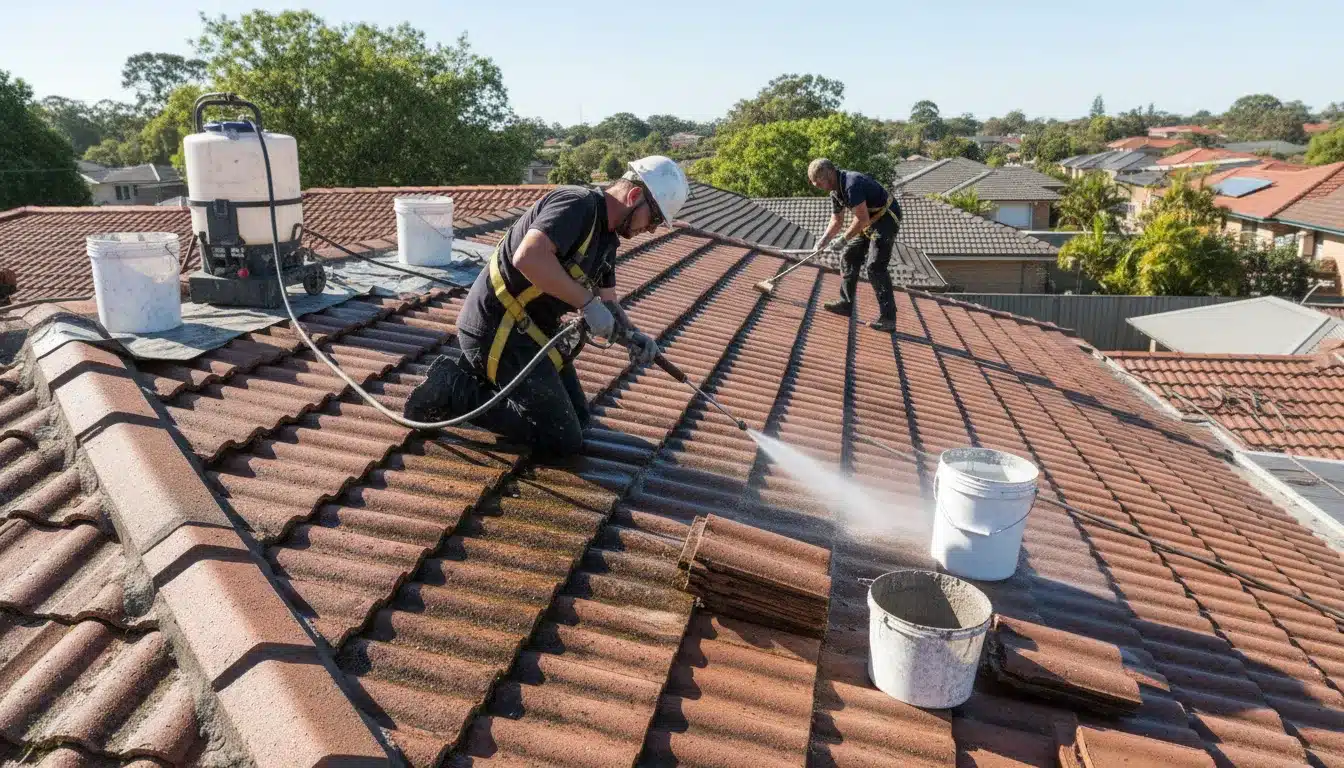
Coated steel is not maintenance-free. Compacted leaves and wet silt can hold moisture against the base, while scratches or poorly treated cut edges can expose the underlying metal. Periodic roof cleaning can form part of a wider plan to keep roof surfaces, valleys and drainage paths clear.
Compatible fasteners and careful handling matter, particularly in coastal areas where salt exposure can increase corrosion pressure. The installer must also avoid combinations of dissimilar metals that can react when moisture is present.
Where PVC gutters can struggle
PVC appeals because it is lightweight and cannot develop rust in the way steel does. Those qualities can be useful on a short, sheltered section where visual demands and storm loads are modest. They do not remove the need to consider heat, support and joint movement.
Perth summer exposure can place plastics under sustained heat and ultraviolet stress. Depending on product quality and orientation, an ageing profile may fade, chalk, become brittle or prove more vulnerable to impact. A shaded rear section faces a different environment from a long west-facing elevation.
Plastic also expands and contracts as temperatures change. Long runs need room for that movement, and clips, corners, joins and outlets all need to accommodate it. Permacoat assesses those movement points with the roof edge, not as a catalogue of separate products.
Our experience across more than 30,000 restored roofs helps us view guttering as part of the whole roof system, not as an isolated edge strip.
Appearance can influence the decision as well. On many tiled homes, a metal profile gives the roof edge a firmer, more consistent line. PVC may still be appropriate in a low-visibility position, but material selection should account for the elevations seen from the street and outdoor areas.
Compare complete systems, not isolated materials
The key question in PVC vs metal gutters is how the gutter, brackets, outlets and downpipes work as one drainage system. Profile material is only one part of that system. Capacity, fall and discharge can have a greater effect on overflow risk.
A small profile can overflow regardless of whether it is steel or PVC. Roof area, pitch and valley positions determine how much water reaches each run, while outlet size and location affect how quickly it can leave. Patios and additions may concentrate flow in places the original drainage layout was not designed to manage.
Correct fall allows water to reach an outlet without leaving persistent pools. Too little fall encourages standing water and debris build-up, while an uneven or excessive fall can affect appearance and load one end of the system. Bracket spacing must then keep that line stable when the gutter is full.
Where surface deterioration extends beyond the gutter, our roof coatings work can address suitable roof surfaces after the necessary preparation and repairs. Coatings and gutter replacement solve different problems, so each should be recommended according to actual condition.
Downpipes need equal attention. A larger gutter can still overflow if the outlet is restricted or the downpipe is crushed, blocked or poorly positioned. Water should move away from the building at ground level rather than collect beside walls, paths or footings.
Balance service life, maintenance and appearance
Initial price is only one part of replacement value. Labour, access, fascia preparation, profile size, extra outlets and downpipe changes can all affect the scope. A cheaper material may cost more over time if movement at joins or early deterioration leads to repeated attention.
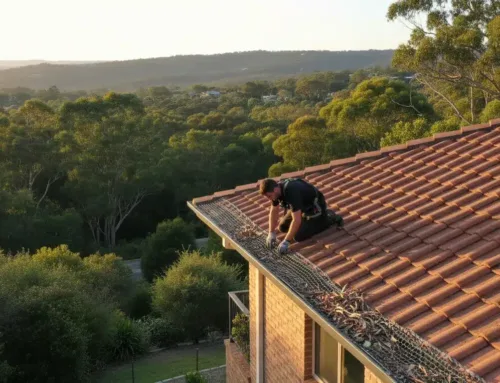
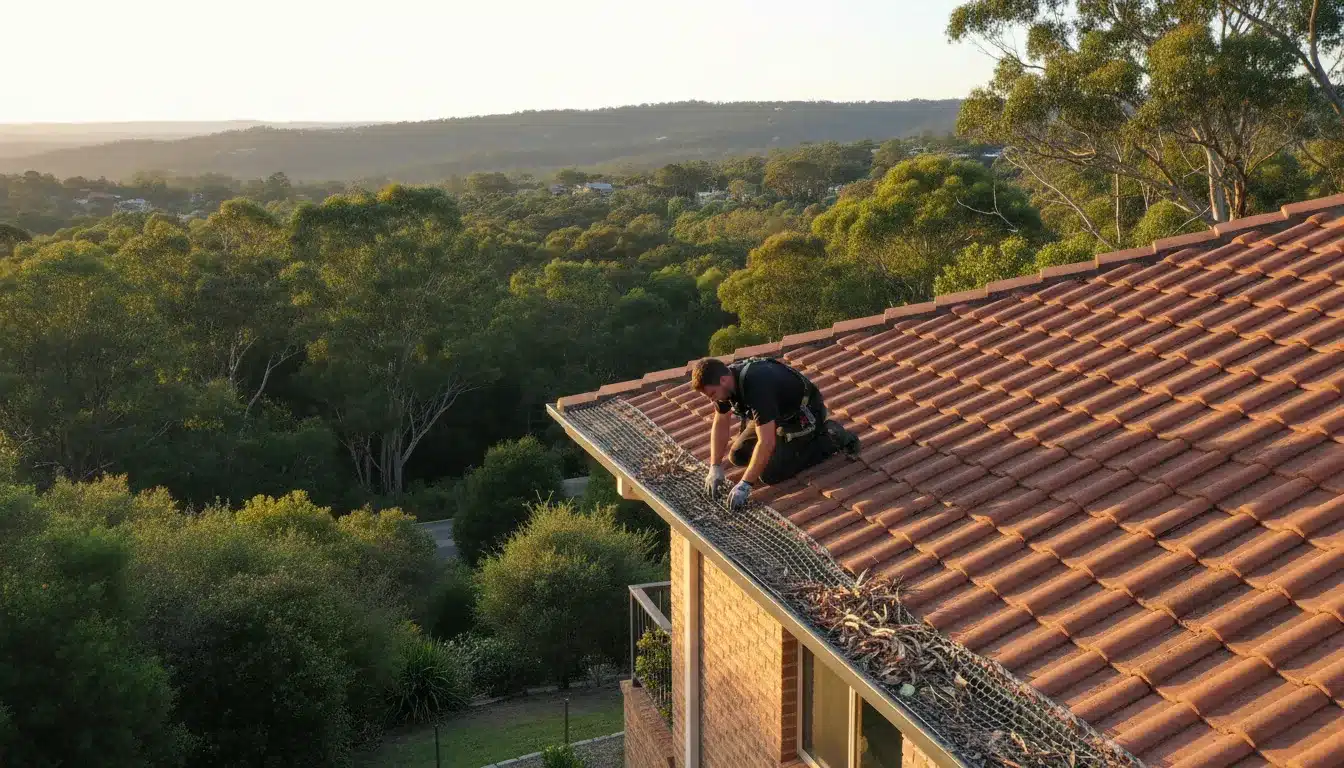
Maintenance access should be considered before the profile is selected. Leafy properties may need more frequent clearing, and awkward roof edges can make routine work difficult. A design that can be kept clear safely and consistently has a better chance of carrying stormwater as intended.
The colour and finish should also be read against the whole elevation. Where the roof remains sound but its finish is weathered, roof painting may be considered separately from the gutter project after cleaning, repairs and surface preparation.
A complete roof replacement is not automatically required because the gutters have rusted. If the roof structure or covering has reached the end of its useful condition, however, re-roofing may change the most sensible sequence of work. New gutters should be coordinated with the final roof edge rather than fitted twice.
For strata and managed properties, consistent profiles, planned access and coordinated maintenance can be particularly important. Our strata roofing work considers multiple dwellings and shared property requirements without treating every roof edge in isolation.
When replacement is more sensible than repair
An isolated defect in otherwise sound guttering may be repairable. Replacement becomes more practical when corrosion appears along several sections, seams repeatedly leak, the profile has sagged, or the base remains wet after rain has stopped.
Overflow after cleaning can indicate a design issue rather than a blockage. The profile may be undersized, an outlet may be poorly placed, or a valley may send too much water into one point. These conditions should be corrected in the replacement design.
Widespread fascia staining, peeling paint below the gutter or damp eaves can show that water has been escaping for some time. Waiting for a visible hole to grow can allow damage to spread into timber, linings and exterior finishes.
Colorbond guttering is usually the practical choice for Perth homes that need strength over longer runs, close colour coordination and a stable roof-edge profile. PVC can still suit selected sheltered areas, but its heat exposure, movement allowances and appearance should be assessed carefully.
The final decision should follow an inspection of the roof edge, fascia, catchment and discharge path. For advice on whether Colorbond or PVC suits your property and what needs to be corrected before replacement, contact us.