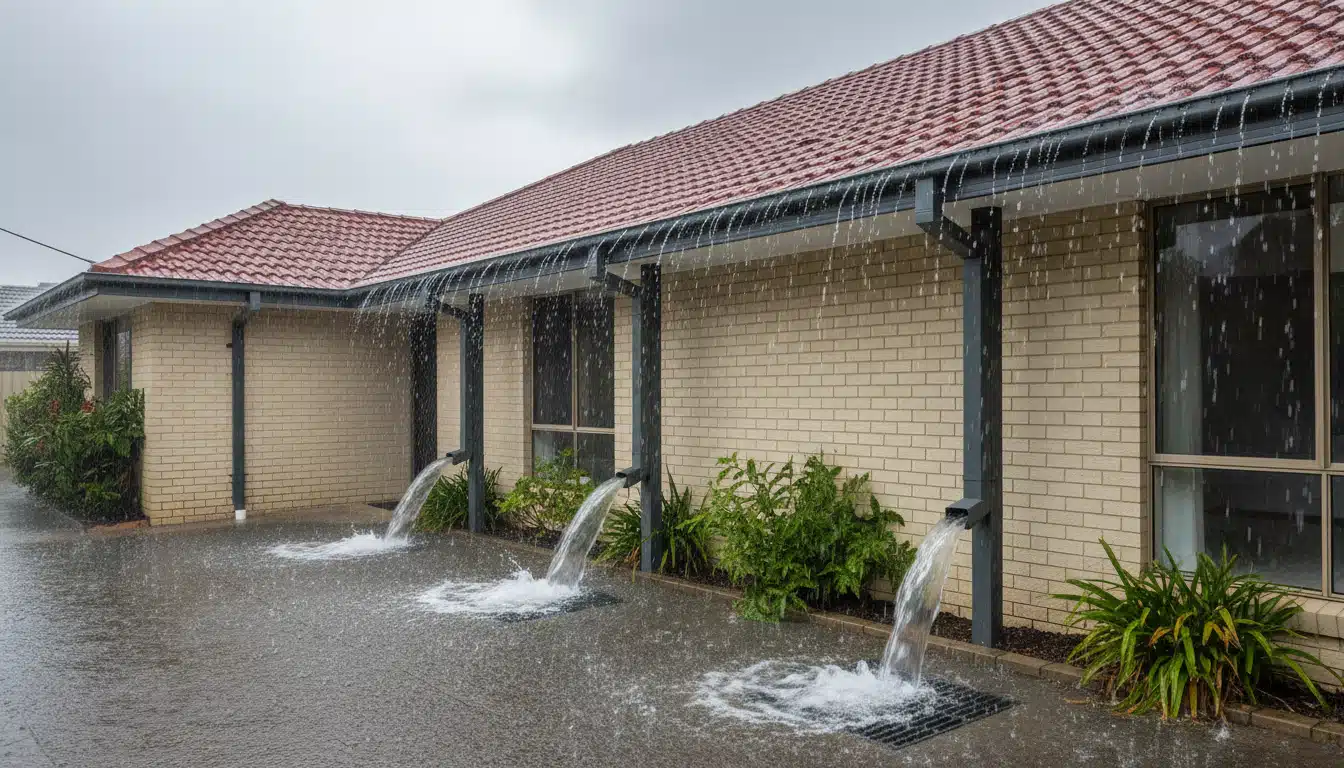
Downpipe sizing determines how quickly stormwater can leave your gutters during heavy rain. If the outlets and pipes cannot carry water away as fast as the roof collects it, the gutters can back up and overflow. Pipe size is only one part of that route. It does not, by itself, keep the fascia, walls or ground dry.
Downpipe storm capacity is not set by pipe diameter alone. Roof catchment area, gutter profile, outlet size, gutter fall, pipe position, bends and the final stormwater connection all affect the amount of water the system can handle. A large pipe attached to a restricted outlet can still perform poorly.
Heavy rainfall drainage is most severely tested during short, intense bursts. A system may appear adequate in light or steady rain, yet overflow when water reaches the gutter faster than one outlet can release it. That pattern is often a capacity or layout problem rather than a random leak.
We assess the whole drainage route because every restriction matters. The useful question is not simply whether a downpipe looks large enough. It is whether each roof section has enough gutter and outlet capacity, in the right places, to manage concentrated storm flow and move it safely away from the building.
Roof Catchment Area Sets the Drainage Load
Every roof plane feeding a gutter adds to the volume that its outlets must remove. A broad roof section usually needs more outlet area than a small porch, while adjoining valleys can concentrate water from two planes into a short part of the gutter. Our gutter and downpipe services consider the drainage components as one connected system rather than isolated pieces.
Extensions can change the calculation. A patio, pergola or added room may direct extra runoff into an existing gutter that was designed for the original roof. The old downpipe might still look serviceable, but it can become the narrowest point once the contributing catchment increases.
Roof pitch and shape also influence how runoff arrives. Water can reach the gutter quickly from steep surfaces, while intersecting roof sections may send a sudden surge towards one valley discharge point. The system needs capacity where the flow actually gathers, not merely an even number of pipes around the home.
A practical assessment maps each contributing roof plane to its gutter run and outlet. Missing a small upper section or an adjoining structure can understate the load. This is why sizing from the existing pipe alone can preserve a problem that has already shown itself during storms.
Gutters, Outlets and Downpipes Must Work Together
The gutter receives water, the outlet releases it and the downpipe carries it towards the stormwater system or another suitable discharge point. If one component has less usable capacity than the others, it becomes a choke point. Where overflow has already affected roof edges, broader roof repairs may be needed alongside drainage work.
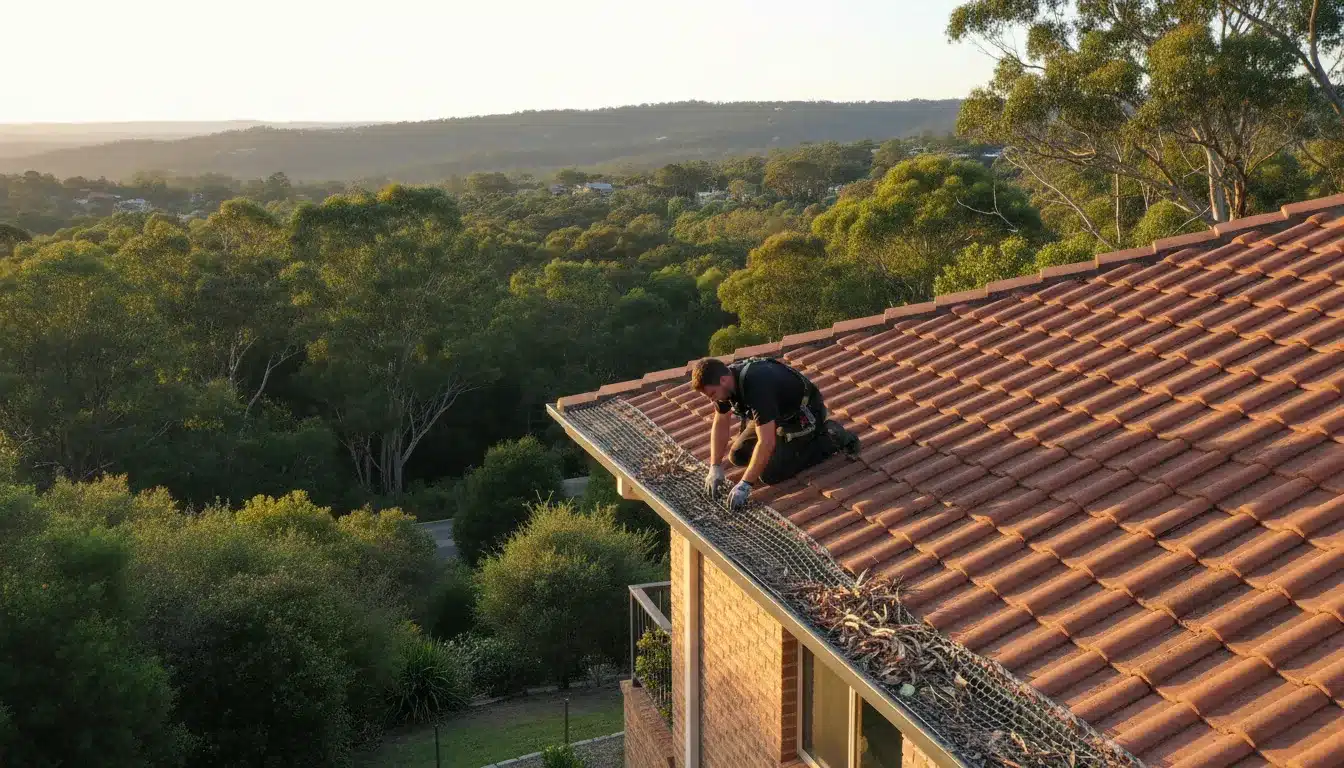
The outlet is frequently the first restriction. Leaves, seed pods, silt and roofing grit settle around the opening, reducing the area through which water can pass. A wide gutter and generous downpipe cannot compensate if the dropper between them is partly blocked or too small.
Gutter fall matters as well. Water must travel towards the outlet rather than ponding at the opposite end of a long run. Increasing downpipe diameter will not correct a section that falls away from the outlet or holds water because its alignment has changed.
Bends and offsets add resistance and create places where debris can lodge. A straight drop generally offers a simpler route than multiple tight elbows around eaves or walls. Crushed sections, separated joins and poorly aligned ground connections can further reduce the working capacity of an otherwise suitable pipe. A failed covering is a roof repairs job, separate from a wider pipe.
Routine roof cleaning can expose drainage defects hidden by accumulated debris. Once gutters and outlets are clear, recurring overflow becomes more useful evidence of poor fall, unsuitable outlet placement or insufficient capacity rather than a basic maintenance issue.
Why Heavy Rain Reveals Problems That Light Rain Does Not
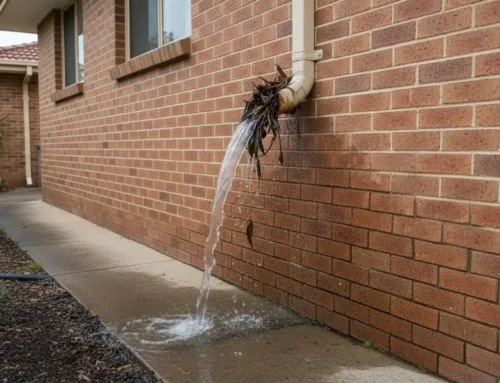
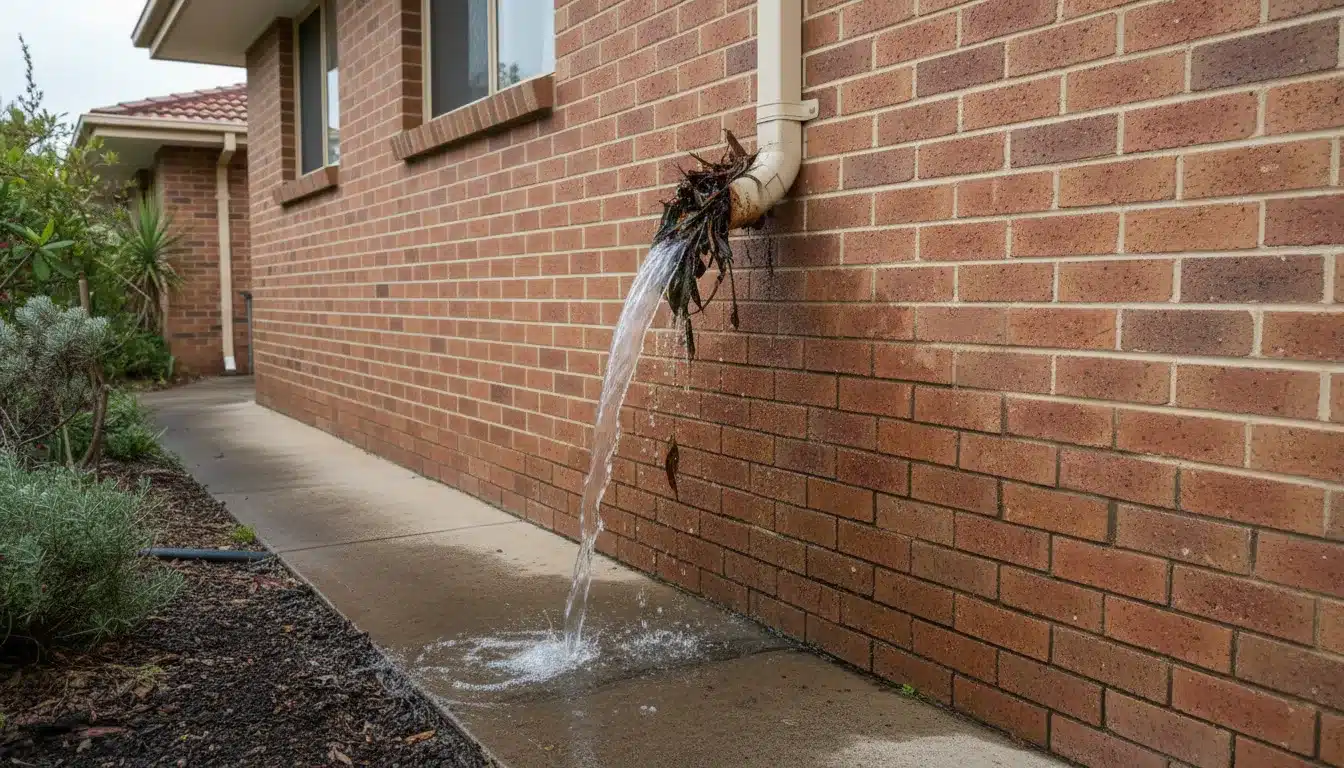
Light rain may enter the gutter slowly enough for a restricted outlet to keep pace. During a strong burst, the inflow can exceed the outflow within minutes. Water then rises in the gutter until it spills over the front, tracks behind the gutter or reaches vulnerable parts of the eave.
This explains why a drainage fault may seem intermittent. The same gutter can look normal after a long period of gentle rain but fail during a brief storm cell. Downpipe storm capacity must therefore be judged against peak flow, not just performance in ordinary showers.
Permacoat has restored more than 30,000 roofs across Perth, north and south of the river. That breadth of experience helps us place stormwater symptoms in the context of the roof, its drainage layout and the condition of surrounding components, rather than treating visible overflow as an isolated event.
Valleys deserve particular attention because they funnel runoff from adjoining planes towards one point. If the nearest outlet is small or distant, water may overshoot the gutter or overwhelm a short section even when the rest of the roof drains normally.
Long gutter runs present a different problem. Water at the far end must travel farther before it can leave, and poor fall can slow that journey. Adding a well-positioned outlet may improve performance more effectively than enlarging the only downpipe at one end.
Properties with shared or complex roof areas need coordinated assessment. For strata roofing, changes to one drainage section can affect common walls, lower roofs, paths and neighbouring lots, so the discharge route deserves the same attention as the roof edge.
Signs That Downpipe Capacity May Be Too Low
Overflow from a clean gutter during intense rain is the clearest warning. If maintenance repeatedly clears the same section but water still spills at peak rainfall, the likely causes include an undersized outlet, too few downpipes, poor placement or inadequate gutter fall.
Staining below one outlet can show where water regularly escapes. Marks on fascia, soffits or walls do not identify the exact cause by themselves, but their position helps trace the overloaded part of the system. Deteriorated finishes can be addressed through roof painting after the source of the moisture has been corrected.
Gurgling, splashing or slow drainage can indicate trapped air, partial blockage or a restrictive route through bends. A pipe that remains full after rain may contain compacted debris, a crushed section or a blocked connection below ground level.
Erosion and splashback at the base show that the problem can continue after water leaves the pipe. Concentrated discharge beside walls may saturate garden beds, mark lower brickwork or undermine soil. Heavy rainfall drainage must move water away from the roof and then away from vulnerable areas around the building.
Loose brackets and leaking joins are further clues. They may not change the nominal pipe size, but movement can alter alignment and allow water to escape before it reaches the intended discharge point. A complete inspection follows the route rather than stopping at the visible outlet.
What a Downpipe Sizing Assessment Should Cover
Roof area and the number of planes feeding each gutter run set the load. Pitch, valleys, gutter profile, fall, outlet size, downpipe diameter, bends and the discharge point all change where storm flow concentrates.
Roof condition matters because drainage symptoms can overlap with other faults. Cracked tiles, displaced flashing and deteriorated bedding can admit water even when the gutter is working. Targeted roof tile repairs help separate defects in the roof covering from overflow caused by the drainage layout.
A hose test can reveal slow movement, leaks at joins and water ponding away from outlets, although it does not recreate every storm. Observations made during real rain are valuable too. Note which corner overflows, whether the gutter was clean and whether the problem begins during a short burst or after prolonged rainfall.
The final discharge route must be checked for restrictions. A correctly sized downpipe can still back up if its underground connection is blocked or if the outlet empties into a pit that cannot accept the incoming flow. Surface grading and drainage around the property influence whether water moves away safely.
We also account for recent changes. Added roof areas, altered valleys, replacement gutters or reworked paving may affect where water collects and how it leaves. Reviewing those changes can explain why an old overflow pattern has appeared or become worse.
Maintenance and Upgrades That Improve Storm Flow
Clearing gutters is only the beginning. Outlets should be opened fully, and downpipes should be checked for compacted leaves, nests, silt and objects lodged at bends. Professional roof coatings should only follow suitable preparation and correction of defects that could keep directing water onto vulnerable surfaces.
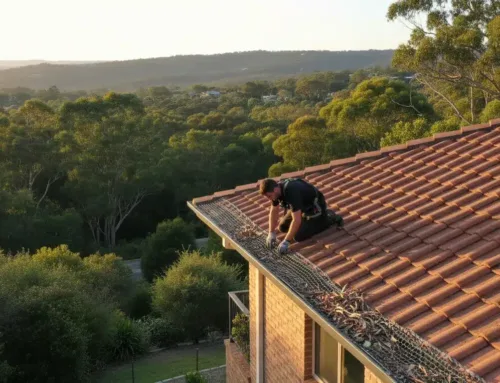
Pre-winter checks are useful because dry conditions allow brackets, joins, outlet openings and discharge points to be inspected before the first major fronts. Homes under trees or below large valleys may need closer attention because debris and concentrated runoff can reduce usable capacity quickly.
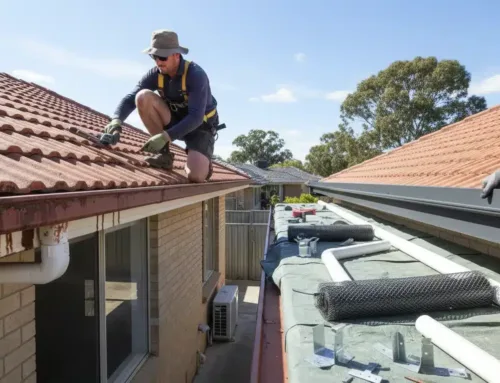
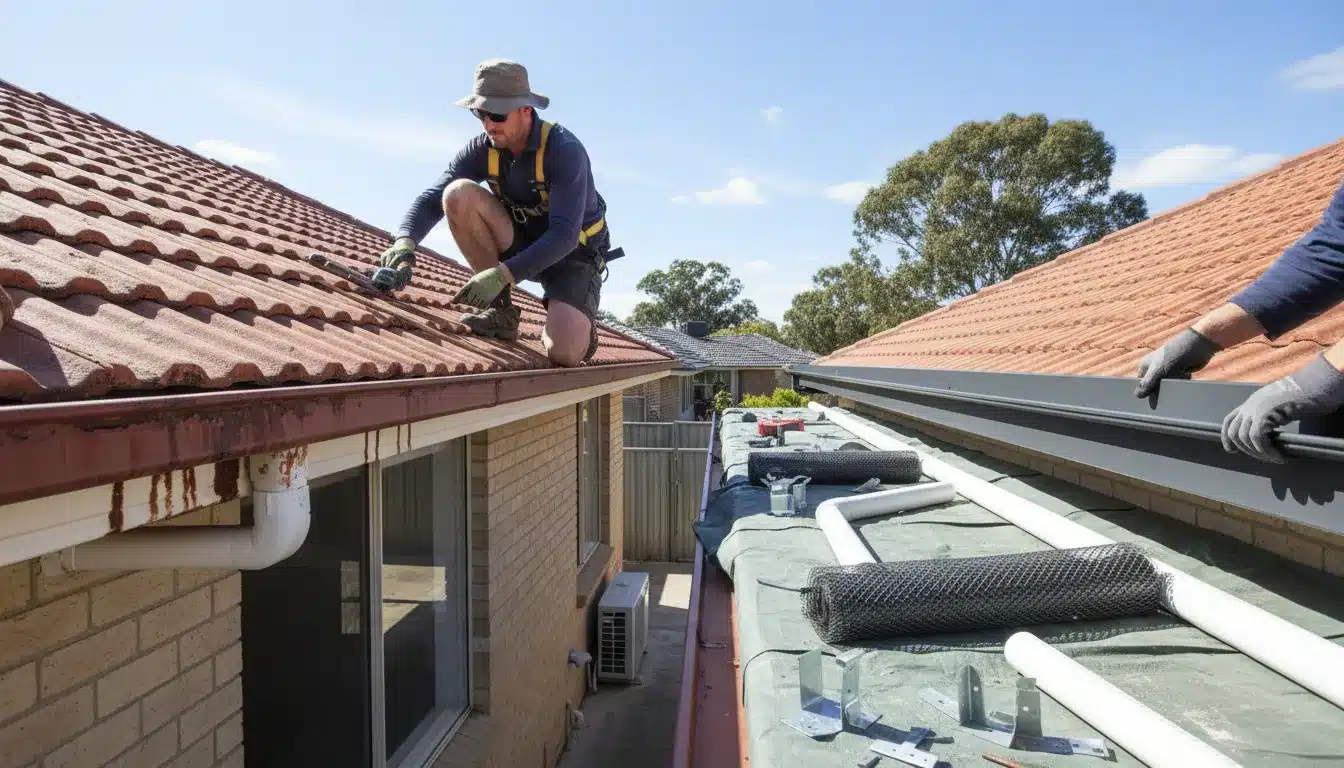
If cleaning does not stop overflow, the drainage design needs review. Depending on the roof layout, an upgrade may involve a larger outlet, an additional downpipe, improved gutter fall, fewer restrictions or a safer discharge route. The correct change addresses the actual bottleneck rather than simply replacing like with like.
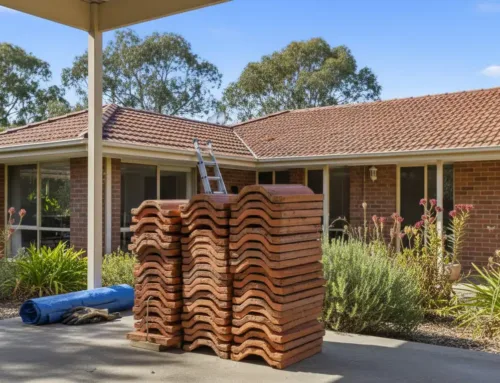
Tile conditions should also be considered around valleys and roof edges. Broken or displaced tiles can alter runoff paths and create separate entry points for water. Where the covering has wider age-related deterioration, tile roof restoration may form part of a broader plan after drainage needs have been assessed.
Any added outlet must have a suitable destination. Sending more water into an already restricted underground line merely moves the bottleneck. The improved system should carry peak flow from the roof edge through the pipe and into drainage that can accept it.
Choosing the Right Response Before the Next Storm
The right response depends on what the evidence shows. A blocked outlet needs clearing, a damaged pipe needs repair and an overloaded gutter run may need a layout or capacity change. Treating every overflow as a cleaning issue can leave the building exposed during the next intense burst. Where the covering has failed across the plane, re-roofing is a separate decision from pipe size.
Downpipe storm capacity protects more than the gutter. It helps limit water reaching fascia, eaves, walls and the ground beside the building. When each roof catchment has enough outlet capacity in the right position, stormwater can leave quickly instead of backing up at vulnerable roof edges.
Frequently Asked Questions
How Do We Judge Downpipe Storm Capacity?
Downpipe storm capacity is the roof area, pitch, valley positions, outlet size and the pipe that actually leaves the gutter. A wide gutter still overflows if the outlet is the pinch point.
Why Does Heavy Rainfall Drainage Fail After Cleaning?
Heavy rainfall drainage fails when the layout is undersized or poorly placed, not only when leaves are present. An extra roof from a patio can load an old outlet that used to cope.
Can an Extra Downpipe Fix It?
One practical change is to split the run or add an outlet so water leaves the wall line. Fall still needs a look so the new pipe is not soaking the same wall.
We can inspect the roof area, gutter fall, outlets, downpipes and discharge route to identify the restriction and recommend a suitable response. Before the next storm, contact us so we can check the catchment, outlets and discharge.