Perth storms can arrive after long dry spells, then drop a hard burst of water across large roof areas. Good downpipe capacity helps a roof shed water before gutters fill faster than outlets can empty. The issue is not only pipe size. It also involves roof area, gutter fall, outlet placement, debris, and the route water takes after leaving the building.
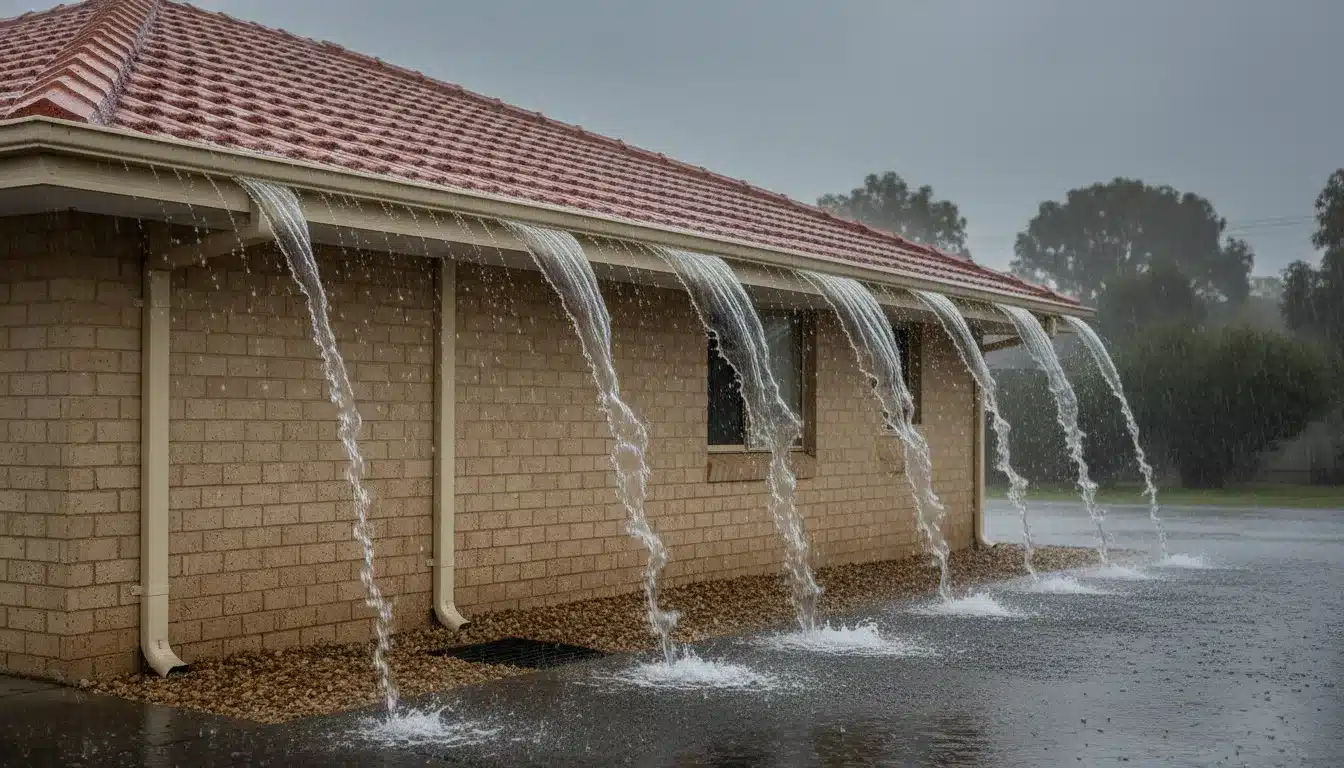
Short, intense showers test heavy rainfall drainage because water moves quickly from roof sheets or tiles into a narrow gutter line. If flow slows at one point, the water level rises along the edge. Overflow then follows the easiest path, which may be behind the gutter or down an external wall.
Storm readiness starts with a simple question. Can each part of the system move water at the same pace during the hardest likely burst of rain? A neat roof can still fail that test if outlets are undersized, blocked, or poorly placed.
How Roof Edges Handle Sudden Water Loads
Roof edges collect water from many square metres before it reaches one outlet. Effective roof stormwater control depends on clear entry points, steady gutter fall, and a safe discharge route. When any part is out of balance, the edge becomes a temporary storage channel.
A roof with long runs can hold more water than expected during a sharp front. The first weak point may be a corner, a low section, or a joint near a valley. Small errors become obvious once rain exceeds normal flow.
Roof Area and Run Length
Large planes send water to the same gutter run. A long run also gives leaves and grit more time to settle. The result can be a slow zone near the outlet, even when the rest of the gutter looks clear from ground level.
Older additions can also change the original design. A patio roof, lean-to, or new valley may add flow to an existing edge. The visible gutter may look unchanged, but the load entering it has increased.
Outlet Position and Gutter Fall
Outlet position matters because water should not travel too far before dropping into the pipe. Fall is just as important. A gutter that sags near the middle can trap water, silt, and leaf fragments after each shower.
The best inspection checks the whole path, not one fitting. It follows water from roof surface to ground level. It also considers whether nearby paving or soil can accept that flow safely.
Key points to assess include:
- Roof area feeding each gutter run
- Outlet size and number
- Gutter fall toward each outlet
- Low spots that hold water after rain
Warning Signs Around Gutters and Walls
The warning signs often appear away from the original restriction. Water can spill from gutters, soak fascia boards, and pool beside paving. Stains, washed mulch, and damp patches can point to a roof edge problem rather than a wall defect.
Good gutter overflow prevention is easier when early signs are taken seriously. Overflow should not be treated as normal during every winter front. Repeated spills can mark paint, weaken timber, and leave soil damp beside footings.
Staining Below the Fascia
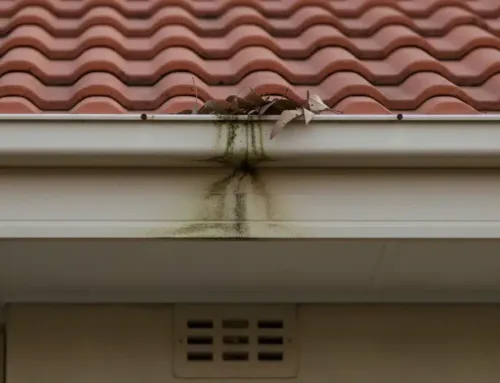
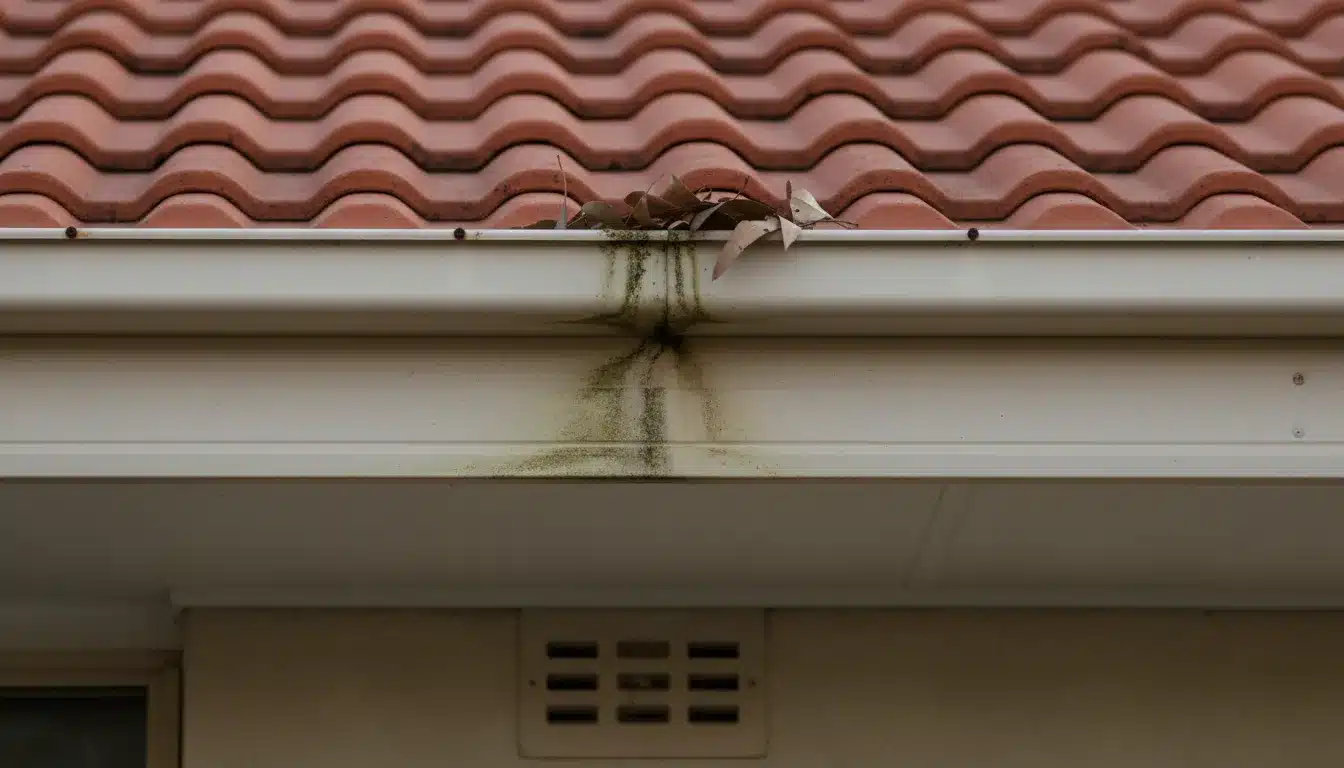
Dark streaks under the gutter can show where water escaped during earlier storms. Peeling paint may also appear near brackets or end caps. These marks help locate the section that needs closer checking.
A stain does not always mean the gutter is leaking. Water may have spilled over the front because the outlet could not keep up. It may also have tracked behind the back of the gutter during a burst.
Splashback Near Paving
Water landing hard on paving can bounce against walls. Over time, that splashback can wet render, vents, and timber trim. The pattern is often worst where a vertical pipe discharges too close to the building.
Ground-level clues should be matched with roof-edge checks. A damp strip beside paving may come from poor surface fall. It may also come from a gutter that spills above the same area.
Noise, Vibration, and Overflow
A vertical pipe that shakes during rain may have a restriction, loose bracket, or sharp bend. Gurgling can also suggest trapped air or partial blockage. Neither sound nor movement alone establishes whether the pipe is too small, so these symptoms need checking rather than an automatic size upgrade.
From a sheltered position at ground level, look for these signs without approaching flowing water or climbing:
- Water spilling from one short section
- Overflow that starts only during intense bursts
- Gurgling at bends or shoes
- Soil washout below a discharge point
Local Conditions That Shape Drainage Choices
Perth roofs face varied exposure across suburbs. Coastal wind, leaf fall, and older extensions can all change how roof water behaves. Local context affects the balance between pipe size, cleaning access, and the number of outlets needed.
Planning for Perth roof drainage means allowing for storms and routine roof cleaning. A system that handles light rain may struggle once seed pods, grit, or broken mortar enter the flow path.
Trees, Valleys, and Debris Loads
Trees can drop leaves in waves, not steady amounts. One windy day can fill a corner that was clear the week before. Valley lines can then push that debris straight toward a small outlet.
This is where downpipe maintenance becomes more than a cleaning task. It includes checking brackets, joins, outlet strainers, and the lower discharge point. A clear top section is not enough if the base is restricted.
Older Roofs and Later Extensions
Many homes have changed since their first gutter layout. Rooms may have been extended, patios added, or roof lines altered. These changes can add water to a pipe that was sized for a smaller catchment.
A practical review of Perth roof drainage looks for these later changes. It also checks whether each discharge point still moves water away from the building. That point is easy to miss during dry weather.
Local checks should cover:
- Nearby trees and seasonal debris
- Extra roof areas from additions
- Ground falls beside the home
- Pipes that discharge onto paving
Inspection and Repair Planning Before Storms
A good roof repair plan checks the roof edge, gutters, outlets, elbows, and brackets before parts are replaced. Any connected sump or ground drain also needs assessment by an appropriate drainage specialist. Otherwise, a new section can inherit the same restriction farther downstream.
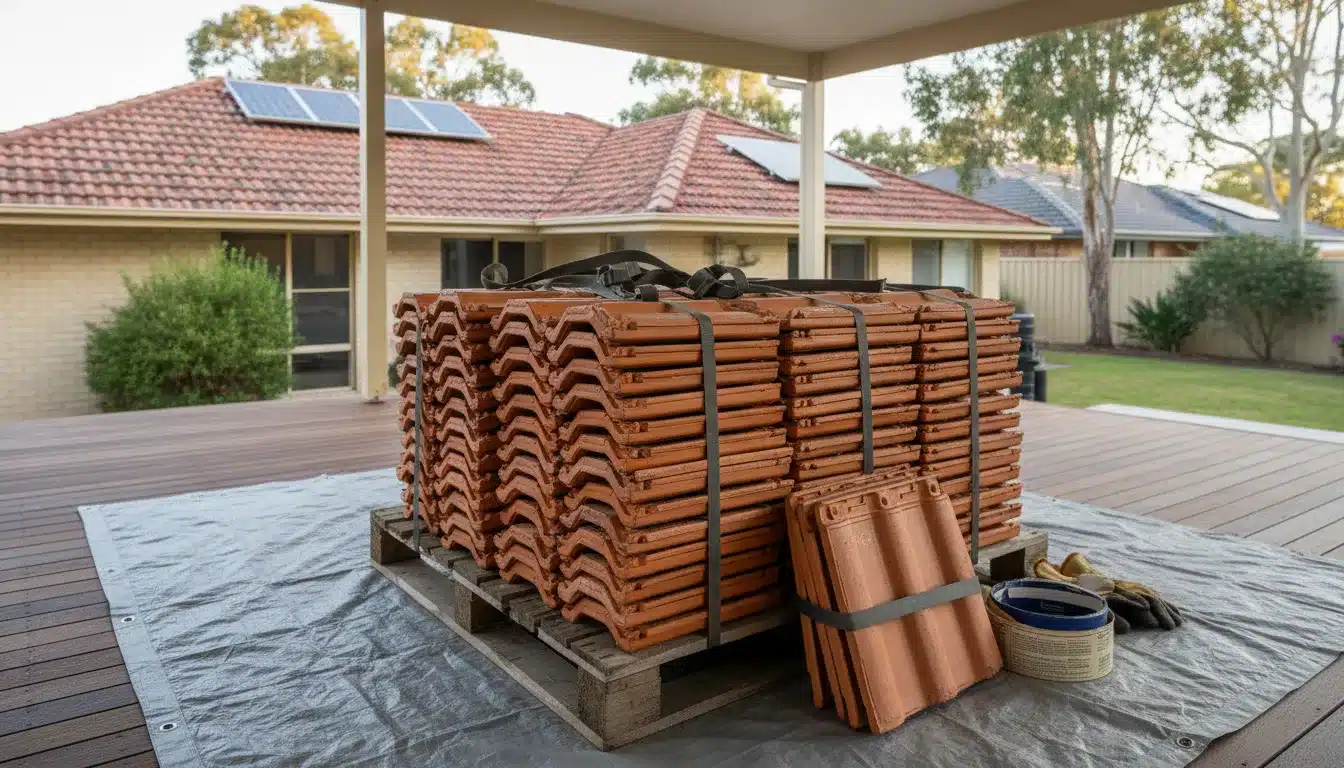
We have operated as Permacoat, a Western Australian family business, for more than 50 years and restored more than 30,000 roofs across Perth, north and south of the river. Our work includes replacing old or damaged gutters and downpipes, either separately or alongside roof repairs and restoration.
Light Rain Versus Peak Flow
A downpipe may carry light rain without difficulty yet be unable to accept a sudden surge from its catchment. The important distinction is whether overflow persists during intense rain after restrictions have been cleared, not simply whether water can pass through the pipe.
A hose test can reveal a blockage or leaking joint, but its flow may be much lower than the runoff produced by a storm. Passing that test alone does not establish that the downpipe capacity suits the roof area or local rainfall intensity.
Catchment Area and Outlet Capacity
Capacity assessment should relate the roof area feeding each outlet to the gutter profile, outlet opening, and downpipe arrangement. Nearby roof sections matter too: a valley or addition can concentrate runoff at one point rather than spread it evenly along the gutter.
The pipe’s nominal size is only part of roof stormwater control. A restricted gutter outlet can limit entry to a larger pipe, while bends and offsets can limit flow below it. The connected components need to be assessed together rather than sized in isolation.
A capacity assessment should account for:
- The roof catchment feeding each outlet
- The rainfall intensity used for sizing
- The gutter profile and clear outlet opening
- Bends, offsets, and downstream restrictions
When a Larger Pipe Is Not Enough
Increasing pipe size cannot correct a gutter that falls away from its outlet. Nor will it help if the outlet opening remains the narrowest part of the route. Where a long run concentrates too much water at one end, outlet distribution may matter as much as pipe diameter.
We offer downpipe replacement where existing pipework is old or damaged. Replacing a crushed or cracked section addresses its condition, but does not by itself establish that the outlet and connected drainage can carry the required storm flow. Those capacity questions need separate assessment.
A larger pipe still depends on:
- A gutter outlet that admits the required flow
- Gutter fall that delivers water to that outlet
- A downstream connection with adequate capacity
- Access to clear restrictions at bends and the base
Planning Practical Upgrades Before the Next Front
An upgrade should address the part of the catchment that overloads its outlet, not simply increase every pipe size. A valley feeding a short section may need different treatment from a long, evenly loaded gutter. Existing sound sections may remain suitable once that concentrated flow is properly accounted for.
Owners should also think about access. A pipe that can only be checked by difficult ladder work is less likely to be cleared before winter. A simple layout, safe inspection points, and clear lower outlets make routine care easier.
Depending on the capacity assessment, options may include:
- Clear debris and test the flow path
- Adjust gutter fall where water sits
- Replace crushed or cracked lower pipework
- Add an outlet where a long run overloads one end
- Move discharge away from paving and wall bases
- Keep cleaning access open for future checks
Small improvements often work best when combined. A larger outlet may help, but it will not solve a lower pipe blocked by roots, silt, or a tight bend. A new pipe may also fail if the gutter still holds water in the wrong place.
Ground discharge deserves the same attention as the roof edge. Water that leaves a pipe too close to the home can still create damp walls, stained paving, and soft soil. The outlet should move water to a safe path that will not erode garden beds or send water back toward the structure.
Seasonal timing matters. Planning before winter allows time to assess catchment loads and arrange any necessary work without relying on observations made during a storm. Temporary patches may contain a local leak, but they do not establish that the system has enough capacity for the next intense burst.
Rainfall intensity matters more to peak flow than the day’s total alone. A short downpour can deliver water faster than a longer period of steady rain, even if both produce the same total depth. Capacity decisions should therefore use appropriate design rainfall information rather than a daily total.
An assessment should also consider where water will go if the system is exceeded. Overflow directed away from the building is different from water backing into the eaves. A safe overflow provision complements suitable capacity; it does not excuse a blocked or undersized outlet.
Common Planning Mistakes to Avoid
Dividing the total roof area by the number of downpipes can conceal an uneven load. Each outlet serves a particular catchment, and those catchments may differ substantially. Several lightly loaded pipes elsewhere on the house do not relieve an overloaded gutter run unless the layout actually allows water to reach them.
Do not assume bigger parts always solve the issue. Larger fittings can help only when the rest of the route can handle the extra flow. A narrow shoe, flat lower section, or blocked ground drain can still cause backup.
Planning should avoid these common errors:
- Treating staining as only a paint issue
- Ignoring ground discharge after roof work
- Adding parts without checking fall
- Leaving hidden bends full of silt
- Cleaning the top but not the lower route
- Forgetting future access for seasonal checks
Inspection should also consider safety. Roof-edge work can damage tiles or put people at risk if access is poor. Leave roof access and flow testing at height to suitably equipped professionals, and do not attempt to clear a downpipe during a storm.
A sensible repair scope should identify the slow point, why it failed, and the intended result. It should distinguish replacing deteriorated roof-edge components from changing the system’s capacity, with any separate downstream work clearly identified. Otherwise, apparently similar quotations may cover different problems.
Connected drainage should also be considered. Soakwells, surface drains, and garden levels can affect how well a roof-edge repair performs. If the lower system cannot accept the incoming flow, a larger downpipe may simply deliver water to that bottleneck faster. Assessment of these lower components is separate from replacing old or damaged gutters and downpipes.
Preparing for Heavy Perth Rainfall
Downpipe capacity matters most when a sudden burst sends the whole catchment’s runoff towards its outlets. If your gutters or downpipes are old or damaged, contact us to discuss replacement, either on its own or alongside roof repairs. Keep wider drainage-capacity questions within the assessment rather than assuming new pipework alone will resolve them.