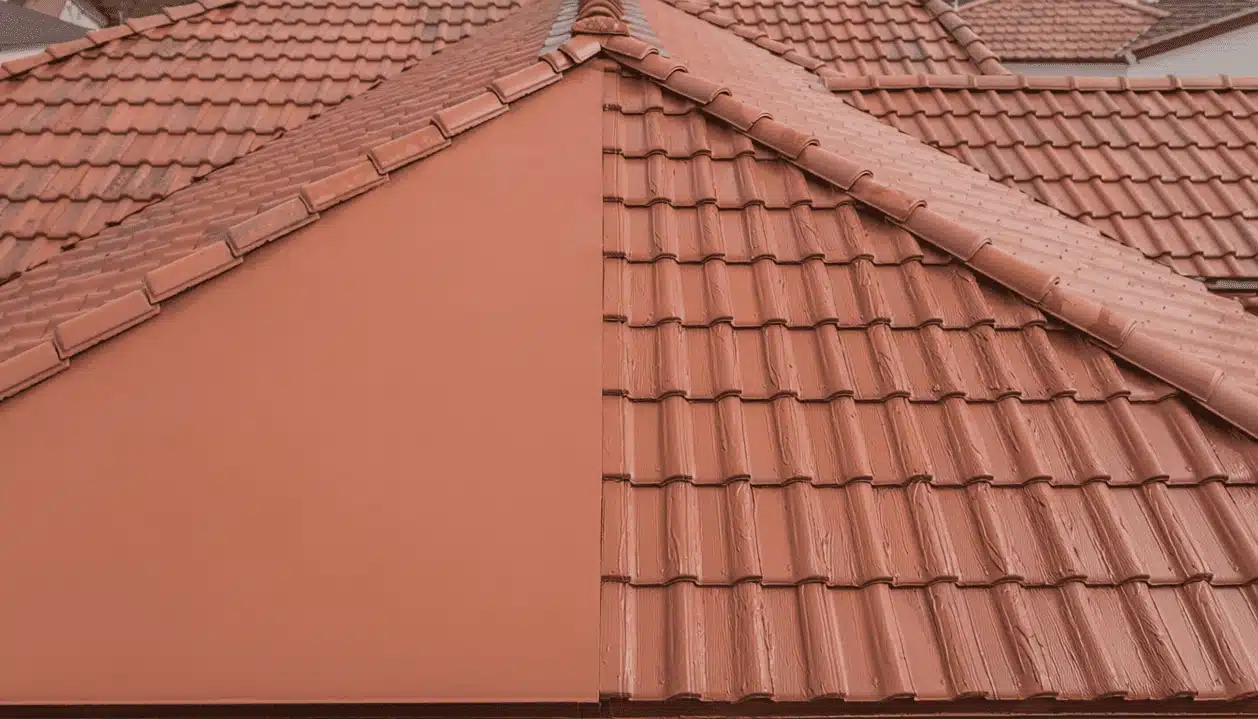
The coating product on a Perth roof restoration quote matters. But the application method that delivers it to the surface matters just as much – and far fewer homeowners think to ask about it. Two contractors applying identical Dulux Acratex products to identical roofs can produce results with lifespans decades apart, depending entirely on whether that product reaches the roof via professional spray equipment or hand rollers and brushes.
Understanding why requires looking at what each method actually achieves on tile and metal surfaces – and what each one cannot.
How Spray-Applied Roof Coatings Work
Professional Equipment and What It Achieves
Roof spray painting uses industrial airless spray equipment to atomise coating products into fine particles that distribute evenly across the entire roof surface. Spray rigs position at ground level, connecting through high-pressure hoses to spray guns operated by trained applicators working on the roof. Coating travels through hoses at pressures between 2,000-3,000 PSI, creating a uniform mist that settles consistently across tiles, metal sheeting, ridges, and valleys.
The atomised particles land softly and flow together before curing, eliminating the brush marks, roller stipple, and application lines that characterise manual methods. This process covers complex roof profiles – curved terracotta tiles, corrugated metal, profiled concrete tiles, textured surfaces – without missing low points or creating heavy build-up on high spots.
The Three-Coat Process Spray Application Supports
Proper surface preparation must precede spray application – professional roof cleaning removes dirt, moss, and loose material, followed by repairs to cracked tiles, damaged flashing, and deteriorated pointing. Once surfaces are clean, dry, and structurally sound, the spray applied roof coating process follows a systematic three-coat sequence.
The primer sealer coat penetrates porous surfaces and creates adhesion between old roof materials and new coating layers. Two topcoat applications then build the protective membrane thickness required for long-term performance. Each coat requires proper drying time before the next application – a process spray application manages more consistently than manual methods because the equipment’s metered flow prevents over-application that extends drying times unpredictably.
The Hand-Brushed Application Method
What Manual Application Involves and Where It Falls Short
Hand-brushed application uses traditional rollers and brushes to manually apply coating across roof surfaces. The technique works for small repair areas or touch-up applications where spray equipment setup doesn’t justify the cost. However, for complete roof coating projects, the method creates inherent challenges that product quality cannot overcome.
Maintaining consistent wet film thickness across large roof areas requires extraordinary discipline that fatigue alone defeats. Coating viscosity changes as material sits in trays between refills. Natural variations in brush pressure create inconsistent coverage that appears uniform to the eye but measures differently in film thickness across sections. The physical motion of brushes and rollers also creates texture patterns that trap dirt and reduce the coating’s self-cleaning properties over time.
Ridge caps, valleys, and tile overlaps – the areas where leaks most commonly develop – receive inconsistent coverage with manual methods. Brushes cannot reach into tight gaps between tiles or under ridge cap edges without creating heavy build-up on adjacent surfaces, leaving vulnerable areas under-protected while wasting material on sections with less consequence.
Coverage Consistency and Film Thickness
Why Measurable Consistency Determines Longevity
Professional spray equipment meters coating flow rates and maintains constant pressure, ensuring each square metre receives the specified wet film thickness. Applicators overlap spray patterns using systematic techniques that prevent missed areas and double-coating. This consistency matters because coating performance depends entirely on achieving minimum dry film thickness across the full roof area – not just accessible sections.
Thin spots allow UV radiation to penetrate the coating film, moisture to reach substrate materials, and premature failure to begin in isolated areas that eventually spread. Dulux Acratex coating systems specify minimum dry film thickness requirements – spray application reliably meets these specifications, while brushed application creates unpredictable variations.
The Real Cost of Hand-Brushed Thickness Variation
Hand-brushed methods typically produce thickness variations of 30-50% across roof sections. Areas where applicators make extra passes receive excessive coating that neither improves performance nor extends service life – it simply wastes material. Sections covered during the final passes before refilling trays often receive insufficient coating as brushes run dry. These variations create a patchwork of protection levels that fail at different rates.
The economic reality emerges over time: thin areas fail first, requiring spot repairs or complete recoating years before properly applied sections show wear. Property owners who chose brushed application to save 20-30% upfront often spend more over ten years than neighbours who invested in professional roof spray painting from the start.
Finish Quality and Aesthetic Results
Spray Application and Long-Term Appearance
Spray-applied coatings cure to smooth, uniform finishes that enhance property street appeal and maintain that appearance over decades. The fine mist settles evenly and self-levels as it cures, creating surfaces free from brush marks, roller stipple, and application lines. This professional finish reflects light consistently and resists the dirt accumulation that rougher textures experience.
Perth’s occasional dust storms and coastal salt deposits test roof coating surfaces relentlessly. Smooth spray-applied finishes shed particulate matter during rain events and resist the surface degradation that textured surfaces accelerate. The consistent surface also reflects solar radiation more effectively, contributing to cooler roof temperatures and reduced heat transfer into living spaces.
How Brushed Application Ages
Brushed applications create textured finishes that show every brush stroke and roller pass. These texture patterns become more pronounced as coatings cure and shrink slightly. The rough surface traps airborne dirt, pollen, and organic matter – progressively discolouring the roof between restoration cycles. It also provides anchor points for moss and lichen establishment in shaded areas, accelerating biological regrowth that single-coat brushed applications cannot suppress.
Colour consistency represents another measurable difference. Spray application distributes pigments uniformly throughout the coating film, ensuring consistent colour across the entire roof. Brushed methods create colour variations as pigments settle in trays between refills, creating subtle patchwork that becomes more visible as the coating ages unevenly.
Time Efficiency and Weather Risk
A typical three-bedroom Perth home with tile roof requires approximately one day per spray applied roof coating coat – three days total for the complete three-coat system plus drying intervals. The same project using brushed methods extends to five to seven days of active application time, not counting drying periods.
This efficiency reduces weather risk during Perth’s variable spring and autumn seasons. Shorter application windows mean less chance of unexpected rain interrupting the coating process before adequate surface cure. When rain approaches, spray teams can complete critical areas quickly and create weathertight conditions before precipitation arrives – a practical advantage that lengthy brushed applications cannot match.
Long-Term Performance and Warranty Implications
How Application Method Affects Service Life
Properly spray-applied Dulux Acratex systems regularly exceed their 15-20 year warranty periods when applied according to manufacturer specifications. The consistent film thickness, complete coverage, and proper surface adhesion that spray application creates allow coatings to perform as designed across the full roof area.
Perth’s coastal suburbs present particular challenges. Salt-laden air accelerates coating degradation when film thickness falls below minimum specifications anywhere on the roof surface. Spray application ensures every section – including those most exposed to prevailing westerly winds – receives adequate protection. This complete coverage prevents the premature failure that begins in isolated thin spots and spreads.
Hand-brushed applications show accelerated wear patterns, typically within five to seven years. Thin areas fail, developing chalking, colour fading, and loss of water resistance. At that point, property owners face a choice between spot repairs that rarely match existing coating colour and texture, or complete recoating decades before spray-applied roofs require attention. When coating failure is extensive enough, re roofing in Perth may ultimately prove more economical than repeated brushed restoration cycles.
Warranty Terms and Insurance Coverage
Reputable coating manufacturers specify application methods in warranty terms. Brushed applications may receive reduced warranty periods or exclusions for premature failure relating to application method. Insurance and professional indemnity coverage also vary – professional spray contractors carry coverage protecting property owners against coating performance failures, while budget brush contractors may operate without adequate protection.
Protective roof coatings applied by accredited spray teams carry manufacturer-backed warranties that brushed applications typically cannot match. This coverage difference reflects genuine confidence in the chemistry and application method working together as an integrated system.
Cost Analysis: Initial Investment vs Long-Term Value
Spray application costs more initially – typically 20-30% higher than basic brushed application. This premium reflects equipment investment, trained operators, and quality standards. The true comparison emerges over fifteen to twenty years.
Spray-applied coatings that perform for two decades without requiring major maintenance or recoating deliver lower annual costs than brushed applications requiring recoating after seven to ten years. The second coating project typically costs more than the original due to inflation and the need to address substrate damage that occurred during the premature failure period. Over twenty years, the total cost difference consistently favours quality spray application.
When Hand-Brushed Methods Make Sense
Despite spray application’s advantages for complete roof coating projects, brushed methods suit specific situations:
- Small repair areas – replacing several damaged tile roof repairs and coating new material to match existing colour
- Touch-up work after roof repairs where blending small sections into surrounding coating is the goal
- Heritage properties with complex architectural details requiring precision brush work on decorative elements where overspray is unacceptable
- Temporary protection for budget-constrained owners needing 3-5 years of weather resistance while saving for proper restoration
These exceptions represent a small fraction of roof coating projects. For standard residential and strata properties requiring complete roof coating, spray application delivers results that justify the additional investment.
Questions to Ask Before Choosing a Contractor
These questions reveal contractor commitment to quality application:
- What spray equipment do you use, and how often is it serviced? Professional teams maintain current equipment and follow regular maintenance schedules
- Do your applicators hold Dulux accreditation? Manufacturer training ensures proper technique and product knowledge
- How do you measure wet film thickness during application? Quality-focused contractors verify coverage meets specifications rather than relying on visual judgement
- What warranty do you provide, and what does it cover? Comprehensive warranties covering coating performance, leak protection, and labour reflect genuine confidence
- Can you provide references from projects completed 10+ years ago? Long-term performance proves application quality better than recent photographs
Conclusion
The difference between spray-applied and hand-brushed roof coatings extends beyond technique – it determines whether a restoration investment delivers decades of reliable protection or requires costly recoating within years. Spray application’s superior coverage consistency, professional finish quality, time efficiency, and long-term performance justify the additional initial investment for Perth homeowners seeking lasting results.
The smooth, consistent finish of spray-applied coatings signals quality to potential buyers, resists Perth’s UV and coastal conditions, and maintains colour integrity throughout its service life. Most importantly, proper spray application ensures every roof area receives adequate protection.
For expert roof restoration in Perth using professional spray application backed by 50+ years of experience, call (08) 9249 5955 to book your free roof inspection.