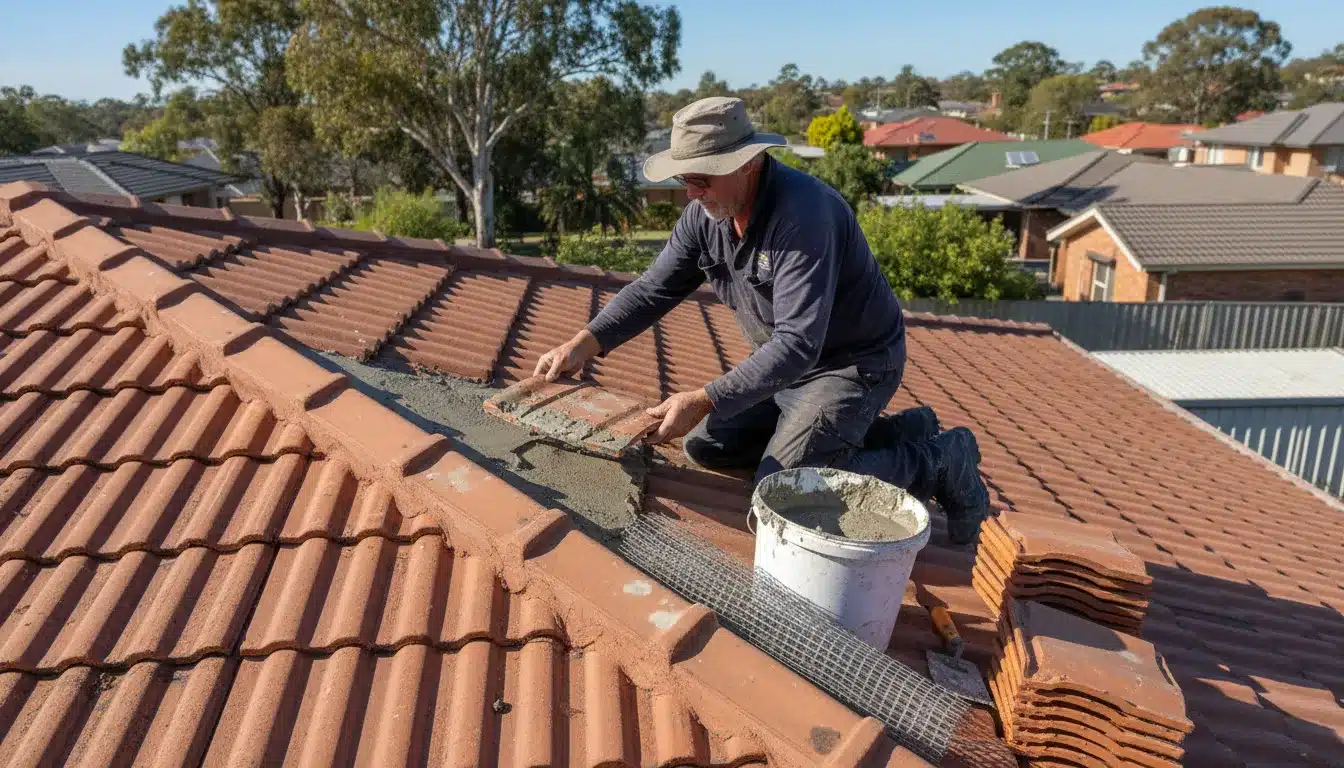
Ridge caps protect the highest joins on a tiled roof. They rely on a mortar base that holds each cap steady through heat, wind and rain.
When that base weakens, ridge caps can shift, crack or open small gaps. Re-bedding restores support before water reaches the roof cavity.
Why Ridge Bedding Breaks Down
Bedding is the mortar layer beneath ridge caps. It shapes the ridge line, supports each cap and helps protect the tile join below.
The bedding is not the final weather seal by itself. It works with pointing, tile laps and drainage to keep rain moving away.
What Bedding Does Beneath the Cap
A sound bedding layer holds the cap in correct alignment. It also spreads load across the tile edges below the ridge.
A stable ridge base helps with:
- Cap alignment along roof peaks
- Support below hip caps
- Weather resistance at tile joins
- Stronger pointing adhesion
- Reduced water entry near roof edges
When the base weakens, the cap can move. Once movement starts, surface cracks often return after patching.
Why Older Mortar Loses Strength
Mortar ages under sun, rain and repeated temperature changes. Perth roofs often face hot dry summers and sharp winter fronts.
Common stress factors include:
- Expansion during summer heat
- Contraction during cooler nights
- Wind pressure on exposed ridges
- Roof traffic during maintenance
- Previous repairs over weak material
- Nearby cracked or slipped tiles
Mortar bedding failure can be slow and hidden. The roof may look tidy from below while support has already weakened.
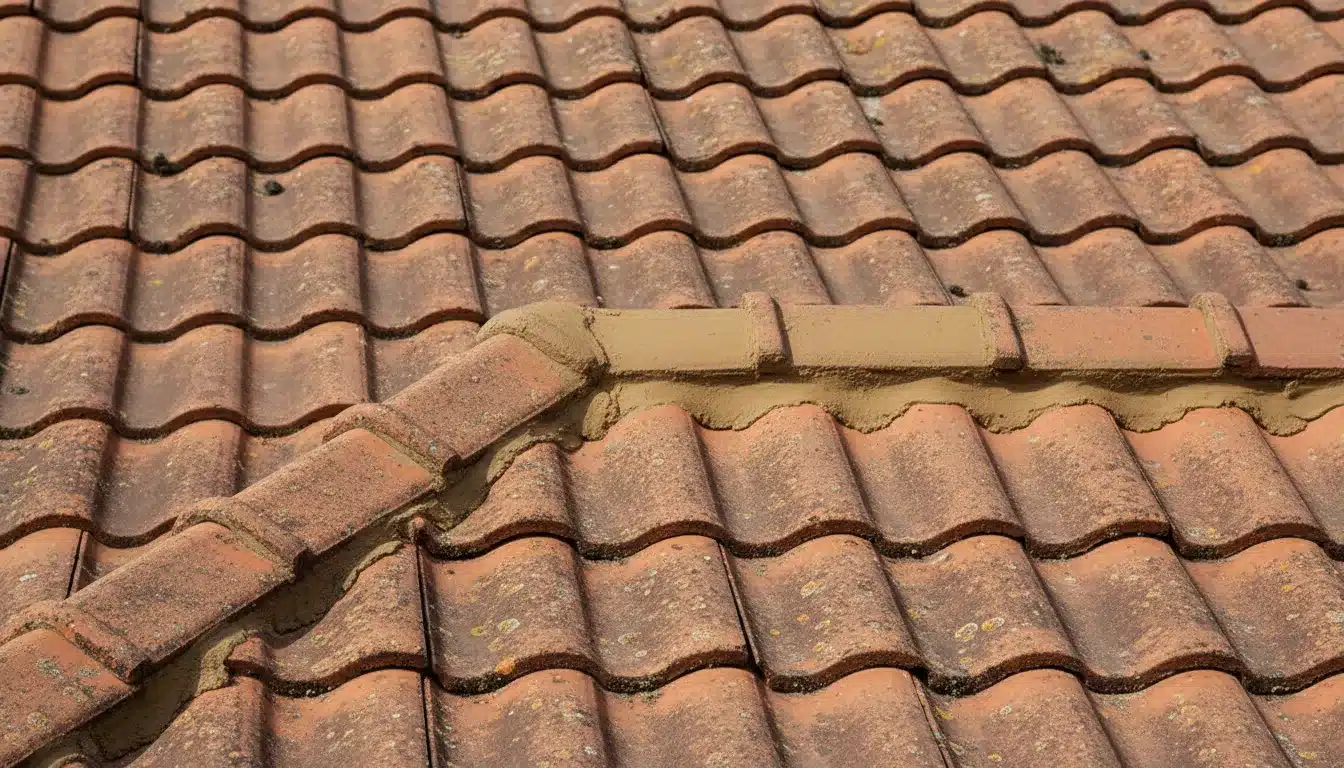
Old mortar can also become powdery. It may fall away when touched or during roof cleaning. That loose material should not be covered.
A ridge may also lose strength unevenly. One hip can stay sound while the next section has hollow bedding. This is common where wind exposure differs across the roof.
Past maintenance can affect the result. Some roofs have patching over cracked or dusty mortar. Those patches can look neat for a short time, then separate.
A proper check looks at the whole cap line. It should note which areas are firm, which areas are loose and which areas need monitoring.
Signs a Roof May Need Re-Bedding
Re-bedding is not required for every crack. The decision depends on whether the cap still has firm support beneath it.
A roof inspection should distinguish surface pointing cracks from deeper bedding failure. That distinction affects repair cost, method and durability.
Signs Visible From the Roof Surface
The most reliable signs are seen close to the ridge line. Ground-level views can miss gaps, loose fragments and cap movement. Leave close inspection and cap stability checks to a professional with suitable access equipment.
Visible warning signs include:
- Ridge caps that rock under light pressure
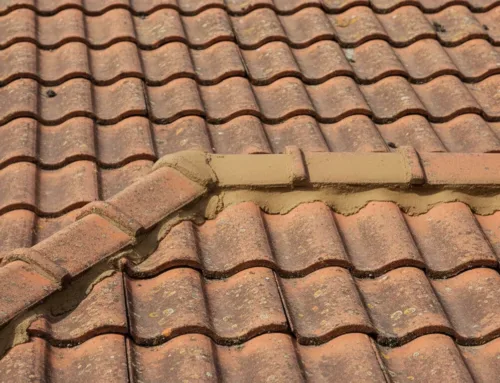
- Missing mortar below cap edges
- Long cracks following the ridge line
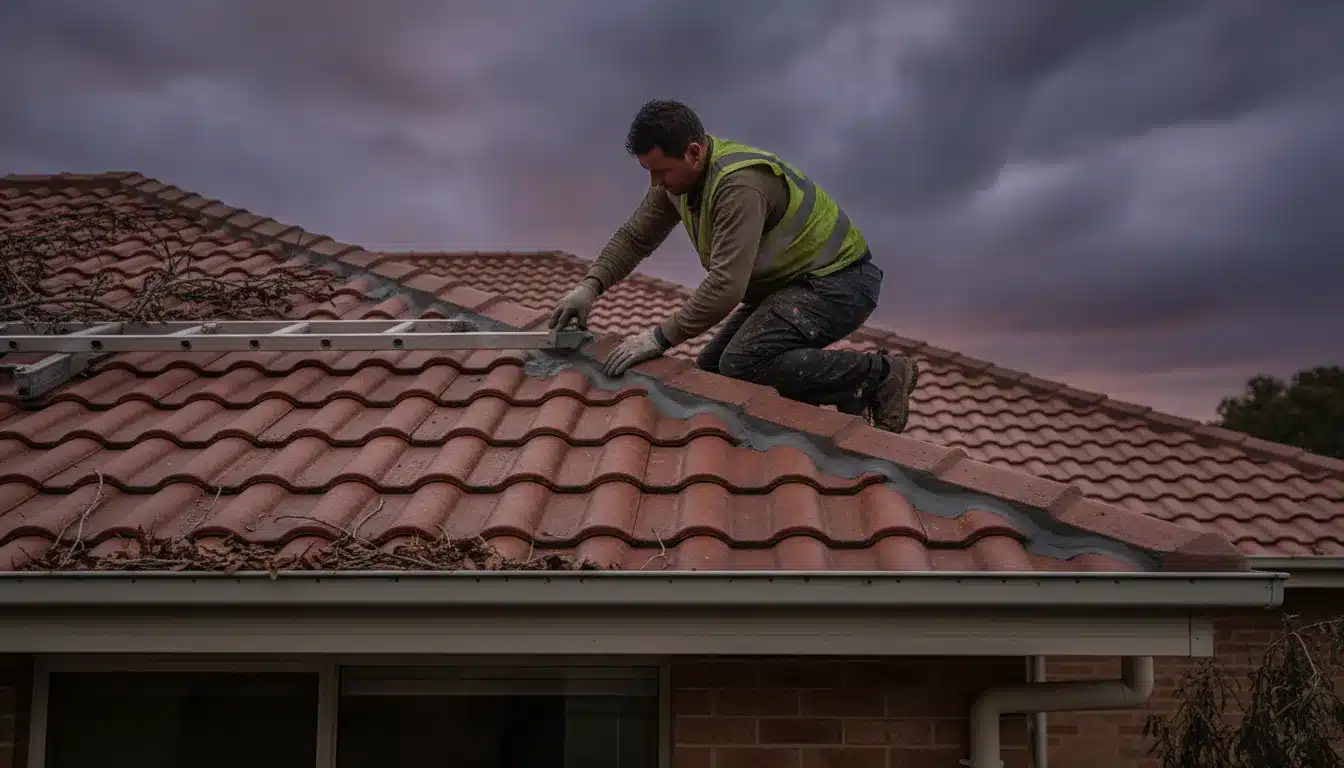
- Loose mortar sitting in gutters
- Uneven cap height along hips
- Open gaps after strong winds
These issues can point to mortar bedding failure below the cap. Repointing alone may not solve that type of movement.
Roof tile movement near the ridge is another warning sign. Shifted tiles can change drainage and expose laps near the cap.
Interior Signs After Rain
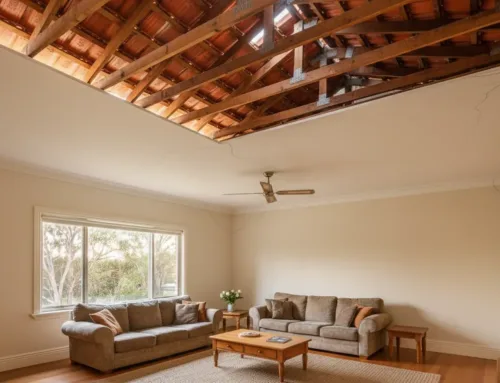
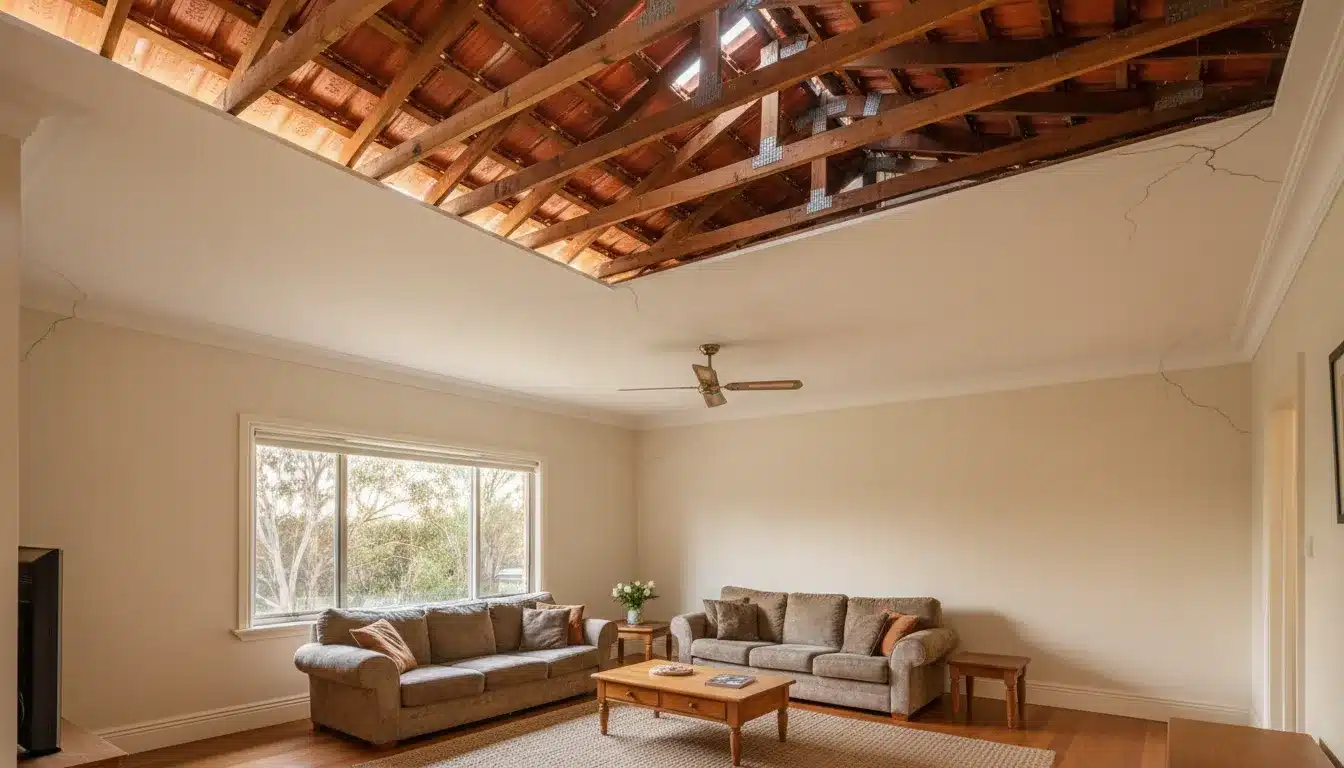
Water from ridge faults can travel before it stains a ceiling. It may move along rafters, insulation or plasterboard first.
Interior clues include:
- Damp marks near cornices
- Brown staining on ceilings
- Musty smells after rain
- Mould in upper rooms
- Drips during wind-driven storms
- Flaking paint near ceiling joins
A tiled roof repair should connect these clues with roof evidence. Guessing from the stain location can lead to missed defects.
Leaks near ridge lines can be intermittent. A roof may stay dry in light rain, then leak when wind drives water sideways.
Record when stains appear. Timing can help separate wind-driven ridge leaks from slow drainage problems elsewhere. Photos after each storm can also show whether damage is spreading.
Do not rely only on indoor repairs. Painting over a mark can hide useful evidence. The roof opening should be addressed before internal finishes are renewed.
What Happens During Roof Re-Bedding
Roof re-bedding is a structured repair. It removes failed support, prepares the surfaces and resets caps on a fresh mortar base.
The process should be planned before work starts. Safe access, weather conditions and tile conditions all affect the repair.
Inspection and Preparation
The first stage confirms the scope. The ridge line, hips and nearby tiles should be checked before any cap is lifted.
Inspection may cover:
- Ridge cap stability
- Bedding hardness and bond strength
- Flexible pointing condition
- Cracked or slipped tiles nearby
- Valley and flashing condition
- Access and safety requirements
Preparation is important because new material needs clean contact. Dust, moss and broken mortar can weaken the bond.
Photos can help explain the condition. They also provide a record before and after repair work.
Removing and Resetting Caps
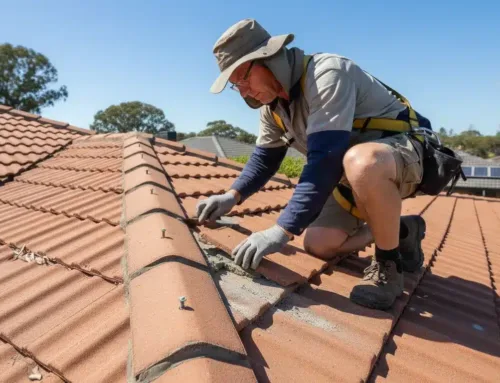
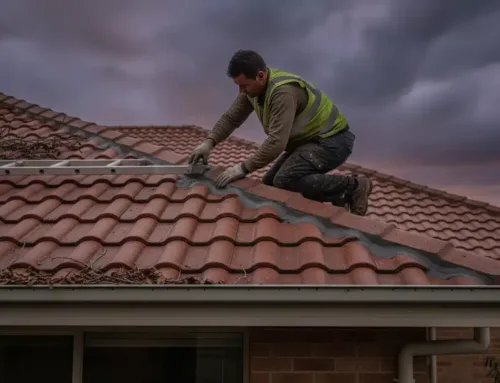
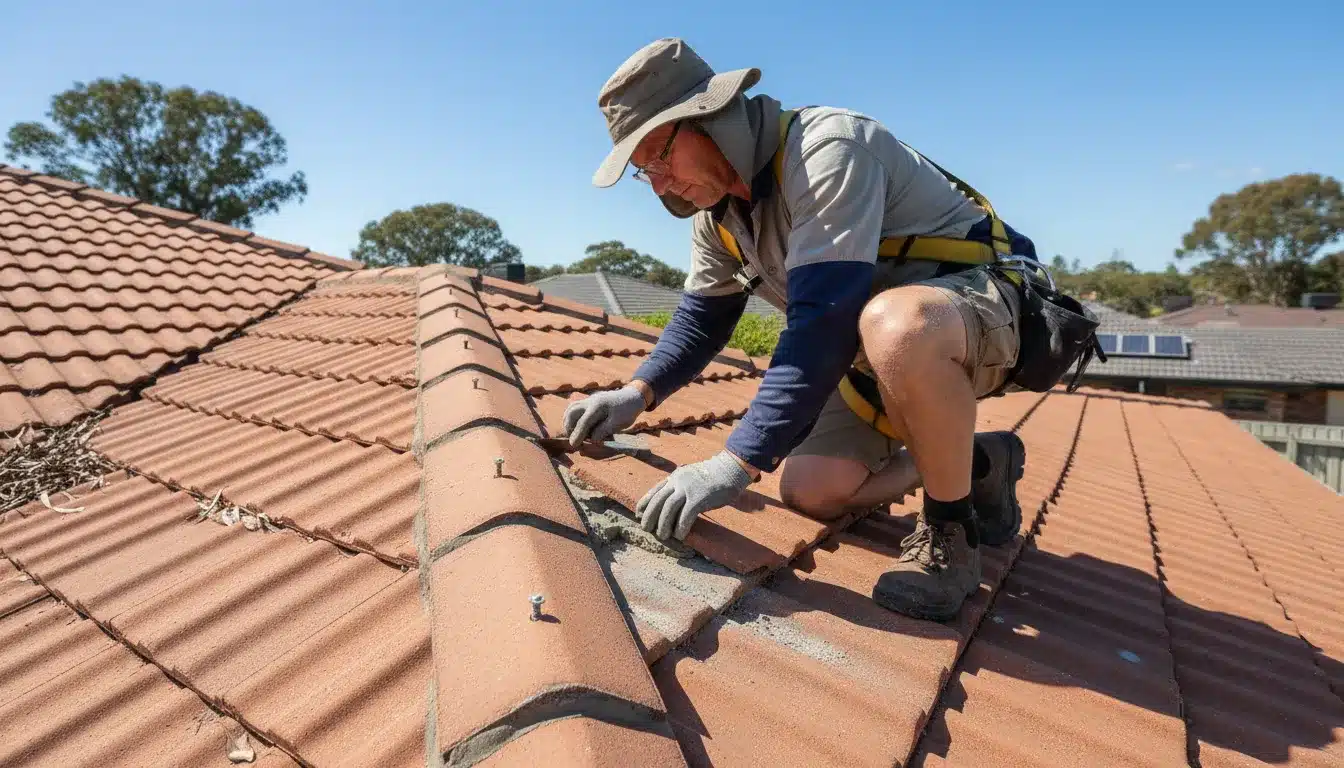
Affected caps are lifted to expose the failed bedding. Loose and unsound mortar is removed before fresh bedding is placed.
A typical sequence includes:
- Remove cracked pointing around affected caps
- Lift affected ridge caps carefully
- Remove failed bedding and clean cap undersides and tile edges
- Place fresh mortar at the correct height
- Reset caps in straight alignment
- Apply suitable flexible pointing after bedding
This roof re-bedding process restores the base below the cap and prepares the ridge for pointing. Through Permacoat, we have restored more than 30,000 roofs across Perth, north and south of the river. Our restoration work addresses damaged tiles and ridge pointing before coating.
Care is needed around older tiles. Brittle tiles can crack under pressure, so access and handling should be controlled.
The repair area should be kept tidy during removal. Loose fragments can slide into gutters or valleys. Debris left behind may block drainage during the next storm.
Curing time also matters. Fresh mortar and pointing need suitable weather to set. Work may need to be timed around rain and strong wind.
Bedding, Pointing and Ridge Cap Work
Bedding and pointing are different parts of the same system. Confusing them can lead to short-lived repairs.
A good repair checks both layers. It also checks the tiles that carry water toward and away from the ridge.
Bedding Provides Support
Bedding sits under the ridge cap. It carries the cap shape and helps hold the ridge line in place.
If bedding has failed, fresh pointing may crack again. The unsupported cap will continue to move under heat and wind.
Mortar bedding failure needs deeper attention. The old loose base should be removed before new material is installed.
This is the reason patching can fail. A neat surface finish cannot compensate for a weak base below.
Pointing Seals the Exposed Edge
Pointing sits along the outer edge of the bedding. Modern flexible pointing helps seal the joint and tolerate small movement.
Pointing should bond to clean, stable surfaces. It should not be used to hide loose mortar or unstable caps.
Ridge cap restoration may involve both re-bedding and repointing. It can also include replacing cracked caps or damaged tiles.
We are a Western Australian family business with more than 50 years in the roof restoration industry.
On older tiled roofs, several ridge sections can show similar wear, even when only one area leaks.
A good trade assessment should also consider future roof plans. If cleaning, coating or painting is planned, structural ridge work should come first. Coatings perform better over stable surfaces.
A repair should also match the existing tile profile. Poorly matched pieces can sit proud and disturb water flow. This can create new weak points beside the repaired area.
Perth Conditions That Affect Tiled Roofs
Local conditions influence how tiled roofs age. Heat, wind, coastal air and winter storms all place stress on mortar and tiles.
Repair planning should consider the whole roof environment. A ridge defect may be made worse by drainage or nearby surface damage.
Heat, Wind and Coastal Exposure
Dark roof tiles can become very hot in summer. Heat makes roof materials expand, then contract as temperatures fall.
Repeated cycles can loosen old mortar. Roof tile movement may increase where bedding has become brittle or detached.
Strong winds can lift and vibrate exposed cap edges. Coastal air may also speed weathering in some suburbs.
These factors do not always cause immediate leaks. They can still create weak points before winter rain arrives.
Homes near open spaces can also receive stronger gusts. Exposed ridges take more pressure than sheltered sections. That pressure can slowly loosen older joints.
Shade can create another issue. Moss and lichen may hold moisture against tiles after rain. Cleaning may reveal cracks that were hidden by growth.
Drainage should be checked at the same time. Blocked gutters or valleys can keep roof edges wet for longer. Extended wetting can shorten the life of older mortar.
When Re-Bedding Forms Part of Restoration
Re-bedding may be a single repair or part of broader work. The right choice depends on age, condition and future plans.
Planning may include:
- Replace cracked tiles before coating
- Complete bedding work before painting
- Clean moss and lichen from tile surfaces
- Repair valleys and flashings as needed
- Allow new materials to cure properly
- Keep gutters clear before winter storms
A localised tiled roof repair suits isolated damage. Wider tile roof restoration may suit roofs with repeated cracks across several ridge lines.
Perth roof repairs should be scoped carefully before coating or painting. Covering weak mortar can hide problems rather than solve them.
Questions to Ask Before Work Starts
Clear questions help separate a quick patch from a proper ridge repair. They also make quotes easier to compare.
The repairer should explain what work is included and what sits outside the scope. This reduces confusion later.
Scope and Method Questions
Ask what was found, which areas need attention and how the repair will be completed. The answers should match the roof condition.
Useful questions include:
- Which ridge lines need work
- Whether caps will be lifted
- Whether tiles need replacement
- How failed mortar will be removed
- What pointing material will be used
- How access will be managed safely
Written scopes are valuable. They should describe the defect, the method and the included roof areas.
If several sections are affected, ask whether staged work is sensible. Some owners may repair urgent areas first, then plan wider work.
Maintenance After Re-Bedding
After repair, basic maintenance helps the roof stay sound. It also helps catch fresh movement before it becomes a leak.
Simple checks include:
- Look for new cracks after storms
- Keep gutters and valleys clear
- Avoid unnecessary roof traffic
- Watch ceilings after heavy rain
- Keep records of repair dates
- Book inspections for ageing tiled roofs
Roof tile movement can still occur on older roofs. Regular checks help identify new issues early.
Perth roof repairs are often easier before winter weather arrives. Dry access and curing conditions can improve the final result.
Maintenance should include valleys and gutters, not only the ridge. Blocked drainage can send water into places that are not designed for pooling. That extra exposure can shorten the life of nearby repair work.
Keep records of photos, invoices and repaired sections. These notes help with future inspections and make it easier to track recurring issues.
Practical Checks After Work Finishes
A finished ridge line should look straight and stable. The caps should sit evenly, with clean pointing edges and no loose material left behind. Nearby tiles should also be checked for chips caused during access and any loose pieces left in gutters.
Curing time matters after mortar work. Heavy rain, foot traffic or premature coating can affect the final result. The repair area should be allowed to settle before broader roof work continues.
Follow-up checks are useful after the first strong weather change. Check ceilings for fresh staining and ask the repairer to assess any suspected roof movement. Compare new findings with the original scope and repair photos.
Conclusion
Sound bedding supports ridge caps, while pointing helps seal their exposed edges. If caps are loose or cracks keep returning, contact us to arrange a free, no-obligation roof inspection before deciding whether isolated repair or wider restoration is appropriate.