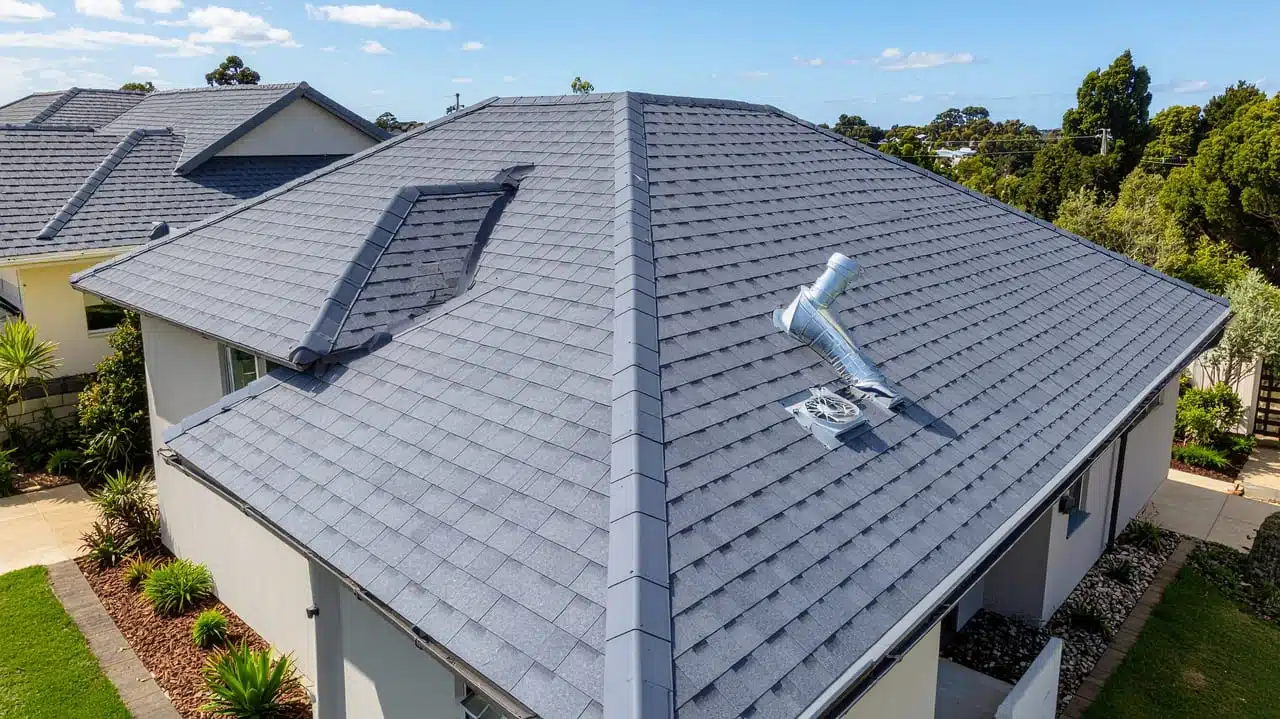
Perth homes face a unique challenge that most homeowners overlook until damage appears: trapped heat and moisture in roof spaces. During summer, roof cavities can reach 70°C, while winter brings condensation that saturates insulation and timber. Without proper airflow, these conditions silently degrade roofing materials, spike energy costs, and create environments where mould thrives.
The physics are straightforward. Hot air rises and accumulates in roof spaces. Without roof ventilation Perth solutions, this heat radiates down through ceilings, forcing air conditioning systems to work harder. In winter, warm indoor air meets cold roof surfaces, creating condensation that drips onto insulation and structural timber. Over 30,000 Perth roofs serviced by restoration specialists show the same pattern: homes without adequate ventilation experience faster material degradation and higher maintenance costs.
How Roof Ventilation Actually Works
Effective roof ventilation Perth creates continuous airflow through roof cavities using two principles: thermal buoyancy and pressure differentials. Hot air naturally rises and escapes through ridge vents or whirlybirds at the roof peak, while cooler air enters through eave vents at the roof’s lowest points. This creates a constant circulation that removes heat and moisture before they cause damage.
The system requires both intake and exhaust points. Many Perth homes have exhaust vents but lack adequate intake ventilation, creating negative pressure that restricts airflow. The Building Code of Australia recommends one square metre of ventilation area per 300 square metres of roof space, split between low-level intake and high-level exhaust.
Natural ventilation relies on temperature differences and wind pressure. As roof cavity temperature increases during the day, air expands and rises, drawing cooler air through eave vents. Wind passing over ridge vents creates negative pressure that accelerates exhaust.
Powered ventilation uses electric fans or solar-powered whirlybirds to force air movement regardless of weather conditions. These systems move larger air volumes but require installation planning to avoid creating pressure imbalances that can draw conditioned air from living spaces.
The Real Cost of Poor Ventilation
Perth’s climate makes ventilation failures expensive. Roof cavities without airflow trap summer heat that radiates into living spaces well into evening hours. Homeowners report ceiling temperatures 8-12°C higher than properly ventilated homes, forcing air conditioners to run longer and work harder. Energy bills increase 15-30% during peak summer months.
The structural damage develops more slowly but costs more to repair. Trapped moisture saturates ceiling insulation, reducing its R-value by up to 50% when damp. Wet insulation compresses, creating gaps that further reduce thermal performance. The moisture then contacts timber framing, where it supports fungal growth and wood rot.
Metal roofing without ventilation experiences accelerated corrosion on the underside. Condensation forms when warm, humid air contacts cold metal surfaces during winter nights. This moisture remains trapped, creating rust that compromises roof integrity years before the external coating shows wear.
Tile roofs face different problems. Moisture trapped beneath tiles prevents proper drying after rain. The constant damp-dry cycle causes mortar bedding to deteriorate faster, leading to loose tiles and leak points. Permacoat’s restoration teams regularly find that homes with poor roof ventilation Perth require tile rebedding 5-7 years earlier than well-ventilated properties.
Perth-Specific Ventilation Challenges
Coastal properties within 5km of the ocean face salt-laden air that corrodes metal vents and accelerates material degradation. Standard whirlybirds in these locations show rust within 18-24 months without proper coating protection. Marine-grade ventilation components cost more initially but last 3-4 times longer in salt air environments.
The eastern suburbs and hills areas experience greater temperature swings between day and night. Roof cavities in Kalamunda, Mundaring, and Darlington can drop 20°C overnight during winter, creating heavy condensation. These properties benefit from increased ventilation capacity to manage moisture loads that coastal homes do not experience.
Northern suburbs like Joondalup and Butler face intense afternoon sun that superheats western roof faces. Without adequate cross-ventilation, hot spots develop where roof cavity temperature reaches 75-80°C. This extreme heat degrades roofing membranes and causes tile coatings to fail prematurely.
Older Perth homes built before 1990 often lack eave vent installation entirely. Original construction standards did not account for modern insulation levels or climate control expectations. Adding ventilation to these properties requires careful planning to maintain architectural character while achieving proper airflow.
Ventilation Solutions for Different Roof Types
Tile roofs offer natural ventilation advantages. Gaps between tiles allow some air movement, but this passive ventilation proves insufficient for Perth’s climate extremes. Ridge vents specifically designed for tile profiles provide targeted exhaust while maintaining weatherproofing. These vents sit beneath ridge capping, invisible from ground level while moving substantial air volumes.
Eave vent installation for tile roofs occurs between the fascia and first course of tiles. Mesh screening prevents bird and insect entry while allowing continuous airflow along the entire roof perimeter. Properties requiring tile roof restoration provide ideal opportunities to upgrade ventilation during the restoration process.
Metal roofs require different ventilation strategies. Colorbond and steel roofing creates sealed cavities with no natural air movement. Each 300mm whirlybird turbine ventilator is capable of exhausting 2,000 cubic metres of air per hour in moderate wind conditions. The whirlybird turbine ventilator remains the most popular choice for metal roof ventilation across Perth.
Ridge ventilation systems for metal roofs use continuous strips that run the entire roof length. These low-profile vents prevent water entry while providing superior air exhaust compared to point ventilators. Combined with soffit vents at eaves, ridge systems create optimal airflow patterns.
Solar-powered extraction fans offer controlled ventilation for metal roofs. These units operate during peak heat hours without electricity costs, moving air volumes that natural ventilation cannot match. Temperature-activated models run automatically when roof cavity temperature exceeds set points.
Signs Your Roof Needs Better Ventilation
Ceiling temperatures that remain hot hours after sunset indicate trapped roof cavity temperature heat. Touch test your ceiling in different rooms during evening hours. Properly ventilated roofs should feel close to room temperature within 2-3 hours of sunset. Persistent warmth signals inadequate exhaust ventilation.
Condensation marks on ceiling surfaces during winter mornings reveal moisture problems. These appear as darker patches or slight discolouration, often near external walls where temperature differentials are greatest. Left unaddressed, these moisture zones develop into mould growth and paint failure.
Musty odours from ceiling vents or manhole openings indicate stagnant air and potential mould. Roof cavities should smell neutral or slightly dusty. Biological odours confirm that moisture levels support microbial growth, requiring immediate ventilation improvements and potential remediation.
Rust spots appearing on the underside of metal roofing visible through manhole access prove that condensation forms regularly. Even small rust patches indicate that moisture exposure happens frequently enough to overcome protective coatings. This damage accelerates without ventilation intervention.
Electricity bills that spike during summer despite consistent air conditioning settings suggest your cooling system fights against heat radiating from poorly ventilated roof spaces. Compare bills year-over-year to identify trends that coincide with ventilation deterioration.
Professional Assessment and Installation
Permacoat includes ventilation assessment as part of free roof inspections. Experienced technicians measure existing ventilation, calculate required airflow based on roof area and cavity volume, and identify optimal locations for intake and exhaust additions. This assessment considers roof type, property orientation, and Perth’s specific climate factors.
Proper installation matters as much as component selection. Incorrectly positioned vents create turbulence that reduces airflow efficiency. Exhaust vents placed too low on the roof slope fail to capture rising hot air. Intake vents blocked by insulation or positioned in negative pressure zones do not draw sufficient fresh air.
Professional installation ensures weatherproofing integrity. Every roof penetration creates a potential leak point. Quality installations use proper flashing, sealants rated for Perth’s UV exposure, and fastening methods that prevent wind damage during storms. The installation should include mesh screening that prevents pest entry while maximising airflow.
Ventilation upgrades often coordinate with other roof repairs Perth services. Properties requiring tile replacement, coating renewal, or flashing repairs benefit from addressing ventilation simultaneously. This integrated approach reduces overall costs and ensures all roof systems work together effectively.
Ventilation and Roof Restoration
Complete roof restoration Perth projects provide ideal opportunities to upgrade ventilation systems. The restoration process includes high-pressure cleaning, repairs, and coating application, all stages where ventilation improvements integrate seamlessly without additional access costs.
During restoration, existing vents receive inspection for damage, blockages, or corrosion. Non-functional vents get replaced with current-standard components. Undersized ventilation systems expand to meet calculated requirements for the roof area. Ridge vents install during tile rebedding or ridge capping replacement.
The three-coat Dulux Acratex coating system applied during restoration includes proper ventilation to cure correctly. Adequate airflow prevents moisture from interfering with coating adhesion and extends the 15-20 year warranty coverage. Properties with poor ventilation experience coating failures that proper airflow would prevent.
Colour selection during restoration affects ventilation requirements. Darker roof colour options absorb more solar radiation, increasing roof cavity temperature. Properties choosing deep colours benefit from enhanced ventilation capacity to manage the additional heat load. Lighter colours reduce heat absorption but still require proper ventilation for moisture control.
Maintenance Requirements for Ventilation Systems
Whirlybird turbine ventilator units require annual inspection to ensure bearings spin freely. Perth’s dust and salt air cause turbine bearings to seize without periodic cleaning. Spray lubricant applied annually extends operational life and maintains extraction efficiency. Seized whirlybirds create resistance that reduces natural airflow below pre-installation levels.
Mesh screens on eave vents accumulate dust, spider webs, and debris that restrict airflow. Roof cleaning services include vent cleaning to restore full ventilation capacity. Properties near bushland require more frequent cleaning due to leaf litter and insect activity.
Ridge vents need inspection after severe weather. High winds can dislodge vent components or drive rain into improperly sealed installations. Annual checks identify damage before water entry causes ceiling staining or insulation saturation.
Solar-powered fans require panel cleaning to maintain charging efficiency. Dust coating on solar panels reduces power generation by 20-30%, causing fans to run at reduced speeds or stop entirely. Twice-yearly cleaning maintains optimal performance.
Integration with Energy Efficiency
Proper roof ventilation Perth reduces air conditioning loads by 15-25% during Perth summers. Lower roof cavity temperature means less heat radiates through ceilings into living spaces. This reduction allows smaller, more efficient air conditioning systems to maintain comfort while consuming less power.
Ceiling insulation performs significantly better with proper ventilation. Dry insulation maintains its rated R-value, while moisture-saturated material loses thermal resistance. The combination of adequate insulation and ventilation creates the most cost-effective thermal barrier.
Winter heating costs also decrease with proper ventilation. While this seems counterintuitive, ventilation prevents moisture accumulation that degrades insulation performance. Dry insulation retains heat better than damp material, reducing heating system runtime and energy consumption.
Properties with solar panels benefit from cooler roof surfaces that ventilation provides. Solar panel efficiency decreases 0.5% for every degree above 25°C. Well-ventilated roofs run 10-15°C cooler, improving solar generation by 5-7% during peak summer production periods.
Strata and Multi-Unit Considerations
Strata roofing services for multi-unit properties require coordinated ventilation strategies. Shared roof spaces over multiple units need balanced airflow to prevent some units experiencing better conditions than others. Centralised ventilation systems with multiple exhaust points ensure consistent performance across all dwellings.
Body corporate properties often face budget constraints that delay ventilation upgrades. However, the energy savings and reduced maintenance costs provide compelling financial justification. Properly documented proposals showing projected savings help strata committees approve necessary improvements.
Multi-storey buildings require specialised ventilation approaches. Stack effect in tall buildings creates strong upward airflow that can draw conditioned air into roof spaces if ventilation systems are not properly designed. Professional assessment prevents negative outcomes from well-intentioned upgrades.
When to Schedule Ventilation Improvements
Spring offers ideal conditions for ventilation installation in Perth. Mild weather allows comfortable roof access, and completing work before summer ensures systems operate during peak demand periods. Properties scheduling roof restoration should address ventilation simultaneously to maximise efficiency and minimise disruption.
Properties experiencing cooling problems should address ventilation immediately rather than waiting for scheduled maintenance. Each summer without adequate ventilation causes cumulative damage that becomes more expensive to repair. The investment in proper roof ventilation Perth pays returns through reduced energy costs within 2-3 years.
Pre-sale property improvements benefit significantly from ventilation upgrades. Cooler interiors during inspections create better impressions, while documentation of recent ventilation work demonstrates proactive maintenance that appeals to buyers and supports higher valuations.
The Long-Term Value Proposition
Proper roof ventilation extends overall roof system lifespan by 30-40%. Materials that stay cooler and drier simply last longer. Metal roofing maintains coating integrity, tile bedding remains secure, and timber framing avoids rot that requires expensive structural repairs.
The 15-20 year coating warranties that accompany professional roof coatings depend on proper ventilation. Warranty claims due to premature coating failure often trace back to ventilation deficiencies that created moisture problems. Adequate airflow protects both the coating investment and warranty coverage. The Dulux Acratex coating system performs optimally when supported by proper ventilation.
Property values reflect roof condition, and well-maintained roofs with proper ventilation command premium prices. Building inspections increasingly assess ventilation adequacy, with poor ventilation noted as maintenance concerns that affect buyer confidence and negotiating positions.
Energy efficiency ratings consider roof ventilation as a contributing factor. Properties with documented ventilation systems score higher on energy assessments, appealing to environmentally conscious buyers and potentially qualifying for green financing options.
Conclusion
Roof ventilation Perth represents a fundamental building system that Perth’s climate makes non-negotiable. The combination of intense summer heat and winter condensation creates conditions that degrade roofing materials and increase operating costs without proper airflow management. Properties across Perth’s diverse suburbs, from coastal Scarborough to hills properties in Kalamunda, all require ventilation strategies matched to their specific conditions.
The investment in proper ventilation delivers returns through reduced energy costs, extended material lifespan, and improved comfort. Professional assessment identifies the right combination of intake and exhaust ventilation for each property’s roof type, orientation, and climate exposure. Installation quality determines whether systems perform as designed or create new problems through improper weatherproofing or airflow imbalances.
Permacoat’s 50 years of experience restoring Perth roofs demonstrates that ventilation separates properties requiring frequent maintenance from those that perform reliably for decades. The 30,000+ roofs serviced across Western Australia show consistent patterns: adequate ventilation prevents problems, while inadequate airflow creates expensive failures that proper planning would avoid.
Talk to us on (08) 9249 5955 for a comprehensive roof inspection that includes ventilation assessment. The free, no-obligation evaluation identifies current ventilation capacity, calculates requirements based on roof area and type, and provides specific recommendations for improvements. Professional installation ensures systems perform correctly while maintaining weatherproofing integrity and aesthetic standards. Protecting your Perth home starts with understanding what’s happening in the space between your ceiling and roof, and taking action to manage the heat and moisture that accumulate there.