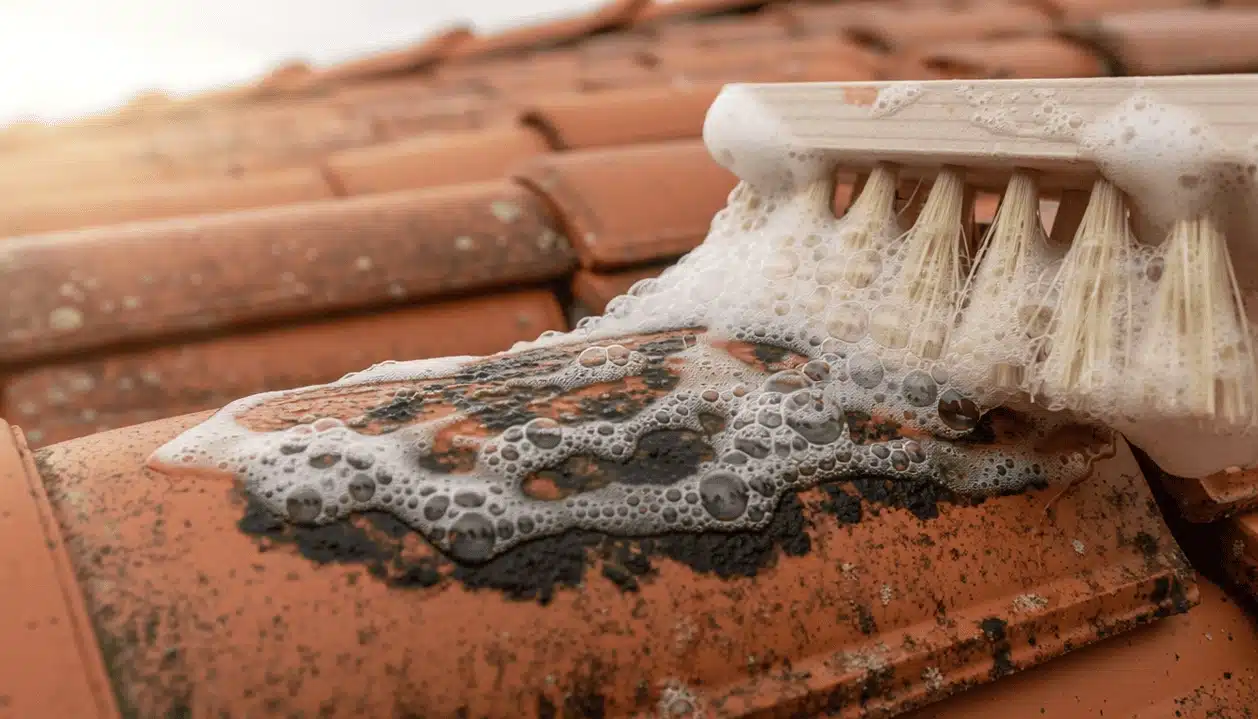
Tile roofs across Perth harbour an invisible threat that high-pressure cleaning alone cannot eliminate. Beneath the surface of terracotta and cement tiles, algae spores embed themselves in microscopic pores, waiting for the next rainfall to trigger regrowth. Within months of a standard roof clean, that familiar green-black discolouration returns – frustrating homeowners who believed they had solved the problem.
The reason is straightforward biology. Pressure washing removes visible growth but cannot reach the dormant spores embedded 2-3 millimetres into tile substrate. Only chemical sterilisation penetrates tile surfaces at a molecular level, destroying not just the growth that’s visible but the reproductive capacity that causes it to return. Understanding how this process works – and why it produces results that surface cleaning cannot – helps Perth homeowners make informed decisions about roof algae treatment.
The Biology Behind Algae Survival on Roof Tiles
Why Perth Tile Roofs Are Particularly Vulnerable
Algae species that colonise Perth roofs have evolved sophisticated survival mechanisms. Common culprits produce hardy spores that withstand months of intense summer heat, only to activate when winter rains provide the moisture they need. Terracotta and cement tiles create ideal environments for establishment – their porous structure allows spores to penetrate beyond the surface, sometimes reaching 2-3 millimetres deep.
Once established, algae colonies feed on organic debris, moisture, and even the mineral content within the tiles themselves. The black streaking visible on many Perth roofs is a protective UV pigment the algae produces to shield itself – ironically, the same UV radiation that damages unprotected roofing materials provides no deterrent to well-adapted algae colonies.
Coastal Suburbs and Accelerated Regrowth
The coastal suburbs of Perth face particularly aggressive conditions. Salt-laden air from the Indian Ocean combines with humidity to create ideal breeding conditions. Properties within 5km of the coast often show algae regrowth twice as fast as inland homes following a standard pressure wash.
For Scarborough, Cottesloe, Hillarys, and similar coastal suburbs, professional roof algae treatment is essential rather than optional. Surface cleaning provides temporary improvement that measures in months rather than years.
Why Pressure Washing Alone Fails
High-pressure cleaning removes the visible algae mat – the surface layer of mature colonies, accumulated organic debris, and dead plant matter. After cleaning, the roof looks restored. The original tile colour returns. But beneath this clean surface, millions of spores remain embedded in tile pores.
Water pressure cannot dislodge these spores because they’re protected by their location deep in tile substrate and their tough outer walls designed to survive harsh conditions. Within 3-6 months, surviving spores detect moisture from morning dew or light rainfall and begin reproducing. The cycle repeats – and with each repetition, the embedded spore load in the tile substrate increases.
How Chemical Biocides Penetrate Tile Surfaces
The Difference Between Biocides and Surface Treatment
Professional roof algae treatment relies on biocides formulated specifically to penetrate porous roofing materials. These solutions contain active ingredients – typically quaternary ammonium compounds or copper-based formulations – designed to break down the cellular walls of algae, lichen, and moss at a molecular level. Unlike household bleach, which primarily whitens surfaces, professional biocides destroy the organisms themselves.
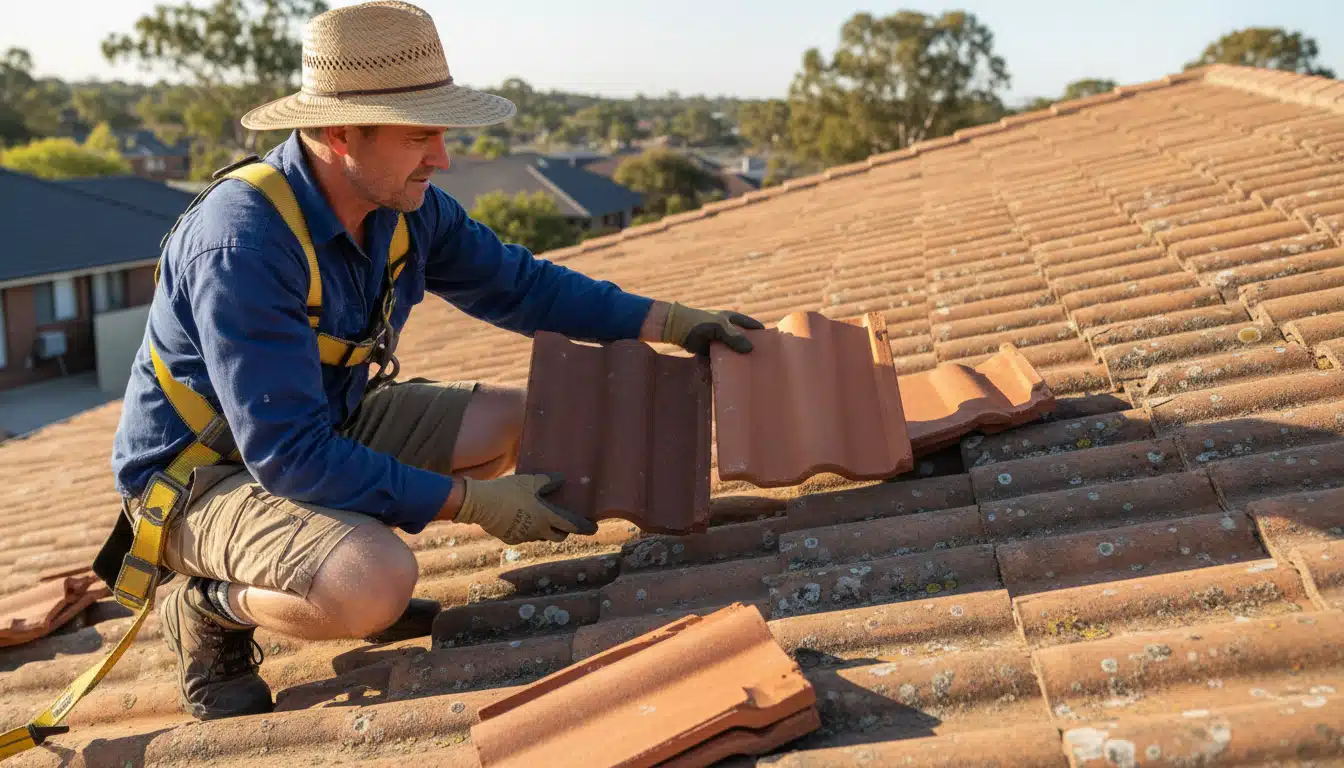
The application sequence matters as much as the chemistry. Tile roof restoration specialists first remove loose debris and bulk growth through controlled pressure washing. This step opens tile pores and removes the protective biofilm that algae colonies produce. Without this preparation, biocides cannot reach embedded spores effectively – the biofilm acts as a physical barrier against chemical penetration.
How the Killing Mechanism Works
Once tiles are cleaned, biocide solution is applied at concentrations calculated for Perth’s climate and the specific tile types being treated. The chemical composition allows molecules to penetrate deep into tile pores through capillary action – the same mechanism that allows water to travel upward through a narrow tube against gravity.
As the solution moves through microscopic channels in terracotta or cement, it contacts spores that pressure washing missed entirely. The killing mechanism works through osmotic disruption – biocide molecules breach the protective walls surrounding algae spores, causing cellular contents to leak out. This destroys the spore’s ability to germinate even if moisture conditions later become favourable. The treatment sterilises the tile surface, creating an inhospitable environment that persists long after the treatment itself has been applied.
Why Dwell Time Cannot Be Rushed
Professional applications require 20-40 minutes of dwell time before any rinsing occurs. This allows the biocide to fully penetrate tile surfaces and complete the sterilisation process. Rushing this step compromises effectiveness in ways that aren’t visible during the application itself but become apparent when regrowth appears months later.
This is one of the clearest indicators of preparation quality. Contractors who rush through biocide application to accelerate the project timeline are leaving active spores in the substrate – and those spores will eventually surface through whatever coating is applied over them.
Surface Cleaning vs Chemical Sterilisation: The Longevity Difference
The distinction between surface cleaning and chemical sterilisation determines whether a roof stays clear for months or years.
Surface cleaning removes the visible algae mat that catches the eye from street level. For a few weeks, the roof looks restored. But beneath this surface, millions of spores remain embedded in tile pores – microscopic reproductive cells protected by both their depth in the substrate and their tough outer walls.
Chemical sterilisation targets these hidden spores specifically. The biocide solution penetrates where water cannot reach, surrounding each spore with molecules that break down its protective barriers. This kills the reproductive capacity of the algae, preventing regrowth from the source rather than just removing visible symptoms.
The longevity difference is measurable. Roofs treated with pressure washing alone typically show regrowth within 4-8 months in Perth’s coastal areas. Roofs that receive proper roof algae treatment as part of a comprehensive restoration remain clear for 3-5 years or longer, depending on exposure and ongoing maintenance.
Why Dulux Acratex Systems Include Biocide Technology
Continuous Release Protection in the Coating Layer
Premium coating systems extend biological protection beyond the initial sterilisation treatment through biocide technology built directly into their formulation. The Dulux Acratex system includes these protective compounds as a standard feature throughout every coat.
As the coating cures and forms its protective membrane across tile surfaces, biocide molecules become embedded throughout the film thickness. When moisture contacts the coating surface, trace amounts of biocide release, creating a hostile environment for algae spores attempting to establish new colonies. This ongoing protection explains why properly coated roofs maintain their appearance far longer than cleaned-only roofs.
How the Three-Coat System Maximises Protection
The three-coat application method Permacoat applies maximises this biological protection. WA’s longest-serving roof restoration company with 50+ years of experience across 30,000+ Perth roofs, Permacoat applies the primer sealer so it penetrates deeply into tiles, carrying biocide compounds into the pores where spores typically hide. The two topcoats then seal this treatment beneath durable acrylic layers, ensuring biocide protection remains active for years.
This comprehensive approach delivers the 15-20 year coating warranties that have proven reliable across Perth’s diverse climate zones – from the coastal salt exposure of Fremantle and Rockingham to the dry heat of Perth’s inland eastern suburbs.
The Measured Performance Difference
Independent testing shows that roofs treated with biocide-enhanced protective roof coatings experience 85-90% less algae regrowth compared to roofs with standard paint products. Standard acrylic paints lack the biocide compounds needed to repel algae spores. Within 12-18 months, these basic coatings often show the first signs of recolonisation, particularly in moisture-prone areas like valleys and shaded sections.
This performance difference translates directly to property value protection and reduced maintenance costs across the roof’s remaining lifespan.
The Treatment Process for Maximum Spore Elimination
Effective roof algae treatment follows a precise sequence designed to eliminate existing growth while preventing future colonisation.
Comprehensive Inspection and Preparation
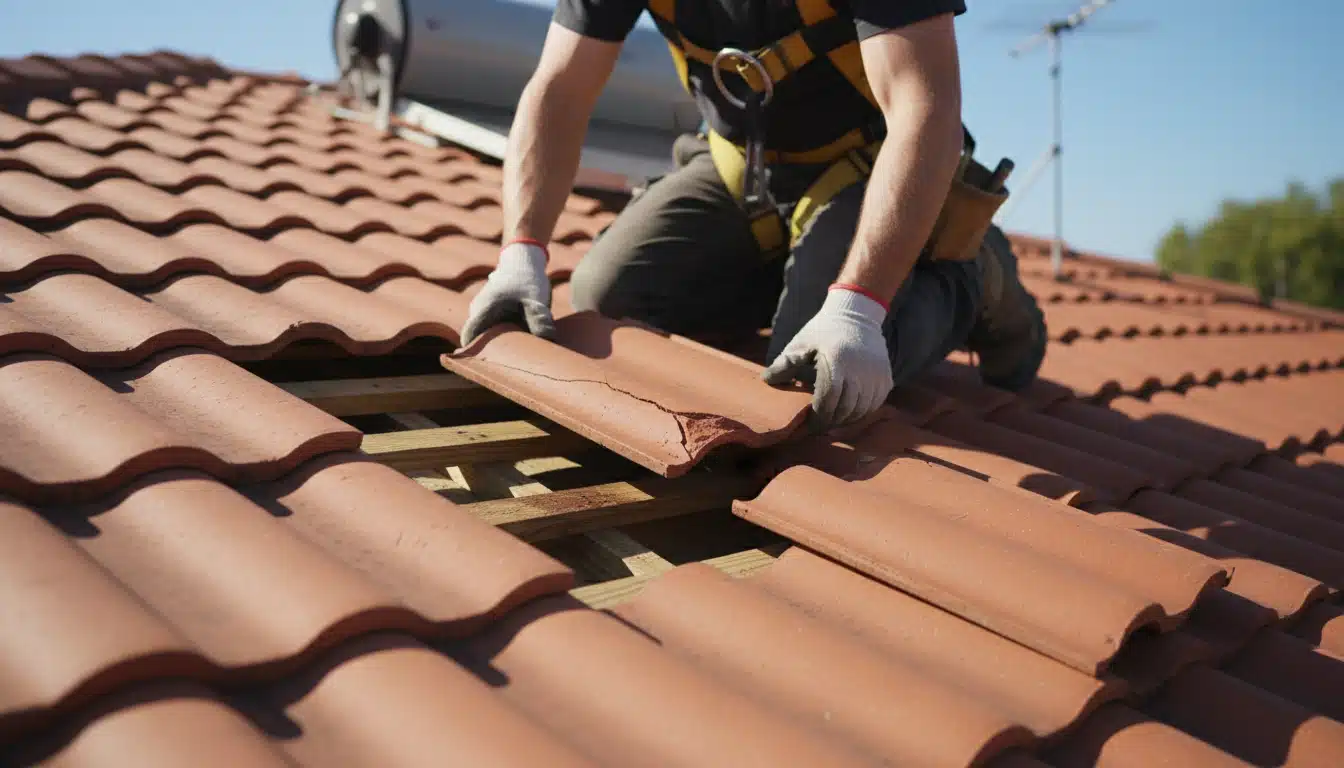
The process begins with a thorough roof inspection to identify not just algae growth but the underlying conditions that enable it. Blocked valleys, damaged tiles, and poor drainage all contribute to moisture retention that encourages algae establishment.
This is also the stage where roof painting services requirements are assessed. If a comprehensive restoration follows the sterilisation treatment, colour selection and coating specification can be planned based on the actual substrate condition revealed during inspection.
Controlled Biocide Application
Specialised biocide is applied using low-pressure spraying equipment that ensures even coverage without runoff. Solutions are selected based on the specific algae species present and the tile type being treated.
North-facing slopes and shaded sections receive particular attention during application. These zones harbour the highest spore concentrations on most Perth roofs – they receive less direct sunlight, retain moisture longer, and provide the conditions algae establish most aggressively.
The Non-Negotiable Dwell Period
The 30-60 minute dwell period that follows is not a pause in the work. During this time, the chemical breaks down spore walls, destroys reproductive capabilities, and creates an inhospitable environment deep within the tile structure. After sterilisation, tiles are gently rinsed to remove dead biological matter and excess chemical – using lower pressure than the initial cleaning to avoid disturbing the biocide that has penetrated tile pores.
For properties where sterilisation is part of a full restoration project, coating application can follow once drying assessment confirms adequate substrate moisture levels.
When to Schedule Professional Algae Treatment
Signs That Treatment Is Overdue
Visible algae covering more than 30% of roof surfaces indicates established colonies with extensive spore distribution. Simple pressure washing will provide only temporary improvement at this stage. The spore load embedded in tiles is too extensive for surface cleaning alone.
Dark streaking visible on north-facing slopes from street level signals colonies that have already penetrated deep into tile pores. Early treatment prevents this spreading to the entire roof and reduces the scope of work required.
Recent roof leaks frequently correlate with algae growth. As algae colonies expand, they retain moisture against tile surfaces, accelerating deterioration and creating conditions where re roofing in Perth may eventually become necessary if tile integrity is sufficiently compromised. Treating algae before it causes structural damage is significantly more cost-effective than addressing both issues simultaneously.
Ideal Timing for Perth Properties
Late autumn or early winter is the optimal treatment window. This schedule allows the biocide to fully sterilise tiles before Perth’s wet season begins between June and August, preventing algae activation during winter rains. The cooler temperatures of April through June also provide ideal conditions for coating application if the treatment is part of a comprehensive restoration project.
For strata-managed properties and larger portfolios, implementing professional treatment programs on a scheduled basis through strata roofing services consistently produces lower maintenance costs than reactive cleaning approaches.
Cost Comparison: Treatment vs Repeated Cleaning
The True 10-Year Cost
Basic pressure washing for an average Perth home costs $400-$800, depending on roof size. This cleaning typically provides 6-12 months of improvement before visible algae returns. Over a 10-year period, repeated cleaning cycles cost $4,000-$8,000 – and the underlying spore problem is never resolved.
Professional roof algae treatment including chemical sterilisation costs $1,200-$2,000 for the same property. This treatment provides 3-5 years of protection before regrowth appears. Over the same 10-year period, total costs range from $2,400-$4,000 – a 40-50% saving compared to repeated surface cleaning.
Comprehensive restoration combining sterilisation, repairs, and premium coating represents the most cost-effective long-term approach. While initial investment ranges from $4,500-$8,500 for typical Perth homes, the treatment provides 15-20 years of protection with minimal maintenance required.
Property Value Protection
Visible algae growth can reduce Perth property values by $10,000-$25,000 in the current real estate market. Professional treatment that maintains roof appearance protects this equity while avoiding the emergency repairs that neglected roofs eventually require.
Conclusion
Chemical sterilisation is the only truly effective approach to eliminating algae from Perth tile roofs. Pressure washing removes visible growth. Only biocide treatment destroys the embedded spores that cause recurring problems. The difference between these approaches becomes apparent within months, as surface-cleaned roofs show rapid regrowth while properly sterilised surfaces remain clear for years.
Comprehensive roof algae treatment requires three elements: thorough cleaning to remove bulk growth, professional biocide application to eliminate embedded spores, and premium coating systems that provide ongoing protection. This integrated approach consistently delivers results that outlast warranty periods.
For expert roof restoration in Perth that includes professional chemical sterilisation backed by 50+ years of experience, call (08) 9249 5955 to book your free roof inspection.