A pristine roof coating can fail within months if applied over a dirty or sandy surface. The consequences extend well beyond cosmetic disappointment: poor adhesion leads to peeling, water penetration, and remediation costs that dwarf the initial saving from choosing a budget operator. Understanding why roof coating adhesion requires a clean substrate – and what happens when it doesn’t get one – is essential knowledge before any Perth homeowner signs a restoration contract.
The science behind coating adhesion is straightforward. Premium coating systems require direct contact with the tile substrate to form both mechanical and chemical bonds. When dirt, sand, moss, or other contaminants create a barrier between coating and tile, the coating bonds to the debris layer instead. That contaminated layer becomes the structural weak point – and when it fails under thermal stress, moisture, or UV exposure, the entire coating system fails with it.
How Contamination Undermines Roof Coating Adhesion
Perth’s coastal environment creates specific contamination challenges. Salt spray, airborne sand, organic growth, and accumulated grime form multiple layers that compromise coating performance in different ways. Each contamination type presents a distinct adhesion problem.
Dirt and Dust Accumulation
Years of accumulated dirt create a powdery layer that lacks structural integrity. The coating bonds to the dirt, and the dirt sits loosely on the tile – a sandwich effect waiting to fail. The first thermal expansion cycle or significant rain event breaks this weak connection. The result is coating peeling away in sheets, typically within 6-12 months, beginning at tile edges and ridges where expansion stress concentrates.
Sandy Residue and Loose Granules
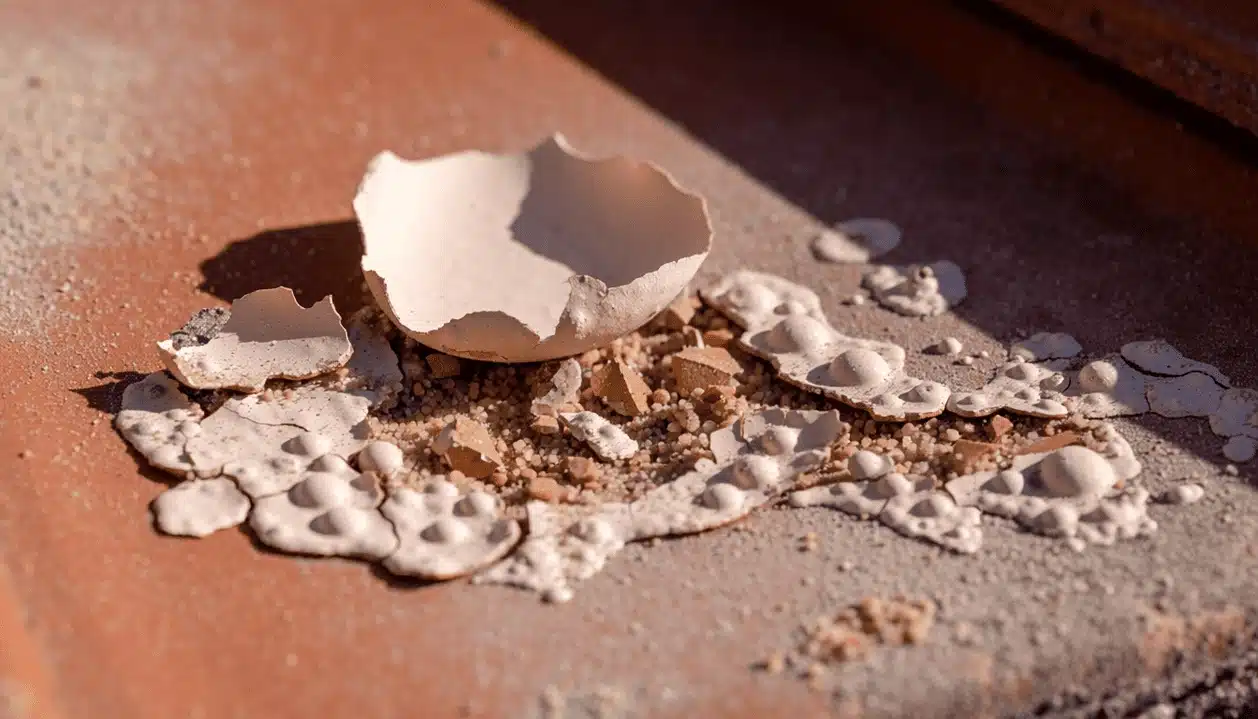
Roof tiles shed granules over time, particularly concrete and cement tiles manufactured before modern standards. Wind-blown sand common in Perth’s drier inland suburbs adds to this unstable surface layer. Coating applied over sandy residue forms a textured but poorly bonded finish. Within 6-12 months, sections begin lifting at edges where moisture has penetrated underneath – and once moisture finds a pathway, the failure area expands rapidly.
Biological Growth and Dead Root Material
Moss and lichen root structures penetrate tile pores and create an organic mat within the substrate. High-pressure roof cleaning removes visible growth, but dead root material remains in tile pores unless biocide treatment is applied. Coating that bonds to dead organic matter rather than the tile substrate will fail – this is the mechanism behind biological regrowth appearing through a supposedly restored roof within 18 months of application.
Efflorescence and Mineral Deposits
Concrete and terracotta tiles often develop white crystalline deposits called efflorescence as water-soluble salts migrate to the surface through capillary action. Coating over efflorescence traps moisture and salts beneath the coating layer, creating ongoing chemical reactions that undermine adhesion from within. The coating may appear sound initially but develops bubbling and delamination within 12-24 months as these internal reactions progress.
The Surface Preparation Process That Ensures Adhesion
Proper preparation transforms contaminated roof surfaces into clean, sound substrates capable of accepting coating systems. This process requires specialised equipment, technical knowledge, and time that cannot be compressed without directly compromising outcomes.
High-Pressure Cleaning Standards
Professional roof cleaning uses 3,000-4,000 PSI equipment with specialised rotating nozzles that remove all surface contaminants without damaging tile substrates. The process strips away dirt, sand, moss, lichen, and loose granules, revealing the original tile surface with the texture that both mechanical and chemical adhesion require. Methodical coverage patterns ensure valleys, ridges, and tile overlaps receive thorough treatment – not just the flat surfaces visible from street level.
Operators who rush through cleaning in three to four hours on an average Perth home cannot physically achieve adequate contamination removal. Professional cleaning teams spend one to two full days on residential roofs – a timeframe that reflects what thorough preparation actually requires.
Chemical Treatment for Biological and Mineral Contamination
After pressure washing, targeted biocide application kills remaining moss and lichen spores embedded in tile pores. This treatment requires 24-48 hours before coating application begins – a window that contractors under schedule pressure frequently eliminate, with predictable consequences for long-term adhesion.
Tiles showing efflorescence require acid washing with diluted hydrochloric acid solutions that dissolve mineral deposits and open tile pores for optimal coating penetration. The surface must then be thoroughly rinsed and neutralised. Residual acid interferes with coating chemistry and prevents proper adhesion – making the rinse stage as technically important as the treatment itself.
Why Drying Time Cannot Be Compressed
Clean tiles must dry completely before coating application – typically 2-3 days in Perth’s summer climate, longer during winter months. Moisture trapped beneath coating creates adhesion failure and bubbling as it tries to escape through the coating layer. Professional teams use moisture meters to verify surfaces have reached appropriate dryness levels rather than relying on visual inspection alone.
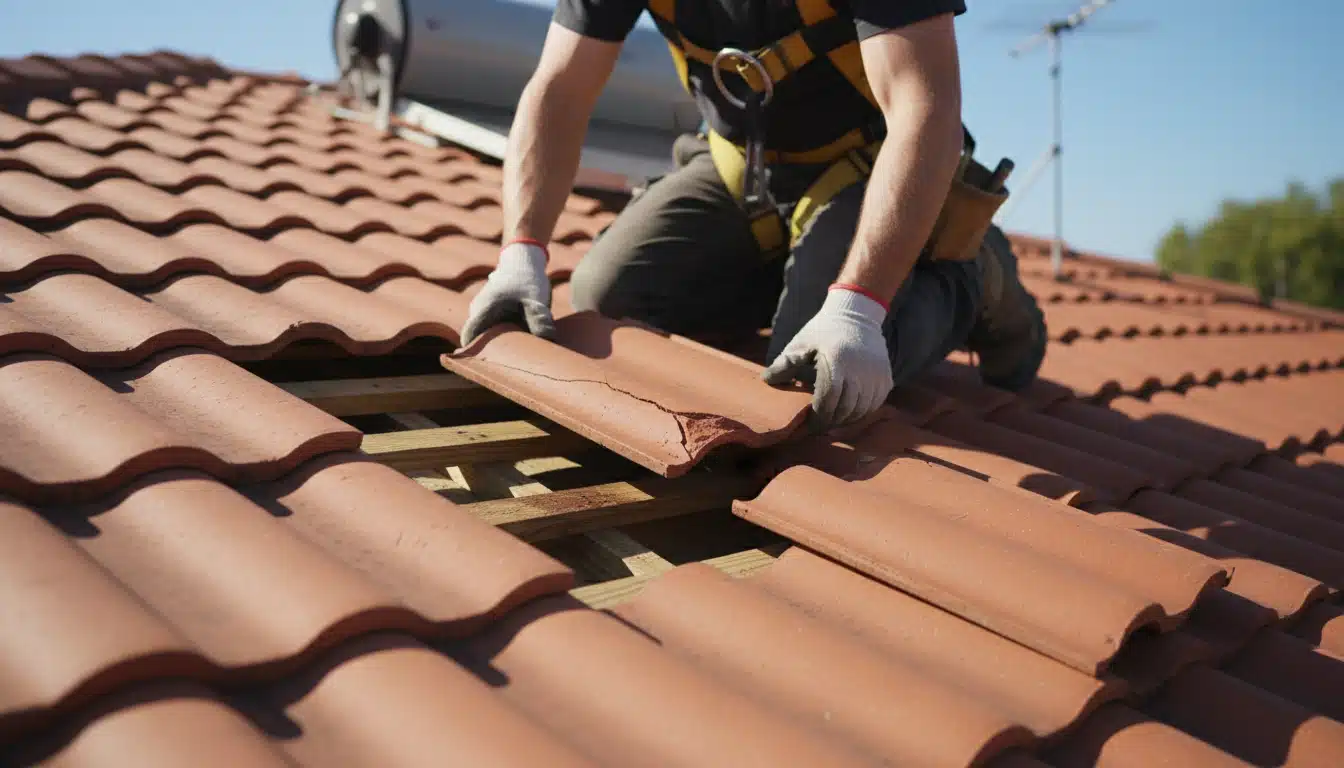
Cracked tile replacement and other repair work identified during cleaning must also be completed and allowed to cure before coating begins. Applying coating over freshly repaired sections that haven’t fully dried creates the same moisture-related failures as coating over insufficiently dried tiles.
The Predictable Failure Patterns from Inadequate Preparation
The consequences of coating over contaminated surfaces follow recognisable patterns that appear within 2-5 years. Understanding these patterns helps homeowners identify substandard work before problems escalate to major remediation.
Peeling and Delamination
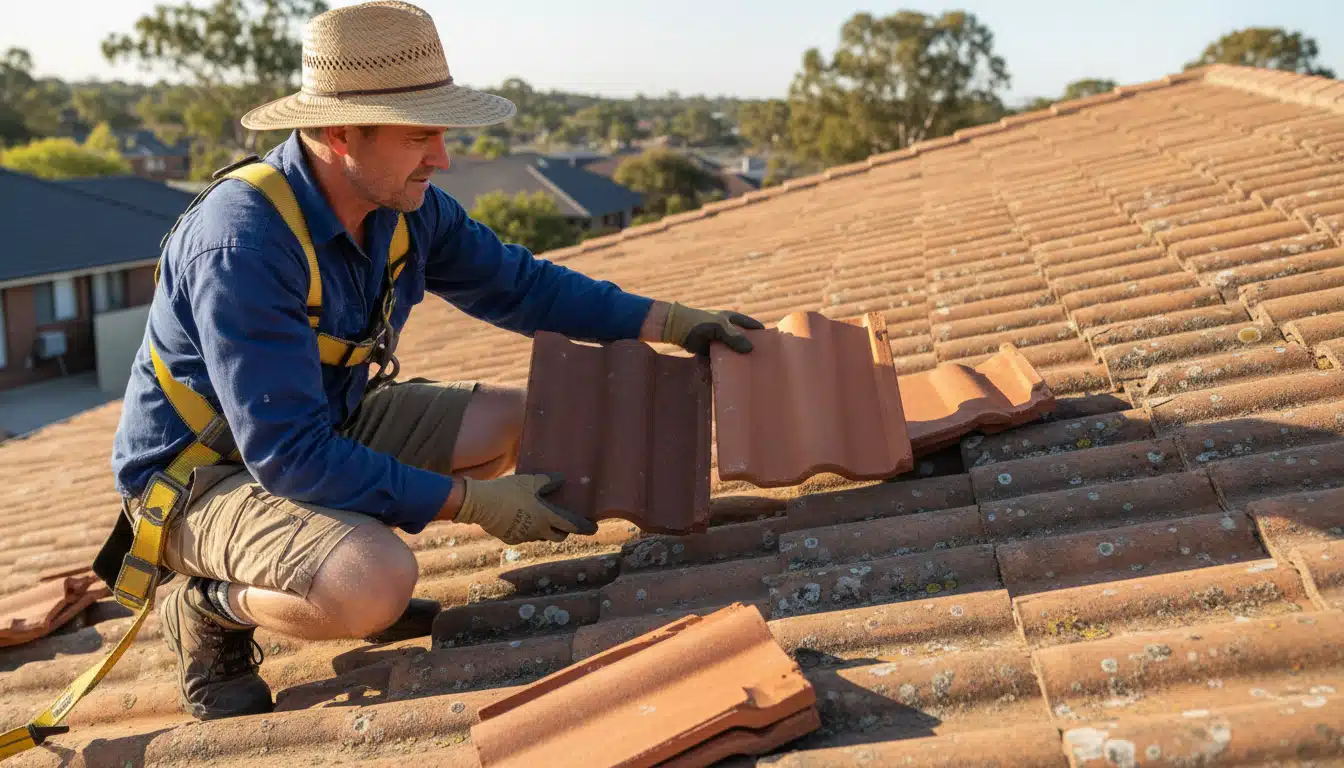
The most visible failure appears as coating lifting from the tile surface in sheets or flakes. This begins at tile edges and ridges where thermal expansion creates concentrated stress. Once peeling starts, moisture penetrates the gap between coating and tile, accelerating failure across larger areas. Within 12-24 months, significant portions of the roof require complete coating removal and reapplication.
In Perth’s summer conditions, where roof surface temperatures regularly exceed 60°C, thermal expansion stress on poorly bonded coatings is particularly severe. What might take three years to manifest in a moderate climate can appear within 12-18 months under Perth’s temperature extremes.
Bubbling and Blistering
Trapped moisture or volatile compounds beneath coating create bubbles that expand during hot weather and eventually burst. Each burst bubble leaves exposed tile and creates a moisture entry point that compromises the surrounding coating. Bubbling indicates fundamental adhesion failure – surface repairs provide only temporary improvement until the underlying preparation deficiency is addressed.
Premature Fading and Chalking
Poorly bonded coating lacks the UV durability of properly adhered systems. UV exposure attacks the coating-substrate interface when adhesion is compromised, causing rapid colour fading and surface chalking. A roof that should maintain appearance for 15-20 years shows significant degradation within 3-5 years. In Perth’s high-UV environment, Dulux Acratex roof painting that lacks proper substrate adhesion degrades 2-3 times faster than correctly applied systems.
Water Penetration and Structural Damage
Failed coating allows water to penetrate beneath the coating layer where it becomes trapped against tile surfaces. This creates conditions for tile deterioration, sarking damage, and potential structural issues that go beyond cosmetic failure. Property owners who coated over dirty tiles often face both coating replacement and structural repairs simultaneously – with combined costs far exceeding what correct initial preparation would have cost.
When structural damage is extensive, re roofing in Perth may become the only viable option. Reaching that outcome from a situation that began as inadequate cleaning is the most avoidable and costly scenario in the roof restoration industry.
Industry Standards vs Shortcut Practices
The quality divide in Perth’s restoration industry exists precisely at surface preparation. Identifying which side of that divide a contractor sits on is possible before any work begins.
Time Investment as a Quality Indicator
Professional tile roof restoration requires 5-7 working days for average residential properties: 1-2 days cleaning, 2-3 days drying, 2-3 days coating application. Operators promising completion in 2-3 days cannot physically achieve adequate preparation and drying times. The timeline alone reveals whether a quote reflects proper methodology or corner-cutting.
Permacoat, WA’s longest-serving roof restoration company with 50+ years of experience and 30,000+ Perth roofs restored, maintains separate preparation and coating teams. This separation ensures each phase receives expert attention from tradespeople who understand its role in long-term coating adhesion. The preparation phase represents 40-50% of total project work – and it determines 90% of long-term performance.
Equipment and Warranty Signals
Professional operations use commercial-grade pressure washers delivering 3,000-4,000 PSI with adequate flow volume. Budget operators often rely on domestic equipment that maxes out at 2,000 PSI – insufficient for thorough contamination removal regardless of how long the operator spends on the roof.
Documentation and warranty terms reveal confidence in preparation standards. Quality restoration companies offer 15-20 year coating warranties, 12-month leak warranties, and 3-year labour warranties – commitments that require genuine confidence in preparation quality. Operators offering minimal warranties signal awareness that their preparation standards won’t support long-term coating performance.
Verifying Quality Before Work Begins
Homeowners can assess preparation standards before committing to contractors by asking targeted questions that reveal technical knowledge and methodology.
- What PSI settings will you use for my roof material? Specific ranges for different materials indicate experience. Vague answers suggest inadequate technical knowledge.
- How long between cleaning and coating application? Same-day clean-and-coat is an immediate disqualifier.
- What biocide treatment do you use for biological growth? Specific product names and required dwell times demonstrate systematic methodology.
- What are your realistic project timelines? Five to seven days for an average home reflects proper preparation. Two to three days does not.
- Can you provide documentation of preparation stages? Professional operators photograph condition before and after each stage as standard practice.
The Long-Term Financial Mathematics
The financial case for proper preparation is straightforward. Quality restoration including thorough preparation costs $8,000-12,000 and delivers 15-20 years of performance. Budget alternatives save $2,000-3,000 initially but require recoating every 5-7 years at $6,000-8,000 per cycle. Over 20 years, the budget approach costs $18,000-24,000 versus $8,000-12,000 for quality work – double the expense for inferior results.
Remediation costs compound this calculation further. When coating failure causes water damage to ceiling insulation, promotes timber deterioration, or requires structural repairs, the original saving becomes financially indefensible.
Conclusion
Roof coating adhesion depends entirely on surface preparation quality. Dirt, sand, moss, lichen, and efflorescence each create barriers that prevent coating from bonding with tile substrate. When coating bonds to contamination rather than tile, failure is inevitable. The only variable is timing.
Professional surface preparation removes all contamination through high-pressure cleaning, chemical treatment, biocide application, and adequate drying time. This process requires specialised equipment, technical knowledge, and a realistic timeline that shortcuts cannot replicate. The preparation phase represents the investment that determines whether a coating system performs for 15-20 years or fails within three.
For expert roof restoration in Perth built on proper surface preparation and backed by 50+ years of experience, call (08) 9249 5955 to book your free roof inspection.