Perth roofs face one of Australia’s most demanding environments. Intense UV radiation pounds surfaces through summer months. Temperatures swing from overnight lows near 10°C to daytime highs regularly exceeding 40°C. For coastal suburbs, salt-laden winds add a third layer of stress that degrades roofing materials faster than most inland conditions allow.
The coating applied to a Perth roof determines whether protection lasts five years or twenty. Homeowners evaluating their options typically focus on price and colour. Fewer consider the chemistry behind the coating – yet that chemistry is precisely where roof coating performance is decided.
Not all protective roof coatings deliver the same results. The coating decisions made during roof restoration in Perth come down to one critical variable: how many layers are applied, and what each layer actually does. Understanding the difference between a two-coat application and a properly executed three-coat system helps homeowners make better choices when the time comes.
Understanding Perth’s Roofing Environment
Perth’s Mediterranean climate creates a specific set of challenges. A quality roof coating system in Perth must address all three simultaneously – UV exposure, salt air, and thermal stress – to deliver meaningful long-term protection.
Summer Heat and UV Intensity
Roof surface temperatures in Perth regularly exceed 70°C during summer – far above ambient air temperature. This heat accelerates acrylic polymer breakdown from the surface downward. UV radiation causes chalking and visible fading on north-facing sections within 18-24 months for inferior products.
Perth receives some of Australia’s highest annual UV exposure. Standard coating formulations developed for European or North American markets don’t account for Australia’s solar intensity. The difference between standard UV inhibitors and industrial-grade formulations determines whether a coating holds its colour for three years or fifteen.
Salt Air and Coastal Corrosion
For properties between Fremantle and Quinns Rocks, salt-laden winds create relentless stress on roof coatings in Perth. Salt particles settle on surfaces, attract moisture, and create localised humidity that accelerates breakdown. Thinner coatings allow salt penetration to reach the substrate faster – initiating corrosion on metal roofs and efflorescence on tile surfaces.
A thicker protective membrane delays this penetration by years, protecting both the coating and the underlying roofing materials.
Winter Rainfall and Thermal Cycling
Perth’s wet season between June and August brings sustained moisture exposure that tests adhesion under real conditions. Coatings that trap moisture beneath tiles eventually delaminate from the back side – a failure mode that begins unseen and accelerates quickly.
Thermal cycling creates a parallel challenge. Metal and concrete materials expand and contract with every temperature swing. Coatings lacking elasticity crack along stress points, allowing water infiltration that compounds roof damage over time.
The Three-Coat System Explained
The Dulux Acratex 3-coat system consists of three distinct layers, each serving a specific protective function. This differs fundamentally from standard two-coat applications where a single topcoat follows the primer.
Primer Sealer Application – The Critical First Layer
Primer sealer application does more than prepare the surface. The first coat penetrates deep into porous substrates like cement and terracotta tiles, creating both mechanical and chemical adhesion bonds. This penetration anchors the entire coating system to the roof material itself.
A quality primer sealer application delivers several essential outcomes:
- Stabilises weathered or friable tile surfaces before topcoats are applied
- Seals surface porosity to create consistent absorbency across the entire roof
- Creates the adhesion foundation that supports long-term protection
- Prevents moisture from absorbing into tiles during the coating process
- Reduces the total topcoat volume needed to achieve consistent coverage
Without this penetration step, topcoats rest on the tile surface rather than bonding with it. Surface-only adhesion fails faster under thermal stress and UV exposure – particularly significant for tile roof coating on porous cement and terracotta surfaces.
Building the Protective Membrane
The second and third coats are full membrane-grade acrylic coatings. Together they build the protective barrier that determines how long the system holds up.
A standard two-coat application achieves 150-200 microns of total membrane thickness. The Dulux Acratex 3-coat system delivers 250-300 microns. That additional 100 microns is precisely where long-term performance is won or lost.
How Extra Thickness Extends Protection
UV radiation degrades coating polymers from the surface downward. A two-coat system provides 150-200 microns before the coating loses integrity. A three-coat system provides 250-300 microns – requiring UV radiation to work through nearly twice as much material before reaching critical failure.
Tile roof coating on coastal properties faces particular pressure from salt penetration. The thicker membrane in a three-coat system delays salt reaching the substrate by years. In Perth’s environment, this difference frequently doubles the effective protection period.
Why Dulux Acratex Outperforms Generic Coatings
Roof surfaces face fundamentally different conditions than walls or fences. Products formulated for general exterior use lack the properties that professional protective roof coatings require – particularly under Perth’s climate pressures.
UV Stabilisers Formulated for Australian Conditions
Dulux Acratex coatings use industrial-grade UV stabilisers specifically calibrated for Australian solar intensity. The formulation protects both the acrylic polymers and the pigment particles. The result is a coating that maintains colour stability and structural integrity far longer than generic alternatives.
Budget roof paints use UV inhibitors designed for vertical surfaces with intermittent sun exposure. Roof surfaces receive 8-12 hours of direct overhead sun through Perth’s intense summer months. That’s a fundamentally different exposure pattern – and the Acratex formulation is engineered accordingly.
Flexibility Across Temperature Extremes
Metal roofing and concrete tiles expand and contract significantly as Perth temperatures swing between seasonal extremes. Coatings without sufficient flexibility crack along thermal stress points. Once cracked, moisture penetrates – causing rust on metal roofs and spalling on tile surfaces.
The Dulux Acratex formulation maintains elasticity across Perth’s full temperature range. It moves with the roof substrate rather than cracking away from it. This flexibility is the foundation of sustained roof coating performance across a 15-20 year warranty period.
The Dulux Accreditation Requirement
Dulux doesn’t issue 15-year warranties to every contractor with a spray gun. Accreditation requires demonstrated competency across several key areas:
- Surface preparation standards and substrate assessment for different roof types
- Product selection matched to specific materials and conditions
- Spray application technique, pressure settings, and tip specifications
- Coverage rate monitoring and film thickness verification
- Quality control procedures between individual coat applications
This accreditation ensures homeowners receive both the right product and the correct application method. A premium coating applied over inadequate preparation fails regardless of formulation quality. The accreditation requirement protects the integrity of the warranty from both sides.
Permacoat’s Commitment to the Three-Coat Standard
Over 50+ years in the industry, Permacoat has restored more than 30,000 roofs across Perth. The company’s exclusive use of the Dulux Acratex 3-coat system is based on long-term performance data – not product preference. Testing virtually every coating system available on the Australian market confirmed the same outcome. Under Western Australian conditions, the three-coat approach consistently outperforms alternatives over any meaningful ownership period.
Dedicated Spray Coating Teams
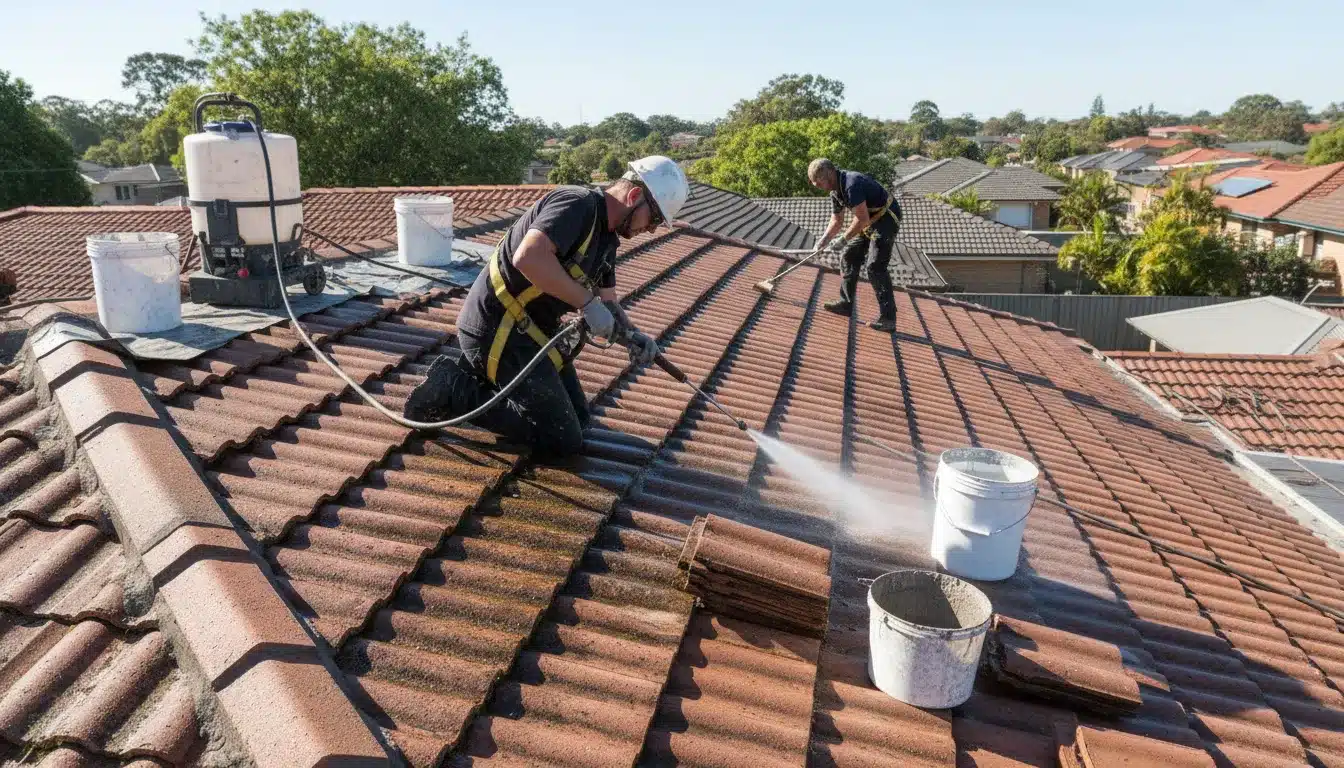
The company operates with two distinct teams on every restoration project. A preparation and repair crew handles structural repairs, cleaning, tile replacement, and valley work. A dedicated spray coating team then focuses exclusively on coating application under controlled conditions.
This separation ensures consistent quality throughout every coat:
- Surface temperature monitored before and during each application
- Humidity and wind conditions assessed before coating begins
- Drying progress confirmed between each coat application
- Coverage uniformity and film thickness checked systematically
- Application technique maintained consistently across the entire roof surface
Quality Control Between Every Coat
Each coat in a three-coat system requires 24-48 hours of curing before the next application can begin. During this interval, the team inspects coverage, identifies thin spots, and confirms uniform thickness across the entire surface.
This quality control step occurs twice – between the first and second coat, and between the second and third. Two-coat systems allow only one intermediate inspection. Catching and correcting coverage issues before the final coat prevents those problems from becoming permanent defects beneath the surface.
Real-World Performance Across Perth
Warranty Figures Backed by Data
The warranty structure reflects genuine confidence in the coating system’s performance:
- 15-20 years on the Dulux Acratex coating itself
- 12 months on all leak repairs
- 3 years on workmanship
These figures come from long-term performance data across thousands of Perth roofs. Properties restored in the 1990s and early 2000s regularly reach 18-20 years before requiring recoating. Some protected inland properties have exceeded 22 years with the original coating still providing adequate protection.
For homeowners considering roof restoration in Perth, this longevity data is significant. It represents a meaningful contrast to the 8-10 year recoating cycles typical of two-coat systems.
Coastal Properties Under Maximum Stress
Coastal suburbs like Scarborough, Cottesloe, and Rockingham face maximum UV intensity combined with continuous salt exposure. Three-coat applications consistently outperform two-coat systems in these locations by 5-7 years. Over a roof’s lifespan, that gap represents thousands of dollars in avoided recoating costs and project disruption.
The Cost-Per-Year Case for Three Coats
Comparing Annual Protection Value
The initial price difference between systems sits at roughly 20-30% more for the three-coat approach. The cost-per-year analysis changes the picture significantly:
- A two-coat system at $8,000 lasting 10 years = $800 per year of protection
- A three-coat system at $10,000 lasting 18 years = $556 per year of protection
That’s a 30% reduction in annual cost from the higher upfront investment. Factoring in the disruption and preparation costs of a recoating project every decade makes the advantage more pronounced still.
Surface Preparation as the Foundation
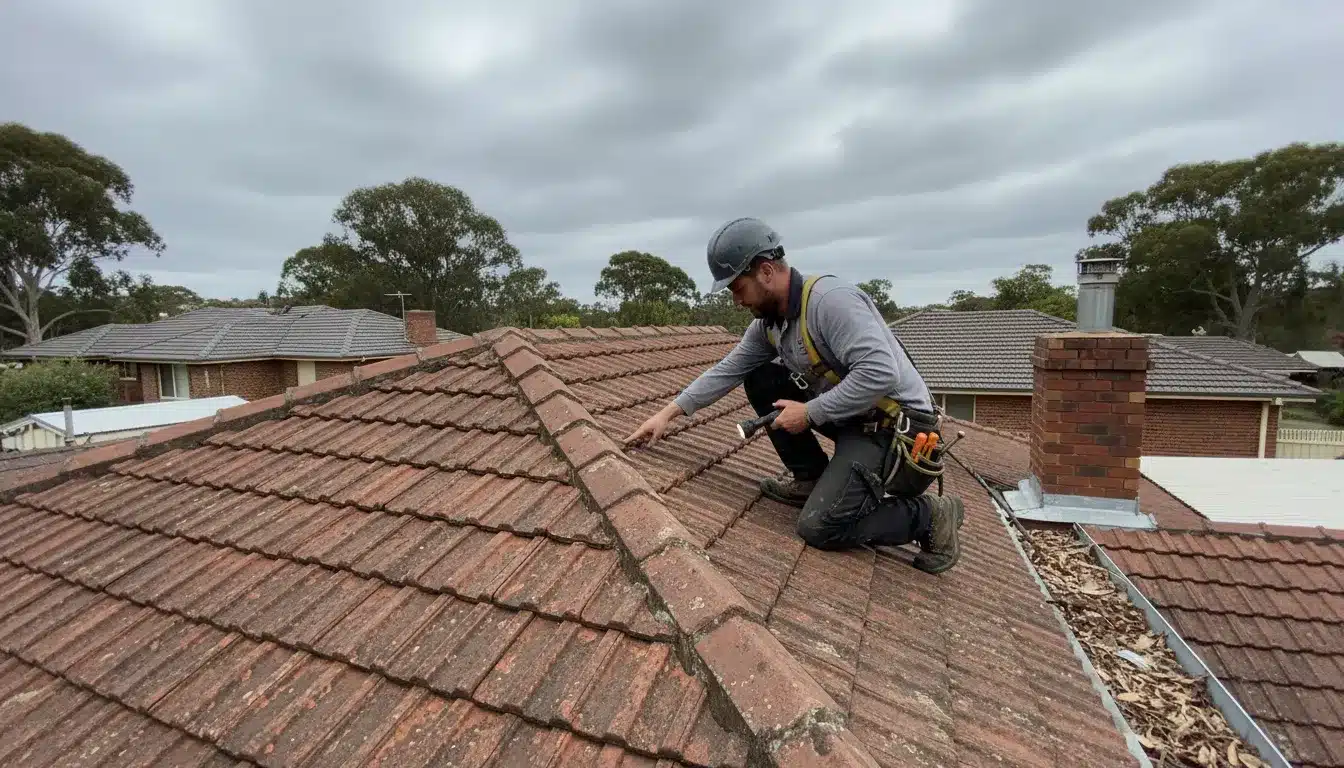
The Dulux Acratex 3-coat system delivers its full potential only over a properly prepared surface. Before primer sealer application begins, the preparation team completes:
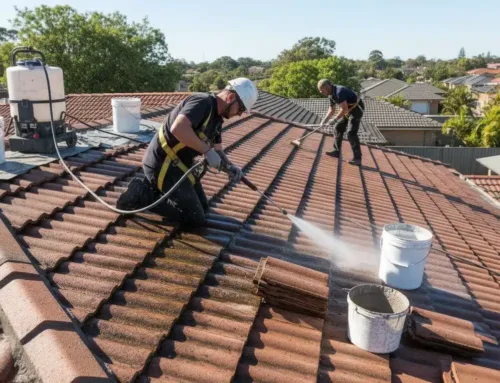
- High-pressure roof cleaning to remove all dirt, organic growth, and loose material
- Replacement of cracked or broken tiles
- Re-bedding and repointing of ridge caps and valleys
- Roof repairs in Perth including rust treatment and flashing repairs on metal roof sections
- Full surface drying confirmed before the first coat is applied
This phase represents 40-50% of total project cost. It determines whether the coating achieves its 15-20 year potential – or fails prematurely despite using premium materials. Preparation shortcuts are the most common cause of early coating failure, regardless of product quality.
Conclusion
The difference between adequate protection and lasting performance comes down to those additional 100 microns of membrane thickness that a properly applied three-coat system delivers. Perth’s climate amplifies every weakness in an inferior coating – and rewards the extra investment in a system engineered for these specific conditions.
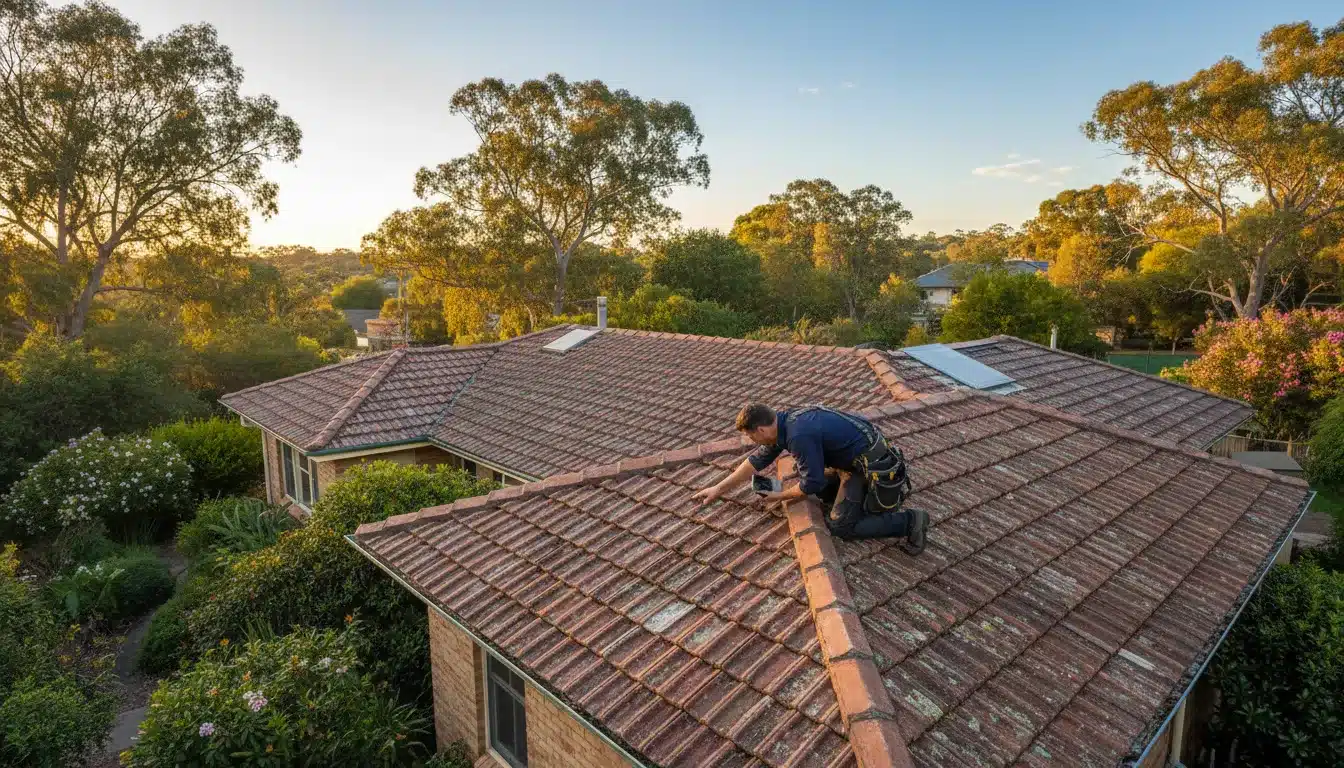
For homeowners comparing coating options, the cost-per-year calculation consistently favours the three-coat approach for any medium to long-term ownership scenario. Explore protective roof coatings backed by Dulux Acratex quality and applied by accredited specialists. Call (08) 9249 5955 today to book your free roof inspection.