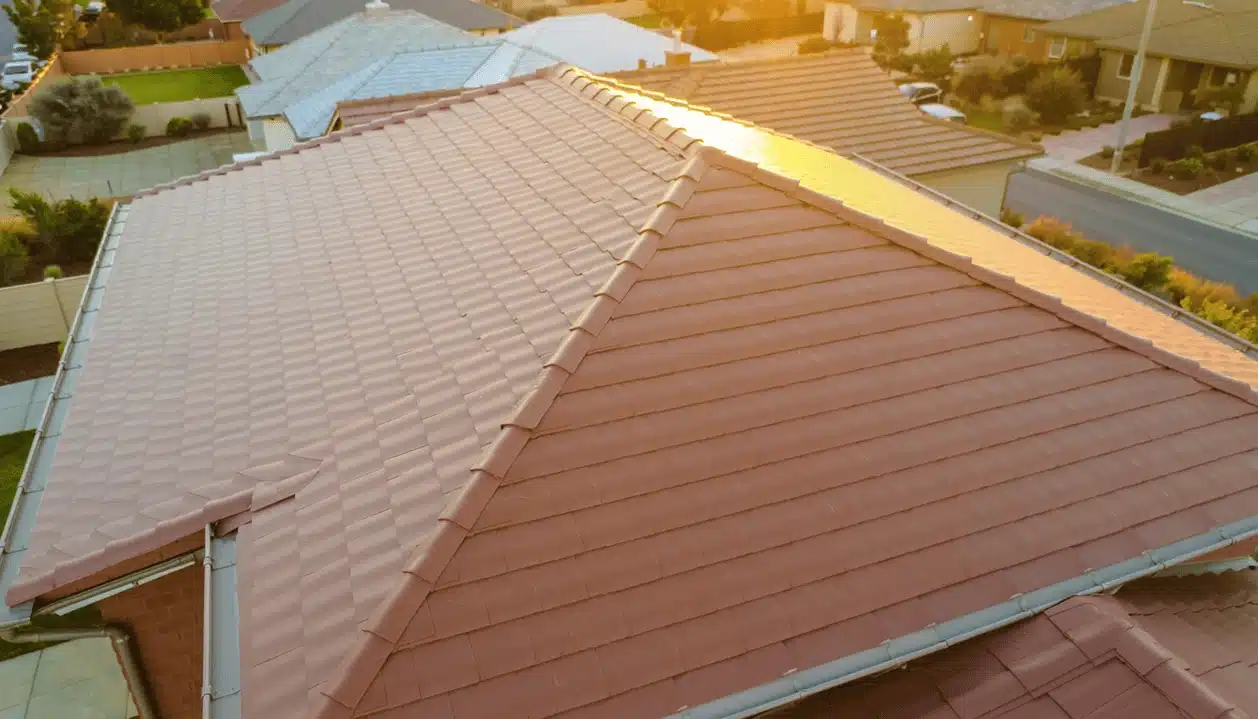
Perth’s architectural landscape includes some of the most technically demanding roof profiles for coating application in Australia. Heritage homes with 45-degree terracotta tile pitches, period cottages with steep gable ends, and contemporary designs incorporating dramatic roof angles all create application conditions where standard techniques fail – not occasionally, but predictably and consistently.
The challenge isn’t simply cosmetic. An inconsistent finish on a high-pitch roof signals underlying application problems that compromise coating performance, reduce warranty effectiveness, and accelerate weathering faster than visible appearance suggests. Understanding what creates genuine uniformity on steep surfaces reveals why experience and technique matter as much as product quality on these demanding profiles.
Why High-Pitch Roofs Challenge Standard Application
Three Forces Working Against Uniform Coverage
On roofs exceeding 35 degrees, gravity pulls wet coating downward before it can properly bond to the substrate. Standard spray patterns designed for moderate pitches produce uneven coverage, with material accumulating at tile overlaps while leaving upper tile sections under-coated. The result appears as visible striping, colour variation, and premature wear patterns that emerge within months rather than years – failing before most homeowners expect any signs of deterioration.
Temperature differentials compound these challenges on Perth’s steep roofs. Upper sections of steep north-facing surfaces can reach temperatures 15-20°C higher than lower sections during application. This variation affects coating viscosity, drying time, and adhesion characteristics within the same roof plane, creating conditions where a single application approach cannot deliver consistent results from ridge to eaves.
Surface geometry adds the third dimension. The geometry of overlapping tiles on steep pitches creates zones where coating naturally wants to either pool in recesses or thin out on tile peaks – neither outcome meeting the uniform film thickness that warranty performance requires.
Why Standard Technique Isn’t Enough
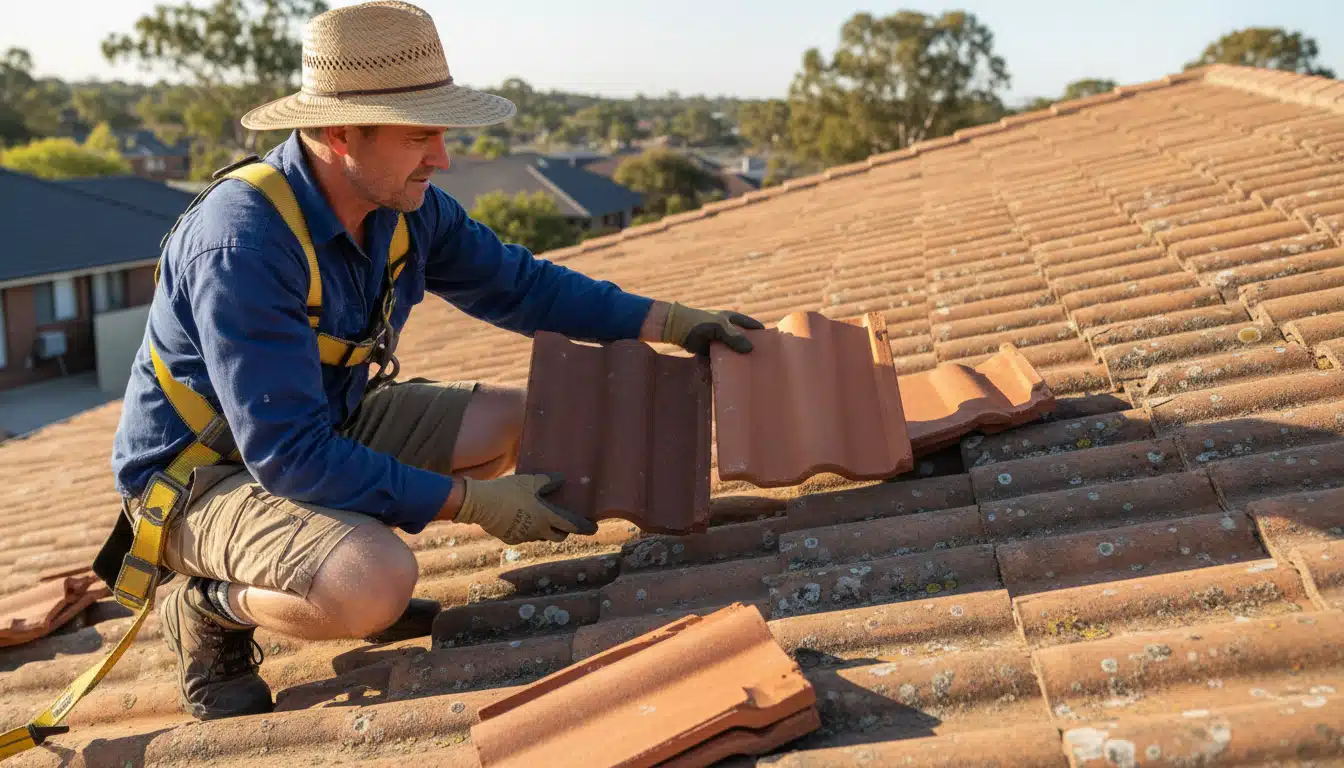
Single-pass application methods designed for moderate pitches simply cannot deliver uniform coverage on steep angles. Applicators cannot maintain the same gun distance, spray angle, and overlap pattern that works on gentle slopes. The safety equipment required for high-pitch work – harnesses, roof anchors, fall protection systems – directly affects body positioning and therefore application technique. When safety requirements and application quality requirements pull in different directions, the result is compromised coverage in the areas of greatest geometric challenge.
The Three-Phase Approach to Steep Surface Coating
Achieving genuine uniformity on high-pitch roofs requires abandoning single-pass application methods. The most reliable approach separates the process into three distinct phases, each addressing specific challenges that steep angles create.
Phase One: Surface Preparation and Priming
Foundation work that accounts for how steep angles affect material flow begins with adjusted high-pressure cleaning. Too much pressure on steep surfaces drives water under tiles; insufficient pressure leaves contaminants that prevent proper adhesion. The cleaning pattern follows tile lines rather than working against them, preventing water accumulation that creates moisture problems during the subsequent coating phases.
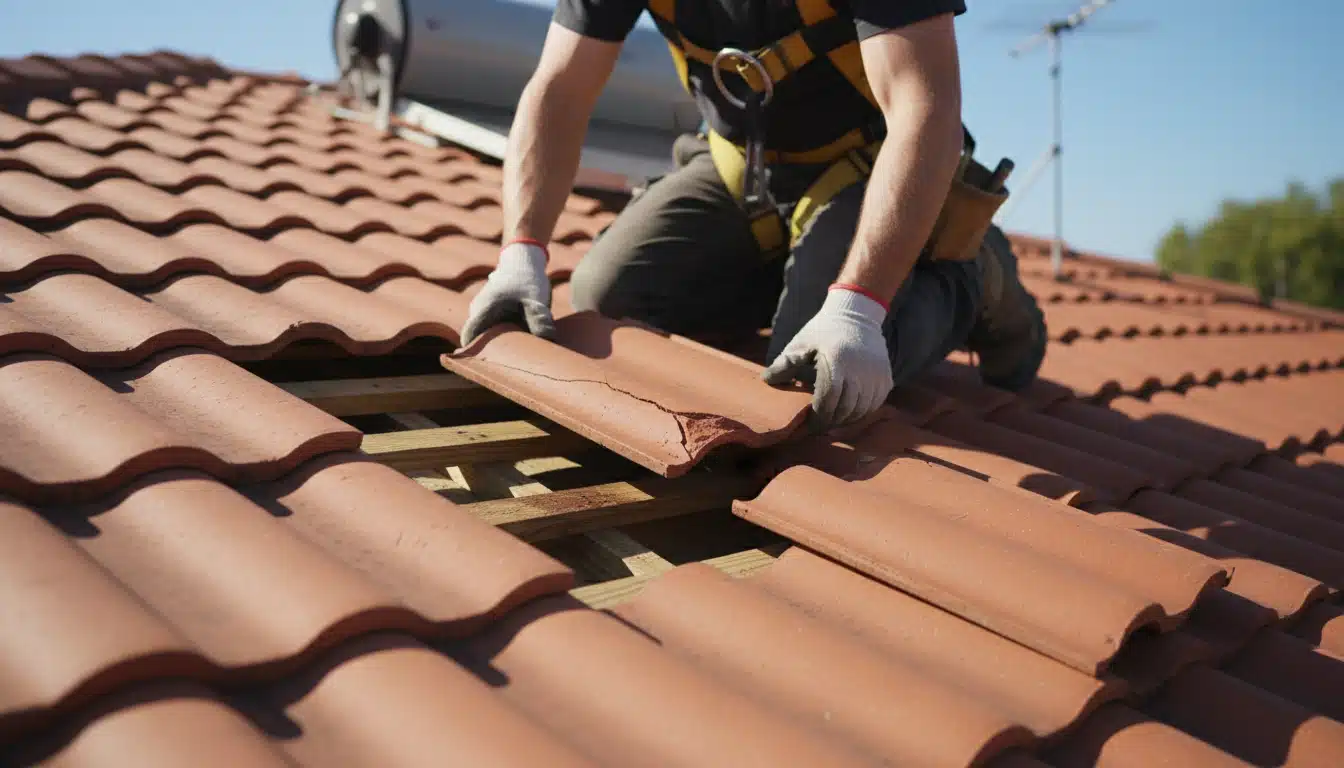
Roof repairs in Perth addressing cracked tiles, failed pointing, and compromised flashing must precede coating on high-pitch roofs as they would on any surface – but steep angles make pre-existing issues more likely to manifest as coating failures because gravity concentrates stress at structural weak points. Primer application then uses modified spray patterns with reduced material flow, and requires longer flash-off time on steep angles before topcoat application proceeds.
Phase Two: First Topcoat Application
The initial topcoat establishes colour uniformity and begins building the protective coating thickness. On high-pitch roofs, this coat uses specific spray angles that work with gravity rather than fighting its effect on wet material. Applicators work in sections small enough to maintain wet edges while preventing material run-off before adequate surface bonding occurs.
The spray pattern overlap requirements differ significantly from standard roof application. Where moderate pitches might use 50% overlap, steep surfaces require 60-70% overlap to compensate for gravitational pull that thins coverage on the upper portion of each pass. Temperature management becomes critical during first coat application: steep north-facing sections are scheduled for application during cooler morning hours when surface temperatures allow proper material flow without premature drying.
Phase Three: Final Coat and Finish Verification
The final coat uses slightly different material viscosity than the first topcoat, adjusted for the base layer already present and the need for final surface levelling. Application technique emphasises consistent material deposition while maintaining constant gun distance despite the steep angle – a requirement that demands specific body positioning and safety equipment configuration that allows technique precision without compromising fall protection.
Permacoat, WA’s longest-serving roof restoration company with 50+ years of experience and 30,000+ Perth roofs restored, verifies finish quality on high-pitch surfaces from multiple viewing angles. What appears uniform from ground level may show inconsistencies when viewed from lateral positions or from above. Touch-up work addresses any areas where coating thickness or colour density varies from the established standard across the rest of the roof.
Equipment Specifications for High-Pitch Application
Why Standard Equipment Falls Short
The equipment used for high-pitch roof coatings differs from standard restoration setups in ways that directly affect outcome quality. Spray equipment requires pressure regulation that maintains consistent atomisation despite changing angles and distances as applicators work across steep surfaces. Standard equipment calibrated for moderate pitches produces uneven droplet patterns on steep surfaces, creating texture variations that become visible as the coating cures and the roof ages.
Pump systems need sufficient capacity to deliver material at consistent pressure while handling the higher material volume that steep-surface coverage ratios require. Undersized pumps cannot maintain the pressure stability needed for uniform application – the result shows as spray pattern variations that translate directly into the film thickness inconsistencies that cause premature failure.
Safety Equipment and Application Quality
Proper harness systems and roof anchors allow applicators to maintain optimal body position and spray angles throughout the application process. This is not a secondary consideration to safety compliance – it is directly linked to application quality. When safety equipment restricts movement or creates awkward positioning, application technique suffers and finish quality declines in precisely the areas where steep-surface challenges are already greatest.
Material Selection and Perth Climate Considerations
Viscosity and Gravity Management
Coating viscosity determines how material behaves on steep angles. Too thin, and gravity pulls material into runs and sags before curing. Too thick, and the coating doesn’t level properly, leaving texture variations and spray pattern marks as it cures. The optimal viscosity for Perth’s climate accounts for ambient temperature, humidity, and surface temperature during typical application windows – variables that change significantly between Perth’s summer and winter application seasons.
UV Exposure on Steep North-Facing Sections
Perth’s UV index regularly exceeds 11 during summer – extreme by global standards. Steep north-facing roof sections receive more direct solar radiation than moderate slopes, making thin coating areas particularly vulnerable. The terracotta tile restoration specialist knowledge needed for steep terracotta profiles accounts for both the tile’s specific absorption characteristics and the elevated UV exposure that these sections receive compared to equivalent horizontal surfaces.
Thin spots that might provide adequate protection on gentler slopes fail prematurely on high-pitch surfaces exposed to Perth’s direct summer radiation. This makes achieving uniform coverage on steep sections arguably more important than on any other part of the roof.
Coastal High-Pitch Properties
Salt-laden air affects coating adhesion and longevity more severely on steep surfaces due to the increased surface area exposed to Perth’s prevailing westerly winds. This exposure demands both enhanced salt resistance in material selection and application technique that leaves no thin spots where salt can compromise the coating-tile bond. Properties in Fremantle, Cottesloe, and Perth’s northern coastal suburbs with steep heritage rooflines face this combined challenge at every restoration.
Common Failure Patterns and How Technique Prevents Them
Premature Wear on Upper Tile Sections
The most common failure pattern on high-pitch roofs shows as premature wear concentrated on upper tile sections where coating application was thinnest. This occurs when applicators don’t account for gravitational material flow during application, leaving insufficient coating thickness at the top of each tile. It becomes visible as premature chalking, colour fade, and loss of water resistance concentrated at upper sections – areas where ground-level inspection rarely focuses until degradation is advanced.
Colour Variation and Peeling at Overlaps
Inconsistent material deposition creates areas with different coating thickness that appear as colour density variations as the coating weathers. Peeling typically begins at tile overlaps on steep roofs when primer application didn’t adequately address these complex surface transitions. Professional technique compensates through adjusted application patterns that maintain consistent coverage despite the surface complexity rather than accepting overlap areas as inherently challenging.
For Colorbond steep roofs, the thermal expansion demands on coating adhesion are more severe than for tile. Roof painting services on steep metal surfaces require primer flexibility specifications that account for both the steep geometry and the dramatic daily expansion-contraction cycles Perth’s climate creates.
The Role of Experience in Steep Surface Application
Technical knowledge explains what steep-surface coating requires, but consistent execution across varied conditions requires experience from thousands of completed projects. Applicators develop intuitive understanding of how material behaves on steep surfaces under varying conditions – adjusting technique in real-time based on immediate feedback from how the coating flows and levels on each specific surface.
A 45-degree terracotta tile roof requires different technique adjustments than a steep Colorbond roof, despite both presenting high-pitch challenges. The tile’s surface texture, absorption characteristics, and thermal behaviour influence the optimal approach differently than smooth metal. This accumulated knowledge prevents problems that less experienced applicators only discover through costly mistakes on customer properties.
The two-team approach that separates restoration preparation from coating application improves high-pitch results directly. Restoration specialists focus exclusively on structural preparation – ensuring cracked tiles, failed pointing, and compromised ridge capping are addressed before coating begins. When any of these defects exist on a steep roof, they become failure points that gravity concentrates stress on during every thermal cycle. Coating specialists then apply their technique expertise to a properly prepared surface rather than working around structural problems.
Quality Verification and Warranty Implications
Uniform high pitch roof coating isn’t just an aesthetic preference – it directly affects whether coating warranties remain valid. Coating warranties specify minimum thickness requirements because insufficient coating fails to provide the protection the warranty assumes. On steep surfaces where achieving proper thickness presents genuine technical challenges, independent verification becomes essential rather than optional.
Professional verification examines coating thickness at multiple points across steep sections, particularly at upper tile areas where application challenges concentrate. This measurement confirms that the coating meets specification requirements across the entire roof, not just accessible lower sections where measurement is straightforward.
The 15-20 year coating warranties offered on properly executed restorations depend on this uniform application. Thin spots on high-pitch sections become failure points where weathering accelerates – and coating failure on steep surfaces is not subtle. It shows as localised chalking and colour variation that progressively worsens until coating integrity is compromised across wider areas.
Conclusion
Achieving a consistent roof finish on high-pitch Perth roof lines requires technical understanding, appropriate equipment, proper material selection, and experienced application refined specifically for steep surfaces. The three-phase approach addresses each challenge systematically: modified cleaning and priming that accounts for gravity, first topcoat applied with steep-surface overlap ratios and temperature management, and a final coat verified from multiple viewing angles.
For Perth homeowners with high-pitch roofs, professional application is not a premium option – it’s the requirement for coating that delivers its full warranty period. The additional care that steep surfaces demand represents investment in results that protect property value and maintain visual appeal throughout the coating’s designed service life.
For expert roof restoration in Perth including specialist high-pitch application backed by 50+ years of experience, call (08) 9249 5955 to book your free roof inspection.