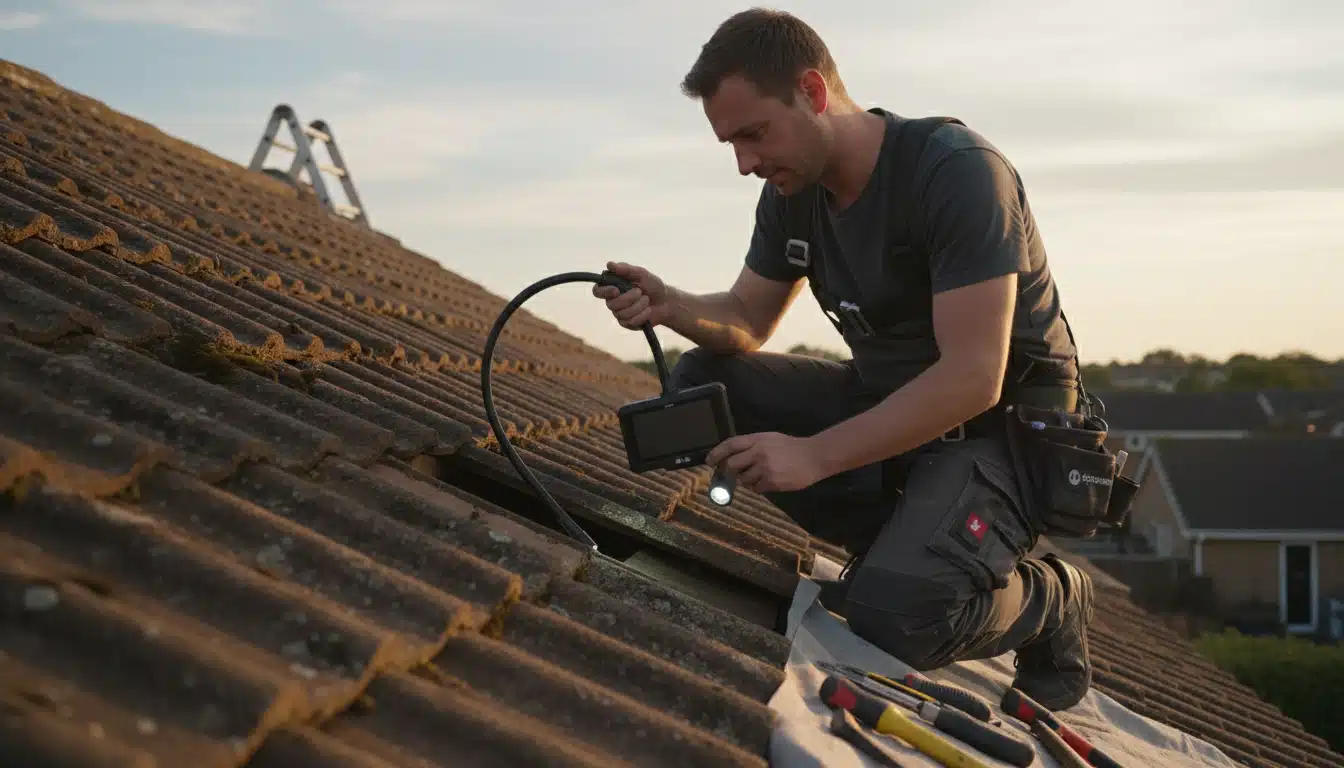
Hidden roof faults rarely announce themselves from the street. A roof can look tidy from ground level while small voids, lifted laps and broken bedding sit out of sight. These concealed openings can redirect rainwater before a ceiling stain appears.
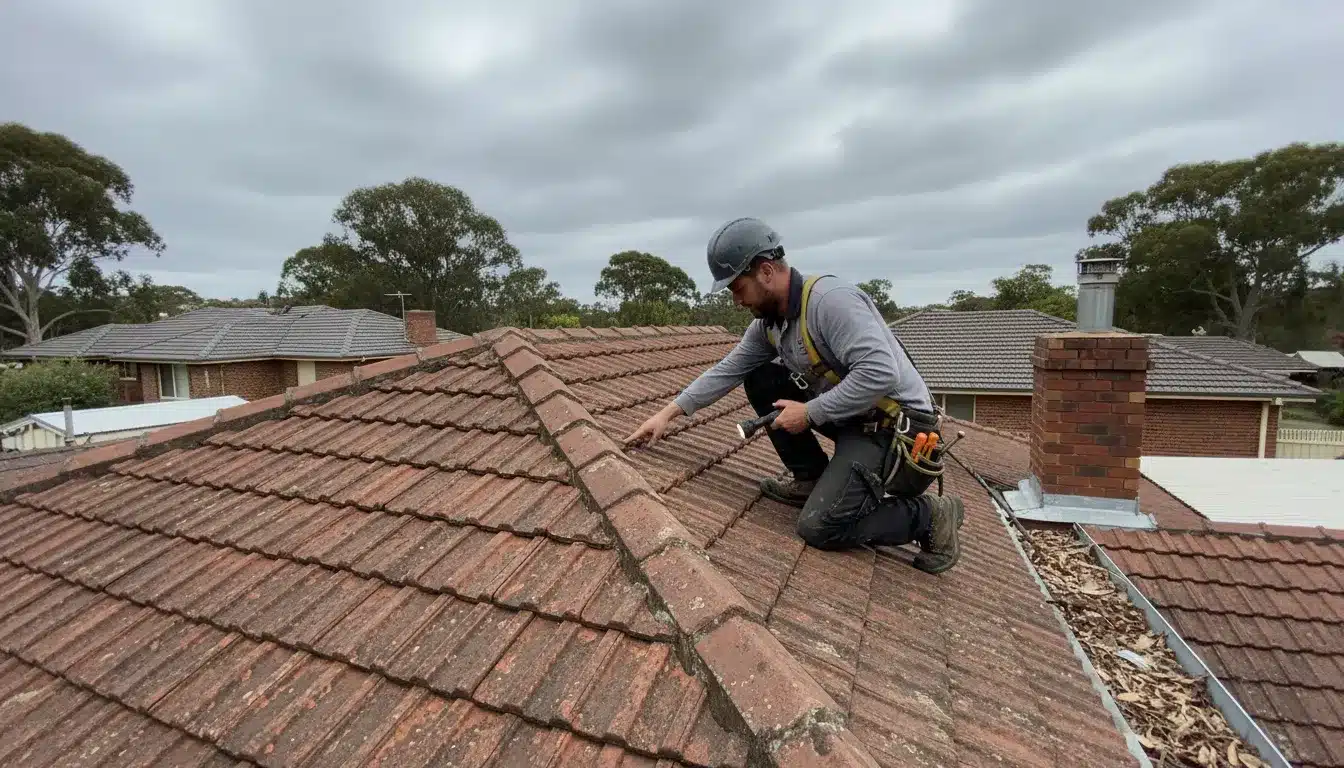
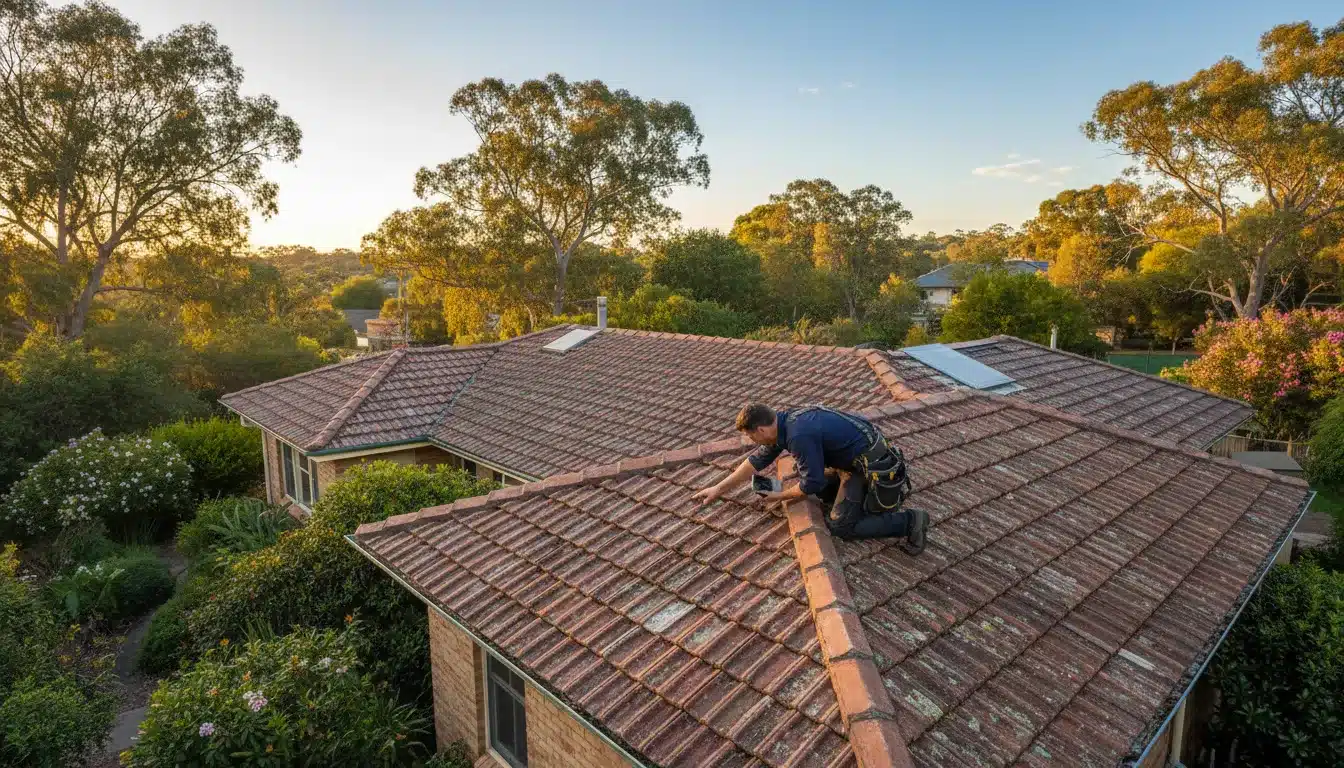
Video roof inspection technology helps reveal those hard-to-see details. Close footage can record tile edges, ridge caps, flashing and drainage paths from useful angles, giving a roofing professional more evidence to assess alongside the leak pattern inside the home.
Non-invasive roof audit methods do not replace trade knowledge or confirm every concealed defect. Their value lies in directing that knowledge towards the most likely gap, void or movement point before repair work begins.
The strongest finding comes from matching exterior footage with the stain location, roof pitch, recent weather and any safe cavity observations. That comparison helps distinguish an active entry point from ordinary wear that happens to be nearby.
Why Roof Voids Are Hard To Confirm From Ground Level
Roof coverings rely on layers. Tiles, ridge caps and flashing overlap to shed water, but the same construction hides the undersides and junctions where faults can begin. A lifted tile edge may only show from one narrow angle, while a broken nib, cracked lap or poorly seated replacement tile can remain invisible from the ground.
Small openings still matter when wind drives rain sideways, capillary action draws moisture through a tight gap, or blocked drainage holds water where it would not normally sit. This is why a roof may stay dry through gentle rain and leak during a storm even though the visible defect looks minor in dry weather.
The ceiling mark does not always sit below the entry point. Water can travel along battens, rafters, sarking or insulation before it reaches plaster, so an inspection confined to the roof directly above the stain may miss the real path. Extensions, carports and older additions make that mismatch more likely where different roof planes meet.
Useful footage follows the likely route upslope and records the wider junction rather than hunting for the most dramatic crack. It can compare several tile edges, cap lines and drainage paths before anything is moved or sealed, preserving the condition that existed when the leak was reported.
That record becomes useful when it agrees with the internal pattern and the weather that triggered the leak. If the mark appears only after wind from one direction, footage of the exposed lap or flashing edge carries more weight than unrelated wear on a sheltered section.
What Video Technology Can Reveal
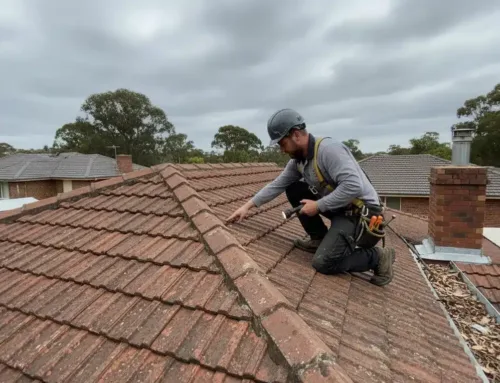
Roof footage is most valuable when it records ordinary details clearly enough to review later. Cracks, gaps, loose edges and drainage restrictions may look unremarkable in isolation, so the frame should include nearby tiles and the path water would take.
Hidden Tile Voids
Tile voids can develop when tiles shift, sag, crack or lose support. They may also appear where a replacement does not match the original profile. An exterior crack can be only the visible part of the problem if the underside has a larger opening or a broken fixing point over the batten.
The surrounding run of tiles shows whether one unit has failed or several have moved together. When the finding is isolated, our tile repairs can address cracked, fallen or poorly seated tiles without treating neighbouring wear as the same fault.
Loose Ridge And Hip Areas
Ridge and hip caps protect the high lines where roof planes meet. Cracked bedding or separated pointing can open a route beneath a cap, after which water may travel down the frame and appear near a cornice or wall. Close footage can show cap alignment and the point where the surface has separated without disturbing the affected section first.
Flashing Voids Around Penetrations
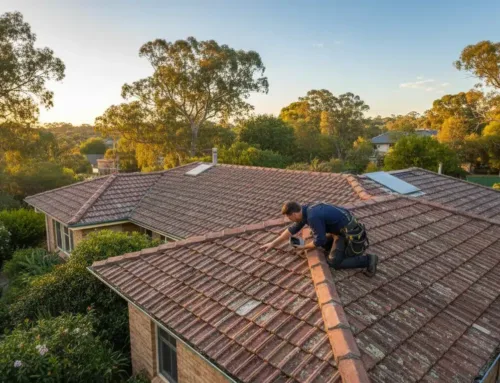
Skylights, vents, chimneys and wall junctions depend on sound flashing and effective overlaps. An open corner may remain dry in vertical rain but leak when wind pushes water under the edge or debris slows the flow. Recording the seam, the overlap and the adjacent tiles keeps attention on the complete junction rather than one suspicious bead of sealant.
Once the likely entry point has been matched to the internal symptom, our roof repairs can address the relevant tile, flashing or maintenance issue. The repair scope should follow the route water is taking, not simply the easiest surface mark to reach.
Valley And Gutter Restrictions
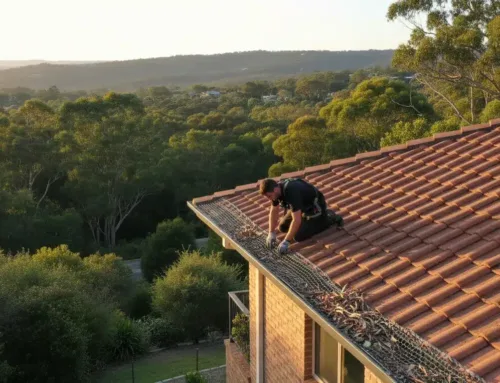
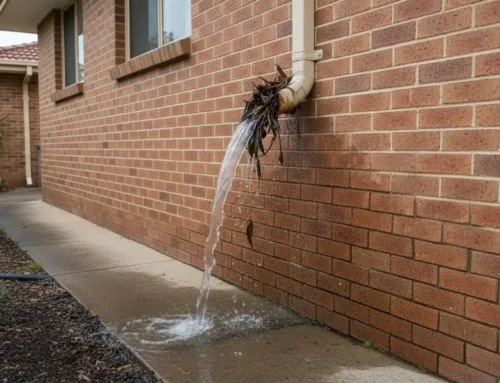
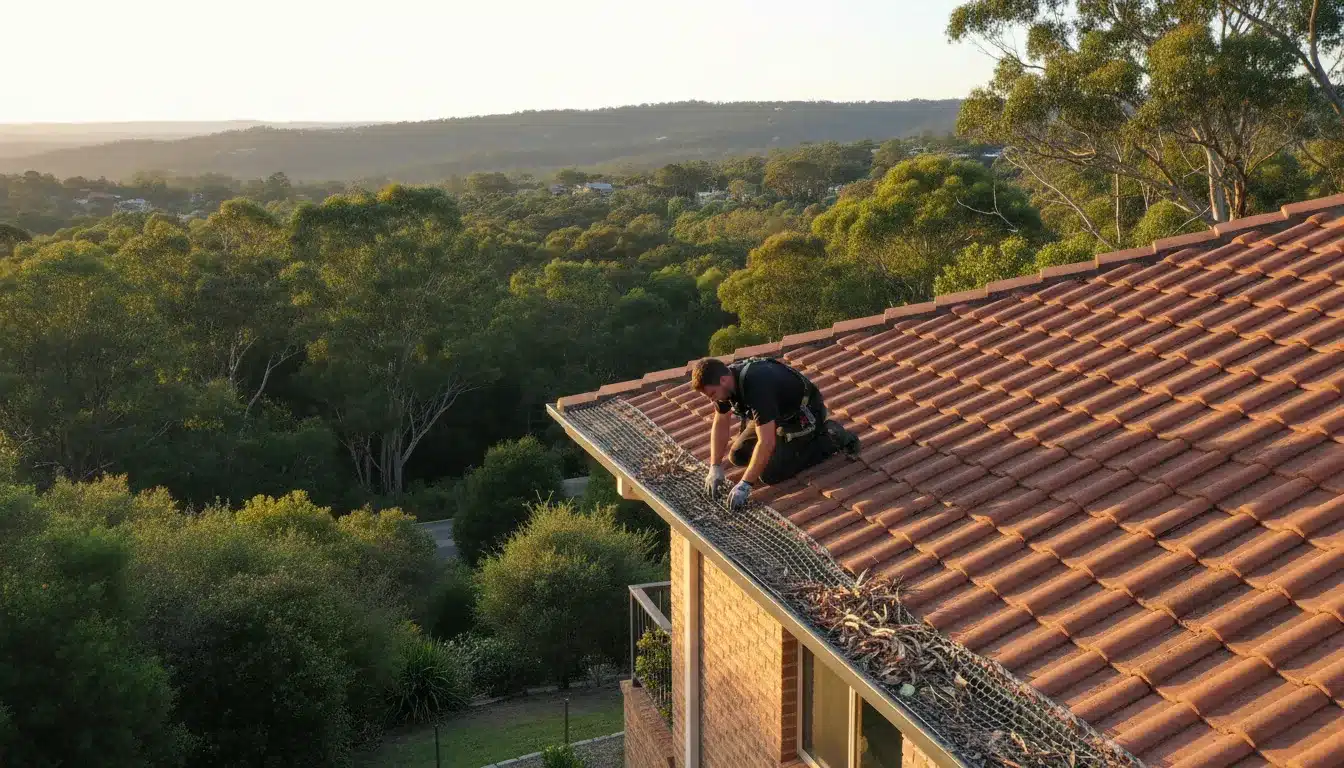
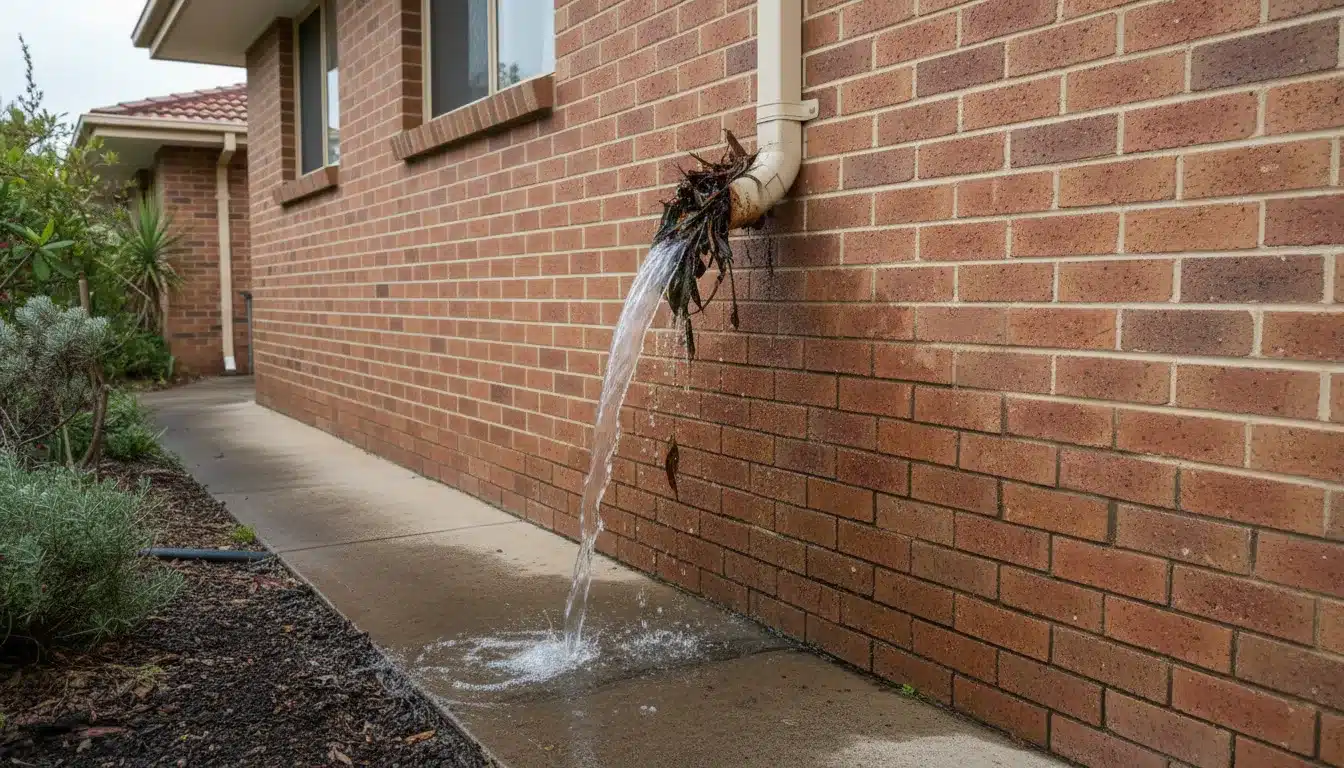
Valleys and gutters carry concentrated flows, which means debris, rust, sediment or poor falls can turn a minor opening into an active leak. Footage taken after a storm may show where water has backed up under a tile edge, while a wider view can establish whether the restriction sits upslope from the affected room.
Where drainage defects contribute to water entry, our gutter and downpipe work can address that drainage path alongside the roof opening. Clearing the route and repairing the gap are different jobs, but the evidence may show that both are needed to stop the same leak.
Where Video Fits In A Proper Inspection
A sound inspection starts indoors. The stain shape, its position, the time it appeared and nearby fittings help set the search area. A circular mark near a light fitting points to a different safety concern and likely path from a long stain running beside an external wall.
Safe cavity observations can then narrow that area through damp timber, wet insulation, rust marks, odour or visible water trails. These clues matter because they reveal where moisture travelled after it passed the roof covering, which may be some distance from the ceiling damage.
Exterior footage tests that route against the roof condition. It should establish the defect, the surrounding materials and the upslope drainage path in the same sequence, giving the reviewer enough context to judge whether the gap could feed the internal trail.
This order prevents a conspicuous cracked tile from ending the investigation too early. A crack below a blocked valley may be secondary, while a lifted flashing edge above the visible damage may fit both the weather direction and the cavity marks.
Permacoat covers focused repairs, restoration and re-roofing, so the recorded fault can lead to a scope based on the condition of the whole roof rather than the size of one close-up.
Benefits Of A Non-Invasive Roof Audit
Close recording can reduce unnecessary disturbance where brittle tiles, ageing bedding or steep sections make repeated handling unwise. It gives the inspector material to review from a safer position and gives the homeowner a clearer explanation of why a particular opening deserves attention.
When footage shows several ageing areas, the leak path should be prioritised before cosmetic or lower-risk wear. Repair costs depend on the roof condition and required scope. A defined defect also makes it easier to compare repair options without assuming that every visible imperfection needs the same response.
A dated record is especially useful for intermittent leaks. Later weather can be compared with the original roof condition, helping to establish whether the symptom has returned in the same place or followed a different pattern. Progressing cracks and loose edges are also easier to recognise when earlier footage exists.
Some useful views are taken around steep pitches, fragile tiles and tight valleys, where prolonged positioning adds risk. Safe Work Australia’s working at heights guidance sets out the need to manage fall risks. Video can limit the need to remain in an awkward position while details are studied, although access and inspection methods still need to suit the roof and conditions.
Limits Of Video Roof Inspection
Exterior video cannot show moisture behind every material, the underside of every tile or hidden timber damage. A surface that looks dry may sit above wet insulation, torn sarking or old staining, so internal symptoms can justify a cavity inspection even when the exterior footage appears inconclusive.
Interpretation is the other limit. A visible gap may be active, historic or unrelated to the current leak. Roof pitch, tile profile, flashing design, wind direction and the internal water trail determine whether that opening matters, and those factors cannot be replaced by a close-up alone.
Widespread defects change the decision. If repeated openings reflect failed underlying materials rather than isolated damage, re-roofing may be more appropriate than returning for a series of local repairs. The footage helps show the distribution of faults, while the roof condition determines the scope.
Conditions on the day also affect what can be recorded. Glare, wet tiles and wind can obscure details, and a leak associated with westerly storms deserves particular attention on exposed edges even if the inspection takes place in dry weather. After the water entry has been repaired, the surface condition can determine whether roof painting is justified as a separate restoration step.
Where the substrate remains sound and restoration is suitable, roof coatings may provide the protective finish. They come after repairs to movement, gaps and drainage faults, rather than being used to cover an unresolved leak path.
Signs A Hidden Roof Gap Needs Attention
Concern rises when an indoor symptom repeats after rain or lines up with a roof defect upslope. Yellow staining, bubbling paint, musty odours and plaster movement can indicate that moisture has entered the roof system. Marks around electrical fittings also require appropriate electrical safety care.
Outside, slipped tiles, cracked ridge pointing, lifted flashing, blocked valleys, rust marks and uneven gutter overflow all deserve context. Their position relative to the affected room matters more than the fact that they are easy to see, because water follows the pitch and available framing before it appears indoors.
Timing can expose a hidden route. Leaks that follow strong wind, sudden summer rain or movement after a long dry period may point to an opening that activates only under particular pressure. Recording the rain intensity and wind direction gives the inspection a more useful starting point.
Perth heat, ultraviolet exposure and storm conditions can contribute to movement across roof materials. If the findings show wider ageing rather than one local fault, our restoration prices reflect factors such as roof height, pitch, area, shape and the condition of tiles, gutters, flashing and valleys.
What To Record Before An Inspection
Start indoors by marking the stain location and photographing it from the same position. Note whether the edge has spread, whether the surface feels different after rain and whether the mark is close to a wall, valley line or fitting.
Write down when the leak appeared, the wind direction and the rough rain intensity where possible. A short factual note can connect an intermittent symptom with the roof plane, valley or junction that was under pressure at the time.
Keep earlier photos and repair details with the new record. After another storm, the comparison can show whether the symptom returned in the same place, moved along the ceiling or appeared only under a different weather pattern.
Choosing The Next Step
Treat the recorded gap as one part of the diagnosis. Match it to the indoor symptom, cavity clues, drainage path and weather pattern, then decide whether the evidence supports an isolated repair, planned maintenance or investigation of a broader roof condition.
When you are ready to turn those findings into a practical scope, contact us for a free, no-obligation roof inspection and a clear next step before further weather tests the same hidden gap.