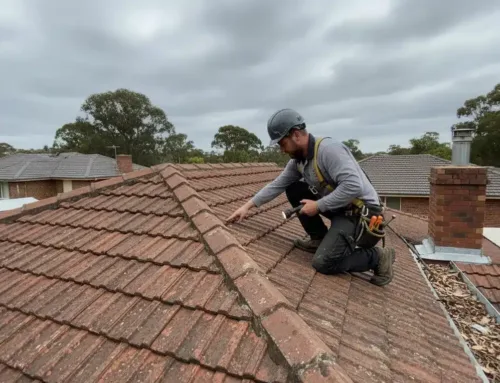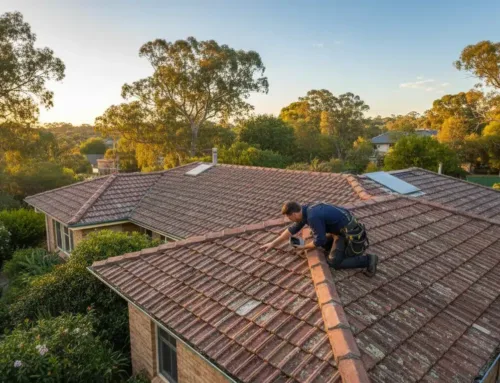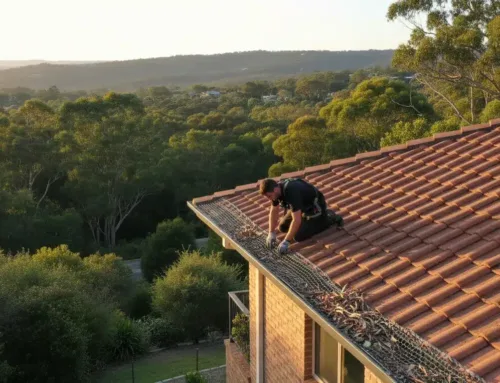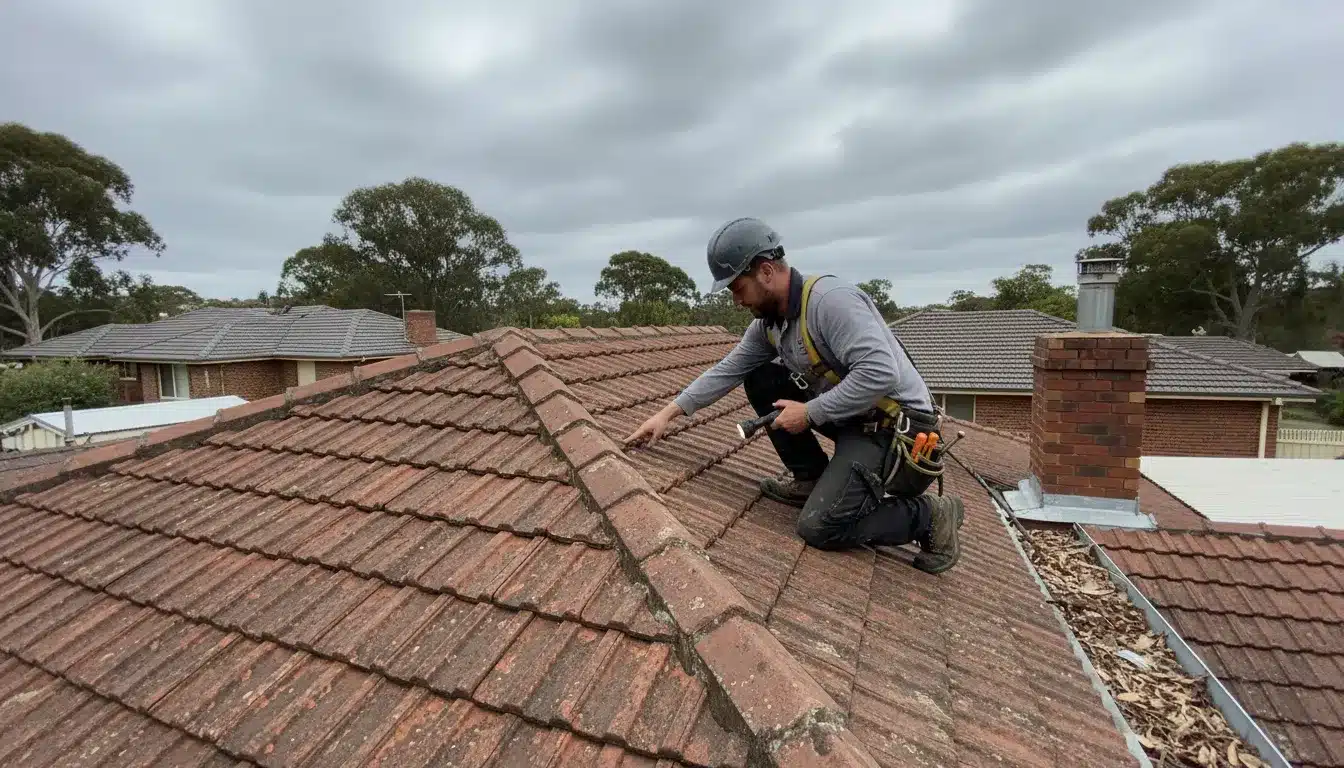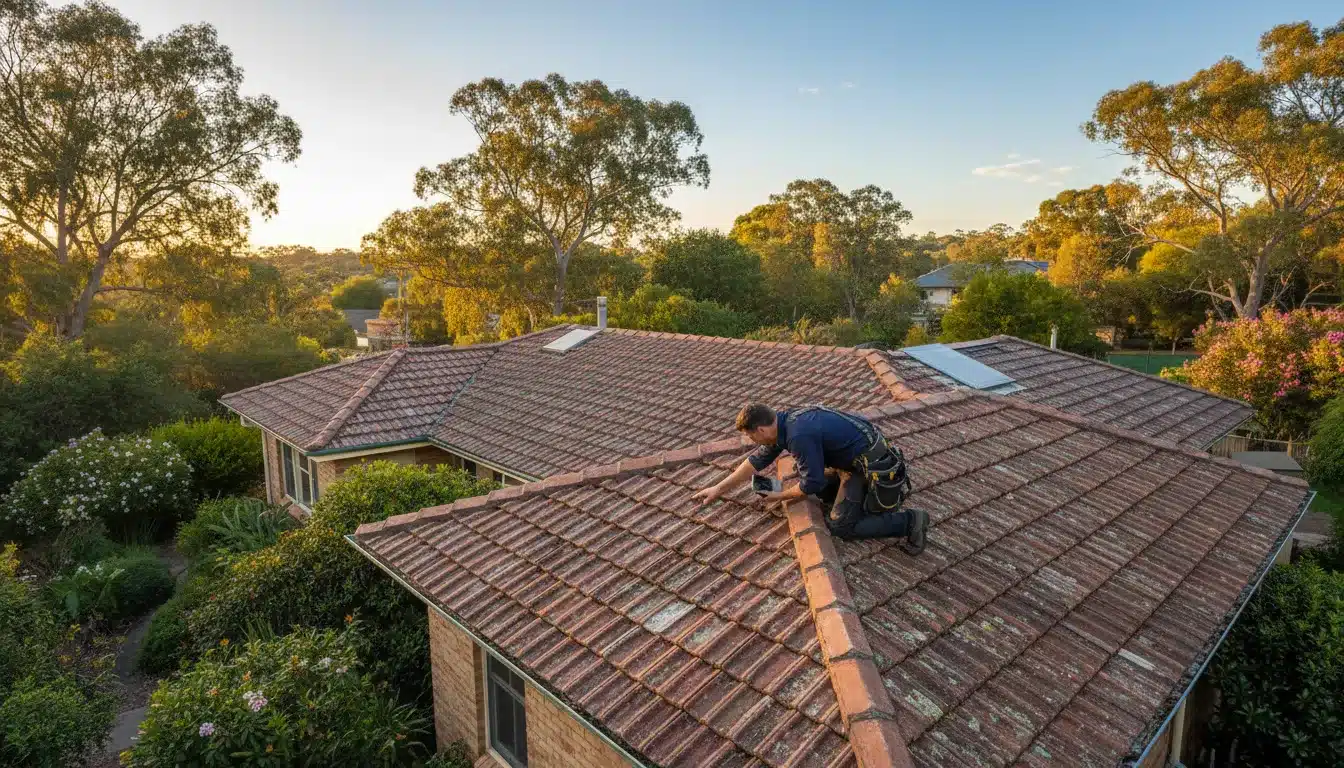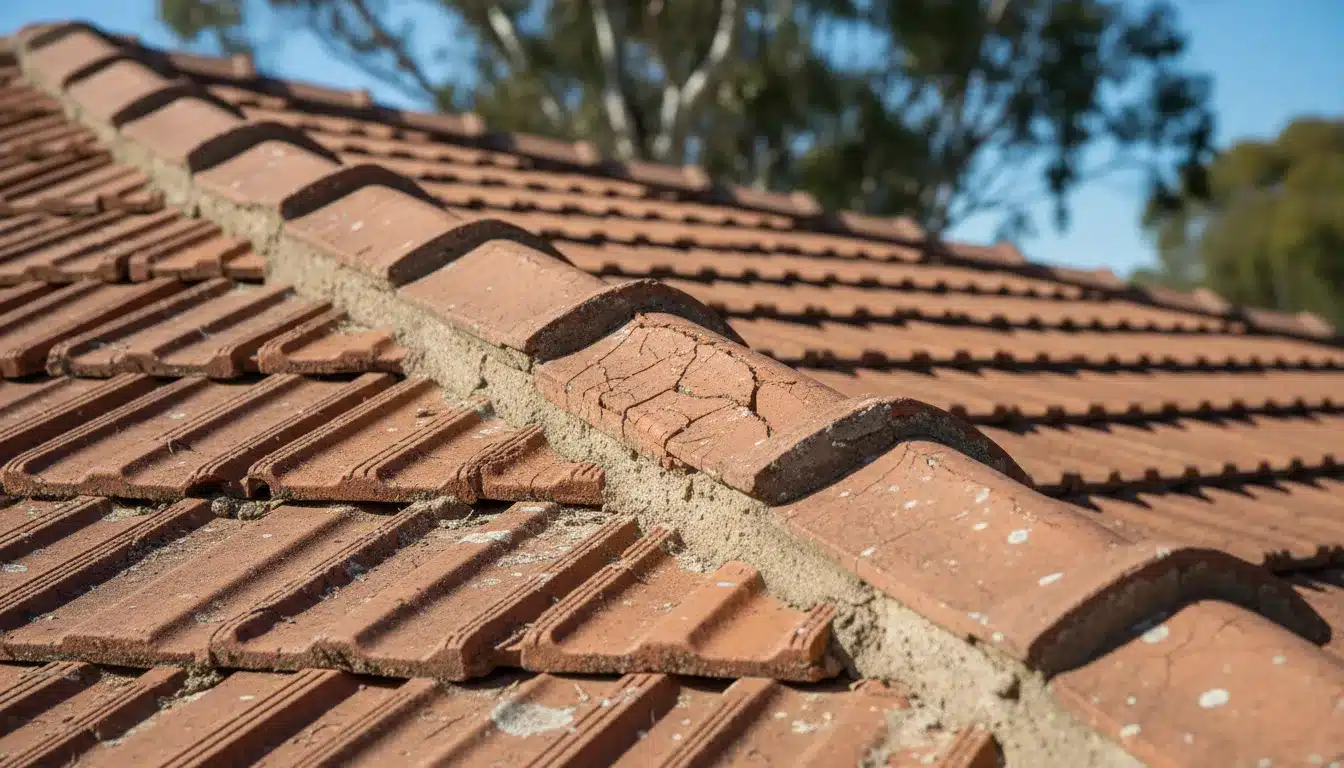
Ridge capping often gives warning before it causes a major leak. Look for cracked pointing, gaps beneath the caps, loose or uneven sections, fresh mortar in the gutters and ceiling marks that return after wind-driven rain. These signs can mean the weather seal or the bedding that supports the caps is failing.
A ridge cap leaking problem deserves attention even when the ceiling is still dry. Water entering near the highest part of a tiled roof can travel along timber, sarking or insulation before it becomes visible in a different room.
The risk rises when ageing mortar, daily heat movement and storm pressure combine. A joint that remains dry in light rain can admit water when strong wind pushes rain sideways beneath the cap.
Do not climb onto the roof to confirm the fault yourself. Brittle tiles, steep pitches and wet surfaces create serious fall risks, and walking near a weakened ridge can cause more damage.
Why Ridge Capping Matters So Much
Ridge caps cover the high joins where two roof planes meet. Standard tiles overlap to shed water down the pitch, but they cannot close the ridge by themselves. The caps, bedding and pointing work together to protect that exposed junction.
Bedding is the mortar base that supports each cap. Pointing forms the visible seal along its edges and across the joints. If the pointing cracks while the bedding remains firm, the problem may still be relatively contained. If the bedding crumbles or separates, the caps can lose support as well as weather resistance.
That distinction matters during inspection. A cracked surface line does not reveal, by itself, whether repointing is enough. The cap must be stable, the bedding must still support it, and the surrounding tiles must be checked for movement or breakage. Our tile repairs are relevant when cracked, fallen or poorly seated tiles contribute to the same leak path.
High Roof Lines Face More Movement
Ridge lines receive strong sun, wind and rain. Heating and cooling make roofing materials expand and contract at different rates, placing repeated stress on old joints. Fine cracks can gradually widen, and pointing may begin to pull away from the cap or bedding.
The highest line of the roof also gives water more possible routes once it gets inside. Moisture can track downslope along sarking, follow a batten or rafter, soak insulation and finally appear at a cornice or internal wall. The ceiling mark may be several metres from the actual opening.
Early Exterior Warning Signs
Cracked Pointing Lines
Cracks along the lower edge of a ridge cap or across the joint between caps are common early warnings. Hairline cracking does not always mean a major leak is already present, but it shows that movement has begun and the seal needs assessment.
Pay particular attention to cracks that have widened, branched or developed a visible dark line beneath them. Fresh cracking after a hot spell or storm may indicate active movement rather than an old, stable mark.
Gaps, Lifted Caps And Lost Alignment
Ridge caps should sit in a consistent line. A lifted, tilted or uneven cap may have moved away from its bed, opening a void beneath it and stretching the seal on neighbouring caps. One loose cap can therefore affect more than one joint.
Visible daylight beneath a cap, missing sections of pointing or a ridge line that appears to rise and dip are reasons to arrange an inspection. Where broader tile wear surrounds the ridge, tile roof restoration should be considered only after the active water path is identified.
The NCC roof tile provisions set requirements for tiled roof installation, including the fixing and bedding of ridge and hip tiles. Existing roofs still need an on-site assessment of their present condition.
Mortar Debris In Gutters
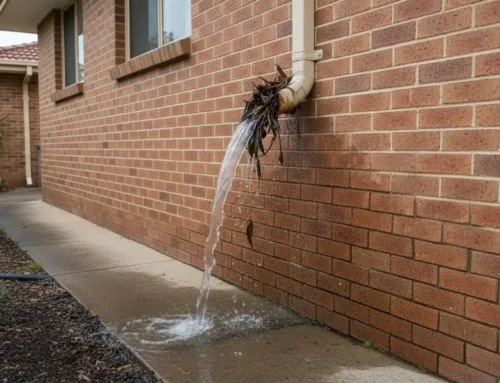
Pieces of mortar in gutters or on the ground can come from deteriorating bedding or pointing. Sandy fragments, small flakes and larger broken pieces all deserve attention, especially when they appear after strong wind or heavy rain.
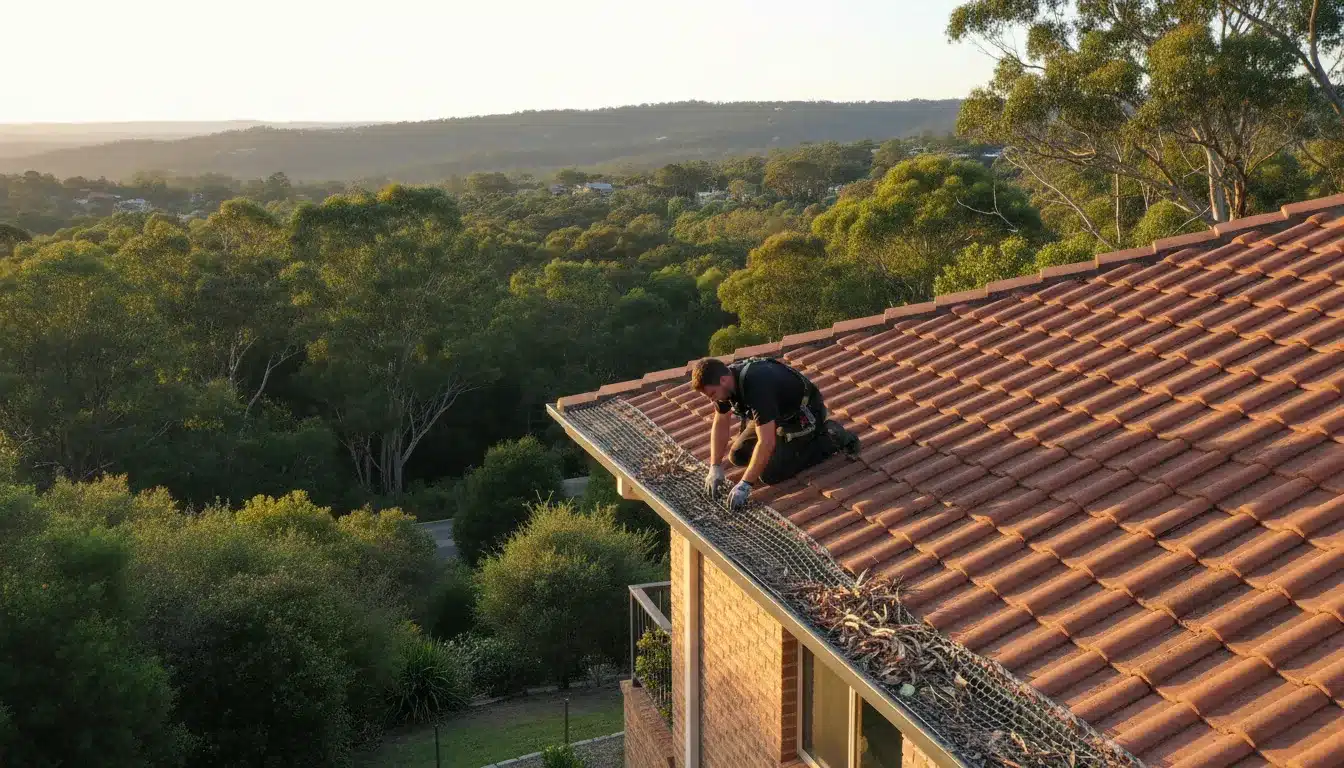
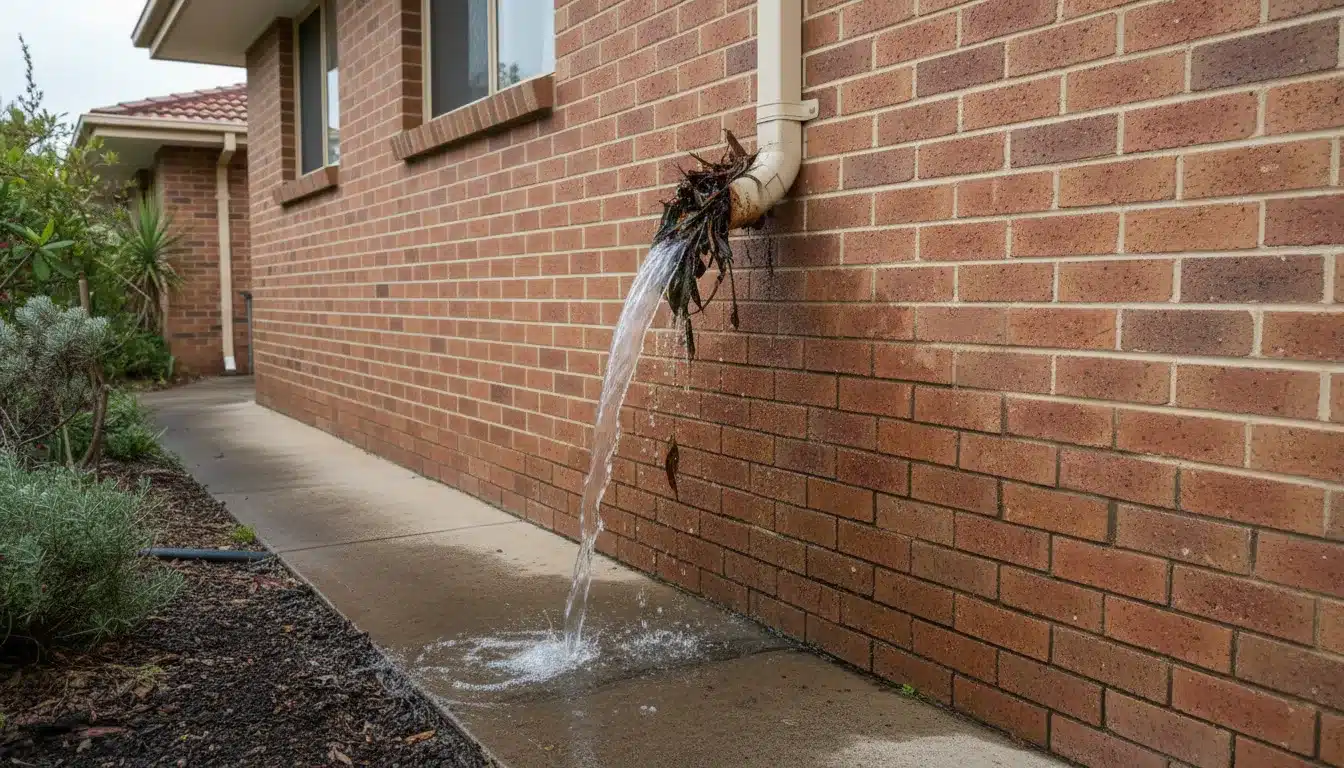
Record where the debris was found before clearing it. Material concentrated below one roof section can help narrow the inspection area, although it does not prove the source on its own. If leaves and grit are obscuring the drainage path, professional gutter and downpipe work may be needed where clearing alone will not correct damaged or ineffective components.
Moss, Lichen And Hidden Joints
Organic growth can hide fine cracks and hold moisture around laps, valleys and mortar joints. It should not be scraped from a ridge by an unprotected homeowner. Aggressive handling can dislodge a cap or break an aged tile.
Where surface build-up prevents a clear view of the roof condition, roof cleaning should be treated as preparation for assessment, not as a cure for a leak. Cleaning can reveal the joint, but failed bedding, pointing or flashing still needs the appropriate repair.
Interior Signs Linked To Ridge Failure
Cornice Stains After Heavy Rain
A stain near a cornice or internal corner may be the end of a longer water path. Ridge water can travel across framing before it reaches plasterboard, so the room below the opening is not always the room that shows the damage.
Timing is useful. Note whether the mark appears during ordinary rain, only during a westerly front or several hours after the weather passes. Also record which side of the roof faced the wind. These details help distinguish a wind-driven ridge leak from a separate plumbing or condensation issue.
With more than 50 years in the industry and work across more than 30,000 roofs, our Permacoat experience includes the local heat and storm patterns that expose ageing tiled roof junctions. The inspection still has to follow the water path on the individual property rather than assume every stain has the same cause.
Bubbling Paint, Sagging Plaster Or Active Drips
Bubbling paint means moisture has reached the ceiling finish. Sagging plaster, active dripping or water near a light fitting is more urgent. Keep people away from the affected area and avoid touching wet electrical fittings. The roof should only be accessed when conditions are safe.
Repainting the ceiling before the entry point is fixed hides a symptom rather than resolving it. Wet insulation and timber can also continue releasing moisture after the rain stops, so a dry surface the next morning does not show that the cavity is dry.
Musty Smells And Repeated Marks
A musty smell in the roof cavity can indicate damp insulation, timber or accumulated dust before a large stain appears. Repeated marks in the same area after separate storms are a particularly useful sign of an unresolved route.
Photograph the mark, note the date and record the wind and rain conditions. This creates a clearer history for our roof repairs assessment and helps separate one active opening from old staining that is no longer changing.
How Storm Damage Leaks Develop From Ridge Faults
Storm damage leaks often expose a weakness that developed over time. A storm may be the trigger, but daily movement, weathering and earlier moisture can have weakened the ridge long before water reached the ceiling.
Wind does not send rain straight down. It can push water sideways and uphill over short distances, forcing it into a gap that stays dry during light vertical rain. This explains why a roof may appear sound for months and then leak during one severe front.
Once water reaches ageing bedding, repeated wetting can accelerate deterioration. More mortar loosens, the cap has less support and the next storm finds a larger opening. Early repair can interrupt that cycle before several neighbouring caps lose alignment.
The extent of the fault affects both the method and the price. A homeowner comparing options should look at the condition of the bedding, the number of affected caps, roof access and any related tile or flashing work, rather than rely on a generic figure. Our guide to repair costs provides context for that scope without replacing an inspection.
When A Ridge Problem Becomes Urgent
Active dripping, sagging plaster, loose caps, missing pointing and repeated stains after rain all justify prompt attention. Material that could dislodge above an entry, path or neighbouring property also raises a safety concern.
The weather forecast matters. A fine crack before a run of dry days presents a different immediate risk from an open joint ahead of another front. Temporary measures may limit interior damage, but they should not be presented as a permanent ridge repair.
Managed buildings add an access and communication step. Occupants, property managers and the council of owners may hold different information about internal stains, earlier repairs and roof access. Coordinating those details helps preserve the history of the leak and gives the inspection a clearer starting point.
Repair Options For Failing Ridge Capping
Repointing Sound Bedding
If the caps are stable and the bedding remains firm, failed pointing can be removed and renewed on a clean, sound base. The inspection must confirm that the visible crack is the main defect and that movement beneath it will not simply reopen the joint.
Re-Bedding Failed Sections
When the mortar base has broken down, the affected cap is lifted and the failed bedding is removed before a new bed is formed. Pointing follows after support and alignment have been restored. Applying fresh material over a loose cap does not address the underlying movement.
The scope may cover one failed section or a longer ridge where several caps have lost support. If defects are widespread across the roof covering and repeated local work would leave an unreliable system, re-roofing may be the more sensible comparison.
Checking Adjacent Tiles, Valleys And Flashing
A ridge fault can coincide with cracked tiles, blocked valleys or failed flashing. Finding one obvious crack should not end the inspection if the moisture trail suggests another route. Each suspected opening should be checked against the internal symptom and storm direction.
Surface finishing should remain separate from leak repair. Roof coatings may suit a sound, properly prepared roof after movement and water entry have been resolved, but coating over an active ridge fault will not restore failed support beneath a cap.
FAQ
What Is The First Sign Of A Ridge Cap Leak?
Cracked pointing, gaps under caps, fresh mortar debris and stains that follow wind-driven rain are common early signs. The first visible clue may be outside or inside, depending on the path the water takes.
Can Ridge Capping Leak Only During Storms?
Yes. Wind can force rain into openings that remain dry in lighter weather. A leak that appears only during storms still indicates a route that needs assessment.
Is Repointing Enough For Loose Ridge Caps?
Usually not. A loose cap needs stable support before new pointing can perform properly. Failed bedding may need to be removed and renewed first.
Can The Ceiling Stain Sit Away From The Ridge?
Yes. Water can travel along sarking, timber or insulation before reaching the ceiling. The stain location is a clue, not an exact map of the opening.
Act Before The Next Storm Tests The Same Gap
Small ridge cracks are easier to investigate before they become active interior leaks. Record the warning signs, avoid unsafe roof access and arrange an inspection that distinguishes failed pointing from failed bedding and checks nearby tiles, valleys and flashing.
If broader tile wear is found after the leak source is identified, restoration can be considered as a separate scope. The immediate decision is still to stop the water path and restore stable support to the affected caps.
For a clear assessment of the ridge and the right next step, contact us to arrange a free, no-obligation roof inspection before further weather turns a small opening into more extensive damage.